What Does a Hygrometer Measure? A Plain Guide
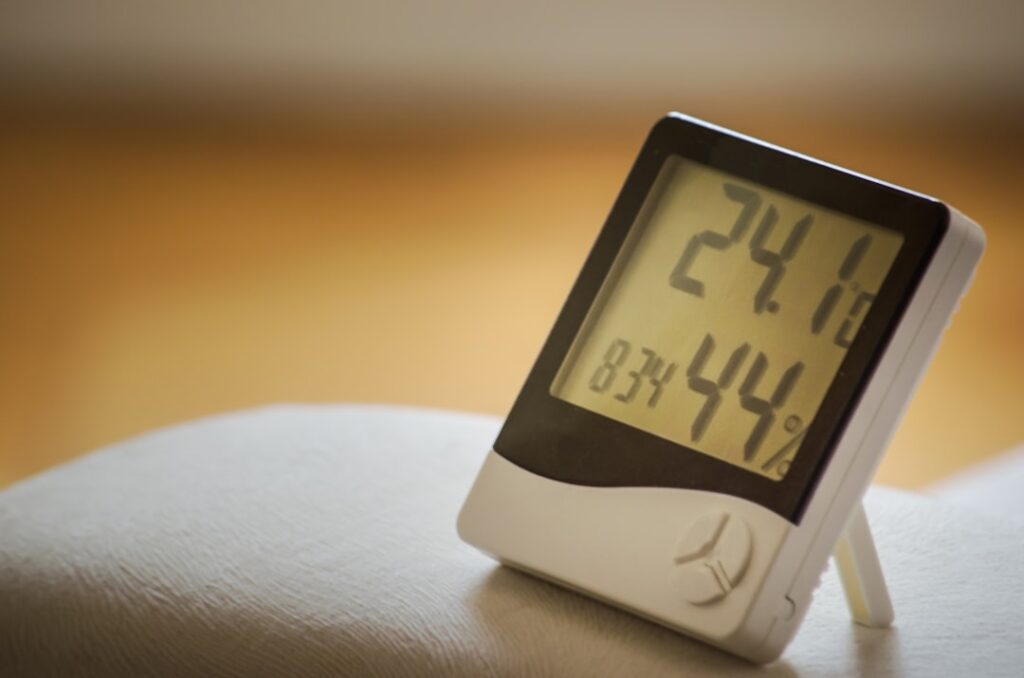
A small device sits on the bookshelf, displaying a temperature and a percentage. That percentage, the one most people glance at and ignore, is humidity, and the instrument reporting it is a hygrometer. So what does a hygrometer measure, exactly? It measures the amount of water vapor in the air, almost always expressed as relative humidity. That single number drives whether your home grows mold, whether your hardwood floors cup or crack, and whether the air feels comfortable. In Colorado’s famously dry climate, knowing the indoor humidity is more useful than most homeowners realize. This guide explains precisely what a hygrometer measures, how it works, and how to act on its readings.
Part of our Home Inspection Tools guide — start there for the full picture →
What a hygrometer measures
A hygrometer measures the moisture content of air, reported in most household and inspection settings as relative humidity (RH), a percentage from 0 to 100. Relative humidity describes how much water vapor the air currently holds compared with the maximum it could hold at that temperature. At 50 percent RH, the air contains half the moisture it could hold before reaching saturation. The “relative” part matters: the same amount of water vapor produces a higher RH in cold air and a lower RH in warm air, because warm air can hold more moisture.
Most consumer hygrometers also display temperature, since the two readings are linked and humidity is meaningless without knowing the temperature it was measured at. A reading of 60 percent at a chilly 60 degrees and 60 percent at a warm 75 degrees describe very different amounts of actual moisture in the air, which is why the paired temperature matters. More advanced instruments report additional values such as dew point, the temperature at which the air would become saturated and condensation would form. Dew point is especially useful for predicting where condensation and mold risk appear inside a building.
Relative humidity, absolute humidity, and dew point
Three related quantities sometimes confuse readers. Relative humidity is the percentage most hygrometers display. Absolute humidity is the actual mass of water vapor per volume of air, independent of temperature, and is used more in science and industry. Dew point is the temperature at which condensation begins; when a surface in your home drops below the dew point, water condenses on it, which is why cold basement walls and single-pane windows sweat.
For everyday home use, relative humidity is the practical number. Keeping it in a healthy band prevents both the mold-and-dust-mite problems of high humidity and the dry-air discomfort of low humidity. A hygrometer that also shows dew point helps diagnose condensation problems, but RH alone covers most household needs.
It helps to picture what the percentage represents physically. Air at a given temperature can hold only so much water vapor before it saturates and the excess condenses out as dew or fog. Relative humidity expresses how close the air is to that saturation point. Because warm air can hold far more moisture than cold air, the very same amount of water vapor produces a low relative humidity reading on a hot afternoon and a high one on a cold night. That temperature dependence is exactly why a hygrometer pairs its humidity reading with a temperature, and why comparing humidity figures taken at different temperatures, without accounting for the difference, leads people astray.
How hygrometer sensors work
Capacitive sensors
Most modern digital hygrometers use a capacitive sensor. A thin polymer film sits between two electrodes, and the film absorbs or releases water vapor as humidity changes, altering its electrical capacitance. The circuit reads that change and converts it to an RH value. Capacitive sensors are accurate, stable, and inexpensive, which is why they dominate consumer and professional digital units.
Resistive sensors
Resistive sensors measure the change in electrical resistance of a moisture-absorbing material as humidity shifts. They are simple and cheap but generally less precise than capacitive types and more affected by temperature and contaminants.
Mechanical and psychrometers
Older analog dial hygrometers use a moisture-sensitive material, often a coiled strip or a bundle of organic fibers, that changes length with humidity and moves a needle. A psychrometer, the traditional laboratory method, compares a dry-bulb and a wet-bulb thermometer; the cooling from evaporation off the wet bulb reveals humidity through a calculation. Psychrometers are accurate references but cumbersome for daily home use.
For a deeper look at the device itself, see our guides on what a hygrometer is and the digital hygrometer.
Why indoor humidity matters
The EPA recommends keeping indoor relative humidity between roughly 30 and 50 percent. The reasons are concrete. Above 50 to 60 percent, mold, dust mites, and bacteria thrive, and condensation forms on cool surfaces, feeding hidden mold in walls and crawl spaces. Below 30 percent, occupants experience dry skin, irritated sinuses and airways, static electricity, and stress on wood furniture, flooring, and musical instruments that crack as they lose moisture.
Colorado’s arid climate pushes indoor humidity low, especially in winter when furnaces heat dry outdoor air. Many Front Range homeowners run humidifiers to stay above the dry threshold, then must watch that they do not overshoot and create condensation on cold windows. A hygrometer is the only way to manage that balance with data instead of guesswork.
Where and how to take readings
Place a hygrometer away from direct heat or cold sources, exterior doors, and humidifiers or dehumidifiers, which would bias the reading toward the local microclimate rather than the room. Give the sensor time to stabilize after moving it; a unit carried from a cold garage into a warm room reads inaccurately until it equilibrates. For whole-home awareness, place units in problem areas: a basement, a bathroom, a bedroom, and near any humidifier.
To track a problem, log readings over days rather than relying on a single snapshot, since humidity swings with weather, cooking, showering, and HVAC cycling. A basement that holds high RH after rain is signaling a moisture-intrusion problem worth investigating.
Accuracy and calibration
Consumer hygrometers typically claim accuracy within a few percentage points of RH, which is adequate for home use. Over time, sensors can drift. A simple field check uses the salt test: seal the hygrometer in a container with a damp salt solution, which produces a known 75 percent RH, and compare the reading after several hours. Some digital units allow manual calibration adjustment. For most homeowners, replacing an old, drifting unit is easier than recalibrating it.
Seasonal humidity swings in Colorado homes
Relative humidity is not a fixed property of a home; it swings with the seasons, and Colorado’s swings are dramatic. In winter, furnaces heat cold, dry outdoor air, and because warm air holds more moisture, the relative humidity indoors can plunge into the teens or low twenties without active humidification. That dryness cracks wood floors and trim, loosens furniture joints, dries out skin and sinuses, and builds static charge. Many Front Range homeowners run whole-house or portable humidifiers all winter just to stay above the 30 percent comfort floor.
Summer flips the problem in some homes. Monsoon moisture, swamp coolers that add humidity by design, and basements that stay cool and damp can push relative humidity up, especially below grade. A hygrometer reveals these seasonal patterns so you can adjust: add moisture in the dry months, remove it in the damp ones, and watch that winter humidification does not overshoot and fog up cold windows. Tracking the number across a full year teaches a homeowner the rhythm of their particular house better than any general rule.
The condensation and dew point connection
One of the most useful things a hygrometer reading predicts is condensation. When humid indoor air contacts a surface colder than the dew point, water condenses on it. In winter that surface is often a single-pane window, an uninsulated closet wall on an exterior corner, or a cold water pipe. Persistent condensation feeds mold and rots window frames, and it is the visible symptom of indoor humidity that is too high for the surface temperatures in the home.
This is why humidifying aggressively in winter can backfire: pushing indoor humidity up to feel comfortable may raise the dew point above the temperature of cold windows and walls, creating condensation and a mold risk where none existed. A hygrometer that displays dew point makes this tradeoff visible. The practical target is the highest humidity that keeps surfaces dry, which in a cold-climate home with older windows is often lower than the comfort ideal. Watching both RH and any condensation tells you where that line sits in your house.
Hygrometers in mold prevention and inspection
Because moisture drives mold, the hygrometer is a frontline tool in preventing it. A basement or crawl space that holds relative humidity above the 50 to 60 percent range for extended periods is a mold incubator, and the reading often climbs before any visible growth or musty smell appears. Catching that early lets a homeowner intervene with a dehumidifier, better drainage, or improved ventilation before mold establishes.
Home inspectors carry hygrometers alongside moisture meters for this reason. A high ambient humidity reading in a crawl space, paired with elevated moisture in the wood framing, points to a moisture-intrusion problem worth investigating. If a humidity reading stays stubbornly high and a musty odor develops, the next step is a professional mold assessment, since confirming and characterizing mold requires surface and air sampling that a hygrometer cannot provide. The instrument flags the conditions; specialists confirm whether mold has taken hold.
Choosing where to place hygrometers in a home
One hygrometer in the living room tells you little about the rooms that actually have moisture problems. Whole-home awareness comes from placing units where conditions differ. A basement or crawl space is the highest priority, since these below-grade spaces trap moisture and are where mold most often starts. A bathroom reveals how well the exhaust fan clears shower humidity. A bedroom, especially one that gets stuffy or where someone notices dry air, shows the conditions people sleep in. Near any humidifier, a hygrometer confirms you are not overshooting.
Each location can read very differently at the same moment. A heated upstairs bedroom in winter might show 25 percent while a cool basement shows 55 percent, and both readings are useful precisely because they differ. Inexpensive wireless units that report to a single display or app make multi-room monitoring practical without walking the house. The goal is to put the sensor where the question is, the damp basement, the steamy bathroom, the dry bedroom, rather than in the one room that happens to be comfortable, so the readings actually inform what you do next.
Acting on the readings
If RH runs high, use a dehumidifier, improve ventilation, and address any water intrusion; persistent high humidity in a basement or crawl space often precedes mold and warrants a professional mold assessment. If RH runs low, a humidifier restores comfort and protects wood. Pairing humidity data with the broader picture from an home inspection tools evaluation helps homeowners catch moisture problems before they become mold problems.
Treat the hygrometer reading as the start of a feedback loop rather than a one-time check. Note the number, take an action, dehumidify, humidify, ventilate, or fix a leak, then watch whether the reading moves into the healthy band and stays there. A basement that holds high humidity even after a dehumidifier runs is telling you the moisture source, groundwater, a leak, poor drainage, is larger than the appliance can handle, which points toward a structural fix or a professional assessment. Conversely, a winter reading that swings too low the moment the furnace runs shows where humidification helps. Over a full year, that ongoing dialogue between reading and response teaches a homeowner how their particular house behaves and keeps the indoor environment in the range that protects both the building and the people in it.
References
- Moisture, Humidity, and Mold Prevention — U.S. Environmental Protection Agency
- Humidity and Mold in the Home — Centers for Disease Control and Prevention
- ENERGY STAR: Dehumidifiers — U.S. Environmental Protection Agency (ENERGY STAR)
Frequently asked questions
What does a hygrometer measure?
A hygrometer measures the amount of water vapor in the air, usually reported as relative humidity in percent. Many units also display temperature, and some show dew point, the temperature at which condensation would form.
What is a healthy indoor humidity reading?
The EPA recommends keeping indoor relative humidity between roughly 30 and 50 percent. Above that range mold and dust mites thrive, while below it the dry air common in Colorado causes irritated airways, static, and cracking wood.
How does a digital hygrometer sense humidity?
Most digital hygrometers use a capacitive sensor: a thin polymer film absorbs or releases moisture as humidity changes, altering its electrical capacitance, which the circuit converts to a relative humidity value. Capacitive sensors are accurate, stable, and inexpensive.