Thermo Hygrometer: What Homeowners Need to Know

A thermo hygrometer is a small instrument that does two jobs at once: it tells you the temperature of a room and the amount of moisture in the air. That second number, relative humidity, is the one most homeowners overlook, yet it shapes comfort, energy bills, and whether mold gets a foothold. Along Colorado’s Front Range, where outdoor air is famously dry but basements and crawl spaces can run damp, a reliable reading matters more than people expect. This guide explains how a thermo hygrometer works, what the numbers mean, where to place it, and how inspectors use it during a moisture evaluation.
Part of our Humidity Control guide — start there for the full picture →
What Is a Thermo Hygrometer?
A thermo hygrometer combines a thermometer and a hygrometer in one housing. The thermometer half reports air temperature, usually in Fahrenheit or Celsius. The hygrometer half reports relative humidity, the percentage of moisture the air is holding compared with the most it could hold at that temperature. A reading of 45% means the air is carrying just under half of its maximum moisture for the current temperature.
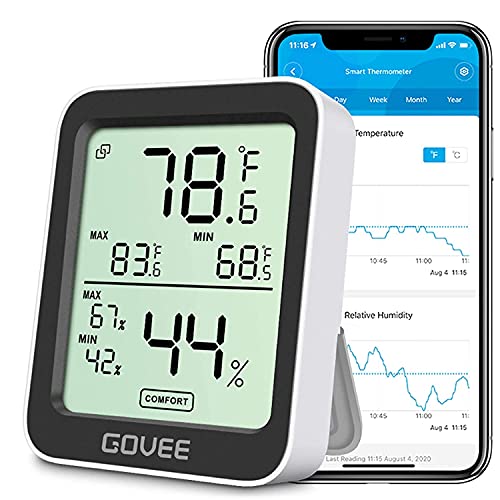
Most consumer units are digital, with a small screen showing both values and often a high-low memory and a comfort indicator. Inexpensive models sell for under twenty dollars, while professional units used by inspectors and remediation contractors cost more and hold tighter accuracy. The device is closely related to other moisture tools, and homeowners sometimes confuse it with a hydrometer, which measures liquid density rather than air moisture. Our comparison of a hydrometer versus a hygrometer clears up that mix-up.
How Does a Thermo Hygrometer Work?
The temperature sensor is straightforward, typically a thermistor whose electrical resistance changes predictably as it warms or cools. The humidity sensor is the clever part. Most modern units use a capacitive sensor: a thin polymer film sits between two electrodes, and the film absorbs or releases water vapor as humidity rises and falls. That change alters the film’s electrical capacitance, and the device converts the signal into a percentage.
Older or cheaper designs use a resistive sensor or even a coiled strip of moisture-sensitive material that physically moves a needle. Capacitive sensors are the standard today because they respond quickly, work across a wide range, and hold accuracy reasonably well. Even so, every humidity sensor drifts over time, which is why professional models are periodically checked against a known reference. For context on what the humidity figure actually represents, our explainer on what a hygrometer measures goes deeper into relative versus absolute humidity.
Accuracy and Calibration
A good consumer thermo hygrometer reads humidity within about three to five percentage points and temperature within about one degree. Professional units do better. Accuracy slips when a sensor is exposed to dust, condensation, or extreme readings for long periods. A simple field check, the salt test, seals the device in a container with a damp salt slurry; the humidity should settle near 75% once it stabilizes, and a reading far off that mark signals the sensor needs adjustment or replacement.
Best Hygrometers: our top 3 picks
| Product | Best for | Key features | Price | Buy |
|---|---|---|---|---|
| Govee H5075 | Best overall, app logging |
| $11.69as of Nov 5, 2026 7:08 am GMT+0000 | Buy now →Check current price |
| TempPro TP50 | Simple tabletop gauge |
| $10.99as of Nov 5, 2026 7:08 am GMT+0000 | Buy now →Check current price |
| Govee H5075 3-pack | Whole-house monitoring |
| $31.49as of Nov 5, 2026 7:08 am GMT+0000 | Buy now →Check current price |


Prices are Amazon’s listed prices as of the time shown and change often; check Amazon for today’s price. As an Amazon Associate we earn from qualifying purchases.
What Indoor Humidity Levels Are Healthy?
The numbers on the screen only help if you know the targets. Public-health and HVAC guidance generally puts comfortable, low-risk indoor humidity between 30% and 50%. Below roughly 30%, dry air can irritate skin, sinuses, and wood furniture, a common winter complaint in the Denver metro where heated indoor air dries out fast. Above 60%, the air holds enough moisture to support dust mites and, over time, mold growth on cool surfaces.
The EPA recommends keeping indoor relative humidity below 60%, and ideally between 30% and 50%, specifically to discourage mold. A thermo hygrometer is the cheapest way to know which side of that line a room sits on. In a Front Range basement or crawl space, a reading that climbs past 60% during a wet spring or after snowmelt is an early warning that a dehumidifier or drainage fix may be needed before mold appears. Persistent damp readings often pair with that telltale musty smell, a topic covered across our mold inspection hub.
Where to Place a Thermo Hygrometer
Placement changes the reading more than most people realize. For a representative measurement of living space, set the device at roughly chest to eye height on an interior wall, away from direct sunlight, supply vents, exterior doors, and heat sources like televisions or lamps. Sunlight will inflate the temperature reading and depress the humidity figure, giving a falsely rosy picture.
For moisture troubleshooting, the goal flips: place units in the problem zones. A basement corner, the crawl space, behind furniture on an exterior wall, and near a bathroom or laundry area all reveal different microclimates. Many homeowners run two or three inexpensive units around the house to compare. Allow several minutes for a unit to stabilize after moving it, because the sensor needs time to equalize with the new environment. In a crawl space, a remote-probe model lets the homeowner read the value from a phone or a base station without crawling under the house every time.
How Inspectors Use a Thermo Hygrometer
During a home or moisture inspection, the thermo hygrometer is part of a small kit that also includes a moisture meter and sometimes an infrared camera. The inspector logs temperature and humidity in several rooms to build a profile of the home’s moisture behavior. A bedroom at 35% humidity and a basement at 68% on the same day points to a moisture source downstairs rather than a whole-house problem.
The tool also helps interpret other readings. Relative humidity depends on temperature, so a cold surface in a humid room can reach the dew point and start condensing water, which feeds mold. By knowing both the air temperature and humidity, an inspector can predict where condensation is likely, such as on an uninsulated basement wall or a single-pane window. This is one reason the device shows up alongside other diagnostic gear in our overview of home inspection tools. The hygrometer does not diagnose mold by itself, but it identifies the conditions that allow mold to grow, which guides where to look more closely.
Choosing a Unit for Your Home
For general comfort monitoring, a basic digital model with a clear display and a min-max memory is plenty. If the goal is moisture troubleshooting, look for a model that lists its accuracy spec, ideally within three percentage points on humidity, and consider one with a remote probe for crawl spaces or attics. Battery life, a backlight for dark mechanical rooms, and a logging feature round out the useful extras. Avoid relying on a single cheap unit for important decisions like sizing a dehumidifier; cross-check with a second device.
Seasonal Humidity Patterns Along the Front Range
Colorado’s climate makes humidity readings behave in ways that surprise newcomers from wetter regions. Outdoor air is famously dry most of the year, and in winter the combination of cold outdoor air and forced-air heating can drive indoor relative humidity well below the comfortable range. A thermo hygrometer in a Denver living room during January often reads in the teens or low twenties, dry enough to crack wood furniture, dry out sinuses, and build static electricity. Many homeowners respond by running a whole-house or portable humidifier, and the hygrometer is how they confirm they are adding enough moisture without overshooting into condensation territory.
Spring and summer flip the picture in specific zones. Snowmelt saturates the soil around foundations, and afternoon thunderstorms common from late spring through summer push outdoor humidity up briefly. Basements and crawl spaces, which stay cool year-round, become the spots where moisture collects, because warm humid air entering a cool space raises the relative humidity sharply as it cools. A crawl space that reads a comfortable 45 percent in winter can climb past 65 percent during a wet July, which is precisely the window when mold gets a foothold. Running a thermo hygrometer in those spaces through the seasons reveals this swing and tells a homeowner whether a dehumidifier or a better vapor barrier is warranted.
Daily cycles matter too. Cooking, showering, and laundry release moisture in bursts, and a hygrometer near a bathroom will spike during a hot shower then recover as the exhaust fan clears the air. Watching how quickly the reading recovers is a quiet test of a home’s ventilation. A bathroom whose humidity stays elevated long after a shower has an undersized or non-functioning exhaust fan, a small problem that, left alone, feeds mold on the ceiling and grout.
Comparing a Thermo Hygrometer to a Moisture Meter
Homeowners sometimes assume a thermo hygrometer and a moisture meter do the same job, but they measure different things and answer different questions. A thermo hygrometer reads the moisture in the air, reported as relative humidity, and the air temperature. A moisture meter, by contrast, reads the moisture content inside a solid material such as drywall, wood framing, or a subfloor, by either pin penetration or a surface scan. The two tools are complementary, not interchangeable.
During a moisture investigation, the sequence usually runs from one to the other. The hygrometer establishes whether the air in a room or basement is chronically humid, which is the condition that allows mold and rot. If the air readings are high, or if there is visible staining, the moisture meter then pinpoints which materials are actually wet and how wet. A wall that reads elevated on a moisture meter while the room air sits at normal humidity suggests a localized leak rather than an air-moisture problem, and vice versa. Knowing which tool answers which question keeps a homeowner from chasing the wrong fix, and it is why an inspector carries both rather than relying on either alone.
When Readings Signal a Bigger Problem
A thermo hygrometer is a screening tool, not a final answer. Readings that stay above 60% despite ventilation, visible condensation on walls or windows, or a persistent musty odor all warrant a closer look by a professional. Chronic high humidity can stem from plumbing leaks, poor grading and drainage, an undersized or absent vapor barrier, or simply too little ventilation in tight modern construction.
Along the Front Range, snowmelt against a foundation and seasonal storms can push basement humidity up even in an otherwise dry climate. If readings stay elevated and a homeowner sees staining, peeling paint, or growth, a qualified inspector can pinpoint the source and recommend repairs. The thermo hygrometer’s job is to catch the trend early, while a fix is still cheap, rather than after damage has spread behind the drywall.
Getting Long-Term Value From Your Readings
A thermo hygrometer pays off most when its readings are tracked over time rather than glanced at once. Many digital units keep a running minimum and maximum, which reveals the swings a single look would miss, such as a basement that creeps past 60 percent overnight then settles by midday. Recording weekly readings from each problem area through a full year builds a profile that shows whether a moisture issue is seasonal, tied to specific weather, or steadily worsening. That record is far more useful to a contractor sizing a dehumidifier or diagnosing a damp crawl space than a one-time number.
The data also guides everyday decisions. A reading that drops too low in winter signals the time to run a humidifier, while one that climbs in a bathroom long after a shower flags an exhaust fan that is undersized or failing. Pairing the hygrometer with simple actions, opening a window briefly, running a fan, adjusting a humidifier, and then watching the reading respond turns the instrument into a feedback loop rather than a passive display. For Front Range homeowners managing both dry winters and damp basement seasons, that ongoing awareness is the practical reward of keeping a thermo hygrometer in regular use, and it catches small moisture problems while they are still cheap to fix.
References
- Mold and moisture control guidance — U.S. EPA
- Indoor humidity and mold prevention — CDC
- Indoor environmental quality standards — ASHRAE
Frequently asked questions
What humidity should a thermo hygrometer read indoors?
Aim for relative humidity between 30% and 50%. The EPA recommends keeping it below 60% to discourage mold and dust mites. Below 30% the air feels dry and can irritate skin and sinuses, common in heated Front Range homes during winter.
How accurate is a thermo hygrometer?
A good consumer model reads humidity within about three to five percentage points and temperature within about one degree. Accuracy drifts over time and with dust or condensation, so a periodic salt-test check or comparison against a second unit is worthwhile.
Where should I place a thermo hygrometer?
For general readings, set it at chest height on an interior wall away from sunlight, vents, and heat sources. For moisture troubleshooting, place units in problem spots like basements, crawl spaces, and bathrooms, and allow several minutes to stabilize.