Thermal Anemometer: What Homeowners Need to Know
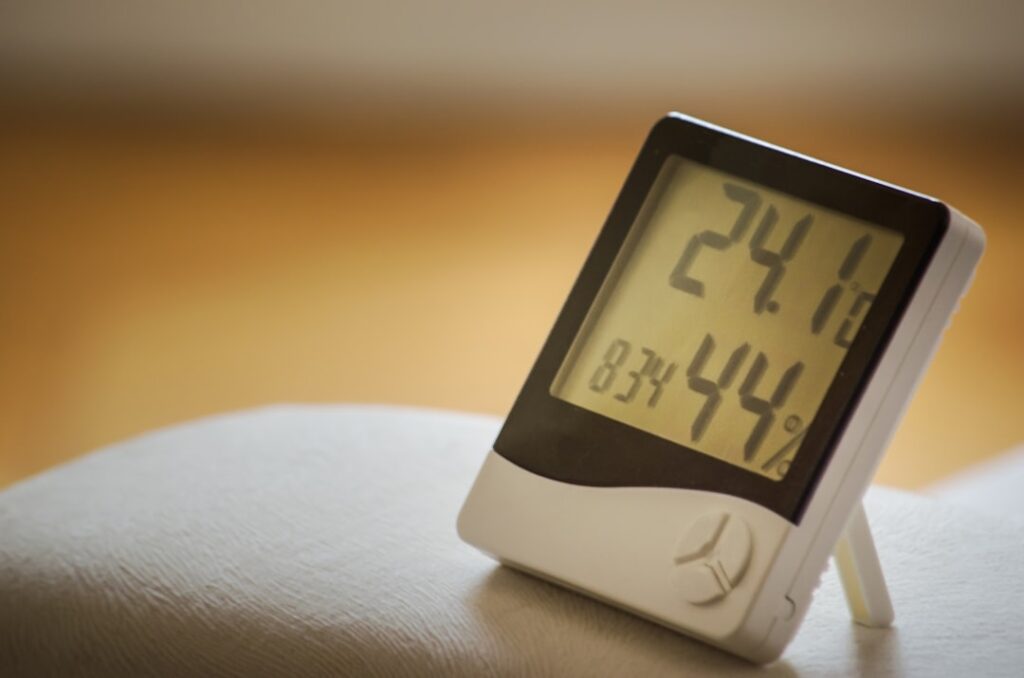
A thermal anemometer measures air velocity by sensing how moving air cools a heated element — a clever bit of physics that turns an invisible draft into a precise number. For anyone diagnosing HVAC performance, checking ventilation, or hunting air leaks, it answers a question other tools cannot: how fast is air actually moving here? Understanding what a thermal anemometer does, the specs that govern its accuracy, and where it fits among other airflow tools helps homeowners and inspectors measure ventilation instead of guessing at it.
Part of our Thermal Imaging for Homes guide — start there for the full picture →
What does a thermal anemometer measure?
A thermal anemometer (also called a hot-wire anemometer) measures air velocity, usually in feet per minute or meters per second, and many models also report temperature and calculate volumetric airflow (CFM) when you enter the duct or opening area. The probe contains a heated sensor; as air flows past, it carries heat away, and the instrument infers velocity from how much power is needed to keep the sensor at temperature. The faster the air, the more cooling, the higher the reading.
This makes it especially good at low air speeds — gentle drafts and register airflow — where spinning-vane meters struggle. For home diagnostics, that means measuring supply and return airflow at HVAC registers, verifying exhaust-fan performance, and detecting slow air leaks. The pillar guide on home inspection tools sets airflow instruments alongside thermal cameras and moisture meters, both of which complement airflow data in an HVAC investigation.
Specs that matter on a thermal anemometer
A few specifications determine whether a thermal anemometer gives trustworthy numbers for building work.
Velocity range and resolution
Most building-oriented units measure from near zero up to several thousand feet per minute. The low-end sensitivity is the strength — thermal sensors resolve airflow as gentle as a few feet per minute, far better than vane meters at low speed. Resolution of 1 ft/min lets you detect subtle differences between registers.
Accuracy
Accuracy is typically quoted as a percentage of reading plus a fixed offset, often in the range of plus or minus 3 to 5 percent of reading. For balancing HVAC airflow or comparing registers, that precision is adequate. Tighter laboratory-grade instruments cost more and matter mainly for engineering work, not routine home diagnostics.
Temperature measurement and airflow calculation
Many units double as a thermometer and compute volumetric flow when you input the cross-sectional area of the duct or grille. That CFM figure is what lets an inspector compare measured delivery against a system’s design specification. Some models log readings or average multiple points across a register face, which improves accuracy because airflow is rarely uniform across an opening.
Probe style and form factor
Thermal anemometers come in a few physical configurations. Telescoping-probe units extend a thin wand into a duct or up to a ceiling register, which is convenient for reaching openings without a ladder for every reading. Integrated-vane hybrids combine a thermal sensor with a small vane for a wider speed range. Bench-style models with a separate probe on a cable suit fixed monitoring. For most home and inspection work, a handheld telescoping unit is the practical choice, balancing reach, low-speed sensitivity, and portability. Whatever the form, the heated sensing element is the delicate heart of the instrument and dictates careful handling.
Real home-inspection and HVAC use cases
A thermal anemometer earns its place in several diagnostics. At HVAC registers, it measures supply airflow to find rooms that are starved or oversupplied, a common cause of uneven heating and cooling. Comparing measured CFM against design targets reveals duct restrictions, leaks, or a struggling blower. At return grilles, low velocity can flag undersized return paths that strain the system.
For ventilation, it confirms whether bathroom and kitchen exhaust fans actually move enough air to clear moisture and odors — a fan that spins but barely pulls air contributes to mold-friendly humidity. It also helps trace air leaks in the building envelope by detecting infiltration at gaps. Inspectors often pair it with a thermal camera: the camera, described in the thermal imaging home inspection guide, shows where cool air enters, and the anemometer quantifies how fast. ASHRAE ventilation standards give context for whether measured airflow is adequate.
Measuring exhaust-fan performance
One of the most practical home uses is checking bathroom and kitchen exhaust fans. A fan can spin loudly while moving almost no air if the duct is crushed, disconnected, clogged with lint, or terminates poorly. Holding the anemometer at the grille and reading velocity — or computing CFM from the grille area — reveals whether the fan actually clears moisture-laden air. A bathroom fan that reads far below its rated capacity leaves humidity lingering after showers, exactly the condition that feeds mold on ceilings and around tubs. Measuring before and after cleaning the duct or replacing the fan quantifies the improvement rather than relying on guesswork.
Balancing room-to-room airflow
Uneven comfort between rooms is a frequent complaint, and airflow measurement diagnoses it. Reading supply velocity at each register and converting to CFM shows which rooms are starved and which are oversupplied. Comparing those figures against the system’s design distribution points to closed or crushed dampers, disconnected ducts, or an undersized return. The data turns “the back bedroom is always hot” into a measured deficit a technician can correct by adjusting dampers or repairing ductwork.
Real home-inspection and HVAC use cases
Connection to moisture and mold problems
Airflow and humidity are linked. Poor exhaust ventilation lets moisture linger, feeding mold, while leaky or unbalanced ducts can create pressure differences that pull humid air into wall cavities. Measuring airflow is part of diagnosing why a space stays damp, complementing the moisture readings covered in the moisture meter explainer.
How it compares to other airflow tools
The thermal anemometer is one of several airflow instruments, each with a niche. Vane (rotating-propeller) anemometers handle higher air speeds well and suit outdoor or duct-traverse work but lose accuracy at low velocities where thermal sensors excel. Cup anemometers measure wind outdoors and are not suited to indoor register work. A balometer (flow hood) captures all the air from a register at once and reads CFM directly, which is faster and more accurate for register balancing but bulky and expensive.
For a homeowner or general inspector, a thermal anemometer offers the best mix of low-speed sensitivity, portability, and affordability. HVAC technicians doing serious air balancing often add a flow hood for register work while keeping a thermal anemometer for low-velocity and leak detection. Choosing among them depends on the air speeds and openings you most often measure.
Limitations to understand
Thermal anemometers have constraints worth knowing. The heated sensor is delicate; dust, grease, and physical contact can damage it or skew readings, so the probe must stay clean and be handled gently. Readings are point measurements — air velocity varies across a register face, so a single reading can mislead, and best practice is to average several points or traverse the opening.
The instrument measures velocity at the probe, not necessarily representative duct flow, and turbulence near grilles can distort results. Accurate CFM depends on entering the correct opening area, so a measurement error there propagates into the airflow figure. As with other diagnostic tools, the number informs judgment rather than replacing it. ASHRAE and inspection bodies treat airflow measurement as one input among several.
Choosing and maintaining a thermal anemometer
For home and general inspection use, a handheld thermal anemometer with a telescoping probe, temperature readout, and CFM calculation in the roughly $50 to $250 range covers most needs. Prioritize low-speed sensitivity and a probe long enough to reach into ducts. Data logging and multi-point averaging help if you balance systems regularly. HVAC professionals may step up to higher-accuracy instruments or add a flow hood.
Maintenance is straightforward: keep the sensor clean and protected with its cap when stored, avoid touching the heated element, and never use it in greasy or heavily contaminated air without cleaning afterward. Replace batteries before fieldwork, and verify the instrument against a known reference periodically if readings inform formal reports. Handled with care, a thermal anemometer gives years of reliable airflow data that turns guesswork about ventilation into measurement.
Interpreting readings against ventilation targets
A velocity or CFM number means little without a reference point. ASHRAE publishes ventilation guidance that establishes how much fresh air a space should receive, and local mechanical codes set minimum exhaust rates for bathrooms and kitchens. Comparing a measured airflow against these targets is what turns a reading into a conclusion: a bathroom fan moving well below its rated and code-expected airflow is underperforming, and a supply register delivering far less than its design CFM points to a duct restriction.
Because airflow varies across an opening, a single point reading can mislead. The accepted approach is to take several readings across the face of a register or duct and average them, or to traverse a duct in a grid pattern for a representative figure. Entering the correct cross-sectional area is equally important, since an error there propagates directly into the CFM result. Treating the measurement as one input — checked against a standard and confirmed with good technique — keeps airflow data honest rather than falsely precise.
Choosing between airflow instruments
The thermal anemometer is one of several tools, and the best choice depends on the work. For low-speed indoor measurements — register airflow, exhaust fans, drafts — the thermal anemometer’s sensitivity is hard to beat, and a handheld telescoping unit covers most home and inspection needs affordably. For higher air speeds or outdoor work, a vane anemometer is more appropriate. For fast, accurate register balancing across a whole house, a balometer or flow hood captures all the air at once and reads CFM directly, though it is bulky and expensive.
Many HVAC technicians carry more than one: a thermal anemometer for low-velocity and leak detection, a vane unit for ductwork, and a flow hood for balancing. A homeowner or general inspector rarely needs all three; a single quality thermal anemometer with temperature and CFM functions answers the questions that come up most often. As with other diagnostic tools described in the pillar guide on home inspection tools, the right instrument follows the task, and the reading informs judgment rather than replacing it.
More Questions About Thermal Anemometers
How much does a thermal anemometer cost?
A thermal anemometer typically costs about $60 to $150 for a basic handheld model and $300 to $1,500 or more for professional instruments with better accuracy, telescoping probes, data logging, and calibration certificates, according to typical retail pricing. Homeowners checking an occasional bathroom fan or register can manage with an entry model. HVAC technicians and energy auditors usually need a professional unit because low-velocity accuracy and repeatable readings matter when balancing systems. Annual calibration services add to the long-term cost of professional instruments.
How do you measure a bathroom exhaust fan with a thermal anemometer?
Measuring a bathroom exhaust fan with a thermal anemometer works best with a flow hood or a cardboard funnel that channels all the air through a known opening. Hold the probe at several points across the opening, average the velocity readings, and multiply by the opening area in square feet to estimate cubic feet per minute. Many building guidelines call for about 50 CFM intermittent or 20 CFM continuous for bathrooms. A reading far below the rating often points to a long duct run, a crushed duct, or a stuck backdraft damper.
Can a thermal anemometer check a kitchen range hood?
Yes, a thermal anemometer can check a kitchen range hood’s airflow, though the large, uneven opening makes accurate readings harder than with a small exhaust grille. Take readings across a grid at the filter face or use a temporary cardboard shroud to channel air through a measurable opening, then multiply the average velocity by the area. Grease and heat can damage the sensor, so clean filters beforehand and avoid measuring while cooking. Weak results often trace to clogged filters, undersized ducts, or a lack of makeup air in tight homes.
Should homeowners buy a thermal anemometer?
Most homeowners do not need a thermal anemometer, but it can be useful for people troubleshooting uneven room temperatures, weak exhaust fans, or ventilation in a tight home. Owners of homes with energy recovery ventilators or heat recovery ventilators may benefit from periodic checks. For one-time questions, hiring an HVAC technician or energy auditor who brings calibrated tools is often more cost-effective. A homeowner who does buy one should learn basic airflow math and follow the manufacturer’s instructions for probe placement and warm-up time.
References
- Ventilation Standards and Guidelines — ASHRAE
- A Brief Guide to Mold, Moisture and Your Home — U.S. Environmental Protection Agency
- Standards of Practice and Inspection Tools — International Association of Certified Home Inspectors
Frequently asked questions
What is a thermal anemometer used for?
It measures air velocity, and often temperature and volumetric airflow, by sensing how moving air cools a heated sensor. Common uses include checking HVAC register airflow, verifying exhaust-fan performance, and detecting slow air leaks in the building envelope.
Is a thermal anemometer better than a vane anemometer?
At low air speeds — gentle drafts and register airflow — thermal anemometers are more sensitive and accurate. Vane anemometers handle higher speeds better. The right choice depends on the air velocities you most often measure.
Can a thermal anemometer measure CFM?
Many models calculate volumetric airflow in CFM when you enter the cross-sectional area of the duct or grille. Accuracy depends on entering the correct area and averaging several points across the opening, since airflow is rarely uniform.
How does airflow measurement relate to mold?
Poor exhaust ventilation lets moisture linger and feed mold, while unbalanced ducts can pull humid air into wall cavities. Measuring airflow helps diagnose why a space stays damp, alongside moisture meter readings.
Can a thermal anemometer measure air leaks in a house?
A thermal anemometer can detect drafts at a specific gap, but it cannot measure overall house air leakage. Whole-house leakage is measured with a blower door test during an energy audit. Pairing the blower door with smoke pencils or thermal imaging pinpoints where air leaks occur.
Do thermal anemometers work in very cold air?
Thermal anemometers can work in cold air within their rated temperature range, but readings may need more warm-up time and condensation can affect the probe. Checking the manufacturer's operating range before use outdoors or in unheated attics helps avoid inaccurate readings.
Is a thermal anemometer useful for checking a furnace filter?
A thermal anemometer can show reduced airflow at registers when a furnace filter is clogged, but the simpler check is to inspect or replace the filter. Comparing readings before and after a filter change can demonstrate how much airflow improved.