Wainscoting: Materials, Moisture and Installation Basics
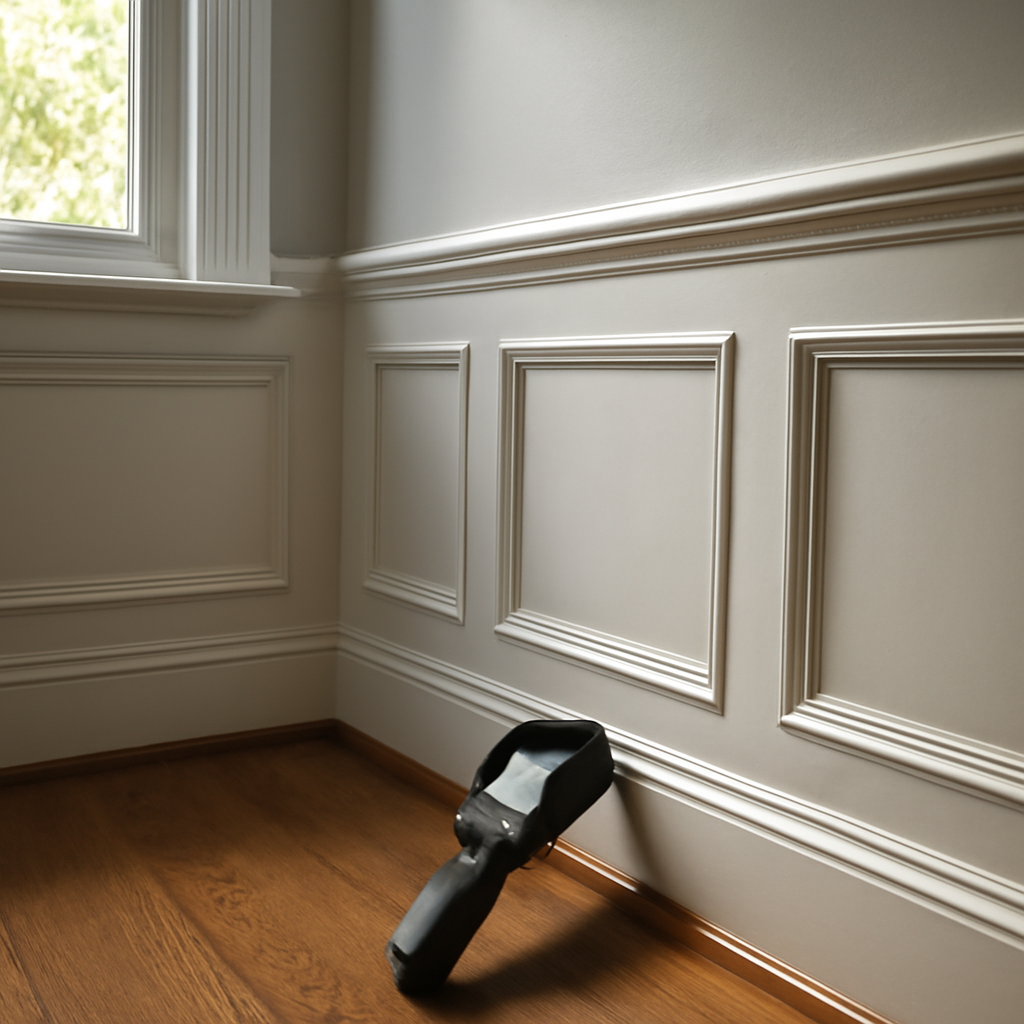
Wainscoting is paneling or trim applied to the lower part of a wall, usually topped with a cap rail at roughly a third of the wall’s height. It started as a practical way to protect plaster from scuffs, chair backs and rising damp, and it remains popular for dining rooms, hallways, mudrooms, stairways and bathrooms. For homeowners and buyers, it raises a few questions beyond style: which material holds up where, how it attaches to the wall, what it might be hiding, and whether old painted panels contain lead. This guide covers the main styles, MDF versus solid wood versus PVC, installing over drywall and studs, caps and baseboards, moisture and mold hidden behind panels, lead paint on older wainscoting, formaldehyde rules for composite wood, painting and maintenance, what a home inspector looks at, and hedged cost ranges.
Part of our Structure & Exterior guide — start there for the full picture →
Wainscoting Styles
The word covers several distinct looks. Each has its own materials, labor and maintenance profile.
Beadboard
Beadboard consists of narrow vertical boards or sheet panels with a raised bead or groove between each strip. It reads as casual and cottage-style and is common in bathrooms, kitchens and porches. It is sold as individual tongue-and-groove boards or as 4-by-8-foot sheets that mimic the look, which are faster to install. The grooves collect dust and can be tedious to paint, but small dents tend to disappear in the pattern.
Raised panel
Raised panel wainscoting is the most formal style: framed panels with beveled edges that stand proud of the surrounding frame, built from stiles and rails. Traditional versions are true frame-and-panel joinery that allows the wood to expand and contract. Many modern products are routed MDF sheets or kits that imitate the look at lower cost. It is typical in dining rooms, libraries and entry halls of older or traditional homes.
Flat panel and shaker style
Flat or recessed panel wainscoting uses the same frame of stiles and rails around a flat center panel. It is simpler and cleaner than raised panel and fits craftsman, transitional and modern interiors. A popular do-it-yourself version applies thin boards directly onto painted drywall to create picture-frame boxes, sometimes called applied molding or box trim.
Board and batten
Board and batten uses flat vertical strips, the battens, spaced evenly over a smooth background panel or wall, often with a horizontal ledger at the top. It gives a bold, graphic look and has become common in mudrooms, nurseries and accent walls. Some versions run nearly to the ceiling. Variations include grid patterns with horizontal battens.
Related paneling
Horizontal plank walls such as shiplap are sometimes grouped with wainscoting when installed on the lower half of a wall. The guide to shiplap covers that style separately, including its own moisture and installation considerations.
Materials: MDF vs Wood vs PVC
Material choice affects cost, durability and how the wainscoting handles moisture. That last factor matters most in bathrooms, laundry rooms and entries where snow and wet boots are part of daily life along the Front Range.
Medium-density fiberboard (MDF)
MDF is an engineered panel made from wood fibers and resin, pressed into dense, smooth sheets. It is stable, machines cleanly and takes paint well, which is why most paint-grade wainscoting kits and panels use it. Its weakness is water. Standard MDF swells and loses strength when edges absorb moisture, and swollen edges rarely return to their original shape. Moisture-resistant MDF grades exist and perform better, but cut edges still need to be sealed and painted. In a bathroom, MDF near a tub, shower or toilet base is a frequent failure point.
Solid wood
Solid wood, often poplar for painted work and oak, cherry or other hardwoods for stained work, is durable, repairable and can be refinished. It moves seasonally with humidity, which is why traditional frame-and-panel construction lets the panel float. Colorado’s dry winter air can open gaps in wood trim that close again in more humid months. Wood costs more than MDF and requires good sealing in wet rooms, but a damaged section can usually be patched or replaced.
PVC and cellular vinyl
PVC panels and boards do not absorb water and will not rot, which makes them a common pick for bathrooms, basements and mudrooms. They can be painted with suitable products, though they expand and contract with temperature more than wood, so installation instructions usually call for specific gaps and fasteners. PVC can look slightly less crisp at joints and costs more per board than MDF.
Other options
Plywood panels, fiberglass-reinforced panels in utility spaces, and tile wainscoting in bathrooms are all used as well. Tile is the most water-tolerant but involves a very different installation over cement board.
Installing Over Studs and Drywall
Most wainscoting today goes over existing drywall. The panels or boards are attached with construction adhesive and finish nails, with nails driven into studs wherever possible for mechanical hold. Finding framing before starting is standard; the guide to the stud finder explains magnetic and electronic tools and the limits on plaster walls. Marking stud lines lightly above the planned cap height makes it easy to hit framing once panels cover the wall.
Key steps in a typical installation include:
- Establish a level reference line. Floors are rarely perfectly level, so installers snap or project a level line for the cap rather than measuring up from the floor at every point. A laser level makes this quick across a whole room.
- Remove baseboards if new baseboard will be installed over the panels, or plan how the panels will die into existing base.
- Check the wall. Bowed walls, bulging drywall seams or soft spots should be addressed before covering them, not after.
- Lay out panels and battens so spacing looks even around windows, outlets and corners.
- Extend electrical boxes where the panel thickness pushes switches and outlets back from the surface. Box extenders keep the device flush and the wiring enclosed.
- Leave expansion gaps where the product requires them, especially with PVC and solid wood.
In older homes with plaster walls, adhesive bond can be weaker on crumbling or painted plaster, and finding studs is harder. Some installers add horizontal furring strips or blocking to give fasteners something to grip.
Caps, Chair Rails and Baseboards
The trim pieces at the top and bottom finish the look and protect the panel edges.
- Cap or chair rail: a molding along the top edge that covers the exposed panel edge and sometimes projects enough to protect the wall from chair backs. Its height is often set around 32 to 36 inches in dining rooms and higher in mudrooms or bathrooms, though proportions vary with ceiling height.
- Baseboard: new base is usually installed over the bottom of the panels so it sits proud of them. In bathrooms, a tight caulk joint between base and floor helps keep mop water and splashes out of panel edges.
- Inside and outside corners: coped or mitered joints keep caps and base tight. Gaps at corners can widen with seasonal movement, especially in very dry winters.
Rooms that also have crown molding benefit from aligning the visual lines of cap, door casings and crown. The guide to crown molding installation cost explains how trim complexity affects labor.
What Wainscoting Can Hide: Stains and Moisture
Paneling the lower part of a wall is an attractive upgrade, but it is also a common way to cover water stains, patched drywall, cracks or damage. Sometimes this is innocent, such as hiding old scuffs; sometimes it covers an unresolved leak. Buyers who see new wainscoting in only one room, or only in a basement or bathroom, have good reason to ask why it was added.
The EPA’s guide to mold and moisture notes that mold may be hidden on the back side of drywall, wallpaper or paneling, and inside walls around leaking or condensing pipes. It also states that the key to mold control is moisture control and that wet materials dried within 24 to 48 hours usually will not grow mold. The same guide cautions that investigating hidden mold can disturb growth and release spores, so opening up a suspect wall calls for care.
Clues that something may be going on behind wainscoting include:
- Swollen, cracked or soft panel edges, especially along the bottom.
- Peeling or bubbling paint on the panels or cap.
- A musty smell in a room with no visible mold.
- Stains on the wall above the cap or on the floor below the baseboard.
- Panels in a basement on an exterior foundation wall, where groundwater and condensation are common.
- Wainscoting near tubs, showers, toilets, washers or water heaters.
A moisture meter can check the panel surface and, through small holes in inconspicuous spots, the drywall behind it. The guide to drywall moisture meters explains how to compare readings with a known dry area. If the wall behind the paneling needs repair, the guide to drywall repair covers patching after the moisture source is fixed. Basement wainscoting on foundation walls deserves extra skepticism, since covering a damp concrete wall with paneling and drywall can trap moisture.
Lead Paint on Old Wainscoting
Original wainscoting in homes built before 1978 may carry layers of lead-based paint under newer coats. The EPA’s Renovation, Repair and Painting program page notes that the federal government banned lead-based paint for residential use in 1978 and that approximately three-quarters of U.S. homes built before 1978 still contain some lead-based paint. It also notes that renovation, repair or painting in a pre-1978 home with lead-based paint can easily create dangerous lead dust, and that surfaces subject to friction, such as doors and window sills, can produce chips and dust.
The RRP rule requires contractors paid to disturb painted surfaces in pre-1978 homes to be certified and to use lead-safe work practices. According to EPA, the rule generally does not apply to homeowners working on their own homes, though it does apply to landlords and to people who buy, renovate and sell homes for profit. Sanding, scraping, heat-gun stripping and prying off old panels are the steps most likely to create dust. Testing the paint before disturbing it is a sensible first move. The guide to 1978 lead paint explains testing options and safer approaches.
Formaldehyde in MDF and Composite Panels
MDF, particleboard and hardwood plywood are made with resins that can release formaldehyde, an indoor air concern. The EPA’s page on formaldehyde emission standards for composite wood products explains that, under TSCA Title VI, hardwood plywood, medium-density fiberboard and particleboard sold, supplied, manufactured or imported in the United States must meet emission standards and, since March 22, 2019, must be labeled as TSCA Title VI compliant. Those requirements extend to finished goods containing these materials.
For a wainscoting project, practical steps include checking for the compliance label on panel stock, sealing and painting all faces and cut edges, and ventilating the room during and after installation. People with asthma or chemical sensitivities may prefer solid wood or PVC.
Painting and Maintaining Wainscoting
Most wainscoting is painted, often with a semi-gloss or satin finish that resists scuffs and wipes clean. Good results depend on preparation: filling nail holes, caulking seams and inside corners, priming MDF edges and bare wood, and using enough coats to cover the grain or profile. Beadboard grooves and raised panel profiles take longer to paint than flat walls, which shows up in labor costs. The guide to interior painting cost explains how trim and detail work affect pricing.
Maintenance is mostly cosmetic: wiping down caps and panels, touching up chips and recaulking joints that open seasonally. In bathrooms, watching the bottom edges and caulk lines is the best early warning of water trouble.
What a Home Inspector Looks At
The ASHI Standard of Practice requires inspectors to inspect walls, ceilings and floors, but it states that inspectors are not required to inspect paint, wallpaper and other finish treatments. It also notes that inspections are not technically exhaustive and are not required to identify concealed conditions. In practice, an inspector is unlikely to comment on wainscoting style or finish, but may report swollen panels, stains, elevated moisture readings or signs of leaks around panel edges, especially in bathrooms and basements. The overview of the home inspection hiring process explains what standard inspections include, and the structure and exterior hub gathers related guides on walls, framing and moisture.
Doing It Yourself vs Hiring a Carpenter
Beadboard sheets, board and batten and applied box molding are among the more approachable trim projects for a handy homeowner with a miter saw, a finish nailer, a level and patience for caulking. The most common do-it-yourself problems are uneven spacing, cap lines that follow a sloping floor instead of staying level, gaps at inside corners and nail holes that show through paint. Raised and true frame-and-panel wainscoting, curved stair walls and installations around many windows and doors usually reward a finish carpenter’s experience.
A professional is also worth considering when the project involves pre-1978 painted surfaces, extending more than a few electrical boxes, or removing existing paneling that may be covering damage. A contractor who opens a wall and finds wet drywall or mold should stop and help identify the moisture source before closing it back up. Asking how the installer plans to handle outlets, out-of-level floors and wet-room edges is a quick way to judge experience.
Wainscoting Costs
Costs vary with style, material, wall condition and local labor. These are general 2026 estimates rather than quotes:
- Beadboard sheets or simple board and batten in MDF: often among the least expensive options, with installed costs commonly in the range of roughly $10 to $30 per square foot of wall.
- Flat panel or applied box molding: frequently somewhat higher due to layout and trim labor.
- Raised panel in MDF or solid wood: may run roughly $25 to $50 or more per square foot installed, with custom hardwood frame-and-panel work at the high end.
- PVC panels: material often costs more than MDF, with installed pricing that varies by product.
- Extras: electrical box extensions, baseboard replacement, wall repairs, lead-safe work practices in pre-1978 homes and painting can all add meaningfully.
Getting more than one written quote that spells out material, finish and wall prep is the best way to compare.
More Questions About Wainscoting
Can wainscoting be used in a bathroom?
Yes, wainscoting works well in bathrooms if the material and finish suit the moisture. PVC or cellular vinyl panels are often the safest choice near tubs and toilets because they do not swell or rot. Painted solid wood can also work with good sealing.
Standard MDF can swell if water reaches its edges, so it needs a moisture-resistant grade and well-sealed cuts. Keep wainscoting out of direct shower spray, caulk the joints at floors and tubs, and run the bathroom exhaust fan to control humidity.
Does wainscoting add value to a home?
Wainscoting can add visual appeal and help a home show well, but it rarely adds a measurable amount to the sale price on its own. Buyers often notice it as a quality detail in dining rooms, entries and hallways.
Well-proportioned, cleanly installed wainscoting tends to help, while poorly fitted panels, gaps or peeling paint can make a room look dated. In practical spaces such as mudrooms and hallways, it also protects walls from scuffs, which keeps the home in better condition for a future sale.
How long does it take to install wainscoting?
A typical room of wainscoting takes an experienced carpenter about one to two days, while many DIY installers need a full weekend or more. Beadboard sheets go up fastest, and frame-and-panel styles with many pieces take the longest.
Preparation adds time: removing baseboards, locating studs, marking a level line and dealing with uneven floors. Caulking, filling nail holes, priming and painting often take another day, especially with drying time between coats. Rooms with many windows, outlets or corners require more cutting and fitting.
Can wainscoting be installed over uneven or plaster walls?
Yes, wainscoting can go over uneven or plaster walls, but it takes more preparation. Wavy walls can create gaps behind panels and at caps, so installers often shim, use construction adhesive generously, or apply a thin backer before the visible pieces.
Plaster can crack when nailed, so pre-drilling and longer nails or screws into studs or lath help. In homes built before 1978, painted plaster may contain lead, so drilling and sanding should follow lead-safe work practices. Flexible caulk along the top cap hides small irregularities.
References
- A Brief Guide to Mold, Moisture and Your Home — U.S. Environmental Protection Agency
- Lead Renovation, Repair and Painting Program — U.S. Environmental Protection Agency
- Formaldehyde Emission Standards for Composite Wood Products — U.S. Environmental Protection Agency
- ASHI Standard of Practice for Home Inspections — American Society of Home Inspectors
Frequently asked questions
What is the best wainscoting material for a bathroom?
PVC panels resist water and will not rot, which makes them a common bathroom choice. Moisture-resistant MDF and sealed solid wood can also work if all edges are primed and painted and caulk lines are maintained, but standard MDF tends to swell near tubs, showers and toilets.
Can wainscoting hide mold or water damage?
Yes. The EPA notes that mold can hide on the back side of drywall, wallpaper and paneling. Swollen panel edges, peeling paint, musty odors or stains near the cap or baseboard are reasons to check moisture before assuming the wall is sound.
Is old wainscoting likely to have lead paint?
Painted wainscoting in homes built before 1978 may contain lead-based paint under newer coats. Testing before sanding, scraping or removing it is recommended, and contractors paid to disturb it must follow EPA's RRP lead-safe rules.
Does MDF wainscoting release formaldehyde?
MDF is made with resins that can emit formaldehyde. Under TSCA Title VI, MDF sold in the United States must meet emission standards and carry a compliance label. Sealing all surfaces and ventilating during installation can further reduce emissions.
How much does wainscoting cost?
General 2026 estimates suggest simple beadboard or board and batten may cost roughly $10 to $30 per square foot installed, while raised panel and custom hardwood work can run higher. Wall repairs, electrical changes and painting add to the total.
Can wainscoting be used to cover damaged drywall?
Wainscoting can cover cosmetic drywall damage such as dents, scuffs and old patches on the lower wall. It should not hide water damage, mold or active leaks. Find and fix any moisture problem first, and replace soft or stained drywall before panels go up.
Is wainscoting outdated?
Wainscoting is not considered outdated, though styles change. Simple flat-panel, shaker and board-and-batten designs are widely used in current homes, while heavily ornate raised panels suit traditional houses. Proportion, paint color and clean installation affect how modern it looks more than the idea of wainscoting itself.
Should wainscoting be glued, nailed or both?
Most wainscoting is installed with both construction adhesive and finish nails, with nails into studs where possible. Adhesive holds panels flat between studs, and nails keep pieces in position while the adhesive cures. Some PVC products specify particular adhesives, so follow the manufacturer's instructions.
Fresh wainscoting in a basement or bathroom of a home you are considering? Contact us and we can put you in touch with a Front Range inspector who can check for moisture and other issues hiding behind new finishes.