Vessel Sinks: Faucet Height, Splashing and Countertop Fit
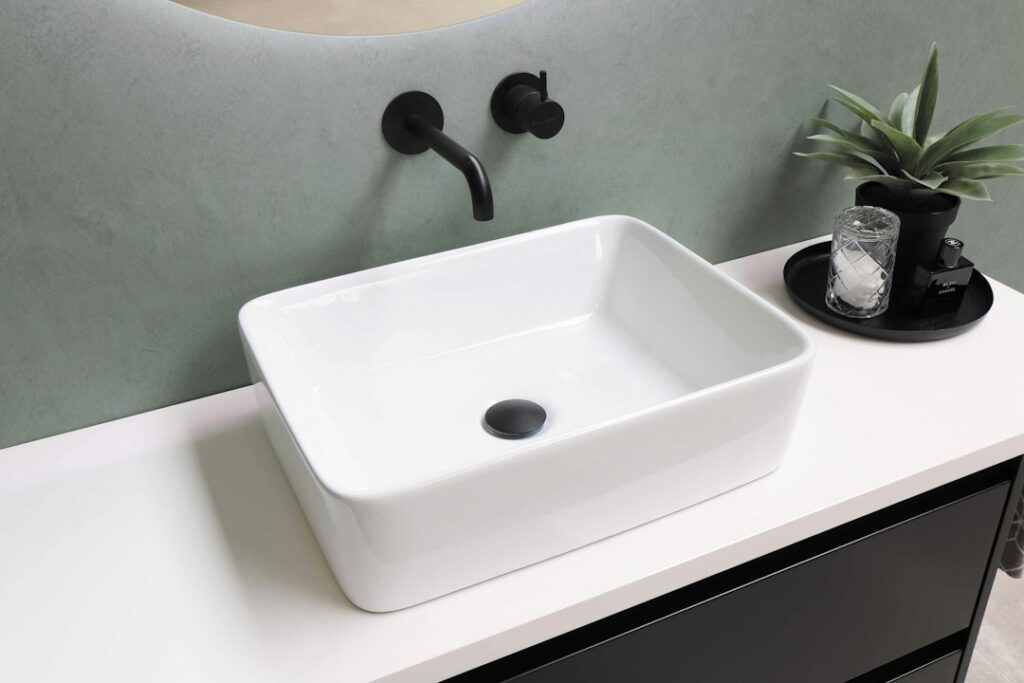
A vessel sink is a bowl that sits on top of the counter rather than dropping into it. Glass, stone, copper, ceramic and concrete versions show up in remodeled bathrooms, boutique hotels and design magazines, and the look can be striking. The practical details are less glamorous. Because the rim sits several inches above the counter, the faucet has to be taller or wall-mounted, and the spout has to reach the right point in the bowl. Get either wrong and water splashes onto the counter with every use. Many vessels have no overflow, which changes the drain hardware. And the joint where the bowl meets the counter is a place water can sit and soak in. This guide covers how a vessel sink works, faucet height and reach, splashing, drains without overflows, counter height, countertop sealing and water damage, what inspectors look for and typical costs.
Part of our Plumbing & Water guide — start there for the full picture →
How a Vessel Sink Differs From Other Bathroom Sinks
Most bathroom sinks are recessed: drop-in sinks rest on the counter with a rim around the edge, undermount sinks are attached below the counter, and integrated sinks are molded into the top. In each case, the basin sits mostly below the counter surface. A vessel sink reverses that. The bowl sits on the counter, often with only a small drain hole cut through it, and anywhere from a few inches to most of its height above the surface.
That changes several things at once:
- Usable height. The working rim is higher than with a recessed sink, which affects the right vanity height.
- Faucet type. Standard deck faucets are usually too short. A tall vessel faucet or a wall-mounted faucet is typically required.
- Drain hardware. Many vessels have no overflow, so a drain designed for no-overflow bowls is used.
- Mounting. Some vessels sit directly on the counter with a mounting ring and sealant; others are partly recessed into the counter, called semi-recessed or above-counter.
- Cleaning. The outside of the bowl and the joint at the counter need cleaning, which is not the case with an undermount sink.
For a comparison, see our guide to undermount sink installation, which covers the opposite approach and its own sealing issues.
Faucet Height, Reach and Splashing
The single most common vessel sink complaint is splashing. Water hits the bottom of a shallow bowl and sprays onto the counter, the mirror and the user. Most of the time, the cause is a mismatch between faucet height, spout reach and bowl shape.
Height
The spout outlet should sit above the bowl rim with some clearance so hands fit underneath, but not so far above the bowl that water falls a long way and splashes. Many manufacturers suggest a modest clearance above the rim, with the exact recommendation varying by product. A faucet that is too tall makes water fall too far; one that is too short leaves no room to wash or may not clear the rim at all.
Reach
Spout reach, the horizontal distance from the faucet body to the outlet, needs to bring the stream close to the drain, often roughly over the center of the bowl or slightly toward the back. A short-reach spout on a wide bowl aims water at the back slope, where it splashes forward. A long-reach spout on a small bowl can aim water past the drain toward the front rim.
Bowl shape and depth
Shallow, flat-bottomed bowls splash more than deep, rounded bowls. Very shallow glass or stone vessels can look elegant but are often the least practical for daily handwashing. A deeper bowl gives water room to slow down.
Flow rate
Higher flow tends to splash more. According to EPA, WaterSense-labeled bathroom sink faucets and accessories such as aerators use a maximum of 1.5 gallons per minute and can reduce a sink’s flow by 30 percent or more from the standard 2.2 gallons per minute. A labeled aerator can be a simple change on a faucet that splashes, as long as the faucet accepts it.
Wall-mounted faucets
A wall-mounted faucet frees the counter and can be positioned precisely over the bowl, but it requires valves and piping inside the wall at the right height. That is straightforward in a remodel with open walls and complicated in a finished bathroom. Our bathroom faucet replacement guide covers matching faucets to sinks and what changes when the valve is in the wall.
Vanity and Counter Height
A vessel sink adds its own height to the counter. With a standard-height vanity, the rim of a tall vessel can end up uncomfortably high for many adults and difficult for children. Designers often pair vessel sinks with lower vanities or choose low-profile vessels so the rim lands near a comfortable working height. The right choice depends on the household and the specific bowl.
For the same reason, retrofitting a vessel onto an existing vanity can create an ergonomically awkward sink. Our guide to vanity installation discusses vanity heights, wall anchoring and plumbing layout, which all interact with a vessel choice.
Stability
Vessels are typically secured with a mounting ring and the drain assembly, which clamps the bowl to the counter, and often a bead of sealant. A bowl that rotates or shifts when bumped can loosen the drain seal and leak. Heavier stone and concrete vessels need a counter and vanity that can carry their weight.
Drains Without Overflows
Most recessed bathroom sinks have an overflow, a hole near the rim connected by a channel to the drain, which provides a path for water if the sink is left running with the stopper closed, and lets air in to help draining. Many vessel sinks do not have one.
That has a few consequences:
- Drain type. A sink without an overflow typically uses a drain body without overflow slots. Using a slotted drain on a bowl without an overflow can let water escape through the slots into the area around the drain.
- Stopper choice. Many vessel drains are always-open grid drains or push-to-close pop-ups. With no overflow, a closed stopper and a running faucet will fill the bowl to the rim and spill.
- Drainage speed. Without an overflow to let air in, some installations drain more slowly. A properly sized drain and trap help.
The trap and drain arm below the counter follow the same rules as any bathroom sink: a correctly sized P-trap that keeps a water seal and slopes to the drain line. Our guides to the P-trap and the bathroom sink drain assembly explain the parts and common leak points.
Vessel Materials and How They Wear
The bowl material affects weight, durability, cleaning and how the sink ages. Each common option has its own trade-offs.
Vitreous china and ceramic
The most common vessel material and generally the easiest to live with. Glazed ceramic resists stains and cleans easily, though it can chip if struck by a heavy object. Replacement is usually simple because standard drain sizes and shapes are common.
Tempered glass
Glass vessels are popular for their look, and tempered glass is designed to resist breakage, but water spots, soap film and mineral deposits show clearly. In areas with hard water, glass vessels may need frequent wiping to stay clear. Water hardness varies across Front Range utilities and private wells, and a simple water hardness test can show whether mineral spotting is likely to be a constant chore before choosing a clear glass bowl. A chip at the rim or drain hole can weaken the bowl, and tempered glass that does fail tends to break into many small pieces.
Natural stone
Marble, granite, travertine and onyx vessels are heavy and distinctive. Many stones are porous to some degree and may need sealing; marble and travertine can etch from acidic cleaners and some soaps. Their weight places more demand on the counter and vanity.
Copper and other metals
Hammered copper vessels develop a patina over time, which many owners like and some do not. Harsh cleaners can strip the finish, and some coatings wear unevenly. Copper is lighter than stone but can dent.
Concrete and composite
Cast concrete vessels are heavy and need sealing to resist staining and water absorption. Hairline cracks can develop. Composite and resin bowls are lighter and less porous but can scratch.
Whatever the material, the drain hole size and bowl thickness have to match the drain assembly and mounting ring. Very thick stone bowls may need a drain with a longer tailpiece or threaded body than standard models provide.
Countertop Sealing and Water Damage
Vessel sinks put more water on the counter than many recessed sinks. Splashes land around the bowl, water drips off hands moving between the sink and a towel, and the joint where the bowl meets the counter is a place water can collect.
The bowl-to-counter joint
Where the vessel sits on the counter, there is usually a mounting ring or a bead of sealant. If that seal fails, water can travel along the drain hole into the counter substrate and the vanity cabinet below. A drain assembly that is not tight against the bowl and counter can do the same.
Countertop materials
- Natural stone. Granite, marble and other stones vary in porosity. Many benefit from periodic sealing, and marble in particular can etch and stain with repeated water and soap exposure.
- Quartz and solid surface. Generally non-porous and tolerant of standing water, though seams and the substrate below still matter.
- Wood. Wood counters with vessel sinks are popular in rustic and modern designs. They need a durable finish, maintained over time, because unsealed or worn spots near the bowl absorb water, swell and can grow mold.
- Laminate. The surface resists water, but the particleboard core swells badly if water gets through the drain hole cutout or seams.
- Concrete. Needs sealing and resealing; it is porous without it.
Water damage and mold
Repeated splashing and slow leaks at the drain can damage the vanity cabinet, the counter substrate and sometimes the floor and wall behind. The EPA states that the key to mold control is moisture control, and that drying wet materials within 24 to 48 hours will in most cases prevent mold growth. A vanity interior that stays damp from a slow drain leak does not get that chance. EPA’s mold cleanup guidance says that for areas of mold under about 10 square feet, homeowners can often handle cleanup themselves, while larger areas or significant water damage call for more extensive guidance and often professional help. In every case, fixing the source of water comes first.
Warning signs inside the vanity include swollen cabinet floors, staining around the drain, a musty odor and peeling laminate. Outside, look for stained grout or caulk around the vanity base and soft flooring.
What Inspectors Look For
Under the ASHI Standard of Practice, inspectors inspect interior water supply and distribution systems, including fixtures and faucets, and interior drain, waste and vent systems, including fixtures. The interior section also lists countertops and a representative number of installed cabinets. For a vessel sink, an inspector will typically:
- Run water and observe drainage and splashing.
- Check for leaks at the drain, trap and supply connections inside the vanity.
- Note a loose or rotating bowl or faucet.
- Look at the vanity floor and walls for water damage or staining.
- Note deteriorated sealant at the bowl and backsplash.
- Check that shutoff valves are present.
Inspections are visual and do not include disassembly. A slow leak that only appears when the bowl is filled and drained repeatedly may not show during a short test. For more on what to expect, see our home inspector selection guide and the plumbing and water hub.
Vessel Sink Costs
Prices vary widely with materials and design. All figures are general 2026 ranges for planning, not quotes.
The bowl
Basic ceramic and tempered glass vessel sinks can be among the more affordable sink options, sometimes under a couple hundred dollars. Natural stone, hammered copper, handmade ceramic and cast concrete bowls range much higher, into many hundreds or more.
The faucet and drain
Vessel faucets are taller and sometimes cost more than comparable standard faucets. Wall-mounted faucets require a rough-in valve as well. A no-overflow drain and mounting ring add a modest amount.
Installation
Installing a vessel on a counter already cut for one, with a deck-mounted faucet and existing plumbing, is often a few hours of plumber labor, commonly in the low to mid hundreds of dollars. Converting from a recessed sink usually means a new counter or at least new cutouts, possibly a lower vanity, and sometimes moving the drain. Adding a wall-mounted faucet in a finished bathroom involves opening the wall, plumbing new supply lines and patching tile or drywall, which can bring the project into the low thousands.
Repairs
Resealing a vessel and tightening a drain is typically a short service call. Repairing water damage to a vanity, counter substrate or subfloor varies from minor to substantial, and replacing a damaged vanity and top is a larger project.
Practical Tips for Living With a Vessel Sink
- Match faucet and bowl. Check the manufacturer’s recommended spout height and reach for the bowl.
- Choose depth over drama. A deeper bowl splashes less than a shallow, flat dish.
- Consider a lower-flow aerator. A WaterSense-labeled aerator may reduce splashing and water use.
- Keep the joint sealed. Inspect and renew sealant around the bowl and backsplash.
- Seal porous counters. Follow the counter fabricator’s guidance for stone, wood and concrete.
- Check under the vanity. A quick look every few months with a flashlight catches slow drain leaks early.
- Avoid closing the stopper and walking away. Without an overflow, the bowl will fill to the rim.
A well-planned vessel installation can be both striking and practical. Most of the trouble comes from mismatched parts and a counter that is not ready for regular splashing.
References
- WaterSense Bathroom Sink Faucets — U.S. Environmental Protection Agency
- A Brief Guide to Mold, Moisture and Your Home — U.S. Environmental Protection Agency
- Mold Cleanup in Your Home — U.S. Environmental Protection Agency
- ASHI Standard of Practice for Home Inspections — American Society of Home Inspectors
Frequently asked questions
Why does my vessel sink splash so much?
Usually the faucet is too tall, the spout reach does not bring water near the drain, the bowl is shallow, or the flow is high. Matching spout height and reach to the bowl and using a lower-flow aerator often helps.
Do vessel sinks need a special faucet?
Typically yes. Standard deck faucets are usually too short to clear the bowl rim. A tall vessel faucet or a wall-mounted faucet is used, positioned so the stream lands near the drain.
What drain do I need for a vessel sink without an overflow?
A drain body made for sinks without an overflow, often a grid drain or a pop-up without overflow slots. Using a slotted drain on a no-overflow bowl can allow water to leak around the drain.
Can a vessel sink damage the countertop?
It can if the bowl-to-counter seal fails, the drain leaks or splashes repeatedly soak a porous counter. Sealing stone, wood and concrete counters and maintaining the joint helps prevent water damage.
How much does it cost to install a vessel sink?
Setting a vessel on a counter already prepared for one is often a few hours of plumber labor in the low to mid hundreds. New counters, lower vanities or wall-mounted faucets can push the total into the low thousands. These are general 2026 ranges.
Planning to buy a home with a remodeled bathroom and wondering about the work behind the finishes? Reach out and we can connect you with a vetted Front Range inspector.