Toilet Seat Replacement: Sizing, Bolts, and Soft-Close Seats
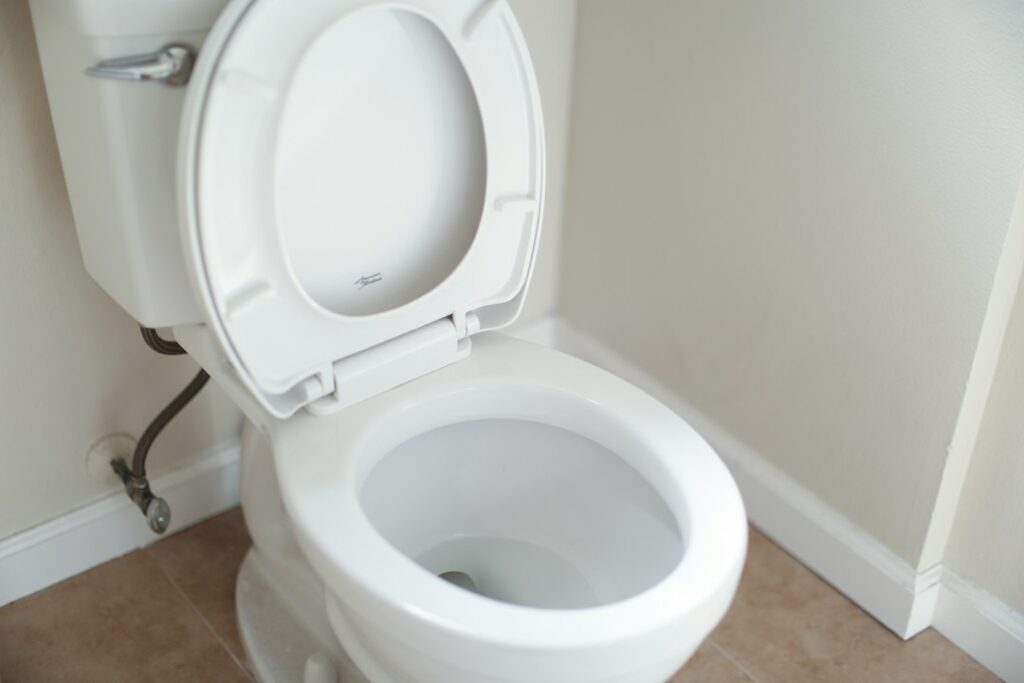
Swapping a toilet seat is one of the simplest jobs in a house, and also one of the easiest to get slightly wrong. The new seat overhangs the bowl, the lid will not stay up against the tank, the hinge bolts spin in place, or the seat keeps sliding sideways a week after it was tightened. Most of those problems trace back to three things: the bowl shape, the hinge hardware and the condition of the old bolts. A good toilet seat replacement starts with a tape measure, not a shopping trip. This guide covers how to size a seat, the difference between top-mount and bottom-mount hardware, quick-release and soft-close hinges, how to deal with corroded bolts, and how to tell a loose seat from a loose toilet, which is a very different problem. It also touches on raised and accessible seats, electric bidet seats, cleaning and what a home inspector does and does not look at.
Part of our Plumbing & Water guide — start there for the full picture →
Plumbing problem? Talk to a local plumber now.
📞 Call (877) 637-1527Measure Before You Buy: Round, Elongated and Bolt Spacing
Residential toilet bowls in North America come in two common shapes, and seats are not interchangeable between them.
- Round bowls are more compact and common in older homes, powder rooms and tight bathrooms. Measured from the center of the hinge bolt holes to the front outside edge of the rim, a round bowl is typically around 16 to 17 inches long.
- Elongated bowls are longer and oval, typically around 18 to 19 inches from bolt holes to front rim. Many people find them more comfortable, and they are common in newer construction and accessible fixtures.
Three measurements settle the question:
- Length: from the center point between the two bolt holes to the front outer edge of the bowl rim.
- Width: across the widest part of the bowl, outside edge to outside edge.
- Bolt spacing: center to center between the two mounting holes. A spacing of about 5.5 inches is the common standard, but some European, wall-hung, one-piece and designer toilets use different spacing or proprietary hinges.
Note the shape of the bowl as well. Some one-piece and skirted toilets have a contoured rim or a tank that sits close to the bolt holes, which limits how far back a lid can open. Seats sold as “universal” usually mean they fit standard round or elongated bowls with standard bolt spacing, not every toilet ever made. If the manufacturer and model number are printed inside the tank or behind the seat, checking the maker’s specified replacement seat removes most of the guesswork.
Seat materials
Most residential seats are either molded wood (wood composite with a painted or enameled finish) or plastic, usually polypropylene or a similar thermoplastic. Molded wood feels heavier and more solid but can chip and absorb moisture at damaged spots. Plastic seats resist staining and chipping and are lighter. Neither is inherently better, and comfort, finish and hinge quality usually matter more than material in day-to-day use.
Hinge Hardware: Top-Mount, Bottom-Mount, Quick-Release and Soft-Close
The hinge hardware is where most of the frustration in a seat swap lives. It helps to know which kind you have before you start pulling things apart.
Bottom-mount (traditional) hardware
The classic arrangement uses two bolts that drop through the hinge posts and the bowl holes, with nuts threaded on from underneath the rim. Bolts are usually plastic or metal, and the nuts are often wing nuts or hex nuts. Access is the drawback: the nuts sit in a cramped space behind the bowl, often close to the tank, and on older toilets they can be fused with corrosion and mineral scale.
Top-mount hardware
Top-mount systems are designed for toilets where the underside of the bolt holes cannot be reached, such as one-piece, skirted and many wall-hung models. An expanding anchor or rubber well nut sits inside the bowl hole, and tightening a bolt from above expands it to lock the hinge in place. Top-mount hardware is convenient on any toilet, but the anchors must be the right size for the hole, or the seat will shift.
Quick-release hinges
Many current seats have hinges that let the seat and lid lift off the mounting posts with a button press or a firm pull. The fixed posts stay bolted to the bowl. That makes cleaning around the hinges, which is where grime collects, far easier. The trade-off is a little play in some designs; a quick-release seat that rattles usually needs its post bolts tightened, not replacing.
Soft-close hinges
Soft-close or slow-close hinges use a damper to lower the seat and lid gently instead of letting them slam. They reduce noise and chipped seats, and they are popular in homes with children. A few things to know:
- Never push a soft-close lid down; forcing it can damage the damper.
- Dampers wear out over time. When a seat starts dropping fast, some manufacturers sell replacement hinges, but on inexpensive seats replacement of the whole seat is often simpler.
- Soft-close lids need enough clearance to rest against the tank or stay upright. Low-profile tanks and contoured one-piece toilets sometimes prevent the lid from staying up.
How to Replace a Toilet Seat, Step by Step
With the correct seat in hand, the job typically takes 15 to 30 minutes when the old bolts cooperate.
- Clean first. Wear gloves and clean the seat, hinge area and rim before loosening anything. It makes the job more pleasant and lets you see the bolt heads and hinge covers.
- Open the hinge covers. Most bolt heads hide under plastic caps that flip up or pry open with a flat screwdriver.
- Hold the nut, turn the bolt. With bottom-mount hardware, hold the nut underneath with a wrench or pliers while turning the bolt from the top. With top-mount hardware, unscrew the bolt and lift the anchor out.
- Clean the bowl holes and the rim behind them. This area rarely gets cleaned, and buildup there can prevent the new hinges from sitting flat.
- Position the new hinge posts. Set the posts over the holes and adjust them so the seat front lines up with the bowl front. Many seats have slotted posts that allow a little forward-back adjustment.
- Tighten evenly, and only snug. Plastic bolts and porcelain both crack under too much force. Tighten hand-tight plus a little more, alternate sides and check alignment again.
- Check operation. Raise and lower the seat and lid several times. The lid should stay upright or rest against the tank without straining the hinges.
Stuck, spinning or corroded bolts
Old metal bolts are the main reason a five-minute job turns into an hour. Common approaches include:
- Penetrating oil: apply it to the threads, wait, and try again. Several applications may be needed on badly rusted hardware.
- Holding the bolt: if the bolt spins when the nut is turned, a screwdriver in the slotted head or locking pliers on the bolt can hold it still.
- Cutting: a hacksaw blade or an oscillating multi-tool can cut the bolt between the hinge and the bowl. Protect the porcelain with painter’s tape or a piece of cardboard, because a slipped blade will scratch or chip it.
- Plastic bolts: plastic hardware rarely corrodes, but it can strip or snap. Snapped plastic bolts usually cut out easily.
Avoid prying against the porcelain with a screwdriver or hammering the hinge, since vitreous china can crack. A cracked bowl means a new toilet, which turns a cheap fix into a much larger job.
A Loose Seat or a Loose Toilet?
A seat that slides sideways or rattles is a hardware problem. A toilet that rocks is a foundation problem, and the two should not be confused. Sit on the closed lid and shift your weight side to side. If the whole bowl moves on the floor, tightening the seat bolts will not help.
A rocking toilet usually points to one of a few causes:
- An uneven floor. On tile or older subfloors, the bowl may not bear evenly. Plastic toilet shims can stabilize it, but shims only help when the seal underneath is still intact.
- A failed wax seal. Once a toilet rocks, the seal between the horn and the drain can be compressed and broken. Our guide to the toilet wax ring covers the signs, including odors, staining and soft flooring at the base.
- A damaged or loose flange. The floor flange is what the closet bolts anchor to. A broken, corroded or low flange can let the toilet move no matter how carefully it is shimmed. See the toilet flange guide for repair options.
Water at the base of the toilet, a sewer odor or soft flooring around it deserve prompt attention. EPA’s guidance on mold and moisture says the key to mold control is moisture control, and that wet or damp materials dried within 24 to 48 hours after a leak in most cases will not grow mold. A slow leak under a toilet is rarely visible until the subfloor is damaged.
Don’t confuse the seat bolts or the closet bolts with the bolts that hold the tank to the bowl, either. Leaks or wobble between tank and bowl are a separate repair covered in our toilet tank bolts guide.
Accessible, Raised and Bidet Seats
Raised and accessibility seats
For someone recovering from hip or knee surgery, or living with limited mobility, a higher seat can make a real difference. Options range from clamp-on and bolt-on raised seats to seats with integrated arms, and to replacing the whole toilet with a taller “comfort height” bowl. Each has trade-offs in stability, cleaning and appearance. A clamp-on seat should be checked regularly to make sure it has not loosened. Our raised toilet seat guide compares the types in more detail.
Electric and non-electric bidet seats
Bidet seats replace the standard seat and are among the most popular bathroom upgrades. They bring two extra connections:
- Water supply. A tee fitting is installed at the toilet’s shutoff valve so the supply feeds both the tank and the bidet. The shutoff valve should be in good condition before the work starts; old multi-turn valves often seep or fail to close completely when disturbed.
- Electrical power. Electric bidet seats with heated water, warm seats or dryers need a receptacle near the toilet. A receptacle in a bathroom is generally expected to be GFCI-protected, and an extension cord is not a substitute for a properly installed outlet. Adding a receptacle is a job for a licensed electrician, and local permit rules apply.
Non-electric bidet attachments and seats skip the power requirement but still need the supply tee. Our bidet installation guide covers sizing, fittings and power options.
Cleaning, Germs and Seat Care
Hinges collect the most grime, which is the main practical reason many people like quick-release seats. Regular cleaning of the hinge area and the underside of the seat helps, using a cleaner suitable for the seat material. Abrasive pads and harsh solvents can dull finishes and damage plastic or painted wood surfaces, so check the seat manufacturer’s care instructions. Antimicrobial seat finishes are widely marketed; treat them as a supplement to cleaning, not a replacement for it. Hand washing after using and cleaning a toilet remains the basic hygiene habit that matters most.
Chipped enamel on a wood seat or cracks in a plastic one are reasonable reasons to replace a seat, because damaged surfaces are harder to keep clean.
Other Toilet Problems That Are Not the Seat
A seat swap is often the moment homeowners notice other issues. A few are worth checking while you are there:
- A running or refilling tank. EPA’s WaterSense program says most toilet leaks are due to old or worn-out flappers, and its Fix a Leak Week page suggests a few drops of food coloring in the tank: if color shows in the bowl within about 10 minutes, the toilet is leaking. Our toilet flapper guide covers replacement, and a tank that hisses or refills slowly may need a new toilet fill valve.
- Slow or partial flushing. A weak flush or repeated clogs are not seat problems. See the clogged toilet guide for safe ways to clear a blockage and signs of a deeper drain problem.
- An old, high-volume toilet. EPA WaterSense notes that toilets account for nearly 30 percent of an average home’s indoor water use and that older, inefficient toilets can use as much as 6 gallons per flush. WaterSense labeled toilets use 1.28 gallons per flush or less. If the toilet is old, the seat replacement budget might be better spent on a new, efficient toilet that comes with its own seat, and some utilities offer rebates.
What Toilet Seat Replacement Costs
Costs vary widely by seat type, region and whether the old hardware cooperates. These are general 2026 ranges for the Front Range, not quotes:
- Basic plastic or molded wood seat: often roughly $20 to $50 at retail.
- Soft-close, quick-release or premium-finish seat: commonly somewhere around $35 to $100 or more.
- Raised or accessibility seat: often roughly $30 to $150, depending on arms, height and mounting.
- Non-electric bidet attachment or seat: frequently in the tens to low hundreds of dollars.
- Electric bidet seat: often several hundred dollars, sometimes more, plus the cost of a new GFCI-protected receptacle if one is needed.
- Professional labor: a handyman or plumber may charge a minimum service call, often in the range of about $75 to $200, for a simple swap. Cutting seized bolts or installing a bidet supply tee can add time. Electrical work for a bidet outlet is a separate trade and cost.
When a rocking toilet turns out to need a new wax ring or flange repair, expect a plumber’s bill well above a simple seat swap, and more if subfloor damage is found under the toilet.
What a home inspector checks
Under the ASHI Standard of Practice, the plumbing portion of a home inspection includes interior water supply and distribution systems, including fixtures and faucets, and interior drain, waste and vent systems, including fixtures. In practice, inspectors typically flush toilets, watch the tank refill and check whether the bowl is secure to the floor. A loose seat might be noted as a minor item, while a rocking toilet, a running tank, staining at the base or soft flooring is usually written up with a recommendation for a plumber. Inspectors are not required to take toilets apart, and the ASHI standard specifically says they are not required to fill shower pans and fixtures to test for leaks. Our plumbing and water inspection section explains what else falls within scope, and the main guide to hiring a home inspector covers how to choose one.
More Questions About Toilet Seat Replacement
How often should a toilet seat be replaced?
A toilet seat usually needs replacing every five to ten years, or sooner when it cracks, the hinges break, or the finish wears through. Plastic seats often outlast painted molded-wood seats, which can chip and let moisture into the wood core.
Signs a toilet seat is due for replacement include stubborn stains, a hinge that will not stay tight, a soft-close mechanism that slams, and cracks that pinch skin. Replacing the seat is also an easy upgrade when moving into a home, since it is one of the cheapest bathroom fixes.
Is a plastic or wood toilet seat better?
A plastic toilet seat is usually better for durability and easy cleaning, while a molded-wood seat feels warmer and more solid. Plastic seats are nonporous, resist stains and do not chip, which makes them a common choice for busy family bathrooms.
Molded-wood seats are made from wood fibers and resin under a painted or enameled finish. They are heavier and less likely to shift, but the finish can chip, and once it does, moisture can swell the core. Solid-wood seats need more care in humid rooms. Choose by bathroom use, not just looks.
Will any toilet seat fit any toilet?
No, a toilet seat must match the bowl shape and the bolt spacing. Most North American toilets are either round, about 16.5 inches from the bolt holes to the front of the bowl, or elongated, about 18.5 inches. Standard bolt spacing is about 5.5 inches center to center.
One-piece and designer toilets sometimes use a proprietary shape or a skirted bowl that only fits the manufacturer’s seat. Measure the bowl length and width plus the bolt spacing, and check the toilet model before ordering, especially for European-style or high-end fixtures.
How do you stop a toilet seat from squeaking?
A squeaking toilet seat usually comes from loose hinge bolts or dry plastic hinges rubbing together. Tighten the hinge nuts first, holding the bolt head steady from above while turning the nut beneath, without cranking hard enough to crack the bowl.
If the squeak continues, a small amount of silicone lubricant on the hinge pivot points usually quiets it. Avoid petroleum-based oils on plastic hinges, since they can attract dirt and may degrade some plastics. A worn soft-close hinge that squeaks or slams usually needs a replacement hinge kit or a new seat.
References
- Residential Toilets — U.S. Environmental Protection Agency, WaterSense
- Fix a Leak Week — U.S. Environmental Protection Agency, WaterSense
- A Brief Guide to Mold, Moisture and Your Home — U.S. Environmental Protection Agency
- Standard of Practice — American Society of Home Inspectors
Frequently asked questions
How can you tell whether a toilet needs a round or elongated seat?
Measure from the center between the two bolt holes to the front outer edge of the bowl. Round bowls typically measure around 16 to 17 inches, and elongated bowls around 18 to 19 inches. Also confirm the bolt spacing, which is commonly about 5.5 inches.
Why does my new toilet seat keep sliding sideways?
The bolts are usually loose, the anchors are the wrong size for the holes, or the hinge posts are not seated flat. Tighten the bolts evenly and snugly, add the rubber washers supplied with the seat and check for buildup under the hinges.
My seat is tight but the toilet still rocks. What does that mean?
A rocking bowl is a floor, wax ring or flange problem, not a seat problem. Continued rocking can break the wax seal and cause hidden leaks, so have a plumber check the flange and seal.
Do electric bidet seats need a special outlet?
They need a receptacle near the toilet, and bathroom receptacles are generally expected to have GFCI protection. Avoid extension cords, and have a licensed electrician add an outlet if none is available.
How much does toilet seat replacement cost?
A basic seat often costs roughly $20 to $50 and soft-close models more, while electric bidet seats can run several hundred dollars. Hiring someone usually adds a minimum service charge. These are general 2026 ranges.
Are soft-close toilet seats worth it?
Soft-close toilet seats are usually worth the small extra cost in homes with children or light sleepers, since the hinge lowers the seat and lid slowly instead of letting them slam. The damped hinges can wear out over years, but many seats offer replacement hinge kits or quick-release hardware for cleaning.
Can a toilet seat be replaced without removing the toilet?
Yes, a toilet seat is always replaced with the toilet left in place. The seat attaches with two hinge bolts through holes at the back of the bowl, secured from above on top-mount seats or with nuts beneath the bowl on bottom-mount seats. No water shutoff is needed.
What is a slow-close toilet seat versus a quick-release seat?
A slow-close toilet seat uses damped hinges that lower the lid gently, while a quick-release toilet seat lifts off its hinge posts for cleaning without tools. Many modern seats combine both features. Quick-release hinges make it easier to clean the area around the bolts, where grime tends to collect.
Buying a home and not sure whether a wobbly toilet is a loose seat or a failing seal? Reach out to us to connect with a Front Range inspector who checks every fixture.