Mold Damage Mitigation: A Combined Restoration Guide
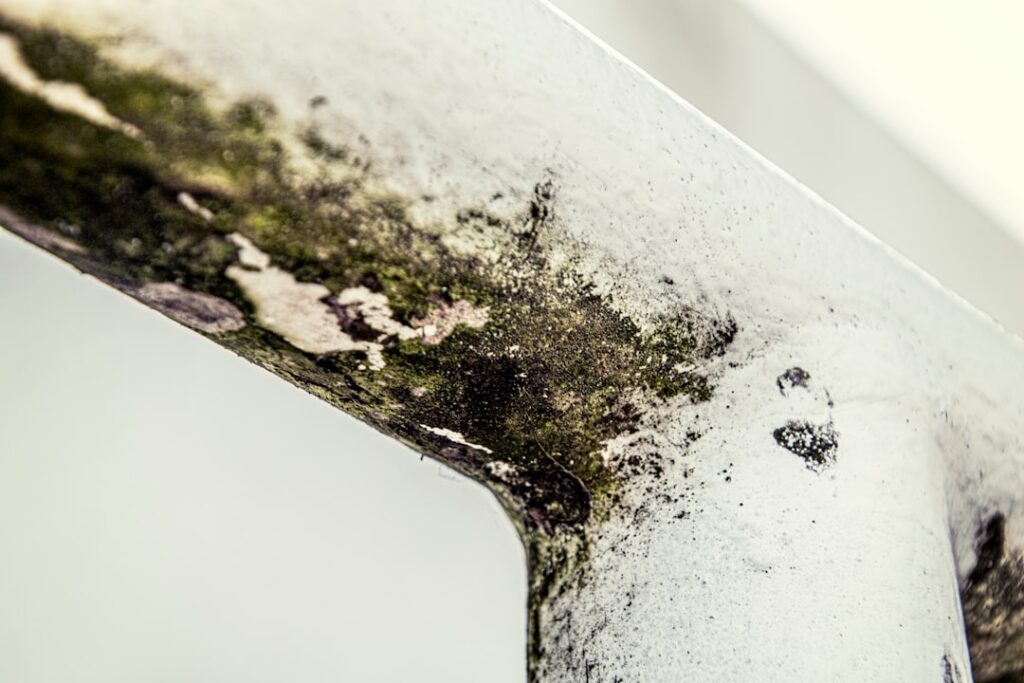
Mold damage mitigation is the EPA-preferred terminology for the combined response when a moisture event has produced both structural damage and fungal growth. Unlike a pure cleanup, mitigation integrates three overlapping work streams — water restoration under IICRC S500, mold remediation under IICRC S520, and structural damage assessment for any saturated framing or sheathing. Front Range homeowners typically encounter the combined scenario after a burst pipe, a basement flood, an ice-dam meltwater intrusion, or a roof leak that went undetected through a season. This guide explains the integrated workflow, the inspection and documentation requirements, and the homeowner decisions that affect both insurance recovery and long-term outcomes. This guide summarizes EPA and CDC guidance current as of 2026 — consult a certified mold inspector for testing decisions and your physician for symptom evaluation.
Is this mold, asbestos, or water damage? Get a free instant screen
Upload a clear photo of the suspect area. You'll get an instant AI screening opinion and what to do next. This is screening guidance, not a professional determination.
Screening guidance only. AI can be wrong. Confirm asbestos, mold type, or lead with lab testing or a licensed professional before acting.
What Mold Damage Mitigation Actually Means
The word mitigation in this context covers three concurrent objectives — stopping ongoing damage, removing what has already failed, and preventing the conditions from recurring. EPA guidance and IICRC standards converge on a sequence: emergency response to halt water intrusion, controlled drying and dehumidification of affected materials, assessment of structural and fungal damage, removal of unsalvageable materials, antimicrobial treatment of remaining substrates, rebuild, and verification.
The distinction from a cleanup-only response is important. Cleanup addresses visible mold; mitigation addresses the entire damage event including the water that caused it, the materials damaged by both water and mold, and the structural elements that may have weakened from prolonged saturation. Skipping the mitigation framing and treating only the visible mold patches leaves the underlying structural and moisture problems intact.
The First Forty-Eight Hours
The window between water intrusion and visible mold growth is short. EPA and CDC guidance both note that mold can establish on most porous indoor substrates within twenty-four to forty-eight hours of saturation. The first two days after a moisture event therefore determine whether the homeowner is managing a water-damage project or a combined water-plus-mold project.
Emergency response in that window has three priorities. Stop the water source — shut off the supply valve, tarp the roof leak, redirect surface runoff. Extract standing water with a wet-vac or a contractor’s truck-mounted system. Begin aggressive drying with industrial air movers and refrigerant or LGR dehumidifiers running continuously. Homeowners who get those three steps started within twenty-four hours often avoid the mold leg of the project entirely. Homeowners who delay past forty-eight hours almost always face the combined scope.
The Damage Assessment Phase
After the initial drying, a documented damage assessment identifies every affected material and the appropriate response for each. Drywall that absorbed water but dried without visible mold within forty-eight hours is usually salvageable with monitoring. Drywall with visible mold staining is removed. Carpet and pad that absorbed water are removed regardless of mold status because the pad cannot be effectively dried in place. Wood framing is moisture-tested with a pin meter — readings under fifteen percent are acceptable, readings above twenty percent indicate continuing saturation that needs additional drying time.
Structural Assessment
Saturated wood framing loses load-bearing capacity proportionally to moisture content. Sustained moisture above twenty-five percent for more than a few weeks can produce permanent damage to subfloor sheathing, joists, and wall studs. A structural assessment by a licensed engineer is warranted for any project where framing has been saturated for more than a week or where visible warping, soft spots, or bowing has appeared. The engineer’s report becomes a project document used for both the rebuild specification and any insurance claim.
Fungal Assessment
A mold assessment after a water event documents visible growth locations, takes moisture readings on potentially affected materials, and may include surface or air sampling for species identification and concentration. The fungal assessment establishes the remediation scope independent of the contractor doing the work. Front Range homeowners can review what an assessment includes at the mold inspection and testing hub.
The Combined Removal Phase
Once assessment is complete, the removal phase addresses both water-damaged and mold-affected materials in one coordinated workflow. Saturated insulation comes out. Carpet pad comes out. Mold-affected drywall is cut back to dry, unaffected studs. Cabinet kickplates over slow-leak areas come out. Any swollen MDF or particle board is removed. The removed materials are bagged in six-mil polyethylene for disposal.
The advantage of combining the workflows is efficiency and accuracy. Removing only water-damaged material first and discovering mold later creates a multi-stage project with repeated containment setup. Removing only mold-affected material and ignoring still-saturated framing produces continued substrate damage and rebuild failures. The integrated mitigation approach saves money in both labor and rebuild materials.
Antimicrobial Treatment and Continued Drying
After removal, exposed substrates receive an EPA-registered antimicrobial application. Continued drying with air movers and dehumidifiers brings remaining wood framing to safe moisture levels — under fifteen percent on a pin meter is the standard target. This phase typically runs three to seven days depending on the original saturation level, the framing dimensions, and ambient conditions.
Daily moisture readings during this phase document the drying progress. The readings serve three purposes — confirming the materials are reaching safe levels, justifying the equipment runtime to the insurance carrier, and providing the baseline data needed for clearance verification later. Photograph and log the readings daily; do not rely on the contractor’s word that the materials are dry without seeing the numbers.
Rebuild Specifications
The rebuild phase replaces the removed materials with mold-resistant alternatives where the application warrants. Use paperless or mold-resistant drywall in any below-grade space, any wet room, and any wall cavity that previously hosted growth. Specify rigid foam insulation rather than fiberglass batts in basement perimeter walls. Use cement backerboard rather than drywall behind any tile installation. Install closed-cell spray foam in rim joists where condensation has historically occurred.
Pay equal attention to the moisture detail that originally caused the failure. New drywall in the same wall cavity that flooded from a slab penetration will fail again unless the penetration is sealed. New basement carpet over the same concrete slab that wicks moisture will fail again unless a vapor barrier is added. The rebuild is the moment to address the conditions that allowed the original damage, not just to replicate what was there before.
Insurance Documentation Throughout
Insurance recovery for combined water and mold damage depends heavily on documentation. The policy language usually distinguishes between sudden discharge (often covered) and gradual seepage (often excluded). Date-stamped photographs, contractor invoices, moisture readings, and the structural assessment report all support the claim. Verbal statements and recollection do not.
Front Range homeowners with active mitigation projects should photograph the affected areas daily during the drying phase, save every receipt for materials and equipment, and request written daily progress notes from the contractor. Claims denied for insufficient documentation are common; claims denied despite thorough documentation are rare. The thirty minutes a day of documentation effort during the project produces substantially better insurance outcomes than scrambling for records afterward.
Verification and Project Closeout
Verification at project completion combines moisture re-testing of all framing, visual inspection of all repaired surfaces, and independent air and surface sampling for mold clearance. The same third-party inspector who performed the pre-mitigation assessment is the right party to perform clearance — the continuity provides comparable data and an objective record. Failed clearance triggers contractor re-work under standard mitigation contracts.
Post-project monitoring matters for combined water and mold events more than for either type alone. Schedule a follow-up moisture check at one month and again at three months. Watch for staining returns, musty odors, or warping that would indicate residual moisture or returning growth. Homeowners reviewing the broader workflow can consult the mold and mildew restoration guide for related context on combined projects.
Selecting a Combined-Scope Contractor
Combined water-and-mold projects benefit from a single contractor holding both IICRC S500 water restoration and S520 mold remediation certifications, or from a tightly coordinated two-contractor arrangement. The risk in the two-contractor model is finger-pointing when something goes wrong — the water-damage contractor blames the mold contractor for delayed handoff, and the mold contractor blames the water contractor for incomplete drying. A single firm carrying both certifications and accepting responsibility for the integrated scope avoids most coordination failures.
Front Range contractors with both certifications are concentrated in the Denver metro, Boulder, and Colorado Springs markets. Smaller mountain communities sometimes require traveling crews, which adds mobilization cost but does not change the technical scope. The contract should specify the combined scope explicitly, list IICRC certifications by name and number, name the antimicrobial products to be used, and identify the third-party clearance inspector by name before the project begins.
Cost Components for Combined Mitigation
The cost structure for a combined mitigation project includes emergency response charges (often hourly during the first twenty-four hours), equipment rental for air movers and dehumidifiers (daily rates), labor for removal and rebuild, materials for the rebuild, antimicrobial product, third-party clearance testing, and any structural engineering work. A single-room basement project typically runs three to seven thousand dollars including rebuild. A larger event involving multiple rooms and HVAC contamination can exceed twenty-five thousand. Insurance recovery offsets a significant portion when coverage applies, but the homeowner deductible and any non-covered scope still produce meaningful out-of-pocket cost.
Front Range Triggers for Combined Damage
Several Colorado-specific moisture events commonly produce combined water-and-mold mitigation projects. Frozen pipe bursts during cold snaps below zero degrees Fahrenheit, particularly in homes with exterior wall plumbing or uninsulated crawlspaces. Sump pump failures during spring snowmelt, especially in foothills neighborhoods with high groundwater. Ice dams forcing meltwater under shingles into ceiling cavities. Late-summer monsoon storms driving rain past failing window flashing on west and south elevations. Each scenario has predictable damage patterns that experienced local contractors recognize quickly.
The seasonality also affects timing. A January pipe burst usually produces a combined project completed by March or April. A June monsoon roof leak may not show mold growth until August because the warm-season drying is faster, but the resulting growth in attic insulation or upper-floor ceiling cavities is often more extensive when finally discovered. The window between discovery and remediation start is therefore even more important during summer events than winter ones.
One additional Front Range trigger deserves mention: high-altitude winter cold can produce localized condensation on the cold side of poorly insulated exterior walls, which over a single winter season can saturate the wall cavity behind paint without any leak or pipe event. The resulting mold finding looks like a sudden discovery in March or April, but the moisture accumulated quietly for months. Mitigation in this scenario requires both removal of the affected materials and a rebuild that addresses the condensation pathway — usually by adding insulation, replacing the vapor-barrier strategy, or improving the interior humidity control.
References
- Flood Cleanup and Mold Prevention — U.S. Environmental Protection Agency
- Cleanup and Remediation — Centers for Disease Control and Prevention
- Healthy Homes Guidance on Mold — U.S. Department of Housing and Urban Development
- Mold Health Topic — National Institute of Environmental Health Sciences
Front Range homeowners managing a combined water-and-mold event can reach a vetted local mold inspector through our contact page for an independent assessment and clearance plan before contractors finalize the scope.