Mold Removal and Restoration Near Me: Combined vs Separate
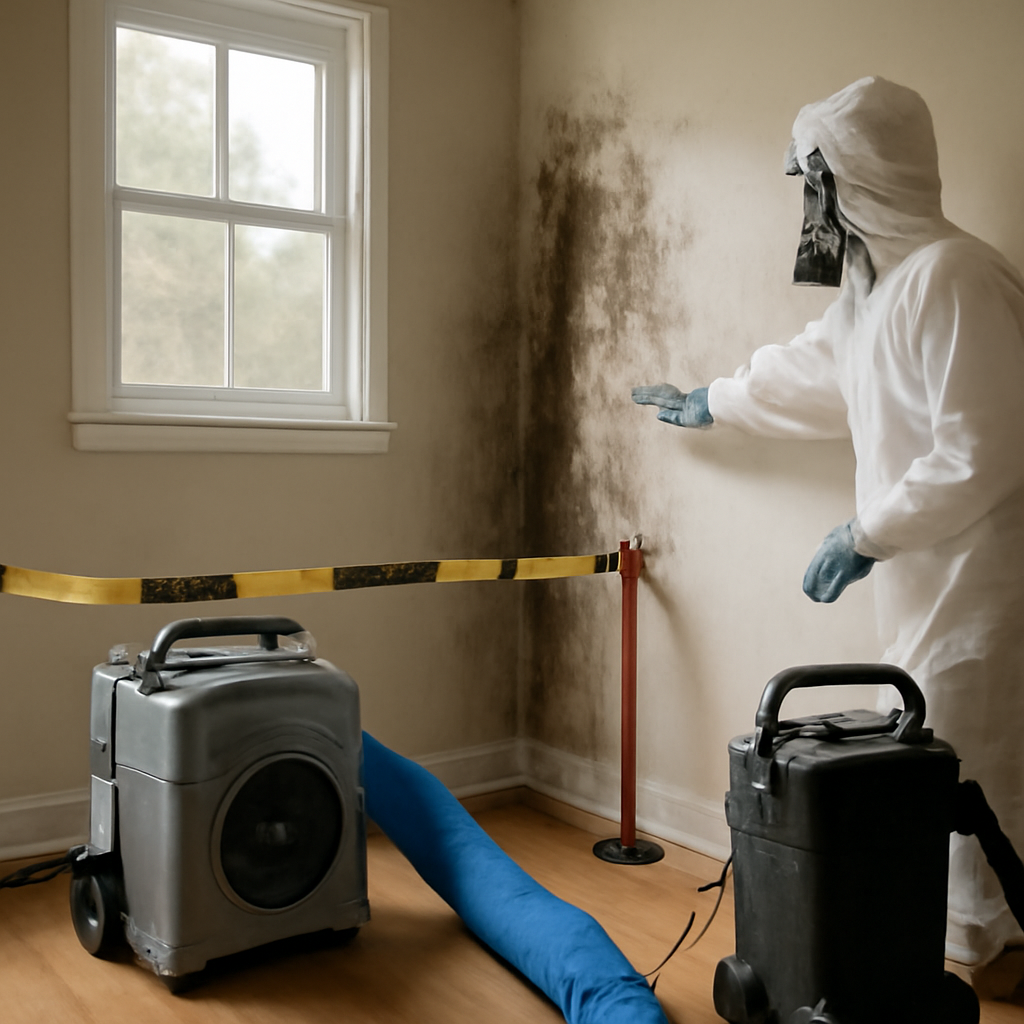
“Mold removal and restoration near me” is a search that bundles two distinct phases of work. Removal — properly called remediation — is the microbial decontamination phase. Restoration is the rebuild: new drywall, paint, flooring, and trim. Some firms offer both; others specialize in one or the other. The right choice depends on insurance, schedule, complexity, and homeowner tolerance for managing multiple trades. This guide summarizes EPA, CDC, and IICRC S520 guidance current as of 2026 and is intended for homeowner education, not as medical advice or a substitute for site-specific assessment.
Part of our Mold Removal & Remediation guide — start there for the full picture →
Is this mold, asbestos, or water damage? Get a free instant screen
Upload a clear photo of the suspect area. You'll get an instant AI screening opinion and what to do next. This is screening guidance, not a professional determination.
Screening guidance only. AI can be wrong. Confirm asbestos, mold type, or lead with lab testing or a licensed professional before acting.
Mold removal and restoration near me: the short answer
For straightforward projects, a single firm holding both IICRC AMRT (for remediation) and general construction credentials (for restoration) simplifies coordination. For complex projects, separating the two firms allows competitive bidding on the rebuild and avoids the conflict-of-interest scope inflation that sometimes occurs when one firm bills both phases. Both approaches are legitimate when each phase meets the relevant standard.
What “removal” means in this context
Removal is the IICRC S520 remediation work: identifying the moisture source, setting up containment, removing non-salvageable porous materials, HEPA-vacuuming remaining surfaces, applying antimicrobial treatment where appropriate, and clearing the area for the rebuild. The work requires IICRC AMRT-certified technicians, HEPA-filtered negative air, and post-remediation verification.
What “restoration” means in this context
Restoration is the construction phase that follows removal: installing new drywall, taping and mudding, priming and painting, replacing insulation and vapor barriers as needed, installing new flooring, and reinstalling baseboards, casings, and trim. It is finish carpentry and general construction. The relevant credential is state or municipal contractor licensing where applicable, plus general liability and workers’ compensation.
The combined firm model
Many restoration franchises and some independent specialists offer both phases under one company. The benefit is coordination: one project manager, one schedule, one invoice, and one point of contact for insurance. The drawback is that competitive bidding on the rebuild phase is limited because the homeowner has effectively pre-selected the contractor by hiring them for remediation.
The separate-firm model
Some homeowners hire one firm for remediation and a separate finish contractor for the rebuild. The benefit is competitive bidding on restoration, often at lower cost than the integrated firm offers. The drawback is coordination: the homeowner manages two schedules, two invoices, and the handoff between phases. Insurance claims can also be slightly more complex when two firms bill separately.
When the combined model makes sense
Combined makes sense when speed matters more than price (post-flood emergencies), when the home is occupied and disruption tolerance is low, when the insurance carrier has a preferred-vendor relationship with the firm, or when the project is small enough that competitive rebid would save little. Most insurance claims under $25,000 fall into this category and finish faster under a single-firm model.
When the separate model makes sense
Separate makes sense when the rebuild scope is large (cabinets, flooring, custom trim), when the homeowner has a finish contractor they already trust, when out-of-pocket pricing matters, or when the project complexity makes coordination headaches less painful than scope-inflation risk. Whole-basement and whole-floor projects often benefit from the separate model.
Conflict of interest under the combined model
The same firm-handling-everything conflict that the EPA flags for testing and remediation also applies, in a softer form, to remediation and restoration. The remediator who will be paid for the rebuild has an incentive to remove more drywall than necessary because the rebuild billing follows. Independent clearance testing by a third party blunts this. The four-phase sequence guide covers the testing-remediation-rebuild handoff.
Insurance and the combined-vs-separate decision
Many homeowners’ policies cover both remediation and restoration when the underlying loss is a covered sudden water event. Some adjusters prefer a single-vendor claim because it simplifies their workflow. Others are neutral. Read the policy language and ask the adjuster directly. Assignment-of-benefits paperwork commonly bundles both phases; read it carefully before signing.
Pricing tiers for combined work
Industry estimates for combined remediation-plus-restoration run $3,000 to $7,500 for a single-room basement project, $7,500 to $20,000 for whole-basement work, $15,000 to $35,000 for whole-floor projects including kitchen or bath rebuild, and $35,000 and above for whole-house contamination with significant rebuild scope. These are integrated-firm pricing; separate-firm pricing on the same scope often falls 10 to 25 percent lower.
Pricing tiers for the separated approach
The remediation phase alone runs $500 to $1,500 for limited surface jobs, $2,000 to $6,000 for basement contamination, $3,000 to $7,500 for HVAC-involved work, and $10,000 and above for whole-house contamination. Restoration alone runs $40 to $60 per square foot for full-finish work, $1,500 to $4,000 for single-room rebuilds, and $10,000 and above for whole-floor restoration. The repair phase scope guide covers restoration pricing.
Sequencing the two phases
The correct sequence is: identify and stop the moisture source, perform remediation, pass independent clearance testing, then begin restoration. Skipping clearance and rolling directly into restoration means new drywall can encapsulate contamination. Whether one or two firms handle the work, the clearance step must happen between phases. The S520 standard prescribes verification before rebuild.
Front Range Colorado considerations
Denver, Douglas, Jefferson, and Boulder County markets support both combined-firm restoration franchises and independent IICRC-certified specialists. Adams County and El Paso County have similar coverage. Front Range labor and material costs run modestly above the national median for both phases. Get bids from both models when the project size justifies the extra effort; the savings on a $20,000-plus job often exceeds $3,000.
Permits during restoration
Small drywall patches rarely require permits. Whole-basement rebuilds usually do, particularly when electrical or plumbing trades are involved. Front Range jurisdictions vary in their permit thresholds; check with the local building department. Permitted work creates documentation that protects resale value and confirms code-compliant installation of vapor barriers, GFCIs, and exhaust ventilation.
Materials selection during restoration
Restoration is the natural moment to upgrade moisture-resistant materials. Paperless drywall (fiberglass-faced) in basements, closed-cell spray foam in below-grade walls, LVP instead of carpet in basements, and tile with epoxy grout in bathrooms all reduce future moisture vulnerability. Some firms charge premium for these upgrades; some include them in standard scope. Specify in writing before the bid.
Vapor barrier and insulation decisions
Front Range climate (IECC zone 5) calls for vapor retarders on the warm-in-winter side. Below-grade basement walls require careful detail: unfaced insulation against the foundation with a vapor barrier inboard, or closed-cell spray foam direct to the foundation. Restoration that simply replaces the original kraft-faced batt insulation in a basement without addressing vapor management repeats the original problem. The mold inspection hub covers building-science details.
Restoration timeline expectations
Single-room restoration after a passed clearance runs 5 to 10 working days. Whole-basement restoration runs 3 to 6 weeks. Custom cabinetry and tile push timelines further. Material lead times and weather move dates. Get the schedule in writing with the original bid and document any approved change orders. Hold final payment until punch list completion.
Red flags in combined-firm proposals
No clear handoff between remediation and restoration phases, no independent clearance testing requirement, scope-bundling that hides the restoration line item, no separate proposal lines for the two phases, no mention of moisture source repair, and assignment-of-benefits paperwork that covers both phases. Each of these obscures cost or hides scope.
Red flags in separated-firm coordination
If the remediator’s clearance test is required but never scheduled, if the restoration firm starts work before clearance is documented, or if neither firm takes responsibility for the moisture source repair, the project is set up to fail. Define the handoff in writing before either firm begins work. The homeowner is the integrator under the separate model.
How to vet a combined-firm contractor
Verify IICRC AMRT credentials by number, confirm general liability with mold endorsement and contractor licensing as applicable, require a written scope referencing S520 for the remediation phase and detailed material specifications for the restoration phase, separate the two phase line items in the bid, and require independent third-party clearance testing between phases. Collect three bids on a common scope.
How to vet a separated-firm pair
Apply the IICRC and S520 vetting to the remediation firm. Apply general construction vetting to the restoration firm (license, insurance, references, written specifications). Define the handoff in writing. Schedule independent clearance testing as a milestone between phases. The homeowner pays both firms separately and coordinates the schedule.
Material upgrade opportunities during restoration
Restoration is the natural moment to upgrade materials that reduce future moisture risk: paperless drywall (fiberglass-faced) in basement assemblies, closed-cell spray foam at below-grade walls, LVP flooring instead of carpet in basements, and tile with epoxy grout in bathrooms. Some firms include these in standard scope; others charge premiums. Specify the upgrades in writing during bid review so the comparison is apples-to-apples.
Permit considerations across jurisdictions
Front Range jurisdictions vary in permit thresholds. Denver County permits any project over $5,000; Douglas and Jefferson Counties have higher thresholds. Boulder is conservative about permits and inspections. El Paso County follows Colorado Springs municipal code. Verify the local requirements with the building department before scheduling work. Permitted work creates a documentation trail that protects resale value.
Final walkthrough and punch list
The restoration phase closes with a final walkthrough where the homeowner identifies any quality issues: paint touch-ups, trim adjustments, missed details. Document the punch list in writing with photos. Hold final payment (typically 10 percent of the contract) until punch list items are addressed. Reputable contractors expect a punch list and complete it within a few days of the walkthrough.
Common project handoff failures
When two firms split the work, the most common failures occur at the handoff: clearance test scheduling slips, restoration begins before remediation clearance is documented, the moisture source repair gets lost between trades, or one firm blames the other for missed details. Each failure is preventable with a written handoff protocol signed by both firms before either begins work.
The role of an independent project manager
Some homeowners hire an independent project manager or owner’s representative to coordinate large mold projects across multiple trades. The cost typically runs 5 to 10 percent of the total project budget. For projects under $25,000, self-management usually makes sense. For projects over $50,000, the project manager often pays for themselves through coordination quality and dispute prevention.
When to call a professional
Contamination over 10 square feet, hidden growth, porous-material contamination, HVAC involvement, post-flood emergencies, and homes with vulnerable occupants all warrant professional remediation. Restoration of any scope larger than a single drywall patch benefits from licensed contractor involvement. Consult a physician for symptoms. The EPA does not endorse contractors.
References
- Mold Remediation Guide — EPA
- CDC Mold Cleanup Guidance — CDC
- InterNACHI Mold Inspection Reference — InterNACHI
- Colorado Mold Guidance — Colorado Department of Public Health and Environment
Frequently asked questions
Should the same firm handle mold removal and restoration?
Either model is legitimate. Combined firms simplify coordination and insurance claims. Separated firms allow competitive bidding on the rebuild and reduce scope-inflation risk. The right choice depends on project size, insurance status, and homeowner tolerance for managing multiple trades.
Does insurance cover both phases?
Many policies cover both remediation and restoration when the underlying loss is a covered sudden water event. Remediation may fall under a mold endorsement with a lower limit; restoration falls under dwelling coverage. Long-term humidity-driven growth is commonly excluded entirely. Read the policy and confirm with the adjuster.
What does combined mold removal and restoration cost?
Industry estimates run $3,000 to $7,500 for a single-room basement project, $7,500 to $20,000 for whole-basement work, $15,000 to $35,000 for whole-floor projects, and $35,000 and above for whole-house contamination. Separated firms on the same scope often run 10 to 25 percent less.
What sequence should the two phases follow?
Identify and stop the moisture source, perform remediation, pass independent third-party clearance testing, then begin restoration. Skipping clearance and rolling into restoration risks encapsulating contamination behind new drywall. The S520 standard prescribes verification between phases.
Front Range homeowners weighing combined versus separated mold removal and restoration approaches and wanting a connection to a vetted local contractor can get in touch through our contact page.
Mold removal & cleanup picks
For a small, contained patch (under ~10 sq ft) these EPA-friendly removers handle surface mold. Larger or recurring growth warrants a professional assessment first.
| Product | Why | Buy |
|---|---|---|
 RMR-86 Instant Mold Stain Remover RMR-86 Instant Mold Stain Remover | Fast-acting on stains; ventilate and wear PPE. | Amazon — $29.99 |
 Concrobium Mold Control Concrobium Mold Control | No-bleach formula that also helps prevent regrowth. | Amazon — $11.26 |
 Mold Armor Mold & Mildew Remover Mold Armor Mold & Mildew Remover | Widely stocked bathroom/surface remover. | Amazon — $22.98 |