Mold and Mildew Restoration: Post-Water-Damage Guide
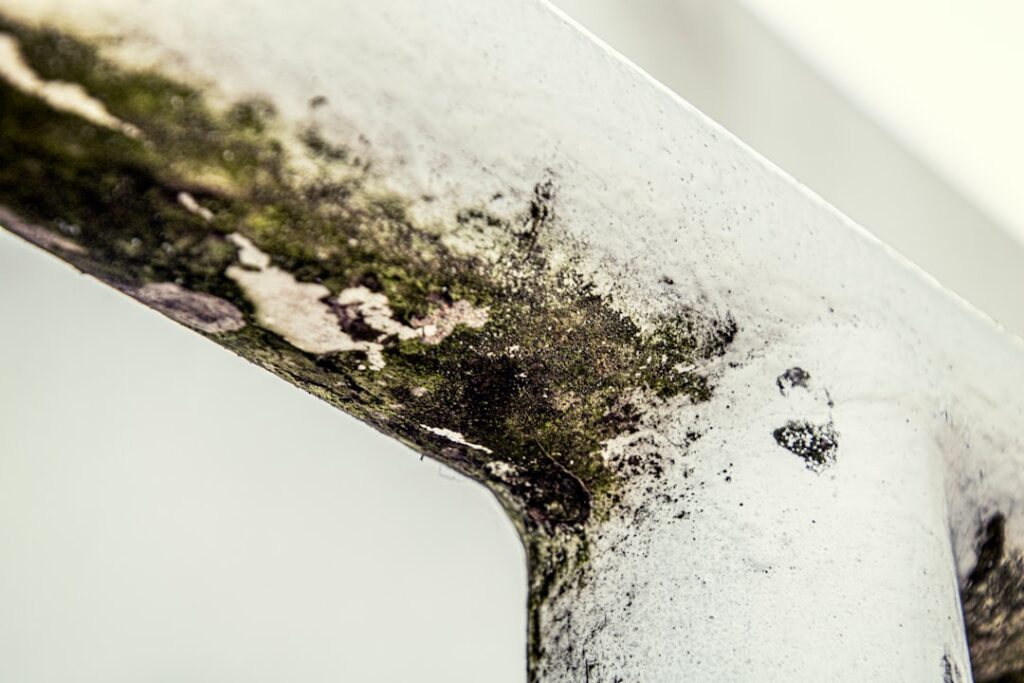
Mold and mildew restoration usually starts after a water event the homeowner did not expect. A supply line burst, a roof leak during a storm, an appliance failure, a sewer backup. The water gets pumped out and dried, but mold growth that started during the wet period now needs its own remediation phase. This guide summarizes EPA and CDC mold guidance current as of 2026 and reflects how restoration contractors actually combine IICRC S500 water restoration with S520 mold remediation on Front Range jobs. Consult a physician for symptom evaluation and a certified restoration professional for testing decisions before signing any contract.
Is this mold, asbestos, or water damage? Get a free instant screen
Upload a clear photo of the suspect area. You'll get an instant AI screening opinion and what to do next. This is screening guidance, not a professional determination.
Screening guidance only. AI can be wrong. Confirm asbestos, mold type, or lead with lab testing or a licensed professional before acting.
What restoration means in the mold-and-mildew context
Restoration is a broader trade term than remediation. A restoration contractor handles water damage (IICRC S500), fire and smoke damage (IICRC S700), and mold remediation (IICRC S520) under a single firm umbrella. The advantage on a water-event project is that one contractor manages the entire incident from initial water extraction through mold clearance to reinstallation of finishes.
A pure mold-remediation contractor, by contrast, handles only the IICRC S520 mold work. If the project also involves water extraction, structural drying, or reinstallation of drywall and flooring, the homeowner contracts those separately. That can work on small mold-only projects but becomes unwieldy on whole-house water events.
The word “mildew” colloquially overlaps with “mold” but technically refers to a specific subset — typically powdery surface growth on plants or fabrics. In residential restoration, the term is often used loosely to mean any visible fungal growth on walls, floors, or finishes after a water event. The trade workflow is the same regardless of the colloquial label. For the inspection-side workflow, see our mold inspection and testing hub.
The IICRC S500 water restoration sequence
Water restoration under IICRC S500 runs through four classes and three categories. The categories describe water cleanliness: Category 1 is clean potable water from a supply line, Category 2 is grey water with some contamination (washing machine overflow, dishwasher leak), and Category 3 is black water with serious contamination (sewer backup, river flooding, long-stagnant water). The classes describe the saturation level: Class 1 is minimal saturation in a small area, Class 4 is extensive saturation including hardwood floors or concrete.
The standard sequence: emergency response within 24 hours, water extraction, removal of unsalvageable porous materials, controlled drying with air movers and dehumidifiers, moisture monitoring with daily logs, and final inspection before declaring the structure dry. Drying typically takes three to seven days on Category 1 events and longer on higher categories where contamination remediation extends the timeline.
Mold remediation under IICRC S520 begins where S500 ends — once visible mold growth has been confirmed. On fast-response projects where extraction and drying happen within 48 hours, mold often never develops, and only the S500 work is needed. On slower-response projects or events with hidden cavity saturation, mold growth follows within days, and S520 layers onto the project.
When mold growth begins after a water event
The window between water event and mold growth is shorter than most homeowners expect. EPA guidance notes that mold can begin growing on wet substrate within 24 to 48 hours under typical indoor temperatures. By 72 hours, visible colonies are common on cellulose materials. By a week, colonies are usually well-established and require remediation, not just drying.
That timing is why emergency response matters. A burst supply line discovered within hours and extracted, dried, and stabilized within 48 hours often produces no mold growth at all. The same event left for a weekend produces colonies on drywall paper, carpet pad, and framing that require full S520 remediation.
Front Range homeowners away from the home during a water event — vacation, business travel — sometimes return to find the water event has progressed from a pure water-damage situation to a combined water-damage-plus-mold situation. The restoration scope expands accordingly.
Insurance interaction on combined restoration projects
Homeowner insurance coverage on mold and mildew restoration is one of the most misunderstood topics in residential property. The general rule, with significant policy variation: insurance typically covers mold remediation when the mold resulted from a covered peril, but excludes mold from chronic conditions or maintenance issues.
Covered peril examples: a burst supply line during a freeze, an appliance malfunction causing sudden water release, a covered storm event, a fire-suppression-system discharge. In these scenarios, the carrier usually covers water extraction, drying, mold remediation, and reinstallation up to policy limits.
Non-covered examples: a slow plumbing leak that the homeowner did not notice or report, chronic foundation seepage, ongoing high humidity, mold from a roof that was at end-of-life and not maintained. In these scenarios, the carrier typically denies the claim entirely.
Many Colorado homeowner policies cap mold-related coverage even within covered perils — caps of $5,000 or $10,000 are common, and they often fall short of full whole-house restoration costs. Reading the mold-exclusion language in the policy before assuming reimbursement is essential. Documentation of the water event timing and source affects the claim outcome significantly.
For more on the contractor selection process, see our guide on mold removal and remediation experts.
Restoration contractor versus mold-only contractor
The decision between hiring a restoration contractor and a mold-only contractor turns on the scope of the underlying event.
For pure mold problems with no recent water event — chronic humidity, slow seepage discovered late, mold found during a real-estate transaction — a mold-only contractor is often the most cost-effective choice. Their specialization is focused, their pricing reflects the narrower scope, and they coordinate any reinstallation through homeowner-contracted trades.
For combined water-and-mold events — burst pipe, roof leak, appliance failure, sewer backup — a restoration contractor managing both phases is usually the better choice. The advantages are single-contract project management, single-point insurance billing (if the event is covered), and integrated scheduling that avoids gaps where the home is partially dried but not fully remediated.
For house-scale projects regardless of cause, restoration contractors with both S500 and S520 credentials often have the equipment and crew size to handle the project at pace. Mold-only specialists handle larger projects too but sometimes subcontract the water-extraction and reinstallation phases.
What a combined restoration project actually looks like
A typical sequence on a Front Range burst-pipe restoration runs about as follows. Day one: emergency response, water extraction, initial containment, removal of obviously unsalvageable materials, placement of air movers and dehumidifiers. Days two through five: continued drying with daily moisture logs, removal of partially saturated materials as they fail to dry on schedule, source-moisture verification (the plumber’s repair confirmed), initial mold assessment if any growth is observed.
Days five through ten: mold remediation phase if mold has been confirmed — containment upgrade, additional material removal, HEPA vacuum, antimicrobial application, drying to dry-equivalent. Days ten through fourteen: clearance testing — visual reinspection, moisture verification, air sampling against an outdoor reference.
Days fourteen onward: reinstallation phase — new drywall, new insulation, refinished flooring, repainting. The reinstallation does not begin until clearance has passed. Homeowners who pressure contractors to start reinstallation before clearance often see issues during final walkthrough that delay the project further.
Emergency response considerations
The first 24 hours after a water event determine much of the project trajectory. Homeowners who respond quickly often avoid mold remediation entirely, keeping the project within IICRC S500 water restoration scope. Homeowners who delay typically see the project expand into S520 territory.
The recommended emergency-response steps after a water event: shut off the water source immediately at the supply valve or main shutoff. Photograph the affected area before any cleanup. Contact the homeowner insurance carrier to report the incident and request claim guidance. Engage a restoration contractor with 24-hour emergency response capability. Begin extraction within hours, not days. Move salvageable contents to a dry area. Do not return drywall, carpet, or porous materials that have been removed unless and until a contractor confirms they are salvageable.
Restoration firms typically offer emergency-response service 24 hours a day. Front Range homeowners experiencing a water event in the middle of the night should not wait until business hours to make the call — the cost differential between immediate response and next-morning response is often the difference between an S500-only project and a combined S500-plus-S520 project.
Documentation throughout the restoration project
Combined restoration projects produce substantial documentation, and the homeowner should retain all of it. Core documents include the initial water-event report with photo documentation, the IICRC S500 water-class and water-category determination, the daily moisture logs during the drying phase, the IICRC S520 mold scope of work if mold was confirmed, the room-by-room remediation documentation, the clearance test results, the final closeout report, the contractor warranty terms, and copies of all insurance-claim correspondence.
This documentation matters for insurance claim resolution, for future home sales (buyers and their inspectors will ask about prior water and mold events), for warranty callback if regrowth occurs, and for any occupant-health discussions with physicians. Treating the documentation as part of the deliverable, not an optional add-on, is reasonable on any project above five figures.
Cost ranges on combined restoration
Industry estimates from InterNACHI and the Insurance Information Institute place small water-and-mold restoration projects (one room, Category 1 water, limited mold growth) in the $3,000 to $8,000 range. Mid-size projects (multiple rooms, Category 2 water, moderate mold growth) typically run $8,000 to $20,000. Larger projects (whole house, Category 3 water, extensive mold growth) routinely exceed $30,000 and sometimes reach $75,000 or more on severe events.
The mold portion of a combined project is often 30 to 50 percent of the total cost. The water-extraction and drying portion is typically faster and lower-cost than the mold remediation phase, which adds containment, PPE upgrade, and clearance testing.
Insurance coverage, where applicable, typically pays the contractor directly under a benefit assignment, with the homeowner covering the deductible and any costs above policy limits. Homeowners on uncovered events pay out of pocket, sometimes financing the project through home-equity lines or contractor payment plans. Several restoration firms on the Front Range offer financing arrangements for uncovered or under-covered projects, though the interest rates often run higher than home-equity options the homeowner could secure independently.
Preventing the next event
Once a combined restoration project is complete, prevention focuses on the failure mode that caused the original event. Burst supply lines during freezes are prevented by insulating exterior-wall pipe runs and maintaining heat above 55 degrees throughout the home during cold spells. Appliance leaks are prevented by replacing washing-machine hoses every five years, replacing ice-maker supply lines with copper or braided stainless, and monitoring under-appliance areas for early-stage leaks. Roof leaks are prevented by an annual roof inspection and proactive replacement before the roof reaches end-of-life. Foundation seepage is prevented by exterior grading, downspout extension, and, where warranted, interior perimeter drains.
Insurance carriers occasionally offer premium discounts for water-monitoring systems — leak detection sensors near washing machines, water heaters, and under sinks. Inexpensive Wi-Fi-enabled sensors can alert homeowners to a leak within minutes, often before the event progresses to mold-growth territory.
References
- Mold Remediation Guidance — U.S. Environmental Protection Agency
- Mold Cleanup Recommendations — Centers for Disease Control and Prevention
- Mold and Indoor Air Quality — Colorado Department of Public Health and Environment
- Mold Inspection and Remediation Guidance — InterNACHI
Front Range homeowners dealing with a water event that has progressed to visible mold growth can connect through our contact page for a vetted referral to a local restoration contractor who can scope the combined project.