Water Mold Damage: What Homeowners Need to Know
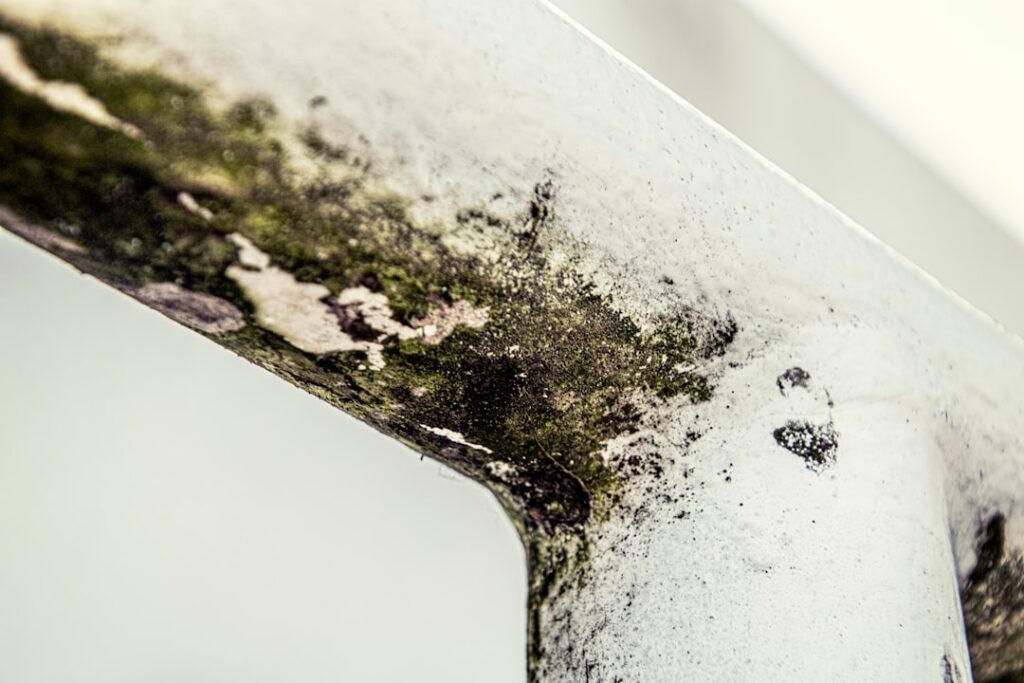
Water mold damage describes the chain reaction that begins with an indoor water event and ends with mold colonization if the dry-out window is missed. The water side of the equation is the cause; mold is the symptom that appears when restoration is incomplete. Restoration professionals follow the IICRC S500 standard for water damage and the IICRC S520 standard for mold remediation precisely because the two problems chain together in predictable ways. This guide summarizes EPA and CDC guidance current as of 2026 and walks through the water-restoration workflow that prevents the mold half from ever starting. For symptoms tied to suspected exposure, consult your physician, and for any mold patch larger than roughly 10 square feet, defer to an IICRC-certified remediation professional rather than DIY cleanup.
Part of our Types of Mold guide — start there for the full picture →
Is this mold, asbestos, or water damage? Get a free instant screen
Upload a clear photo of the suspect area. You'll get an instant AI screening opinion and what to do next. This is screening guidance, not a professional determination.
Screening guidance only. AI can be wrong. Confirm asbestos, mold type, or lead with lab testing or a licensed professional before acting.
The Water-First Framing
Most homeowner mold conversations start with the visible patch and work backward to the moisture source. The water-mold-damage framing reverses the order: the water event happens first, the dry-out either succeeds or fails, and mold appears only when dry-out misses. Reframing this way changes the priorities. If the homeowner stops the leak quickly and dries the cavity completely within 72 hours, the mold half never materializes. If the dry-out fails or stalls, mold becomes inevitable on cellulose substrates.
The water source determines how aggressive restoration needs to be. Category 1 water (clean supply-line water) carries no contamination but still drives mold growth if dry-out fails. Category 2 (gray water from appliances or sinks) carries bacterial load that complicates cleanup. Category 3 (black water from sewers or flood-line groundwater) carries pathogens that require full removal of contacted porous materials. The IICRC S500 standard sets the protocols for each category. For the broader picture on the mold side once colonization has already started, the mold inspection and testing hub walks through identification, remediation thresholds, and clearance protocols.
Mold Remediation Versus Water Mold Damage Restoration
The two services overlap but follow different standards. Water-damage restoration is the IICRC S500 process: extraction, drying, dehumidification, and material restoration to pre-loss condition. Mold remediation is the IICRC S520 process: containment, removal of porous contaminated materials, HEPA filtration, and post-remediation clearance verification. A clean water event that gets restored within 72 hours stays in S500 territory and avoids S520 entirely. A water event that drags into mold colonization triggers both — the water-damage source gets repaired under S500 logic, and the resulting growth gets remediated under S520 logic.
The cost difference is significant. Pure S500 dry-out on a moderately wet bathroom or laundry room runs roughly $1,500-3,500 in most U.S. markets. Adding S520 remediation to the same job for a 20-square-foot drywall colony pushes the total into the $4,500-8,000 range depending on containment complexity and substrate replacement. The 72-hour window is therefore not just a mold-prevention threshold but also a several-thousand-dollar pricing inflection point.
The 24, 48, and 72 Hour Restoration Sequence
The IICRC S500 timeline parallels the mold growth timeline almost exactly, which is no coincidence — the standard exists to beat the mold clock. Each phase has specific extraction, drying, and verification steps.
Hours 0-24: Extraction
The first priority is removing standing and absorbed water before it migrates further. Truck-mount extraction pulls water from carpet and pad with vacuum power far beyond home wet/dry shop vacs. Pumping removes standing water from finished basements. Pulling baseboards exposes the bottom inch of drywall and lets the cavity start releasing moisture. Within the first day, the volume of water present should drop by 70-80% if extraction is competent.
Hours 24-48: Active Drying
Commercial air movers and desiccant dehumidifiers run continuously to pull bound moisture from porous materials. Pin-type moisture meters track progress against pre-loss readings on dry reference materials. Carpet pad almost always gets discarded at this stage if it absorbed Category 1 water for more than a few hours; Category 2 or 3 contact automatically triggers pad and carpet removal. Drywall stays in place if surface readings are dropping but gets drilled with weep holes if cavity moisture persists.
Hours 48-72: Verification and Final Drying
The third day is verification-heavy. Moisture meters confirm substrate readings have reached pre-loss equivalent or below 16% on framing and below 1% above pre-loss on drywall. Relative-humidity probes inside wall cavities confirm the cavity has dried below 60% RH. Air movers may continue running on slow-drying assemblies. By hour 72, the restoration plan either declares completion or escalates to demolition and S520-territory work.
When Restoration Fails and Mold Becomes the Issue
Restoration fails in identifiable patterns. The most common failure is partial extraction — surface vacuuming gets the visible water but leaves carpet pad saturated, and the pad becomes a slow-release reservoir keeping the subfloor and base-of-wall wet for weeks. The second common failure is skipped cavity drying — the painted drywall surface dries while the paper backing and insulation stay above 25% moisture content. The third is dehumidifier undersizing — running a home dehumidifier in a 600-square-foot basement instead of a commercial unit means the moisture removal rate never catches up to the evaporation rate. All three failures look like successful drying on the surface, then produce visible mold growth 2-4 weeks later.
For the timeline view of when each mold stage typically appears after a missed dry-out, black mold water damage walks through the hour-by-hour and week-by-week progression that IICRC S500 is built to prevent.
Antimicrobial Treatments — What They Do and Do Not Do
Restoration crews routinely apply antimicrobial solutions during S500 dry-out. These products kill surface microbes and slow regrowth, but they do not substitute for moisture removal. A wet substrate treated with antimicrobial and left wet will eventually grow mold once the antimicrobial residue degrades or gets diluted by continued moisture. The EPA’s position is that mold prevention is fundamentally a moisture-control problem, not a chemical-treatment problem.
Antimicrobial use makes the most sense as a secondary measure after dry-out succeeds, particularly on Category 2 and 3 jobs where surfaces had bacterial contamination. On Category 1 jobs that dried completely, antimicrobial is often unnecessary. Restoration companies that lead with antimicrobial application before moisture verification are often selling chemistry as a substitute for the harder drying work — homeowners should ask for moisture-meter documentation, not chemical-treatment receipts.
Substrate-by-Substrate Outcomes After a Water Event
Different materials behave differently under sustained wetness. Knowing which substrates can be dried in place and which usually need replacement saves time during the restoration decision.
- Drywall: Can usually be dried in place if the wet duration was under 48 hours and the saturation depth is the bottom 12 inches or less. Beyond that, the bottom course typically gets removed.
- Carpet pad: Almost always replaced. Pad holds water against the subfloor and dries unreliably.
- Carpet face fiber: Often salvageable on Category 1 if extracted promptly. Discard on Category 2 or 3.
- Framing lumber: Dries in place with adequate airflow and dehumidification. Watch for surface mold colonies on exposed joists and studs.
- OSB and plywood subfloor: Dries in place if not delaminated. Replace where layers have separated.
- Wood flooring: Engineered flooring rarely survives. Solid hardwood may be salvageable with controlled drying if caught quickly.
- Insulation: Fiberglass batts usually replaced rather than dried. Closed-cell foam typically stays.
The Hidden-Moisture Problem That Causes Most Restoration Failures
Surface dryness fools homeowners and undertrained restoration techs alike. A wall that reads dry to the touch may still hold 25-30% moisture inside the cavity. The painted exterior paint film acts as a vapor retarder, slowing surface evaporation and creating a false sense of completion. Inside the cavity, drywall paper, framing, and insulation can stay above the mold-friendly threshold of 16% for weeks without any surface clue.
Verification techniques that actually catch this: pin-type moisture meters with insulated probes pushed through small drilled holes; relative-humidity probes left inside cavities for 24 hours to track ambient moisture; thermal imaging that highlights cool spots from evaporative cooling on damp framing; and pre-loss reference readings on dry materials in the same room for comparison. A restoration job without documented cavity readings is essentially a guess about whether the dry-out succeeded.
Homeowners verifying restoration work should ask for the moisture log. Reputable IICRC-certified restorers document daily moisture readings on suspect substrates from initial response through final verification. The log shows the dry-down curve and serves as evidence if hidden mold later emerges. A restoration company that resists providing this documentation is a red flag.
Insurance and Water Mold Damage Claims
Most U.S. homeowner policies cover sudden, accidental water damage but exclude mold remediation unless the mold results directly from a covered peril. The distinction creates disputes after slow-leak claims. If the homeowner did not notice the leak for weeks, insurers often argue the resulting mold is a maintenance issue rather than a covered loss. Sudden events — burst pipes, supply-hose failures, water-heater tank ruptures — usually trigger coverage including reasonable mold cleanup. Long-term seepage usually does not.
Documenting the timeline matters. Photographs of the initial water event with timestamps, a written log of when the homeowner noticed each visible sign, copies of any plumber or restoration company invoices, and the moisture-meter log from the restoration crew together build the documentation record that protects the claim. Even when the homeowner plans to handle dry-out personally, filing the claim creates a paper trail that helps if hidden mold emerges months later.
Front Range Water Mold Damage Patterns
Colorado’s water-event patterns produce predictable mold scenarios. Spring snowmelt drives basement seepage along foundation perimeters in Denver, Douglas, and Jefferson counties. Ice dams in older homes with under-insulated attics push meltwater into ceiling drywall throughout the Front Range during January and February thaw cycles. Slab leaks — underground supply-line failures in homes built on concrete slabs — push water up through hairline cracks into base-of-wall framing where Stachybotrys finds an ideal microclimate. Each pattern has a characteristic visible signature: ring-stains on ceilings after ice dams, perimeter darkening of basement drywall after snowmelt, and base-of-wall growth after slab leaks.
When to Call a Professional
The threshold for professional water-damage restoration is lower than the threshold for professional mold remediation. Any Category 2 or 3 water event, any wetted area larger than roughly 20 square feet on a porous material, any saturated carpet pad, and any water that contacted electrical systems all warrant professional involvement under S500 logic. The threshold for S520 mold remediation kicks in at 10 square feet of visible growth, on porous substrates with deep saturation, or whenever HVAC contamination is suspected.
Front Range homeowners dealing with the aftermath of an ice dam, basement flood, or supply-line failure can contact our team to be matched with a vetted IICRC-certified restoration or remediation company before a 72-hour dry-out window slips into a 30-day mold problem.
References
- EPA Mold Cleanup in Your Home — U.S. Environmental Protection Agency
- CDC Basic Facts About Mold and Dampness — Centers for Disease Control and Prevention
- HUD Healthy Homes Mold Guidance — U.S. Department of Housing and Urban Development
- NIEHS Mold Health Topic — National Institute of Environmental Health Sciences
Frequently asked questions
What's the difference between water damage restoration and mold remediation?
Water damage restoration follows the IICRC S500 standard for extraction, drying, and dehumidification before mold colonizes. Mold remediation follows the IICRC S520 standard for containment, removal, and HEPA filtration after colonization. Successful S500 within 72 hours usually prevents S520 from being needed.
How fast does water damage become mold damage?
Allergenic molds can germinate within 24-48 hours of sustained wetness; Stachybotrys typically requires 48-72 hours of continuous moisture. The IICRC S500 dry-out target is 72 hours specifically to beat this timeline.
Does antimicrobial treatment prevent mold after water damage?
Antimicrobial slows regrowth but cannot substitute for moisture removal. The EPA position is that mold prevention is fundamentally a moisture-control problem. Restoration crews that lead with antimicrobial before moisture verification are often selling chemistry instead of the harder drying work.
What's the average cost difference between water damage and water damage plus mold?
Pure S500 dry-out runs roughly $1,500-3,500 for a moderate residential job. Adding S520 mold remediation pushes the total into the $4,500-8,000 range depending on containment and substrate replacement. The 72-hour window is the inflection point.
If you have a water event in progress or just discovered hidden moisture that may already be feeding a colony, reach out through our contact page for a referral to a vetted Front Range IICRC restorer who can hit the 72-hour window before mold takes over.