How to Test for Radon in Basement: A 2026 Procedural Guide

Testing for radon in a basement is the single most useful indoor-air investigation a Colorado homeowner can run. The basement is the level most likely to read above the EPA’s 4 picocuries per liter (pCi/L) action level, the easiest location to maintain closed-house conditions during testing, and the level where mitigation systems eventually draw from. This guide summarizes EPA Citizen’s Guide to Radon and the AARST consumer protocol current as of 2026, and walks through placement, duration, device choice, and retesting. It is a procedural walkthrough rather than a science overview — for the underlying detection methods see our sibling article on how radon tests work.
Part of our Radon Levels guide — start there for the full picture →
The short version
For a typical homeowner test:
- Use either a short-term test (2 to 7 days) or a long-term test (90+ days) depending on purpose
- Place the device in the lowest livable level of the home — usually the basement
- Maintain closed-house conditions for 12 hours before and during a short-term test
- Position the device 20 inches to 6 feet above the floor, away from drafts, exterior walls, and heat sources
- Run the test for the full duration specified by the manufacturer or laboratory
- Send the device promptly to the analyzing lab; do not delay the postmark
- Act on the result based on EPA’s 4 pCi/L action level and the 2 pCi/L consideration level
Pair this with our radon testing pillar for Colorado homeowners for the broader frame on why testing matters in Zone 1 counties.
Short-term versus long-term testing
Two test categories cover most homeowner needs. Each has a different purpose and a different best-fit use case.
Short-term tests (2 to 7 days)
Short-term tests are charcoal canister, electret ion chamber, or short-deployment continuous radon monitors. They produce a result within days. Best uses include real estate transactions with a fixed inspection contingency, initial screening of a home with unknown status, and quick post-mitigation verification within the first weeks after a system is installed.
Limitations: a short-term result is a snapshot. Radon levels vary day to day with weather, soil moisture, and HVAC operation. EPA recommends following any short-term result above 4 pCi/L with either a second short-term test or a long-term test before deciding on mitigation.
Long-term tests (90+ days)
Long-term tests use alpha track detectors that record exposure over months. They produce a far more representative annual average. Best uses include verifying that a home below 4 pCi/L on short-term testing remains safe over a typical year, post-mitigation confirmation, and characterizing a home where seasonal variation is significant.
Limitations: the 90-day window means a long-term test is not useful inside a real estate contingency. Use short-term for transactions and long-term for ownership decisions.
Where to place the test device
Placement matters. A test placed badly produces a result that does not reflect normal living conditions. EPA and AARST guidance call for:
- The lowest livable level of the home — basement if used regularly, otherwise the lowest occupied level
- Height: 20 inches to 6 feet above the floor
- Distance from exterior walls: at least 12 inches
- Distance from windows, doors, and HVAC vents: at least 3 feet
- Distance from heat sources: at least 4 inches
- Not in a closet, sump pit, or behind furniture that obstructs air circulation
- Not in a kitchen, bathroom, or laundry — humidity can affect some detectors
For multi-level basements, place the device in the area most often occupied. For unfinished basements not occupied for living, EPA still recommends testing the basement because it represents the source-side concentration most relevant to future use. Our basement radon guide covers the placement decision in more detail.
Common placement mistakes
- Placing the device on the floor — radon concentration varies with height; floor placement reads higher than the 20-inch minimum
- Placing too close to a sump pit or floor drain — these are radon entry points and read artificially high
- Placing near a basement window — air infiltration dilutes the reading
- Placing on top of a furnace or water heater — heat affects some detector types
- Stacking on a stairwell — drafts disrupt the measurement
Closed-house conditions during testing
Short-term tests require closed-house conditions starting at least 12 hours before the test begins and continuing through the test duration. Closed-house means:
- Exterior windows and doors closed except for normal entry and exit
- HVAC system operating in its normal seasonal mode
- Whole-house fans, attic fans, and window fans not running
- Bathroom and kitchen exhaust fans used only as needed and not for extended periods
- No tampering with the test device once placed
Closed-house conditions are not required for long-term alpha track tests, since the long deployment averages out short-term fluctuations. Real estate inspections almost always require closed-house conditions as part of the AARST measurement protocol.
Choosing a test device
For a typical homeowner, the device choices include:
- Charcoal canister — inexpensive ($15 to $35), 2 to 7 day deployment, mailed to lab
- Electret ion chamber — used by professionals, requires reading equipment
- Alpha track detector — long-term ($25 to $50), 90+ day deployment, mailed to lab
- Continuous radon monitor — consumer ($150 to $300) or professional ($1,000+), real-time read-out, no lab fee
For real estate transactions, AARST protocol typically requires a continuous radon monitor operated by a certified measurement provider. DIY kits are appropriate for owner-occupant testing decisions but not for transaction-side measurement in many jurisdictions. Our best home radon detector buyer’s roundup compares consumer devices.
How to run the test step by step
The process for a typical short-term DIY test:
- Read the manufacturer’s instructions before opening the device
- Establish closed-house conditions 12 hours before the planned start
- Place the device in the chosen location and note the start date and time
- Leave the device undisturbed for the full deployment period
- Maintain closed-house conditions for the full deployment
- Note the end date and time on the device and seal per instructions
- Postmark to the analyzing lab the same day or next day if possible
- Receive the lab result by email or mail within one to two weeks
Continuous radon monitors simplify several of these steps but still benefit from closed-house conditions during the deployment.
What the result means
EPA’s action level is 4 pCi/L. Below 2 pCi/L the home is considered low risk and routine retesting is generally adequate. Between 2 and 4 pCi/L, EPA recommends considering mitigation, since no level of radon is considered safe and long-term occupancy still presents elevated lung cancer risk. At or above 4 pCi/L, EPA recommends mitigation following a confirmation test.
- Below 2 pCi/L — routine retest every two to five years, or after any major home modification
- 2 to 4 pCi/L — consider mitigation; long-term test to confirm
- 4 to 10 pCi/L — confirm with a second short-term test or a long-term test, then mitigate
- 10 to 20 pCi/L — confirm and mitigate promptly
- Above 20 pCi/L — mitigate as soon as feasible
Our radon Colorado guide covers the Front Range action-level context, and our Colorado radon mitigation guide walks through the typical mitigation process.
When to retest
Retesting situations include:
- After mitigation system installation — usually within 30 days, then annually
- After any major renovation that affects foundation or HVAC
- After a basement remodel or finish that changes occupancy patterns
- Every two to five years for routine confirmation in a Zone 1 county like most of the Front Range
- After a real estate purchase if testing was not done during the contingency
- If symptoms or concern prompts a homeowner to revisit the question
How HVAC operation affects basement testing
The HVAC system’s operating mode during the test deployment changes the result in predictable ways. Closed-house conditions assume the HVAC operates as it normally would for the season, with a few specific adjustments.
Heating season
In winter, a typical forced-air furnace running on cycle creates intermittent pressure differentials that draw soil gas into the basement. Testing during heating season usually produces the highest readings because the stack effect — warm indoor air rising — pulls soil gas through foundation cracks. The result during heating season is conservative for the home’s annual average.
Cooling season
In summer with air conditioning running, the HVAC operates as a relatively balanced system. Readings during cooling season tend to be lower than winter readings for the same home. A borderline summer result often corresponds to a winter reading above the action level.
Shoulder seasons
Spring and fall, when neither heating nor cooling runs much, produce variable results. Test placement and closed-house discipline matter more during shoulder seasons because the indoor air dynamics are less stable.
Vacant home with HVAC off
A vacant home with HVAC turned off — common during real estate inspections — does not represent the conditions occupants will experience. Buyers commissioning a transaction-side test should request that the seller turn the HVAC on in normal seasonal mode 24 to 48 hours before deployment begins.
How to interpret a borderline result
Many basement tests land in the 2 to 6 pCi/L range, which sits at or near the action level. The decision in this range depends on factors beyond the single number.
Lean toward mitigation when
- The basement is finished living space or expected to be within five years
- Vulnerable occupants — children, pregnant adults, smokers — spend significant time on the lower level
- The test was performed during summer with HVAC less active, suggesting winter readings would be higher
- The home is in an EPA Zone 1 county with documented neighborhood pattern of elevated levels
- The reading is above 3 pCi/L on multiple short-term tests
Defer mitigation pending confirmation when
- The reading is between 2 and 3 pCi/L on a single short-term test
- The basement is unoccupied storage with no near-term use plans
- A long-term test can be scheduled to clarify the annual average
- Recent renovation or conditions during testing may have produced an unrepresentative result
What if the home does not have a basement
Test the lowest livable level. For slab-on-grade homes, that is typically the main floor. For homes on a crawl space, place the device on the main floor since the crawl is not occupied. Place the device in a regularly used room — living room, family room, or bedroom — rather than a hallway or transitional space.
References
- EPA Citizen’s Guide to Radon — U.S. Environmental Protection Agency
- CDPHE Colorado radon program — Colorado Department of Public Health and Environment
- CDC radon health information — Centers for Disease Control and Prevention
- American Lung Association radon resources — American Lung Association
Frequently asked questions
How long should I run a basement radon test?
Short-term tests run 2 to 7 days under closed-house conditions. Long-term tests run 90+ days and produce a more representative annual result. For real estate transactions, short-term continuous radon monitors are typical. For ownership decisions, follow short-term screening with a long-term confirmation.
Where exactly should I put the radon test in a basement?
20 inches to 6 feet above the floor, at least 12 inches from exterior walls, 3 feet from windows or HVAC vents, and away from heat sources and humidity. Not on the floor, not in a sump pit, not in a closet. Pick a regularly used area of the basement.
Do I need closed-house conditions the whole time?
For short-term tests, yes — 12 hours before the start and the full deployment period. Long-term alpha track tests do not require closed-house conditions because the long window averages out short-term variation.
What if my short-term result is above 4 pCi/L?
EPA recommends a confirmation test before deciding on mitigation. Either a second short-term test or a long-term test will work. Two short-term tests above 4 pCi/L, or a long-term test above 4 pCi/L, indicates the home should be mitigated.
How often should I retest?
After mitigation system installation, every two to five years for a Zone 1 county home like most Front Range properties, and after any major renovation affecting the foundation or HVAC. A home that consistently tests below 2 pCi/L on long-term tests can extend the retest interval.
Front Range homeowners ready to schedule a radon test or mitigation consultation can get in touch through our contact page.
Test your home for radon
Radon is invisible and odorless, so a test is the only way to know your level. A short-term kit gives a first reading in days; a digital monitor tracks it over time.
| Product | Why | Buy |
|---|---|---|
 AirChek Charcoal Radon Test Kit | Lab fee usually included; EPA short-term protocol. | Amazon — $21.95 |
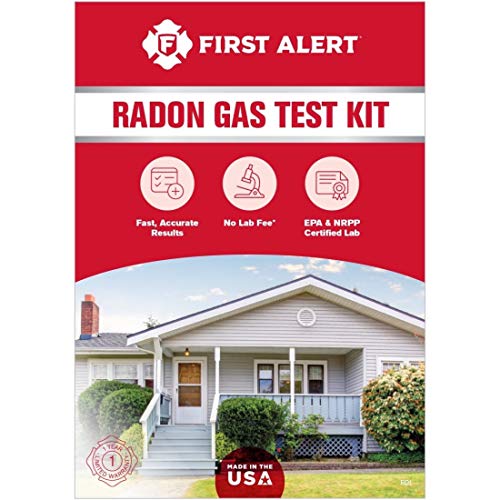 First Alert RD1 Radon Test Kit | Widely stocked; 48-hour charcoal test. | Amazon — $17.95 |
 Airthings Corentium Home | Digital monitor with a long-term average. | Amazon — $142.99 |