Radon Basement System: Mitigation Design and 2026 Costs
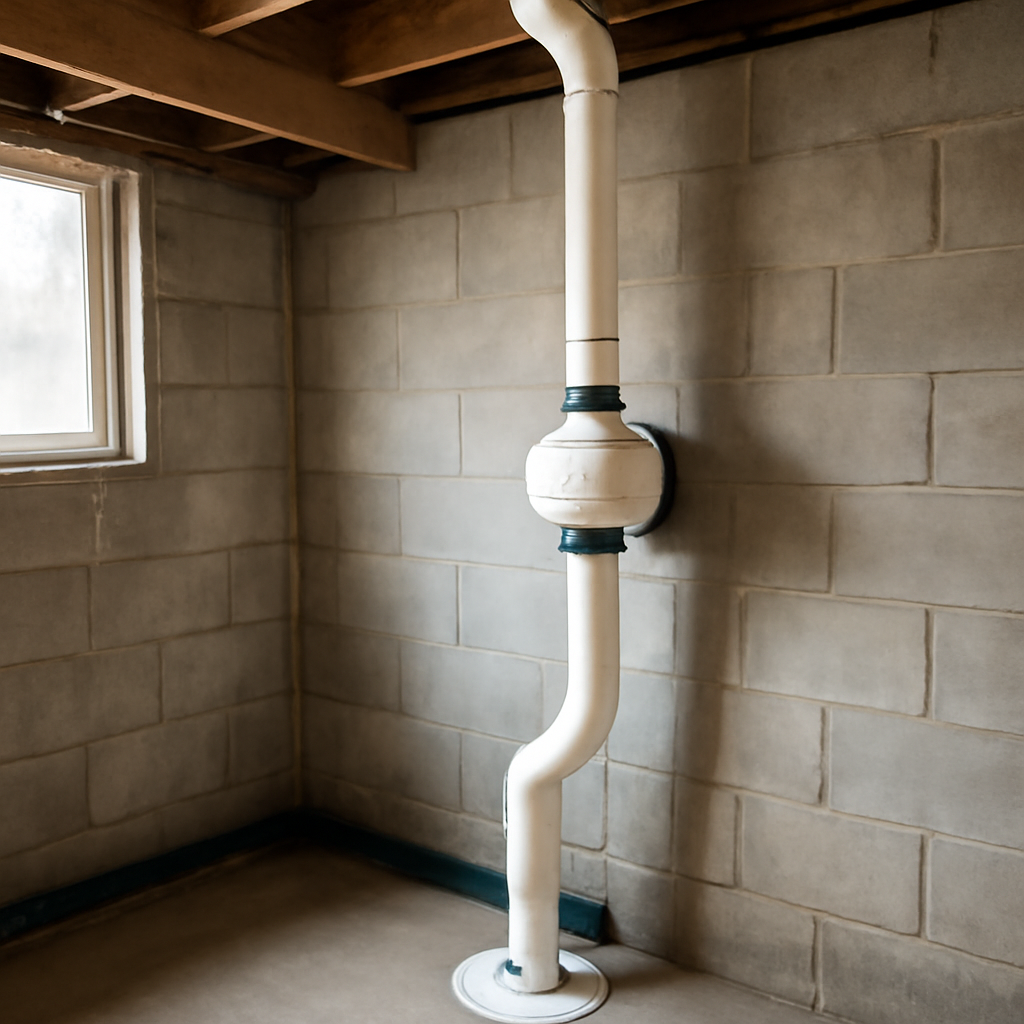
A radon basement system in the modern Front Range single-family home is almost always sub-slab depressurization (SSD): a sealed suction point under the basement slab connected by PVC pipe to a continuously running fan that vents soil gas above the roofline. The design has been the EPA standard for residential radon mitigation since the early 1990s and works on more than 95 percent of installations. This guide summarizes EPA radon mitigation standards and CDPHE guidance current as of 2026 and is not a substitute for direct consultation with a certified mitigation contractor. The fundamentals below help homeowners read installer bids, understand what the system does, and recognize good design from inadequate design.
Part of our Radon Mitigation Systems guide — start there for the full picture →
How sub-slab depressurization works
Radon enters the home from soil through pressure differentials. The home is slightly negative-pressure relative to the soil because warm indoor air rises (stack effect), HVAC exhausts, and combustion appliances pull air out. Soil gas — including radon — flows toward the lower pressure inside the home, entering through foundation cracks, slab penetrations, sump pits, and the slab pour itself.
SSD reverses the pressure differential. A fan pulls air from under the slab through a sealed suction pit, creating sub-slab pressure lower than the indoor air pressure. Soil gas now flows toward the fan rather than into the home. The collected gas vents above the roofline where it dilutes rapidly into outdoor air. EPA radon mitigation standards specify the system must achieve sub-slab pressure differential of at least 5 Pascals below indoor pressure throughout the under-slab area.
The companion Colorado radon mitigation overview walks through Front Range design considerations including foundation types common in Denver-area subdivisions, El Paso County construction patterns, and Boulder County’s slab-on-grade prevalence.
The six components
A standard residential SSD system has six physical components.
Suction pit
A 3-to-6-foot-diameter hole excavated into the gravel layer under the slab. The pit collects soil gas from a wide radius — typically 50 to 100 feet of slab area per pit. Larger basements may need two or three pits. The pit is sealed at the slab penetration to prevent indoor air from short-circuiting the system.
Vent stack
Schedule 40 PVC pipe, typically 3 to 4 inches in diameter, running from suction pit to fan to roof termination. Joints are glued and sealed. The stack runs inside the home (usually in a closet or unfinished area) and exits through the roof above the highest occupied level.
Radon fan
Inline centrifugal fan rated for continuous duty. CFM and pressure ratings match the home’s sub-slab characteristics. Fans must be installed in non-conditioned space — typically the attic, a garage, or outside the home — because pressurized indoor sections of the stack between fan and roof would push radon back into the home if joints leaked.
Manometer
U-tube pressure indicator showing the differential pressure between sub-slab and ambient air. Mounted on the visible portion of the stack inside the home. A working system shows offset legs of the U-tube; a failed system shows equal legs.
Slab seals
Polyurethane or silicone sealant applied to visible slab cracks, plumbing penetrations, sump pit lids, expansion joints, and the suction-pit-to-slab interface. Sealing forces all soil gas through the fan rather than letting it leak in.
Roof termination
Above the roofline, at least 10 feet from any window or air intake, with a cap or bend that prevents rain entry. EPA standards specify minimum height above roof and minimum horizontal offset from openings.
Bid pricing in 2026
Front Range SSD system installation runs $1,200 to $2,500 in 2026 for a typical single-family home. Drivers of variation:
Single suction pit versus multiple pits. A standard installation uses one pit. Large basements (over 2,000 square feet of slab), multi-zone basements separated by interior footings, or basements with limited under-slab communication require additional pits. Each added pit adds $400 to $700.
Interior versus exterior fan routing. Interior routing through closets and unfinished spaces is faster and cheaper. Exterior routing — pipe outside the home, fan mounted on the exterior wall — sometimes required for finished basement layouts and adds $300 to $600.
Slab condition. A clean slab with few cracks and an accessible sump runs at the low end. A heavily cracked slab requiring extensive sealing work, a buried sump pit needing excavation, or a finished basement requiring carpentry-coordinated access runs at the high end.
Roof termination access. A simple attic-to-roof termination through accessible framing runs cheap. A termination through finished ceilings, around HVAC equipment, or through complex roof geometry runs expensive.
Reading installer bids
A defensible bid spells out suction-pit count and locations, fan make and model with CFM/pressure ratings, vent stack diameter and routing, slab seal scope and materials, manometer placement, roof termination location, post-installation guarantee (target pCi/L), post-install verification testing, warranty terms, and itemized cost. Bids without this detail force the homeowner to compare apples to oranges.
The radon system repair guide covers what each component costs to fix if it fails later, which informs the homeowner about which components are worth specifying in detail at install time. A bid that doesn’t name the fan brand and model is a flag — fans vary significantly in service life and warranty terms.
Performance guarantees
Most certified mitigation contractors offer a performance guarantee: the post-installation radon level will be below 4 pCi/L (EPA action level), and many offer below 2 pCi/L (consideration level). The guarantee should be in writing and should include the remedy if the system underperforms — typically additional suction pits, supplemental fan capacity, or additional slab sealing at no extra cost.
Guarantees rest on a post-installation verification test, usually a 48-hour passive test or CRM deployment 14 to 30 days after install. EPA recommends this verification. A contractor who doesn’t include verification testing in the bid is the wrong hire.
Active versus passive systems
Active SSD uses a fan to create the pressure differential. Passive SSD relies on stack effect alone, with no fan — the vertical PVC stack acts like a chimney pulling soil gas upward as warm indoor air rises. Some Colorado homes built since 2009 include passive SSD in the slab from new construction, with stub-up piping ready for a fan if testing shows the passive system is insufficient.
Passive systems usually reduce radon by 20 to 60 percent — useful but rarely sufficient when starting levels exceed 4 pCi/L. Activating a passive system by adding a fan typically costs $400 to $800 and reduces radon by an additional 50 to 80 percent on top of the passive reduction. Homeowners in newer construction should test first to determine whether the passive system is keeping levels below action level. If not, fan activation is straightforward.
Mitigation in finished basements
Finished basements complicate access. The suction pit must be cut through the slab, which means cutting through any flooring above it. Carpet can be lifted and re-laid. Hardwood and tile require more work. Drywall above the suction-pit location may need to be opened for vent-stack routing. Most certified mitigators include carpentry coordination in their bids, but the homeowner should clarify whether finishes will be restored or whether the homeowner is responsible for cosmetic repair.
Some installations use exterior suction with the pipe routed up the outside of the home. Exterior systems work well in basements with no good interior routing path. They cost more ($1,800 to $2,800 range) but avoid finished-basement disruption. The radon basement test guide covers pre-mitigation testing protocol for finished basements.
Mitigation in crawl spaces
Homes with crawl-space foundations rather than full basements use a variant called sub-membrane depressurization. A heavy polyethylene sheet is sealed across the crawl-space floor, and the radon fan pulls soil gas from under the membrane. Sealing the membrane edges to foundation walls is critical — a small gap defeats the system. Crawl-space mitigation typically costs $1,500 to $2,800 in 2026, with the upper end reflecting low-headroom crawl spaces requiring difficult labor conditions.
What homeowners can expect on install day
A standard SSD installation takes one day on-site for a typical single-family home. The crew arrives in the morning, scopes the work, and begins by cutting the suction pit through the slab (a noisy step using a concrete saw and rotary hammer). Pit excavation removes soil and gravel down to the desired depth, usually 18 to 24 inches below slab. PVC piping is installed from pit through framing to the fan location. The fan is mounted, electrical connections made, vent stack routed to roof termination, and the roof penetration sealed.
Slab sealing runs alongside the pipe work. All visible cracks get sealed, the suction-pit-to-slab interface gets sealed, the sump pit lid (if present) gets sealed, and plumbing penetrations get reviewed and sealed as needed. The manometer is mounted on the visible interior portion of the stack.
The fan is activated near the end of the day. The crew confirms vacuum at the manometer and explains the system to the homeowner. A 14-to-30-day follow-up verification test confirms the system reduced radon below action level.
Warranty and ongoing maintenance
Most installations come with 5-year fan warranties and 1-to-2-year labor warranties. Some contractors offer extended warranties. EPA recommends annual radon retesting of mitigated homes to confirm fan function and seal integrity. The radon testing pillar covers ongoing maintenance practices for mitigated Front Range homes.
References
- EPA Radon Mitigation Standards — U.S. Environmental Protection Agency
- EPA Consumer’s Guide to Radon Reduction — U.S. Environmental Protection Agency
- CDPHE Radon Program — Colorado Department of Public Health and Environment
- American Lung Association Radon Overview — American Lung Association
Frequently asked questions
How much does a basement radon system cost in 2026?
Front Range sub-slab depressurization installations run $1,200 to $2,500 for a typical single-family home. Drivers include suction pit count, interior versus exterior routing, slab condition, and roof termination complexity. Bids significantly below $1,200 often skip key components like proper sealing or post-install verification testing.
How long does a radon system installation take?
A standard SSD installation takes one day on-site for a typical Front Range single-family. The crew cuts the suction pit, runs piping, installs the fan, seals the slab, and routes the vent through the roof. Follow-up verification testing 14 to 30 days later confirms the system reduced radon below the 4 pCi/L action level.
Will a radon system damage my finished basement?
Some disruption is inevitable but most contractors minimize it. A small access cut in the floor for the suction pit, drywall opening for the vent stack, and roof penetration are the visible impacts. Clarify in the bid whether the contractor restores cosmetic finishes or whether the homeowner handles that. Exterior routing avoids most finished-basement disruption.
What if my home already has a passive radon system?
Test first to see whether passive performance keeps levels below 4 pCi/L. If yes, no fan needed. If not, fan activation typically costs $400 to $800 and reduces radon by an additional 50 to 80 percent. Many Colorado homes built since 2009 include passive stub-up piping ready for fan addition.
Front Range homeowners weighing mitigation bids or planning a basement system installation can reach out for vetted certified mitigator contacts across the nine-county service area.
Test your home for radon
Radon is invisible and odorless, so a test is the only way to know your level. A short-term kit gives a first reading in days; a digital monitor tracks it over time.
| Product | Why | Buy |
|---|---|---|
 AirChek Charcoal Radon Test Kit AirChek Charcoal Radon Test Kit | Lab fee usually included; EPA short-term protocol. | Amazon — $21.95 |
 First Alert RD1 Radon Test Kit First Alert RD1 Radon Test Kit | Widely stocked; 48-hour charcoal test. | Amazon — $17.95 |
 Airthings Corentium Home Airthings Corentium Home | Digital monitor with a long-term average. | Amazon — $142.49 |