Radon in the Basement: What Homeowners Need to Know
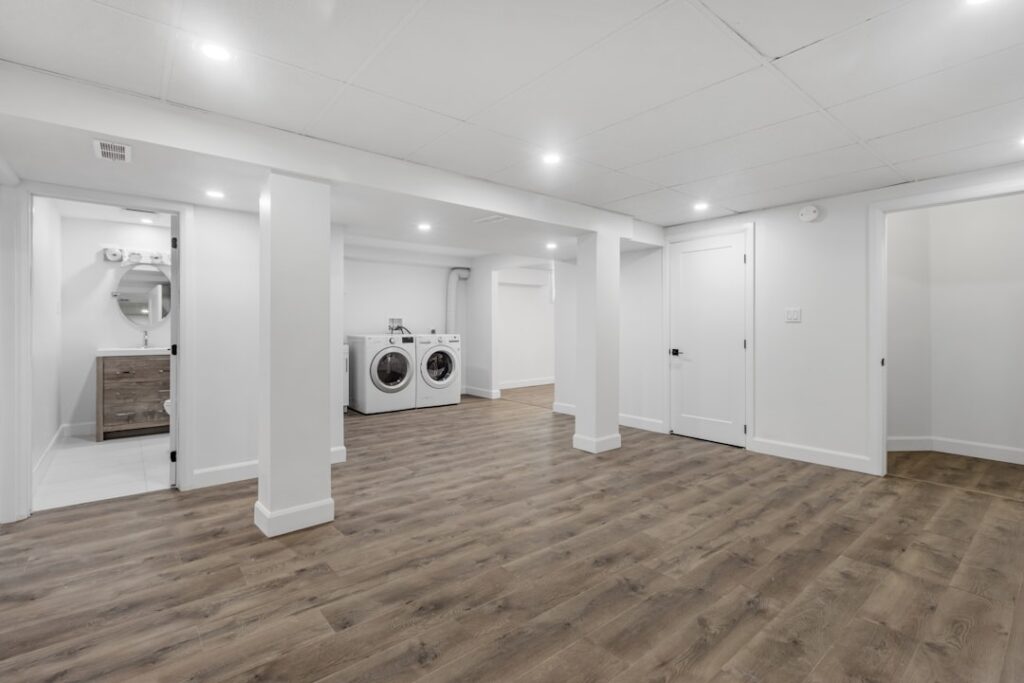
The basement is where radon problems usually start, because it is the part of the home in closest contact with the soil where the gas originates. Radon in the basement tends to read higher than anywhere else in the house, which matters enormously as finished basements become bedrooms, offices, and playrooms. For Front Range homeowners, where elevated radon is the norm, understanding why basements concentrate the gas — and what to do about it — protects the household’s long-term lung health. This guide summarizes EPA and Colorado Department of Public Health and Environment guidance current as of 2026 for informational purposes; consult a certified professional for testing and mitigation decisions.
Part of our Radon Levels guide — start there for the full picture →
Why Radon Is Highest in the Basement
Radon forms when uranium in soil and rock decays, releasing a radioactive gas that moves upward through the ground. A home sits over that soil, and the basement is the first barrier the gas meets. It enters through cracks in the slab and foundation walls, gaps around pipe penetrations, the sump pit, floor drains, and any unsealed openings. Because the basement is below grade and often less ventilated than upper floors, the gas accumulates there before diffusing through the rest of the house.
The “stack effect” amplifies this. Warm air rising through the home creates a slight negative pressure at the lowest level, actively drawing soil gas — including radon — in through foundation openings. The result is that basement readings are typically the highest in the home, sometimes several times higher than the main floor. This is why the EPA directs that testing be done in the lowest livable level. The full picture of where radon comes from and how it moves is covered in our guide to radon testing for Front Range homeowners.
How to Test Radon in a Basement
Testing in the basement follows the standard EPA protocol, with placement being the key detail. Place the test device in the lowest level you live in or plan to live in — if the basement is finished or will be, that is where the test belongs. Position the detector 20 inches to 6 feet above the floor, away from drafts, exterior walls, sump pits, high humidity, and direct sunlight. For short-term tests, maintain closed-house conditions: windows and exterior doors closed except for normal entry and exit, starting 12 hours before and throughout the test.
Short-term tests run 2 to 7 days; long-term tests over 90 days give a more accurate annual average, which is especially useful because basement radon swings with the seasons. A high short-term result should be confirmed with a second test before mitigation. Determining a safe versus unsafe basement reading is a common question, and our guide to safe radon levels in the basement explains how to interpret the numbers in this specific context.
What Basement Radon Levels Mean
Results come in picocuries per liter (pCi/L). The EPA recommends mitigation at or above 4.0 pCi/L and suggests considering it between 2 and 4 pCi/L, noting no level is entirely risk-free. Because basements read higher than upper floors, a basement measurement at the action level is significant — it represents the exposure in a space families increasingly use for sleeping and daily living. The U.S. indoor average is about 1.3 pCi/L and outdoor air around 0.4 pCi/L.
Colorado context sharpens the concern. Much of the Front Range sits in EPA Zone 1, the highest radon-potential category, and a large share of Colorado basements test above 4.0 pCi/L. The CDPHE encourages every Colorado home to be tested, and a high basement reading there is common rather than exceptional — the appropriate response is mitigation, not alarm.
Finished Basements Raise the Stakes
A finished basement used as living space changes the calculus. When the lowest, highest-radon level of the home becomes a bedroom or a child’s play area, occupants spend many hours in the zone of greatest exposure. The EPA frames radon risk in terms of long-term exposure, so converting a basement to living space without testing — and mitigating if needed — can meaningfully increase a household’s cumulative dose. Anyone finishing a basement should test before and after the project.
How to Reduce Radon in the Basement
The standard, most effective fix for basement radon is an active sub-slab depressurization system. A continuously running fan draws soil gas from beneath the basement slab and vents it through a pipe to above the roofline, creating negative pressure under the slab so radon is intercepted before it enters the living space. Sealing visible cracks, the sump pit, and slab penetrations supports the system, though sealing alone is not a reliable standalone solution.
Professional installation routinely brings basement levels well below 4.0 pCi/L, often under 2.0. The system includes a monitoring gauge so homeowners can confirm at a glance that the fan is working, and post-installation testing verifies the reduction. The components, cost, and operation of these systems are detailed in our guide to the active radon mitigation system. In Colorado, mitigation contractors are required to be certified, so homeowners should hire a credentialed professional rather than attempting a full system as a DIY project.
Crawl Spaces and Mixed Foundations
Not every lower level is a poured slab. Homes with a crawl space beneath part or all of the structure require a different technique — sub-membrane depressurization — in which a heavy polyethylene barrier is laid over the crawl floor, sealed, and depressurized beneath so soil gas is drawn out before it reaches the living space. Front Range homes often combine foundation types, with a finished basement adjoining a crawl space or a slab-on-grade addition, and these mixed configurations may need more than one suction point to control radon across the whole footprint. A contractor evaluating a basement should account for any adjoining crawl space, because radon entering there can migrate into the basement air and undermine a system designed only for the slab.
Improving Basement Ventilation
Ventilation can help modestly but rarely solves elevated basement radon on its own. Increasing air exchange dilutes the gas, and a heat recovery ventilator can do this while limiting energy loss, but for readings well above the action level, sub-slab depressurization is far more effective. Treat ventilation as a supplement, not a substitute, when basement levels are high.
Common Basement Entry Points for Radon
Knowing where radon gets into a basement helps homeowners understand both testing and the fix. The most common entry points are cracks in the concrete slab, especially the control joints and the perimeter gap where the slab meets the foundation wall. Cracks and porous areas in poured or block foundation walls let gas seep through below grade. The sump pit is a major pathway, since it opens directly to the soil and drainage system, which is why mitigation often seals it with a gasketed lid. Floor drains, gaps around plumbing and utility penetrations, and the hollow cores of concrete block walls all provide routes as well.
Even a tight, well-built basement is not sealed against radon, because the gas is driven by pressure differences, not just open holes. The stack effect and exhaust appliances like furnaces, water heaters, and dryers depressurize the lower level slightly, and that negative pressure actively pulls soil gas in through whatever openings exist. This is why simply patching visible cracks rarely solves an elevated reading on its own — the gas finds new pathways. A sub-slab depressurization system addresses the root cause by reversing the pressure relationship, holding the area beneath the slab at lower pressure than the basement so gas is drawn out and vented rather than pulled inward.
The Health Basis for Acting on Basement Radon
The reason basement radon deserves attention is its link to lung cancer. Radon decay products, when inhaled, irradiate lung tissue over years, and the EPA ranks radon as the second-leading cause of lung cancer in the United States and the leading cause among people who have never smoked. Because the basement typically holds the highest concentration in the home, it is the space where exposure accumulates fastest — and as basements increasingly serve as bedrooms, offices, and play areas, families are spending more hours in that high-exposure zone.
Risk is cumulative and tied to both concentration and time. A child’s bedroom or a home office in a basement reading 8 pCi/L delivers far more lifetime exposure than the same level in a storage room visited a few minutes a week. The combination of radon and smoking multiplies the risk well beyond either alone, so households with smokers have added reason to mitigate a high basement reading. The American Lung Association and CDPHE both treat basement radon as a preventable hazard, and the Front Range’s high prevalence — with a large share of Colorado basements reading above the action level — means acting on a high result is the norm, not an overreaction.
Why Sealing the Basement Alone Is Not Enough
A natural instinct on discovering basement radon is to seal every visible crack and assume the problem is solved. Sealing helps, and it is part of every professional system, but the EPA cautions that sealing by itself has not been shown to reliably lower radon to safe levels. The reason is pressure. The home’s stack effect and exhaust appliances hold the basement at slightly negative pressure relative to the soil, so the gas is actively drawn in — and it will find whatever pathways remain, including the hollow cores of block walls and microscopic openings sealant cannot reach.
Patch one crack and the gas migrates to another. This is why active sub-slab depressurization, which reverses the pressure relationship beneath the slab, is the reliable solution rather than sealing alone. The system holds the sub-slab area at lower pressure than the basement, so soil gas is pulled into the suction pipe and vented outdoors instead of seeping upward into the room. Sealing then becomes a supporting measure that improves the system’s efficiency by reducing the volume of air the fan must move, not the primary defense. Homeowners who rely on caulk and paint-on sealers without depressurization often see disappointing retest numbers, which is the practical proof that the pressure problem, not the visible cracks, is the real issue.
Living Safely With a Basement
For homeowners finishing a basement into living space, the smart sequence is to test before the project, mitigate if levels are elevated, and test again after the work, since finishing can change airflow and radon entry. Building the mitigation system in before drywall goes up is far easier than retrofitting around a finished room. A basement designed and tested with radon in mind becomes simply more usable square footage rather than a hidden exposure risk.
A basement is not inherently dangerous — it is simply the most likely place for radon to concentrate, which makes it the place to test first and watch over time. Test the lowest livable level, confirm any high result, mitigate with a certified contractor if levels reach the action threshold, and retest after mitigation and every few years thereafter. For Front Range homeowners, where elevated basement radon is widespread, this routine turns an invisible risk into a managed one and keeps the lowest, most-used level of the home safe for the people who live there.
References
- A Citizen’s Guide to Radon — U.S. EPA
- Radon in Colorado Homes — Colorado Department of Public Health and Environment
- Radon and Lung Health — American Lung Association
Frequently asked questions
Why is radon higher in the basement?
The basement is closest to the soil where radon forms and enters through slab cracks, foundation gaps, and the sump pit. Being below grade and less ventilated, it accumulates the gas, and the home's stack effect actively draws soil gas into the lowest level.
What is a safe radon level in a basement?
The EPA recommends mitigation at or above 4.0 pCi/L and suggests considering it between 2 and 4 pCi/L, noting no level is fully risk-free. Because basements read higher than upper floors, a basement reading at the action level is significant, especially in finished living space.
How do I reduce radon in my basement?
The standard fix is an active sub-slab depressurization system: a fan draws soil gas from beneath the slab and vents it above the roofline. Sealing cracks and the sump pit supports it. Professional installation routinely brings levels well below 4.0 pCi/L.
Should I test a finished basement for radon?
Yes, before and after finishing it. A finished basement used as a bedroom or play area means occupants spend hours in the home's highest-radon zone, increasing cumulative exposure. Testing the lowest livable level and mitigating if needed protects the household.
Front Range homeowners concerned about radon in a basement, especially a finished one, can contact us here to connect with a certified local professional for testing and mitigation guidance.
Test your home for radon
Radon is invisible and odorless, so a test is the only way to know your level. A short-term kit gives a first reading in days; a digital monitor tracks it over time.
| Product | Why | Buy |
|---|---|---|
 AirChek Charcoal Radon Test Kit | Lab fee usually included; EPA short-term protocol. | Amazon — $21.95 |
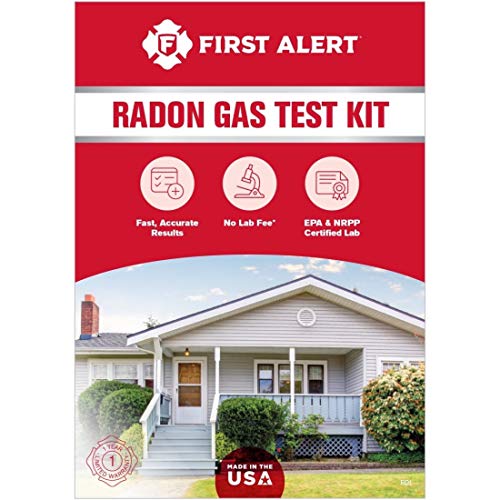 First Alert RD1 Radon Test Kit | Widely stocked; 48-hour charcoal test. | Amazon — $17.95 |
 Airthings Corentium Home | Digital monitor with a long-term average. | Amazon — $146.14 |