What Does a Radon System Do? A Plain-Language Guide
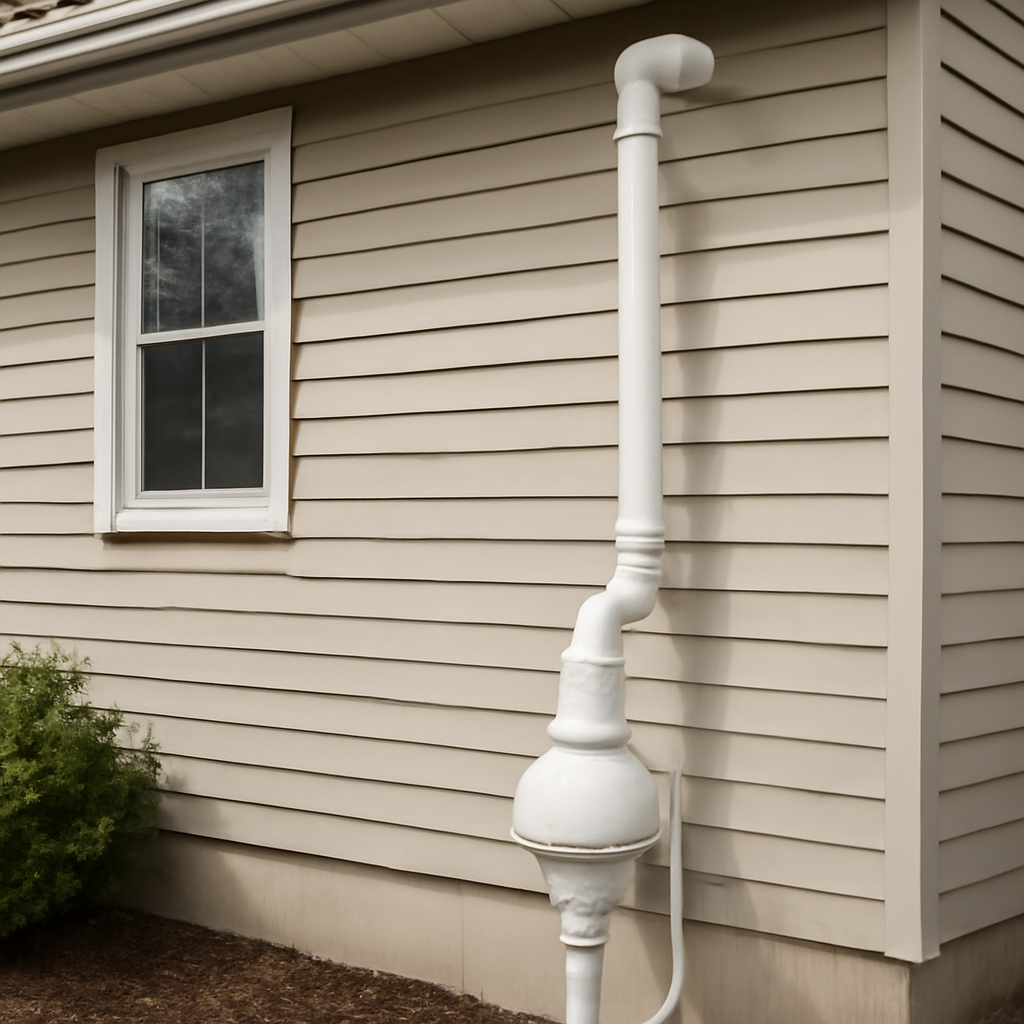
Radon is an invisible, odorless radioactive gas that seeps up from soil and rock into homes, and prolonged exposure is a leading cause of lung cancer. A radon system, more precisely a radon mitigation system, is the engineered fix that keeps that gas from accumulating indoors. The most common design pulls radon from beneath the foundation and vents it safely above the roof before it can enter living space. This guide summarizes EPA and Colorado health-department guidance current as of 2026 on what a radon system does, how its parts work together, and what to expect from one. It is educational; testing and mitigation decisions should involve a certified professional, and health questions belong to a physician.
Part of our Radon Mitigation Systems guide — start there for the full picture →
What a Radon System Does in Practical Terms
A radon system reduces the concentration of radon inside a home by intercepting the gas before it reaches the living area and routing it outdoors. Radon enters through cracks in the slab, gaps around pipes, sump pits, and the porous fill beneath a foundation. Left alone, it collects indoors, especially in lower levels, and can reach concentrations the EPA considers a health risk.
The dominant approach is active soil depressurization (ASD), sometimes called sub-slab depressurization. A fan creates slight suction beneath the foundation so radon-laden air is drawn into a pipe and discharged above the roofline rather than seeping into the house. The result is a lower indoor radon level and a pressure relationship that discourages new gas from entering.
Understanding what the system does is the foundation for understanding the rest of radon management. The terminology and component details connect to the broader radon testing guide for Front Range homeowners, where the why behind testing and mitigation is laid out.
It helps to picture the problem the system solves. A house tends to operate at a slightly lower air pressure than the soil beneath it, especially in winter when heated air rises and escapes upward. That pressure difference draws soil gas, radon included, up through every crack and gap in the foundation. A radon system reverses the advantage. By applying suction beneath the slab, it makes the area under the foundation lower in pressure than the house, so radon flows into the system’s pipe instead of into the living space.
Why Radon Is a Health Concern
Radon matters because of what it does over years of exposure. As radon decays, it produces radioactive particles that can lodge in the lungs and damage tissue. The EPA identifies radon as the second leading cause of lung cancer overall and the leading cause among people who do not smoke. The risk is cumulative, building with the concentration and the length of exposure, which is why long-term exposure in a home is the central concern rather than a brief encounter.
Because radon is invisible and odorless, a household can be exposed for years without any warning. There are no immediate symptoms to prompt action. This is the reason testing comes first and a mitigation system follows when levels are high. The system’s purpose is to keep the lifetime dose low by holding indoor radon well below the level at which the EPA recommends action.
The Main Components
A typical active system is straightforward once the pieces are named. A suction point is created through the slab, often into the gravel or soil below. A vent pipe, usually PVC, runs from that point up through the house and out above the roof. An inline fan, mounted in an unconditioned space such as an attic or on an exterior wall, provides the continuous suction that keeps air moving.
The Monitor and Sealing
A manometer, a simple U-shaped gauge on the vent pipe, shows whether the fan is producing suction so a homeowner can confirm the system is running. Installers also seal major slab cracks, the sump cover, and other openings, which improves the suction’s reach and the system’s efficiency. These elements together make the difference between a pipe that merely exists and a system that actually lowers levels.
The discharge point matters as much as the suction point. EPA mitigation standards call for the vent to release radon above the roofline and away from windows and other openings, so the gas disperses into the outdoor air rather than re-entering the home. Routing the pipe correctly, sizing the fan to the home, and locating the suction point where it can draw across the sub-slab area are the design decisions that determine whether a system performs. A poorly placed suction point or an undersized fan can leave levels stubbornly high.
Active vs. Passive Systems
Not every radon system has a fan. A passive system relies on the natural stack effect, warm air rising in the house, to draw radon up the vent pipe without mechanical help. Passive systems are often roughed-in during new construction and can be upgraded to active by adding a fan if testing shows levels remain elevated.
Active systems with a fan are more reliable for bringing high levels down, which is why post-test mitigation almost always uses one. The choice depends on the home, the soil, and the measured radon concentration. A clearer breakdown of system types appears in the guide to what a radon mitigation system is.
Why It Matters in Colorado
Colorado’s geology makes elevated radon common. The Colorado Department of Public Health and Environment notes that a large share of homes across the state, including the Front Range counties of Denver, Douglas, Arapahoe, Jefferson, El Paso, and Boulder, test above the EPA action level of 4 picocuries per liter (pCi/L). Soil composition and the way homes are built into hillsides both contribute.
That regional reality is why radon systems are widespread in Colorado real estate. The EPA recommends fixing homes at or above 4 pCi/L and considering action between 2 and 4 pCi/L. A mitigation system is the standard remedy, and in many Front Range transactions a buyer will encounter either an existing system or a recommendation to install one.
What to Expect From a Working System
A properly designed and installed system typically brings indoor radon well below the action level, often under 2 pCi/L. The fan runs continuously and uses modest electricity. The manometer should show a steady pressure difference; if the columns level out, the fan may have failed and needs attention.
EPA guidance recommends retesting after installation to confirm the system worked, and periodically thereafter, since radon levels and home conditions change over time. A system is not a one-time fix to forget; it is ongoing infrastructure that benefits from occasional verification, much like a smoke detector.
Maintenance and Verification
Maintenance is light but real. Homeowners should check the manometer periodically, keep the vent path clear, and retest radon every couple of years and after major renovations. Fans have a service life and eventually need replacement. Because the gas is undetectable by the senses, the only way to know a system is doing its job is to test. A certified radon professional can diagnose and service a system that is not performing.
What a System Does Not Do
A radon system has a specific job, and it is useful to know its limits. It lowers radon by intercepting soil gas, but it is not an air purifier and does not address other indoor air concerns such as mold, dust, or general ventilation. It also cannot guarantee a level of zero, since there is no completely radon-free indoor environment; the goal is to bring levels well below the action threshold, not to eliminate radon entirely.
A system also does not maintain itself silently forever. If the fan fails, the suction stops and radon can climb back toward pre-mitigation levels, which is why the manometer and periodic retesting exist. A homeowner who installs a system and then ignores it for a decade may be living with a failed fan and elevated radon without knowing. Treating the system as ongoing infrastructure, checked occasionally and retested periodically, is what keeps it doing its job year after year.
Reading the Manometer
The manometer is the simplest tool a homeowner has for confirming the system runs. It is a small gauge, usually filled with colored liquid in a U-shaped tube, mounted on the vent pipe. When the fan is pulling suction, the liquid sits at two different heights on the two sides of the U, showing a pressure difference. When the columns sit level with each other, there is no suction, which usually means the fan has failed or lost power.
Checking it takes seconds and costs nothing. A homeowner who glances at the manometer now and then will catch a failed fan long before a retest would. Because radon gives no sensory warning, this little gauge is one of the few real-time indicators that the system is working. Noting the normal reading when the system is first installed gives a baseline to compare against later.
How a Radon System Fits With Home Resale
In high-radon regions, a radon system is a familiar feature in real estate. Buyers increasingly test during transactions, and an existing, documented system with a recent passing test reassures them. For a seller, a system with proof of a low post-mitigation level removes a potential sticking point and signals the home has been responsibly maintained.
Along Colorado’s Front Range, where the Colorado Department of Public Health and Environment reports widespread elevated radon, encountering a system or a recommendation to install one is routine. A buyer who understands what the system does can evaluate it confidently rather than seeing it as a red flag. Far from a defect, a properly functioning radon system is evidence that a known regional hazard has been addressed, which is exactly what a careful buyer wants to see.
What Influences How Well a System Works
Two homes with identical-looking systems can perform differently, and the reasons trace back to design and conditions. The placement of the suction point determines how broadly the fan can draw across the area beneath the slab. The fan’s capacity has to match the home’s soil and the severity of the radon problem. The thoroughness of sealing affects how much air the fan wastes pulling from inside the house rather than from the soil. Each factor shapes the final indoor level.
Soil conditions play a quiet but important role. Loose, permeable gravel beneath a slab lets a single suction point reach a wide area, while tight, compacted soil resists airflow and may require more fan power or additional suction points. A professional who diagnoses these conditions before installing produces a system tuned to the home. This is why a confirming radon test after installation is so important: it verifies that the design choices actually delivered the intended reduction rather than assuming they did.
References
- EPA radon health risk and mitigation guidance — U.S. Environmental Protection Agency
- Colorado radon program and home prevalence data — Colorado Department of Public Health and Environment
- CDC information on radon and lung cancer risk — Centers for Disease Control and Prevention
Frequently asked questions
What does a radon system actually do?
It lowers indoor radon by drawing the gas from beneath the foundation and venting it above the roof before it enters living space, using active soil depressurization with a fan.
How do I know my radon system is working?
Check the manometer gauge on the vent pipe for a steady pressure difference, and retest the home's radon level. EPA recommends retesting after installation and periodically thereafter.
What is the difference between active and passive systems?
Passive systems use natural air movement to vent radon, while active systems add a fan for reliable suction. Active systems are standard when test results show elevated radon.
What radon level requires a system?
EPA recommends fixing homes at or above 4 pCi/L and considering action between 2 and 4 pCi/L. A mitigation system is the standard remedy for elevated levels.
Front Range homeowners weighing a radon system can reach a vetted local radon professional through our contact page to test and plan a fix.
Test your home for radon
Radon is invisible and odorless, so a test is the only way to know your level. A short-term kit gives a first reading in days; a digital monitor tracks it over time.
| Product | Why | Buy |
|---|---|---|
 AirChek Charcoal Radon Test Kit AirChek Charcoal Radon Test Kit | Lab fee usually included; EPA short-term protocol. | Amazon — $21.95 |
 First Alert RD1 Radon Test Kit First Alert RD1 Radon Test Kit | Widely stocked; 48-hour charcoal test. | Amazon — $16.98 |
 Airthings Corentium Home Airthings Corentium Home | Digital monitor with a long-term average. | Amazon — $142.99 |