Mitigation System for Radon: 2026 Homeowner Guide

A mitigation system for radon is a purpose-built piece of equipment designed around the chemistry and pressure behavior of one specific gas. The word “mitigation” appears across many household-safety contexts — carbon monoxide alarms, methane vent stacks, vapor-intrusion controls for industrial sites — but the systems are not interchangeable. A radon mitigation system follows EPA Radon Mitigation Standard ASD-1995 and the AARST consensus revisions that have updated it since, uses sub-slab depressurization (SSD) as the dominant method, and pulls radioactive soil gas from beneath the building envelope before it can enter living spaces. This guide summarizes EPA and CDC guidance current as of 2026 — consult a certified radon professional for testing and your physician for symptom evaluation.
Part of our Radon Mitigation Systems guide — start there for the full picture →
What does a mitigation system for radon actually do?
The job is to lower indoor radon below 4.0 pCi/L (the EPA action level) and ideally below 2.0 pCi/L (the EPA aspirational goal). Most modern systems hit those targets using sub-slab depressurization. A small-diameter PVC pipe penetrates the slab into a pit cut into the sub-slab gravel layer, an in-line radial fan creates suction in that pit, and the pipe routes the captured soil gas out above the roofline where it disperses harmlessly. The fan runs continuously, the manometer mounted on the riser confirms suction, and the system tag documents who installed it and when.
The pressure logic matters. Houses generally sit at slightly lower pressure than the soil beneath them — warm interior air rises, stack effect pulls cooler air in, and the foundation acts like a straw drawing radon up. A radon mitigation system reverses that pressure gradient by depressurizing the sub-slab volume. Once the gravel layer is at lower pressure than the basement, soil gas flows toward the suction point rather than through slab cracks.
Why is the system different from other gas-mitigation equipment?
Other gases that get “mitigated” in residential settings — carbon monoxide, methane, sewer gas, formaldehyde — behave differently and call for different controls. The label “mitigation system” applied to those problems does not describe a radon system in disguise.
Carbon monoxide
CO comes from incomplete combustion inside the home — furnaces, water heaters, attached garages. Mitigation means combustion appliance repair, draft hood verification, attached-garage isolation, and resident-level CO alarms. There is no continuous fan extracting CO from outside the building envelope.
Methane and sewer gas
Methane in residential settings usually traces to landfill proximity, sewer breaches, or natural gas leaks. Vent stacks, sewer trap repair, and gas-line leak detection address it. Methane is lighter than air; radon is much heavier. The pipe routing and fan placement for methane mitigation differ fundamentally.
Vapor-intrusion mitigation
Industrial sites with VOC contamination sometimes install sub-slab depressurization systems that look superficially like radon mitigation. The pipe sizing, fan ratings, and post-installation testing protocols are different because the target gas is different and the regulatory framework (typically state environmental program oversight) is different. A contractor licensed for vapor-intrusion mitigation is not automatically credentialed for residential radon work.
What EPA standard governs radon mitigation system design?
The original EPA Radon Mitigation Standard, often shorthanded as ASD-1995, set the framework for sub-slab depressurization design. AARST (American Association of Radon Scientists and Technologists) has since produced consensus standards that update the original document — SGM-SF-2017 for single-family dwellings and RMS-LB-2018 for larger buildings are the most cited. Colorado, like many states, references the AARST consensus standards in its certification program and inspection criteria.
The standards prescribe specific design elements. Suction-point quantity scales with slab size and sub-slab communication. The riser pipe must be at least three inches in diameter (four inches preferred). Exhaust termination requires ten feet above grade and ten feet from any opening that could allow re-entry. The system must include a manometer (often called the U-tube) so operation can be verified visually. A system tag documenting installer, date, fan model, and post-installation radon reading is mandatory. Households researching the broader mitigation landscape can review the what is radon mitigation overview for context on cost and standards.
How does sub-slab depressurization work in practice?
SSD is the EPA-recommended primary method for new and existing homes with slab-on-grade or basement foundations. The system has five major components.
The suction pit
A pit cut into the slab and into the gravel layer below creates a low-pressure volume the fan can draw from. The pit is sized to allow soil gas to flow toward it through the gravel without choking the fan.
The riser pipe
Schedule 40 PVC, three to four inches diameter, runs from the pit up through the building envelope and out the roof. Joints are solvent-welded. The pipe is labeled “Radon Mitigation System” so future trades do not mistake it for plumbing.
The fan
A radial radon fan — RadonAway RP260, Festa Z-1, Fantech HP190, or similar — sits in the riser above the conditioned space (attic, exterior wall, or above the highest occupied floor). Manufacturers publish suction curves; the installer matches the fan to the design airflow target.
The manometer
A U-tube manometer on the riser shows unequal liquid columns when the fan is pulling. The offset value is recorded on the system tag at commissioning so future service techs can compare.
The exhaust termination
The riser exits above the roofline with a screened cap, ten feet from any window or air intake, with proper flashing at the roof penetration.
Why is contractor certification non-negotiable?
Two national programs certify radon mitigation specialists. The National Radon Proficiency Program (NRPP) and the National Radon Safety Board (NRSB) maintain registries of credentialed installers and measurement professionals. Colorado and many other states require one of these credentials for any commercial radon mitigation work. The certification process covers the AARST consensus standards, system design, contractor safety, and post-installation verification testing.
The risk of non-certified installation is real. Common errors include undersized riser pipe (which chokes airflow), incorrect suction-point placement (which leaves zones of the slab unmitigated), exhaust terminations within ten feet of openings (which can pull radon-laden air back in), and missing or incorrect manometers (which leave the homeowner with no way to confirm the system is working). Cost savings from hiring an uncertified contractor evaporate the first time the post-mitigation test comes back at 6.0 pCi/L. Homeowners exploring service expectations beyond install can review the radon maintenance guide for the recurring care a properly installed system needs.
How is post-installation verified?
The EPA mitigation standard requires a post-mitigation radon test within thirty days of commissioning. Forty-eight-hour short-term protocol under closed-house conditions, with the result documented on the system tag and delivered to the homeowner in writing. The target is typically under 2.0 pCi/L; any result still above 4.0 pCi/L triggers system rework — usually an additional suction point or fan upgrade — at the installer’s expense if the contract is written correctly.
Many Colorado contractors include the post-mitigation test in the install package. The test result becomes part of the home file alongside the install report. Real-estate agents on the Front Range often request that documentation during seller disclosure. The Colorado radon testing pillar walks through the measurement workflow and timing.
What does an SSD system cost on the Front Range?
A standard single-family SSD installation in the Denver metro runs $1,200 to $2,500 in 2026, depending on slab complexity, foundation type, and exhaust routing requirements. Crawl-space combinations with a basement add cost because the crawl needs a sealed membrane and a separate suction point. Homes with finished basements where the riser must route through interior walls cost more because of the carpentry. Exterior wall installations are typically cheaper than interior because no drywall work is required.
The post-installation test is sometimes a separate $100 to $200 line item and sometimes bundled. The system tag, manometer, and labeled pipe are not optional add-ons — they are required by the EPA standard and any contractor leaving them off has not delivered a complete system.
Are there alternatives to SSD?
SSD is the dominant method for slab-on-grade and basement homes, but alternatives exist for specific situations. Crawl-space encapsulation with sub-membrane depressurization (SMD) handles homes with unsealed crawls. Block-wall depressurization addresses concrete-block foundations where the wall cavities are a major entry path. Heat-recovery ventilator (HRV) or energy-recovery ventilator (ERV) dilution can supplement SSD in tightly built homes where outdoor air exchange is limited. Sealing alone — caulking cracks, sealing sump covers, gasketing slab penetrations — reduces radon entry but rarely hits the 4.0 pCi/L threshold without active depressurization.
The right method depends on foundation type, sub-slab communication, existing radon levels, and budget. A certified mitigation specialist diagnoses the building before designing the system. Households inheriting a home with an unusual foundation should expect a site visit and a design proposal rather than a one-size quote.
How does new construction differ from retrofit?
EPA-recommended radon-resistant new construction (RRNC) integrates a passive system into the foundation as it is poured. A four-inch perforated pipe sits in the gravel layer beneath the slab, a vertical PVC pipe routes up through the building envelope to above the roofline, and the foundation crack and penetration sealants are added during the build. The passive system relies on natural stack effect to draft soil gas. If the post-construction radon test comes back above 4.0 pCi/L, the homeowner activates the system by adding an in-line fan — converting passive to active SSD without any additional pipe work.
Retrofit installations on existing homes are more expensive and more invasive because the slab is already in place. The contractor cores the slab to create the suction pit, routes the riser through framing, and selects a fan sized to overcome the higher resistance of an existing gravel layer with imperfect communication. RRNC costs a few hundred dollars at build time; retrofit runs $1,200 to $2,500 or more on the Front Range. Buyers shopping new construction in EPA Zone 1 counties should confirm the home was built with RRNC and ask for the rough-in documentation.
What about energy and noise considerations?
Modern radon fans draw between 50 and 130 watts continuously — roughly $5 to $15 per month in electricity at Front Range rates. Older units pull more. Energy-efficient fan choices like the RadonAway GP series or the Festa AMG line trim the draw without sacrificing suction. The fan also produces a low-level hum that some homeowners find noticeable in interior installations; exterior wall mounts move the noise outdoors at the cost of cold-weather durability. Noise isolation mounts and acoustic-rated couplings reduce vibration transfer if the riser passes near a bedroom wall.
Long-term operating cost matters because the system runs every minute of every year. A poorly chosen oversized fan can add hundreds of dollars in annual electricity without delivering better radon reduction. A certified installer sizes the fan to the design airflow, not to “as big as possible.”
When should homeowners call a professional?
Call a certified radon mitigation specialist if a measurement comes back at or above 4.0 pCi/L, if a real-estate transaction requires mitigation before closing, if an existing system stops achieving target levels, or if the household has had any change to the building envelope (basement remodel, sump pit addition, foundation crack repair) that could alter pressure dynamics. Design work and installation are not DIY tasks — the EPA standard requires components, sizing, and verification testing that exceed homeowner skill in nearly every case.
References
- Consumer’s Guide to Radon Reduction — U.S. Environmental Protection Agency
- Find a Radon Measurement or Mitigation Professional — U.S. Environmental Protection Agency
- Colorado Radon Program — Colorado Department of Public Health and Environment
- CDC Radon Overview — Centers for Disease Control and Prevention
Frequently asked questions
Is a radon mitigation system the same as a CO or methane mitigation system?
No. Radon mitigation uses sub-slab depressurization to a specific EPA standard, with components sized for radon's behavior in soil gas. CO and methane mitigation address different sources, different gas densities, and follow different protocols.
What EPA standard governs radon mitigation design?
The original EPA Radon Mitigation Standard (ASD-1995) set the framework, with AARST consensus standards updating it — most commonly cited are SGM-SF-2017 for single-family homes and RMS-LB-2018 for larger buildings. State certification programs reference these standards.
Does a homeowner need an NRPP-certified contractor?
Colorado and most states require NRPP or NRSB certification for commercial radon mitigation work. The certification covers AARST design standards, post-install verification, and consumer-protection rules — uncertified work routinely misses key components.
How long after installation should a post-mitigation test run?
EPA guidance calls for a confirmation radon measurement within thirty days of system commissioning. The test uses the standard forty-eight-hour closed-house protocol and the result is documented on the system tag.
Front Range homeowners weighing whether their high radon reading needs a new SSD system or repair of an existing one can connect with a vetted local NRPP-certified contractor through our contact page.
Test your home for radon
Radon is invisible and odorless, so a test is the only way to know your level. A short-term kit gives a first reading in days; a digital monitor tracks it over time.
| Product | Why | Buy |
|---|---|---|
 AirChek Charcoal Radon Test Kit | Lab fee usually included; EPA short-term protocol. | Amazon |
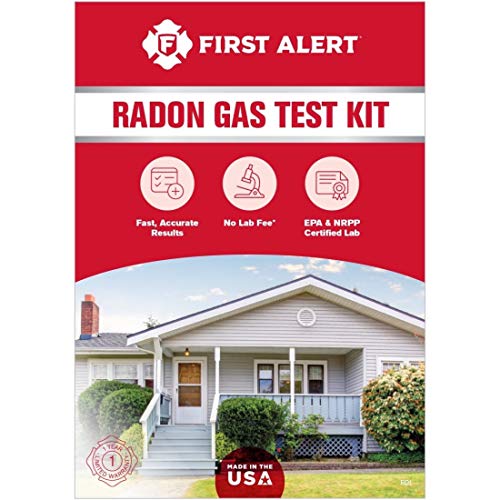 First Alert RD1 Radon Test Kit | Widely stocked; 48-hour charcoal test. | Amazon — $17.95 |
 Airthings Corentium Home | Digital monitor with a long-term average. | Amazon — $142.99 |