How Common Is Radon in Homes: A Clear Guide
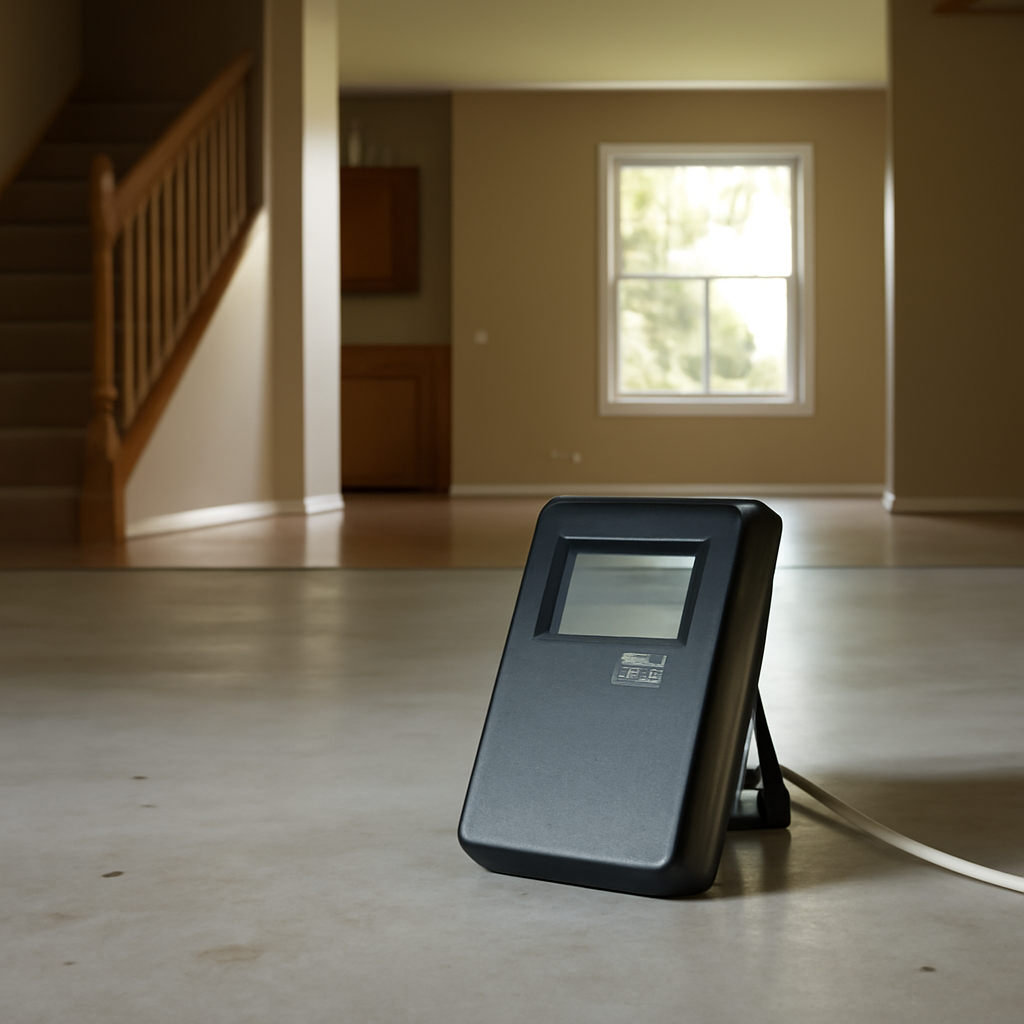
Radon does not announce itself. It is invisible and odorless, which leaves many homeowners assuming it is a rare problem that happens to other people’s houses. The data tells a different story. So how common is radon in homes? Common enough that a meaningful fraction of U.S. houses test above the level where the EPA recommends action, and far more common in regions like Colorado’s Front Range. This guide lays out what the numbers show, why the gas is so widespread, and what the prevalence means for your own home. It summarizes EPA and Colorado Department of Public Health and Environment guidance current as of 2026 and is general information, not medical advice.
Part of our Radon Levels guide — start there for the full picture →
How common is radon in homes?
Radon is present at some level in virtually every home, because it forms naturally from uranium in soil everywhere. The relevant question is how often levels are high enough to matter. The EPA estimates that roughly 1 in 15 U.S. homes, about 6 to 7 percent, has radon at or above the action level of 4.0 pCi/L. Many more sit in the gray zone between 2.0 and 4.0 pCi/L.
So while detectable radon is nearly universal, problematic radon affects a substantial minority of homes nationally, and a much larger share in high-radon regions. The national average indoor level is around 1.3 pCi/L, but averages hide wide variation between individual houses.
Why radon is so widespread
Radon’s prevalence comes down to its source. Uranium and radium are present in soil and rock across the entire country, and as they decay they continuously produce radon gas. That gas migrates upward and seeps into homes through foundation cracks, sump pits, crawlspaces, and gaps around pipes and utility penetrations.
Because every home sits on soil, every home has a pathway for radon entry. The difference between a low-radon and high-radon home is the amount of uranium in the local ground, the number and size of entry points, and how the house exchanges air. Our guide on sources of radon explains where it originates.
How common is high radon in Colorado?
Nationally, about 1 in 15 homes exceeds the action level, but Colorado is far above that. The CDPHE reports that a large share of tested Colorado homes, a majority in many counties, exceed the EPA action level. The Front Range’s uranium-bearing geology drives those odds well above the national figure.
For Colorado homeowners, this reframes the question entirely. Here, elevated radon is the expectation rather than the exception, which is why testing is treated as routine. The Colorado radon testing hub covers the regional picture, and our guide on where radon is most common places Colorado in context.
Does home age or type affect prevalence?
Radon is common in all kinds of homes, old and new, with and without basements, slab and crawlspace. A frequent misconception is that only old homes or only basements have radon. In reality, newer, tightly sealed homes can concentrate radon because they exchange less air with the outdoors, and slab-on-grade homes can test high too.
What matters more than age or style is the soil beneath the home and the number of entry points. A brand-new energy-efficient house on uranium-rich soil can easily test above the action level. This is why the EPA recommends testing every home regardless of its age or construction.
How common is radon in apartments and upper floors?
Radon is most concentrated at ground contact, so apartments and units on upper floors generally have lower readings than ground-floor or basement dwellings. A third-floor apartment is farther from the soil source and typically tests lower than a basement unit in the same building. This does not mean upper units are immune, since radon can still rise through a building, but the prevalence of high readings drops with height.
Ground-floor units, garden-level apartments, and basement dwellings carry odds closer to those of a house, because they sit near or below grade where radon enters. Multifamily buildings can and do have elevated radon, especially on lower levels, which is why testing ground-contact units is worthwhile. The general rule, radon decreases as you move up from the soil, applies within apartment buildings just as it does within a single-family home.
How common is radon in well water?
Beyond soil gas, radon can enter homes through private well water, adding to indoor air levels and posing an ingestion risk. This pathway is less common than soil-gas entry and primarily affects homes on private wells drawing from uranium-bearing aquifers. Public water supplies usually release radon before delivery.
For most homes, soil gas is the dominant source. But households on private wells, including many rural Front Range properties, should consider testing their water as well. Our guide on radon in water explains this secondary pathway.
Why prevalence makes testing essential
If problematic radon affected only a tiny number of homes, broad testing would be hard to justify. It does not. With roughly 1 in 15 homes nationally and a majority in places like Colorado exceeding the action level, the odds are high enough that every home warrants a test. And because you cannot predict a single home’s level from its neighbors, testing is the only reliable way to know.
The combination of widespread prevalence, invisibility, and serious health risk, radon is a leading cause of lung cancer after smoking, is exactly why public-health agencies recommend universal testing. Our guide on how to test for radon covers the simple steps.
What the numbers mean for your home
Prevalence statistics describe populations, not your specific house. Your home could be one of the many at safe levels or one of the substantial minority above the action level, and the only way to find out is to test. Given the national 1-in-15 figure and far higher Colorado odds, skipping the test is a gamble with no upside.
Place a short-term test in the lowest livable level under closed-house conditions, or use a long-term test for a fuller picture. If your result reaches 4.0 pCi/L or more, plan mitigation; if it is borderline, retest to confirm. For homes that test high, our guide to radon mitigation cost in Colorado gives realistic budgets.
Why so many homeowners underestimate the prevalence
Radon’s invisibility is the root of the underestimation. There is no smell, no stain, no immediate symptom, so a home with a serious radon problem feels exactly like a home with none. Without a test, there is simply no sensory feedback to prompt concern. This sets radon apart from hazards like mold or a gas leak, which announce themselves.
The long latency compounds the misperception. Radon-related lung cancer develops over years or decades, so even people who were exposed rarely connect cause and effect. Because the consequences are delayed and silent, the day-to-day experience of living in a high-radon home offers no warning. That is precisely why the EPA leans on statistics and testing rather than expecting homeowners to notice a problem on their own. The prevalence is high; the awareness lags behind it.
How the 1-in-15 estimate was derived
The EPA’s roughly 1-in-15 figure comes from national residential radon surveys that measured indoor levels across a representative sample of U.S. homes. Aggregating those measurements showed that about 6 to 7 percent of homes have a long-term average at or above the action level, with many more in the 2-to-4 pCi/L gray zone. The estimate reflects real measurements, not modeling alone.
Like any national average, it smooths over enormous regional variation. The 1-in-15 figure understates the situation dramatically in high-radon states and overstates it in low-radon ones. For a Colorado homeowner, the relevant prevalence is the state’s much higher rate, while a resident of a low-radon coastal area faces lower odds. The national number is best read as a baseline that proves the problem is widespread enough to justify universal testing, with local data refining the picture.
Prevalence across home types and ages
One persistent myth is that radon is only a basement problem or only an old-home problem. The data does not support either belief. Homes with slabs and crawlspaces test high too, because radon enters through any ground contact. And new homes are not exempt; in fact, modern tight construction can trap radon and produce higher readings than a drafty older home on the same soil.
What actually predicts a high reading is the uranium content of the soil beneath the home and the number of entry points, not the home’s age or style. This is why the EPA recommends testing every home regardless of when it was built or how it is constructed. A brand-new energy-efficient house in a high-radon county can easily exceed the action level, surprising owners who assumed new meant safe.
How prevalence translates to lung-cancer risk
The prevalence numbers matter because of what radon does. Radon is the leading cause of lung cancer among people who have never smoked and the second leading cause overall after smoking, per EPA and surgeon-general assessments. The risk is cumulative, rising with the concentration breathed and the years of exposure. With roughly 1 in 15 homes nationally above the action level, the population-level impact is substantial.
For smokers, the combination of smoking and radon multiplies the danger well beyond either alone. This interaction is part of why public-health agencies treat radon as a serious, widespread hazard rather than a rare curiosity. The commonness of elevated radon, multiplied across millions of homes, is what makes it a leading environmental cause of cancer in the United States.
What the prevalence means for Colorado specifically
Nationally, about 1 in 15 homes exceeds the action level. In Colorado, the figure is far higher, with the CDPHE reporting a majority of tested homes above 4.0 pCi/L in many Front Range counties. For a Colorado homeowner, the question is less “is radon common?” and more “is my home one of the many that needs mitigation?”
This regional reality is why testing is treated as a normal part of homeownership across Denver, Douglas, Jefferson, Boulder, and El Paso counties, and why radon contingencies appear routinely in local real-estate contracts. The Colorado radon testing hub covers the local picture, and our guide on radon testing in Denver addresses the metro specifically. In Colorado, elevated radon is the expectation, not the exception.
Turning prevalence into protection
The practical response to high prevalence is simple and cheap: test. A short-term kit placed in the lowest livable level under closed-house conditions gives an initial read; a long-term test offers a fuller annual picture. Borderline results near the action level deserve a confirming test. If your home exceeds 4.0 pCi/L, mitigation routinely brings it well below, and the fix is usually a one-time, single-day project.
Given that the gas is common, invisible, and seriously harmful, while the test is inexpensive and the fix reliable, the cost-benefit case for testing is overwhelming. Prevalence statistics describe the odds across millions of homes; your test converts those odds into a definite answer for your family. The guide to testing for radon covers the simple steps.
How common radon is depends on where you look, but the headline holds everywhere: the gas is present in nearly every home and elevated in a meaningful share, far more along Colorado’s Front Range. Because it is invisible and its harm is delayed, prevalence on its own changes nothing for your household until you test. The test is the bridge from a statistic to a decision.
References
- Health Risk of Radon — U.S. Environmental Protection Agency
- Radon in Colorado — Colorado Department of Public Health and Environment
- Radon and Indoor Air — American Lung Association
Frequently asked questions
How common is radon in homes?
Radon is present in nearly every home at some level. The EPA estimates about 1 in 15 U.S. homes, roughly 6 to 7 percent, has radon at or above the action level of 4.0 pCi/L, with many more in the 2 to 4 pCi/L gray zone.
Are new homes less likely to have radon?
No. Newer, tightly sealed homes can actually concentrate radon because they exchange less air with the outdoors. Radon is common in homes of all ages and foundation types, which is why every home should be tested.
How common is high radon in Colorado?
Much higher than the national average. The CDPHE reports a large share of tested Colorado homes, a majority in many counties, exceed the EPA action level because of the region's uranium-bearing geology.
If radon is so common, do I really need to test?
Yes. You cannot predict your home's level from its neighbors, and the gas is invisible and odorless. Given the prevalence and serious health risk, testing is the only reliable way to know your number.
Front Range homeowners who want to test for radon or connect with a vetted local professional can reach out through our contact page.
Test your home for radon
Radon is invisible and odorless, so a test is the only way to know your level. A short-term kit gives a first reading in days; a digital monitor tracks it over time.
| Product | Why | Buy |
|---|---|---|
 AirChek Charcoal Radon Test Kit AirChek Charcoal Radon Test Kit | Lab fee usually included; EPA short-term protocol. | Amazon — $21.95 |
 First Alert RD1 Radon Test Kit First Alert RD1 Radon Test Kit | Widely stocked; 48-hour charcoal test. | Amazon — $16.98 |
 Airthings Corentium Home Airthings Corentium Home | Digital monitor with a long-term average. | Amazon — $142.99 |