How to Detect Radon in Your Home: Plain-Language Guide
Radon cannot be detected by any human sense. It is colorless, odorless, tasteless, and chemically inert — and at the concentrations relevant to homes, it produces no symptoms a person would associate with its presence. The only way to detect radon in a home is to deploy a measurement device capable of counting the alpha particles emitted as radon atoms decay. This guide summarizes EPA and Colorado Department of Public Health and Environment methodology current as of 2026 — consult a certified radon professional before making mitigation decisions. The walkthrough below covers how to detect radon in your home using the three categories of measurement tools available to homeowners, and explains why Colorado Front Range homes deserve special attention.
Part of our Radon Levels guide — start there for the full picture →
How to Detect Radon in Your Home: The Core Principle
You cannot detect radon without a measurement device. There is no smell, no irritation, no visible cue. People sometimes ask whether a particular health symptom suggests radon — chronic cough, headache, fatigue. The answer is essentially no. Radon’s primary health effect is long-term increased risk of lung cancer, with no acute symptoms at typical residential concentrations. The EPA classifies radon as the second-leading cause of lung cancer in the United States after smoking, but the exposure-to-cancer pathway is decades long and produces no detectable short-term signal.
Detection therefore means measurement. The three categories of measurement devices:
- Short-term passive detectors (charcoal canisters, alpha-track).
- Long-term passive detectors (alpha-track for 90+ days, electret ion chambers).
- Continuous active monitors (consumer and pro CRMs).
For broader regional context, see the radon testing in Colorado guide.
Category 1: Short-Term Passive Detectors
The most widely-deployed radon detection tool in the country. Two sub-types:
Charcoal Canisters
Activated carbon adsorbs radon gas over a 2 to 7 day exposure. After exposure, the sealed canister is mailed to a lab. The lab measures gamma emissions from radon decay products trapped in the carbon and back-calculates the time-averaged radon concentration. Cost is $10 to $25 retail, with lab fee typically bundled.
Strengths: cheap, fast, simple. Weaknesses: single average over a short window, sensitive to short-term weather and HVAC conditions, no tamper detection.
Short-Term Alpha-Track
A small plastic chip records tracks left by alpha particles. Less common than charcoal in short-term use because alpha-track really shines over longer exposures. Cost similar to charcoal canisters.
Category 2: Long-Term Passive Detectors
Alpha-track detectors exposed for 90 days to 12 months produce a time-integrated annual average — the gold-standard number for a home’s true radon level. Cost: $20 to $40 per detector including lab analysis.
Strengths: averages out seasonal and short-term variation, more representative of true exposure than any short-term method, simple deployment. Weaknesses: slow — a 90-day result is by definition 90 days away.
Long-term detectors are the right tool for confirming a borderline short-term result and for establishing a definitive baseline of an occupied home. They are not the right tool for real-estate transaction timelines.
Category 3: Continuous Active Monitors
Continuous radon monitors (CRMs) measure radon hourly using a pulse-ionization chamber or photodiode detector. They display real-time and rolling-average results. Two sub-categories:
Consumer CRMs
Airthings Corentium ($150 to $230), Airthings View ($200+), Ecosense RadonEye ($170), RadonFTLab FR-R20 ($300). Phone-app integration, ongoing monitoring, app-based history. These are the right tool for ongoing homeowner awareness — once purchased, you can detect radon any time without per-test fees.
Professional CRMs
Sun Nuclear Model 1027, Femto-Tech RIM-101, Radalink Aircat. $800 to $3,000+ for new units. Include tamper sensors (motion, temperature, humidity, barometric pressure), chain-of-custody logging, and calibration certificates. These are the right tool for real-estate transactions where defensibility matters.
For deeper comparison of method types, see the best way to test for radon guide in this batch.
The Front Range Detection Baseline
Colorado’s Front Range — Denver, Douglas, Arapahoe, Jefferson, Boulder, El Paso, Adams, Broomfield counties — sits in EPA Radon Zone 1, the highest-priority designation. The Zone 1 status reflects geological factors: uranium-bearing soils and rocks underlie much of the region, generating radon as the uranium decay chain progresses. Soil radon enters homes through foundation cracks, sump pits, slab penetrations, and crawl-space soil.
CDPHE survey data suggests roughly half of pre-2000 Front Range homes test above the EPA action level of 4 pCi/L. Even post-2000 homes, despite passive radon control features in newer construction codes, test above action level meaningfully often. The practical takeaway: detection should be presumed positive until measured otherwise. Every Front Range home benefits from at least one radon test.
For more on the regional context, the radon testing house guide covers placement for Colorado homes.
What to Look For During Detection
The result of any detection method comes back in picocuries per liter (pCi/L). The interpretation thresholds:
- ≥ 4.0 pCi/L: EPA action level. Mitigation recommended.
- 2.0 to 4.0 pCi/L: EPA consideration level. Mitigation can be weighed against occupant risk factors.
- Below 2.0 pCi/L: Below typical mitigation threshold. Retest periodically.
For Front Range homes, mitigation contractors typically aim to bring post-mitigation levels below 2 pCi/L; well-designed systems routinely achieve 0.5 to 1.5 pCi/L. The 4 pCi/L EPA action level is a regulatory threshold, not a safety threshold — there is no fully safe level of radon exposure, only a continuum of risk.
Common Misconceptions About Radon Detection
Several patterns confuse first-time testers:
- “My neighbor tested clear, so my home is probably clear too.” Radon varies dramatically between adjacent houses based on foundation type, soil contact, HVAC patterns, and slab integrity. Neighbor data does not transfer.
- “My home is new, so it should not have radon.” New homes in Zone 1 areas still test above action level meaningfully often despite passive control features.
- “My upper floors are radon-free.” Radon concentrations are usually highest in the lowest level but circulate throughout the home via HVAC. Upper-floor readings can still exceed 2 pCi/L.
- “A single low test means the home is fine forever.” Soil conditions and home airflow change over time. EPA recommends retesting every two to five years.
- “I would feel sick if radon was a problem.” Radon produces no acute symptoms at residential concentrations. The health effect is long-term increased lung cancer risk.
How to Detect Radon in Your Home — The Operational Steps
For a homeowner approaching first-ever detection:
- Select method. Charcoal canister for one-off ($15) or consumer CRM for ongoing ($200).
- Place per EPA guidance. Lowest occupied level, 2–6 feet above floor, away from walls and drafts.
- Establish closed-house conditions. For short-term tests: windows closed 12 hours prior and throughout exposure.
- Start measurement. Note date and time.
- Wait. 2–7 days for canister; ongoing for CRM.
- End test. Seal and mail canister, or read CRM display.
- Interpret result. Above 4: mitigate. 2–4: long-term confirm. Below 2: retest periodically.
The methodology side is covered in deeper detail in the how-to-test-radon guide.
When DIY Detection Is Enough vs When to Hire a Pro
For owner-occupied baseline testing, DIY is adequate. For real-estate transactions where the test result will drive negotiation, a certified radon tester using a pro CRM is the standard — and increasingly the expectation. The reason is chain-of-custody documentation. A homeowner-collected canister has no tamper detection; a pro CRM logs every disturbance.
For post-mitigation verification, either path works, though most mitigation contractors include a post-installation test in their service price.
What Happens After Detection
The detection result drives one of three outcomes:
- Below 2 pCi/L: No action. Retest every two to five years.
- 2 to 4 pCi/L: Confirm with a 90-day alpha-track. Mitigation can be considered for occupants in elevated-risk categories (smokers, respiratory conditions).
- Above 4 pCi/L: Contract a certified radon mitigation contractor. Typical Front Range installation runs $1,200 to $2,500. Mitigation systems reliably bring levels below 2 pCi/L.
The mitigation-side architecture is covered in the radon evacuation system guide.
Why Detection Matters Even Without Symptoms
Radon detection’s whole point is to act on a hazard that produces no perceptible signal until decades after exposure. The EPA estimates radon is responsible for roughly 21,000 lung cancer deaths annually in the United States. For Front Range homeowners in Zone 1, the regional baseline elevates this risk meaningfully. The cost of detection — $15 to $250 depending on method — is trivial compared to the cost of mitigation, and far smaller than the cost of unchecked exposure across a multi-decade ownership period.
References
- EPA Citizen’s Guide to Radon — U.S. Environmental Protection Agency
- CDPHE Radon Program — Colorado Department of Public Health and Environment
- EPA Radon Health Risk — U.S. Environmental Protection Agency
- CDC Radon Topic — Centers for Disease Control and Prevention
- American Lung Association Radon — American Lung Association
Frequently asked questions
Can I detect radon by smell or taste?
No. Radon is colorless, odorless, and tasteless. It produces no acute symptoms at residential concentrations. The only way to detect radon in a home is with a measurement device — a charcoal canister, alpha-track detector, or continuous radon monitor.
What is the easiest way to detect radon in my home?
A $10 to $25 charcoal canister deployed for 2 to 7 days is the simplest and cheapest first-time detection. Place in the lowest occupied level, maintain closed-house conditions, seal and mail the canister at the end, and receive a lab result in 3 to 7 business days.
How often should I check for radon in my home?
EPA recommends retesting every two to five years even in homes with prior clear results. Additional retesting is warranted after major foundation, basement, or HVAC renovations, and 30 days after any mitigation system installation.
Should I worry about radon in a newer home?
Yes, even newer homes in EPA Zone 1 areas like the Colorado Front Range. While newer construction often includes passive radon control features, CDPHE data shows newer Colorado homes still test above the EPA action level meaningfully often. Every Front Range home should be tested at least once.
Front Range homeowners wanting a referral to a certified radon tester or measurement professional can connect through our contact page.
Test your home for radon
Radon is invisible and odorless, so a test is the only way to know your level. A short-term kit gives a first reading in days; a digital monitor tracks it over time.
| Product | Why | Buy |
|---|---|---|
 AirChek Charcoal Radon Test Kit | Lab fee usually included; EPA short-term protocol. | Amazon — $21.95 |
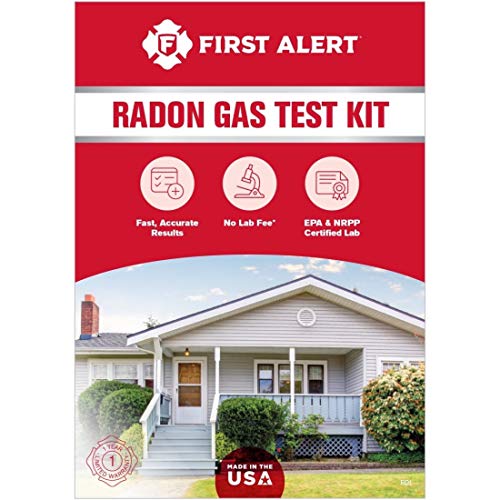 First Alert RD1 Radon Test Kit | Widely stocked; 48-hour charcoal test. | Amazon — $17.95 |
 Airthings Corentium Home | Digital monitor with a long-term average. | Amazon — $142.99 |