Gutter Hangers: Spacing, Sagging Gutters and Snow Loads
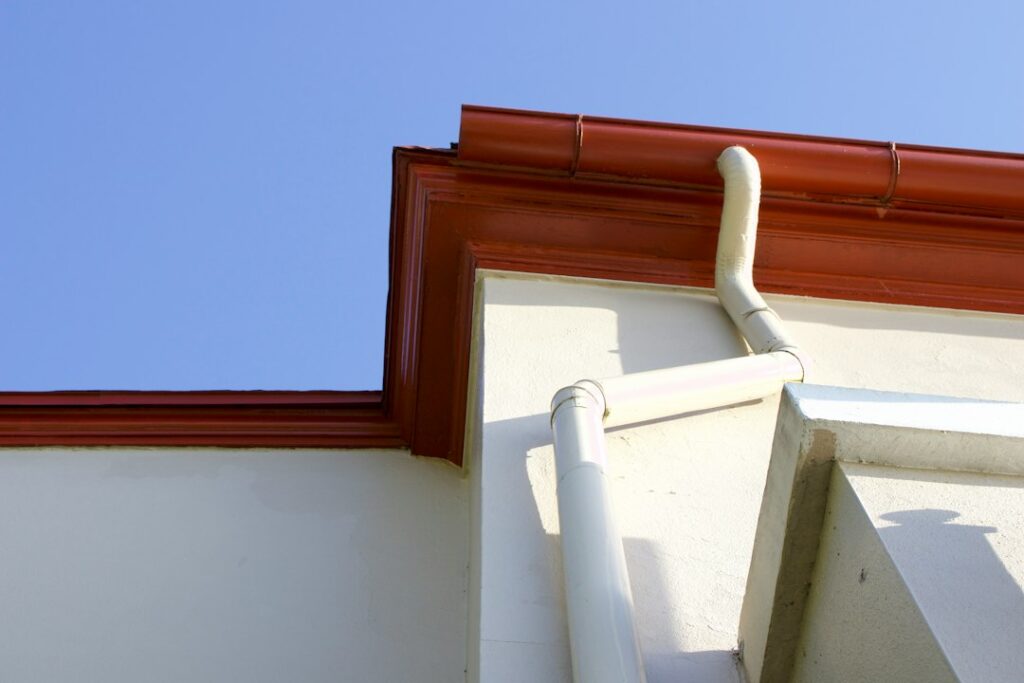
A gutter is only as strong as the hardware holding it to the house. When a run sags, pulls away from the fascia, or holds a long puddle after every storm, the cause is often the gutter hangers rather than the gutter itself. Hangers carry the weight of the trough, the water flowing through it, wet leaves and, on the Colorado Front Range, snow and ice that can sit in the gutter for days or weeks. They also set the pitch that moves water to the downspouts. This guide explains the main types of gutter hangers, how spacing works and why snow country often calls for closer spacing, how to recognize hanger failure, the role of fascia condition, ladder safety for homeowners who do their own repairs, rough cost ranges, and what a home inspector may note about gutter attachment.
Part of our Structure & Exterior guide — start there for the full picture →
What Gutter Hangers Do and Why They Fail
Gutter hangers are the brackets, spikes or straps that attach a gutter to the house, usually through the fascia board into the ends of the rafters or roof trusses behind it. A well-chosen, well-spaced hanger system does three things: it supports the load of the gutter and its contents, it keeps the gutter’s front lip from rolling outward, and it holds the slope set during installation so water drains toward the downspouts.
Hangers fail for a handful of predictable reasons:
- Too few hangers. Wide spacing leaves long unsupported spans that bend under ice or debris.
- Weak fastening. Fasteners driven only into fascia, rather than into the rafter tail or a solid backing, can pull out over time.
- Rotted fascia. Soft wood cannot hold a spike or screw, no matter how strong the hanger.
- Freeze-thaw cycling. Repeated expansion and contraction of the gutter, plus ice forming around fasteners, gradually loosens them.
- Sliding snow and ice. A sheet of snow or ice sliding off the roof can catch the front of the gutter and lever it away from the house.
- Clogs. A gutter full of wet debris and water weighs far more than an empty one.
Types of Gutter Hangers
Spike and ferrule
The traditional system, still found on many older Front Range homes, uses a long nail-like spike driven through the front lip of the gutter, through a metal tube called a ferrule that spans the inside of the trough, through the back of the gutter and into the fascia. The ferrule keeps the gutter from collapsing as the spike is driven.
Spike-and-ferrule systems are inexpensive and simple, but the smooth spikes tend to work loose. As wood dries, swells and dries again, and as ice and wind tug on the gutter, spikes creep outward. Exposed spike heads backing out of the gutter face are one of the most recognizable signs of an aging gutter system. Many repairs replace spikes with screw-in hangers or with gutter screws that use the existing ferrules.
Hidden hangers
Hidden hangers are the most common choice for modern K-style seamless gutters. A bracket clips into the front lip of the gutter and runs across the top to the back, where a screw passes through the bracket and the gutter back into the fascia. Because the hanger sits inside the gutter, it is not visible from the ground.
Hidden hangers generally hold better than spikes because the threaded screw resists pulling out and the bracket braces the front lip. Some designs incorporate a clip for gutter guards. Their weak points are short screws that only reach fascia, plastic hangers that can become brittle with UV exposure and cold, and installers who space them too far apart.
Strap hangers
Strap hangers are metal straps that wrap around or clip to the gutter and fasten to the roof deck under the shingles, or to the fascia. Roof-mounted straps are often used where there is no fascia, where fascia is too shallow, or on some older homes. Because they nail through the roof deck under the first course of shingles, they ideally go in when the roof is installed or replaced; retrofitting them means lifting shingles and risks damaging the roof or voiding warranty terms.
Brackets and fascia hangers
Exposed brackets that cradle the gutter from below, common with half-round gutters, attach to the fascia and support the trough from underneath. They can carry heavy loads well when securely fastened and are favored on copper and historic-style installations.
Gutter Hanger Spacing
Spacing is the distance between hangers along the gutter run. Many manufacturers and installers use spacing in the range of roughly 24 to 36 inches for standard residential gutters in mild climates. In regions with heavy snow and ice, closer spacing is commonly recommended, often around 18 to 24 inches, and some installers place a hanger at every rafter tail. Exact recommendations vary by hanger manufacturer, gutter gauge, gutter size and local practice, so the product instructions and the installer’s warranty terms are the best guide.
Several factors argue for closer spacing on Front Range homes:
- Snow and ice weight. Wet spring snowstorms are common, and ice can fill gutters on shaded north-facing eaves for extended periods.
- Larger gutters. A 6-inch gutter holds more water, debris and ice than a 5-inch gutter.
- Thin gauge material. Lighter aluminum flexes more between supports.
- Valleys and long runs. Sections where valleys concentrate runoff or long runs carry significant volume see higher loads.
- Gutter guards. Some guards add weight and can hold snow on top of the gutter.
Hangers should also be placed close to corners, end caps and downspout outlets, where loads concentrate and joints need support. Sizing and spacing go together; the guide to gutter sizing explains how roof area and pitch influence gutter size, which in turn influences how much load each hanger carries.
Signs of Hanger Problems: Sagging, Pulling and Poor Pitch
Hanger failure tends to show up gradually. Common warning signs include:
- Visible sagging between hangers or along a whole run.
- Gaps between gutter and fascia, sometimes with daylight showing behind the gutter.
- Spikes backing out of the gutter face.
- Standing water in sections that should drain, indicating the pitch has reversed or flattened.
- Overflow at the middle of a run rather than at a clogged downspout.
- Water stains or drips behind the gutter on siding or fascia.
- Icicles forming along a low spot in winter.
Poor pitch is often a hanger problem in disguise. When one or two hangers loosen, the gutter drops at that point and creates a low spot that holds water and debris. The extra weight then loosens neighboring hangers, and the sag spreads.
Fixing a sagging gutter
For a minor sag, the typical repair is to lift the gutter back to its correct pitch and install new hidden hangers with screws long enough to reach solid framing, adding hangers between existing ones to shorten spans. For spike-and-ferrule systems, replacing spikes with hangers or gutter screws is common. Where the run is bent, crushed or badly kinked, or the pitch cannot be restored without removing the gutter, replacing the section or the whole run may be more practical. The guide to gutter repair walks through resealing, re-pitching and when replacement makes more sense.
When a full replacement is on the table, many homeowners move to continuous runs; the guide to seamless gutters compares seamless and sectional systems.
Choosing Hanger Hardware: Materials, Screws and Compatibility
Not all hidden hangers are equal. When buying replacements or reviewing a contractor’s quote, a few details make a practical difference:
- Material. Aluminum hangers are common and match aluminum gutters. Steel hangers are stiffer, and some heavy-duty designs include a reinforcing rib. Plastic or composite hangers are lighter and cheaper but can become brittle with sun and cold.
- Screw length and type. Screws should be corrosion-resistant and long enough to pass through the gutter back and fascia into framing where possible. Many hangers come with screws that only reach the fascia.
- Gutter size and profile. Hangers are made for specific gutter widths and profiles. A 5-inch hanger will not fit properly in a 6-inch gutter, and K-style hangers do not suit half-round gutters.
- Guard compatibility. Some gutter guards clip to the hangers; others require specific hangers or add fasteners of their own. The guide to gutter guards notes how guards interact with snow and ice.
- Dissimilar metals. Mixing copper with aluminum or galvanized steel can lead to galvanic corrosion, so hangers and fasteners should match the gutter material or be rated for it.
A seasonal routine helps hangers last. In fall, after leaves drop, clear debris and check that each hanger is tight. In spring, after the last heavy snow, walk the perimeter looking for new sags, gaps behind the gutter and spikes backing out. Tightening or adding a hanger at the first sign of movement is usually far cheaper than repairing a bent gutter and the fascia behind it.
Fascia Rot: When the Wood Cannot Hold
Hangers can only be as strong as the wood they fasten into. Fascia boards take a beating from water that runs behind gutters, ice that builds up at the eave, and paint that fails in strong sun. Once the wood softens, screws strip and spikes pull out.
Common signs of fascia rot include peeling paint, dark stains, soft spots that yield to a screwdriver probe, gaps at miters and corners, and gutters that refuse to hold new hangers. Rot often starts where water is directed behind the gutter because of missing drip edge or gutter apron; the guide to the gutter apron explains how that flashing keeps water in the trough.
Before re-hanging gutters, damaged fascia should be replaced and, where practical, hangers should reach into rafter tails or blocking behind the fascia. The guide to soffit and fascia repair covers the scope and cost of that work. Aluminum fascia wraps can protect new wood but can also hide decay if water gets behind them.
Water management matters inside the house as well. The U.S. Environmental Protection Agency’s mold and moisture guide recommends cleaning and repairing roof gutters regularly as part of moisture control, along with grading the ground to slope away from the foundation.
Snow, Ice and Roof Loads in Colorado
Gutters along Front Range eaves carry more than rain. Snow slides down into them, meltwater refreezes in them, and ice dams can form just above them.
FEMA’s Snow Load Safety Guide (FEMA P-957) explains that ice dams form when meltwater flows down the roof and freezes at the eave, and that they prevent snow from sliding off, create an unbalanced snow load at the eave, and can allow water infiltration into the building. The same guide lists gutters and downspouts in disrepair or clogged among items to inspect before snow events, and notes that homeowners can handle minor actions such as making sure gutters and downspouts are not blocked at the discharge point.
For hangers, that means:
- Closer spacing and stronger, screw-fastened hangers on eaves that collect ice.
- Attention to north-facing and shaded eaves, where ice persists longest.
- Snow guards on metal roofs or steep slopes to reduce sliding snow that can tear gutters off.
- Avoiding chipping ice out of gutters with tools, which can damage both gutter and hangers.
- Addressing attic air leaks and insulation, which reduces ice dam formation at the source.
The guide to ice dams covers prevention, and the guide to roof snow load explains how snow weight affects roof framing more broadly.
Ladder Safety for Gutter Work
Replacing hangers looks simple from the ground but involves working at height while handling a drill and an awkward gutter. OSHA describes falls from portable ladders as one of the leading causes of occupational fatalities and injuries, and its portable ladder safety guidance includes several points that apply directly to homeowners:
- Maintain three points of contact while climbing and face the ladder.
- Use the ladder only on a stable, level surface, or secure it to prevent displacement.
- Extend an extension ladder at least 3 feet above the point of support, and do not stand on the top three rungs.
- Set the base about one-quarter of the working length away from the wall.
- Look for overhead power lines and avoid metal ladders near energized lines.
- Do not exceed the ladder’s load rating, including tools and materials.
Leaning a ladder directly against a gutter can crush it and loosen hangers. Ladder standoffs that bear on the wall or roof help. Second-story eaves, steep grades, wet or icy surfaces and nearby service drops are good reasons to hire a gutter contractor.
Typical Gutter Hanger Repair Costs
Costs depend on the number of hangers, gutter height, whether the gutter must be removed, fascia condition and local labor rates. Broad, hedged ranges:
- DIY hanger replacement: hidden hangers with screws are inexpensive individually, so materials for a typical run are modest. The main costs are time and safety equipment.
- Professional re-hanging and re-pitching: often priced by the linear foot or as a service call plus materials, commonly in the low hundreds of dollars for limited sections and more for whole-house work.
- Fascia replacement: adds noticeably to cost, depending on how much wood is damaged and whether painting or wrapping is needed.
- Full gutter replacement: when gutters are bent or failing broadly, replacement may be more cost-effective than repeated repairs.
Written quotes should state hanger type, screw length, spacing, re-pitching, sealing and fascia work. Asking about warranty terms on hanger spacing in snow is worthwhile.
What a Home Inspector May Note
The ASHI Standard of Practice lists roof drainage systems among the roofing components inspectors inspect, defining them as components used to carry water off a roof and away from a building. During a visual inspection, typically from the ground, a ladder at the eave, or the roof surface where safe, an inspector may note:
- Sagging, loose or pulled-away gutter sections.
- Spikes backing out or missing hangers.
- Standing water, debris or reverse pitch.
- Leaking joints, corners and outlets.
- Stained, soft or rotted fascia and soffits.
- Downspouts discharging near the foundation.
Buyers can review how inspectors approach the exterior in the structure and exterior hub, and the guide to hiring a home inspector explains what a standard inspection covers.
References
- Snow Load Safety Guide (FEMA P-957) — Federal Emergency Management Agency
- Portable Ladder Safety QuickCard — Occupational Safety and Health Administration
- ASHI Standard of Practice for Home Inspections — American Society of Home Inspectors
- A Brief Guide to Mold, Moisture and Your Home — U.S. Environmental Protection Agency
Frequently asked questions
How far apart should gutter hangers be?
Many installers use roughly 24 to 36 inches in mild climates. In snow country, closer spacing, often around 18 to 24 inches or at every rafter, is common. Manufacturer instructions and local practice set the final number.
Are hidden hangers better than spikes?
Hidden hangers with screws generally hold better than smooth spikes, which tend to back out as wood moves and ice tugs on the gutter. Hidden hangers also brace the front lip of the gutter.
Why is my gutter sagging?
Common causes include loose or widely spaced hangers, rotted fascia that cannot hold fasteners, ice and snow weight, and clogged gutters full of wet debris. Re-hanging with additional hangers into solid wood usually fixes minor sags.
Can I replace gutter hangers myself?
Single-story replacements are a common DIY project, but ladder safety is critical. OSHA advises three points of contact, stable footing and extending ladders 3 feet above the support. Second-story or icy conditions are better left to professionals.
Do gutter hangers need to go into rafters?
Fastening into rafter tails or solid blocking behind the fascia generally provides stronger attachment than fascia alone. Longer screws help reach that framing when it is present.
Seeing sagging gutters or soft fascia on a house you are considering? Send us a message and we can help connect you with an experienced Front Range inspector.