Gutter Apron: Stopping Water Behind Gutters and Fascia Rot
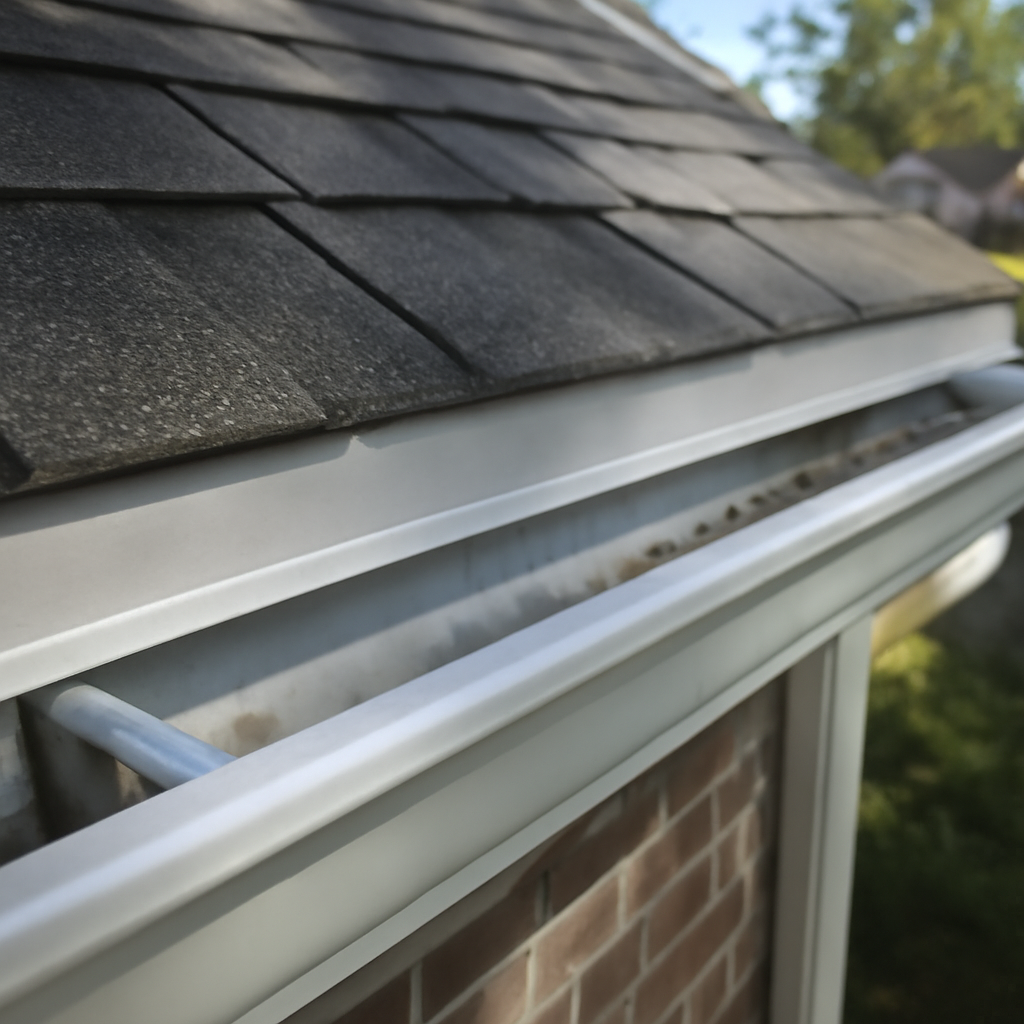
Water that runs off a roof is supposed to land in the gutter. On many houses, some of it never gets there. It clings to the underside of the shingles, wicks backward across the roof deck edge and dribbles down the gap between the gutter and the fascia board. Over a few seasons that hidden trickle can rot fascia, stain siding and feed water into soffits and wall cavities. A gutter apron is the strip of metal flashing designed to stop exactly that. This guide explains what a gutter apron is, how it compares with drip edge, the warning signs that one is missing or failing, how it is usually installed on an existing roof, how it relates to ice dams and gutter sizing, and what a home inspector is likely to note about the roof edge on the Front Range.
Part of our Structure & Exterior guide — start there for the full picture →
What a Gutter Apron Is and What It Does
A gutter apron is a bent strip of flashing, usually aluminum or galvanized steel, that slides under the first course of shingles and the underlayment at the eave and extends down into the back of the gutter. Its profile is shaped roughly like a long, shallow letter L or a lazy Z. The upper flange lies flat on the roof deck. The lower flange angles downward and tucks inside the gutter, behind the back wall of the trough.
The purpose is simple. It bridges the gap between the roof edge and the gutter so that water leaving the shingles has a continuous path into the trough. Without that bridge, surface tension lets water curl around the shingle edge and travel backward along the underside of the starter course. Some of that water reaches the deck edge and the top of the fascia. From there it runs down behind the gutter, where nobody sees it until the damage shows.
A gutter apron does three useful things at once:
- Directs runoff into the gutter instead of letting it slip into the gap between the trough and the fascia.
- Protects the deck edge of the roof sheathing, which can delaminate or rot when it is wetted repeatedly.
- Covers the top of the fascia, the board most likely to rot when water gets behind a gutter.
Gutter aprons are sometimes called gutter flashing, gutter apron flashing or eave flashing. Manufacturers and roofers use the terms loosely, so it helps to focus on where the metal sits and where it sends water rather than on the name printed on the package.
Gutter Apron vs Drip Edge
Drip edge and gutter apron are closely related, and the confusion between them is common. Both are metal flashings installed at the roof perimeter. The difference is in shape and job.
Standard drip edge has a flange that lies on the roof deck and a vertical face that extends down over the fascia, often with a small kick-out at the bottom so water drips clear of the trim. It is designed to protect the edge of the roof deck and direct water away from the fascia. The drip edge guide covers the common profiles and how drip edge works at both eaves and rakes.
A gutter apron, by contrast, is shaped specifically to reach into a gutter. Its lower flange is angled and longer, so it can extend over the back of the trough. On houses where the gutter is mounted slightly low on the fascia, or where there is a noticeable gap between the shingle edge and the gutter, a standard drip edge may not carry water far enough. The apron closes that gap.
Can a House Have Both?
Yes. Some roofs have drip edge along the rakes and a gutter apron along the eaves. Others have drip edge at the eaves with the gutter’s back flange tucked up behind it. Some installers add a separate apron over existing drip edge when gutters are replaced. Which arrangement is correct depends on the roofing manufacturer’s instructions, local code requirements and how the gutters are hung. A roofer or gutter installer can explain which detail fits a particular eave.
Rakes Do Not Get Gutter Aprons
The sloped edges of a gable roof, called rakes, do not carry gutters, so they use drip edge or a rake trim profile instead. The rake board itself can still suffer when that edge is poorly flashed. The rake board guide explains what to look for along that part of the roofline.
Signs a Gutter Apron Is Missing or Not Working
Most homeowners only discover the absence of a gutter apron when the symptoms show up below it. The signs tend to cluster along the eaves and are often worst at inside corners, below valleys and along long gutter runs.
Fascia Rot and Peeling Paint
Fascia is the board the gutter is fastened to. When water runs behind the gutter, the top edge of the fascia stays wet after every storm. Paint starts to bubble and peel, then the wood softens and darkens. Probing with a screwdriver may find spongy wood along the upper edge. Rotted fascia also loosens gutter hangers, which can let the gutter sag and make the problem worse. The soffit and fascia repair guide covers how that damage is usually assessed and repaired.
Stained Siding and Streaks Below the Gutter
Dark streaks, drip lines or mineral staining on the siding directly below the gutter, especially in vertical bands, suggest water is escaping behind the trough rather than flowing through it. On brick or stucco, efflorescence (a white, chalky deposit) can appear in the same pattern.
Soffit Stains and Water Behind the Gutter
Water that runs down the back of the fascia can enter the soffit. Stains, sagging soffit panels, peeling paint and rusty fasteners on the underside of the eave are all signs worth investigating. In some cases water travels into the top of the wall framing.
Rotted Roof Deck Edge
From inside the attic, the first few inches of roof sheathing at the eave can show water staining, delamination or dark discoloration if water has been wicking under the shingle edge for years. That area is often hard to see because of insulation and baffles, but stains on the exterior of the deck edge sometimes show when a gutter is removed.
Overflow That Is Not Really Overflow
Water pouring off the back of a gutter during a storm can look like overflow, but if the gutter is not full, the water may simply be bypassing the trough. Watching the gutter during a steady rain is one of the simplest diagnostics. If water drips behind the gutter while the trough is only partly full, the roof-to-gutter connection is suspect.
How a Gutter Apron Is Installed on an Existing Roof
Installing a gutter apron is easiest when a roof is being replaced, because the apron goes on at the eave before the underlayment and shingles. Many homes, however, need one added to an existing roof. That retrofit is a common job, but it requires care to avoid damaging the shingles.
A typical retrofit sequence looks like this, conceptually:
- Clear and inspect the gutter. The installer removes debris and checks whether the gutter itself is sound, properly sloped and securely fastened.
- Break the shingle seal. The first course of shingles is gently lifted, often with a flat bar, after the adhesive strips are released. In cold weather, shingles are brittle and can crack, so this work is usually done when shingles are warm enough to flex.
- Slide the apron under the shingles and underlayment. The upper flange goes beneath the starter course and, where practical, beneath the underlayment so water cannot get under the metal. The lower flange is positioned to drop into the back of the gutter.
- Overlap the pieces. Sections are lapped several inches, with the upslope piece over the downslope piece in the direction of water flow, so seams do not leak.
- Fasten carefully. Fasteners are placed high enough on the upper flange to be covered by shingles and not create new leak points.
- Reseal the shingles. Lifted shingles are pressed back down and, where needed, hand-sealed with a compatible roofing cement according to the shingle manufacturer’s guidance.
Details such as how far the apron extends into the gutter, how it interacts with existing drip edge, and how it handles inside and outside corners vary by product. Shingle manufacturers publish installation requirements for the eave, and those requirements can affect warranty coverage. That is one reason many homeowners have the work done by a roofer or gutter contractor rather than as a weekend project.
Safety on the Roof Edge
Working at the eave means working on a ladder or at the edge of a roof. OSHA describes falls as among the most common causes of serious work-related injuries and deaths, and it requires fall protection for construction workers at six feet and above. Homeowners are not covered by those workplace rules, but the underlying hazard is the same. Ladder placement, footing, wet or frosty surfaces, and overhead power lines all deserve attention before anyone climbs to the gutter line.
Gutter Aprons, Ice Dams and Front Range Winters
Front Range winters bring a mix of heavy snow, intense sun and rapid freeze-thaw swings. On many homes, snow melts on the upper roof and refreezes at the cold eave, building a ridge of ice that holds back meltwater. That backed-up water can find its way under shingles at the eave. The ice dams guide explains how heat loss into the attic drives that cycle and why air sealing, insulation and ventilation address the cause.
A gutter apron does not prevent ice dams. It can, however, reduce the damage from meltwater that reaches the eave, because it gives water a metal path into the gutter instead of a path onto the deck edge and fascia. In cold climates, building codes and shingle manufacturers commonly call for an ice-barrier membrane along the eaves as well. How that membrane laps over or under the apron is spelled out in the roofing product instructions, and getting the order wrong can trap water rather than shed it.
Gutters packed with ice can also pull away from the fascia under the weight. When that happens, the apron may be bent or lifted out of position. After a hard winter, a quick look along the eaves for gaps between the apron and the gutter, bent flashing or loose hangers is worthwhile.
How the Gutter Itself Affects the Apron
A gutter apron only works if the gutter below it can carry the water. Several gutter problems make it look as if the apron is failing when the real issue is elsewhere.
- Undersized gutters or too few downspouts. A trough that fills and spills during heavy storms will overflow regardless of flashing. The gutter sizing guide walks through roof area, pitch and rainfall intensity.
- Poor slope or sagging sections. Standing water in a gutter adds weight, encourages debris buildup and can push water over the back edge.
- Clogs. Leaves, roof granules and seed pods block outlets and turn gutters into dams. Guards help in some locations, but they need to be compatible with the apron and the shingle edge. The gutter guards guide compares the common types.
- Loose or separated seams and hangers. These problems are covered in the gutter repair guide, which explains when a section can be fixed and when it should be replaced.
The EPA’s guide to mold and moisture in homes lists cleaning and repairing roof gutters regularly among its moisture-control steps, along with making sure the ground slopes away from the foundation. Its Soak Up the Rain program also describes redirecting downspouts away from paved surfaces toward lawns or gardens where water can soak in, while noting that this is not appropriate for every location. The apron, the gutter and the downspouts work as one system, and the weakest part usually decides where water ends up.
What a Home Inspector Typically Notes at the Eaves
Under the ASHI Standard of Practice, a home inspector inspects roofing materials, roof drainage systems and flashing, and inspects eaves, soffits and fascias that are accessible from the ground level. Gutters and the roof-to-gutter connection fall within that scope. The standard does not require walking every roof, and inspectors use different methods depending on roof pitch, height, weather and material. The report should describe the method used to inspect the roofing.
Commonly noted conditions near the eave include:
- No visible gutter apron or drip edge where water appears to be getting behind the gutter.
- Flashing that does not reach into the gutter or sits on top of the gutter’s back edge where water can run behind it.
- Peeling paint, soft or rotted fascia, and stained soffits.
- Gutters pulling away from the fascia, sagging, or pitched the wrong way.
- Staining on siding below the gutter line.
- Downspouts discharging close to the foundation.
An inspector usually reports what is observed and recommends further evaluation or repair by a qualified roofer or gutter contractor. The report will not normally specify which flashing profile to buy. For buyers, the eave findings are worth reading closely because fascia and soffit damage often signals moisture that has been present for a long time. The guide to hiring a home inspector explains how to compare inspectors and what a typical scope includes, and the structure and exterior hub collects related topics on roofs, siding and drainage.
Gutter Apron Costs: What Drives the Price
Gutter apron material is inexpensive by the linear foot compared with most roofing materials. Labor is what drives the price, and labor depends heavily on access and the condition of the existing roof. Exact costs vary widely by region, contractor and season, so the factors below are more useful than any single number.
- New roof vs retrofit. On a reroof, the apron is a small line item added at the eave. Retrofitting under existing shingles takes more time and care.
- Combined with gutter replacement. When new gutters are installed, adding an apron at the same time is usually more efficient than doing it separately. The gutter installation cost guide lists other factors that affect those quotes.
- Roof height and pitch. Two-story eaves and steep roofs need more equipment and safety setup.
- Shingle condition. Brittle or aging shingles may crack when lifted, which can add repair work or push a homeowner toward a broader roofing decision.
- Damage already present. Replacing rotted fascia, soffit sections or deck edge can cost far more than the apron itself.
- Material. Aluminum is common and matches most aluminum gutters. Galvanized steel and copper are also used, and dissimilar metals should not be mixed in a way that encourages corrosion.
Written quotes that spell out the profile, the length covered and whether wood repair is included are easier to compare.
When to Call a Professional
A homeowner can watch gutters in the rain, look for staining, and probe fascia from a ladder with care. Most other steps benefit from a pro:
- Rot in the fascia, soffit or deck edge that needs to be opened up and replaced.
- Roofs that are steep, high or covered in brittle shingles.
- Leaks showing up indoors near exterior walls, which may mean water is reaching wall cavities.
- Any question about how the apron, ice barrier and underlayment should lap for the specific shingle product.
Buyers who see peeling fascia or stained siding during a showing can ask the inspector to pay particular attention to the eaves and roof drainage.
References
- A Brief Guide to Mold, Moisture and Your Home — U.S. Environmental Protection Agency
- ASHI Standard of Practice for Home Inspections — American Society of Home Inspectors
- Fall Protection Overview — Occupational Safety and Health Administration
- Soak Up the Rain: Disconnect / Redirect Downspouts — U.S. Environmental Protection Agency
Frequently asked questions
What is a gutter apron?
A gutter apron is a strip of metal flashing that tucks under the first course of shingles and extends down into the back of the gutter. It bridges the gap between the roof edge and the trough so water flows into the gutter instead of running behind it onto the fascia.
Is a gutter apron the same as drip edge?
They are related but not identical. Drip edge has a vertical face that protects the roof deck edge and fascia, while a gutter apron has a longer angled flange designed to reach into the gutter. Some roofs use both, depending on the shingle maker's instructions and how the gutters are hung.
Can a gutter apron be added without replacing the roof?
Usually, yes. The first course of shingles is carefully lifted, the apron is slid underneath and fastened, and the shingles are resealed. The work is easier in mild weather when shingles are flexible, and brittle shingles may crack during the process.
What are signs that water is getting behind my gutters?
Common signs include peeling paint or rot along the top of the fascia, dark streaks on siding below the gutter, stained or sagging soffits, and water dripping behind the gutter during rain while the trough is not full.
Does a gutter apron stop ice dams?
No. Ice dams form when attic heat melts roof snow that refreezes at the eave. An apron can limit damage from meltwater at the edge, but air sealing, insulation and ventilation address the cause.
Noticed soft fascia or streaked siding on a home you plan to buy? Send us a note and we can help connect you with a Front Range inspector who looks closely at roof edges, gutters and drainage.