EPA Mold Removal Products: What Registration Means
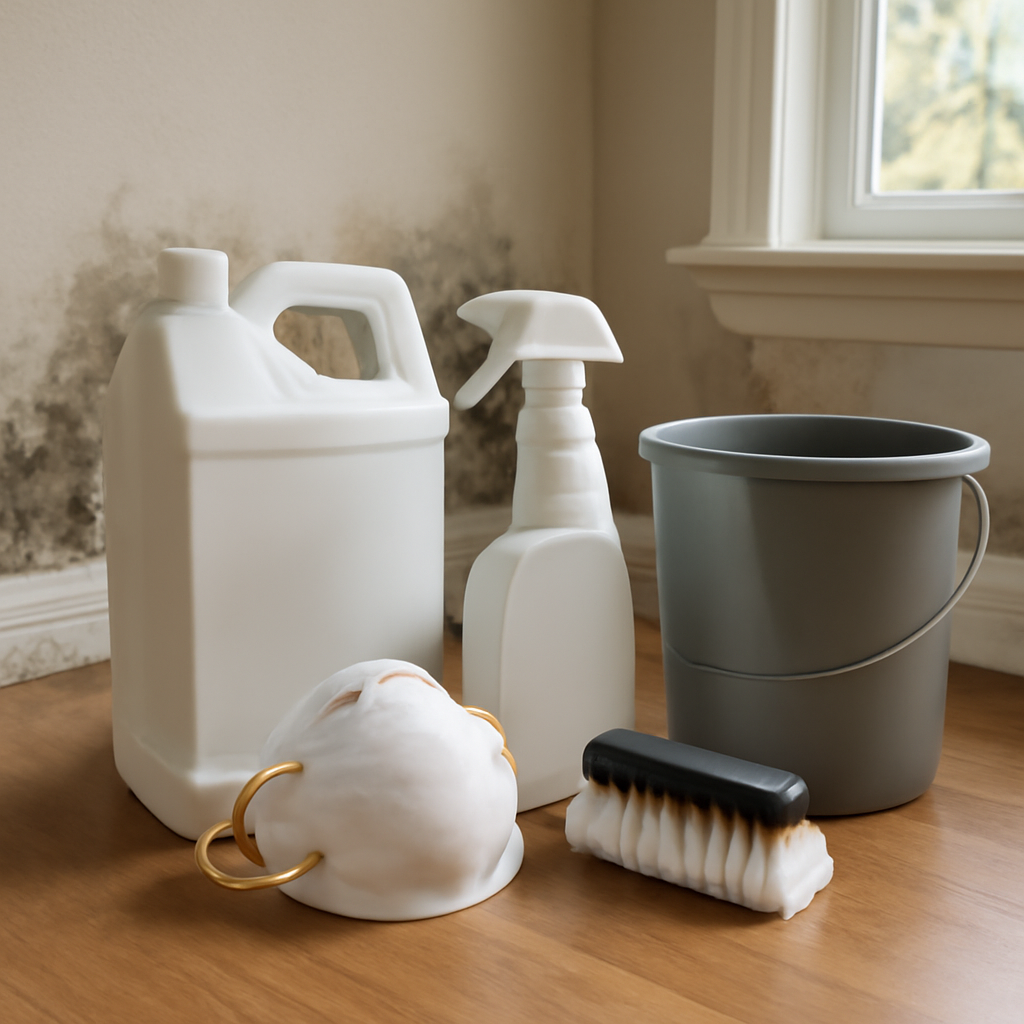
The phrase “EPA mold removal products” appears constantly in product marketing, contractor pitches, and homeowner search queries. The phrase implies that the EPA evaluates and endorses specific products for mold removal. The reality is more nuanced and worth understanding. The EPA does not certify any product as a “mold removal” product. The EPA registers antimicrobial pesticides for specified surface uses, with mold-claim labels appearing on products whose registration covers fungal organisms. Registration is a process; endorsement is a marketing implication. This guide clarifies what EPA registration actually means, which common products carry it, and how homeowners can verify any claim they encounter. This guide summarizes EPA and CDC guidance current as of 2026 — consult a certified mold inspector for testing decisions and your physician for symptom evaluation.
Part of our Mold Removal & Remediation guide — start there for the full picture →
Is this mold, asbestos, or water damage? Get a free instant screen
Upload a clear photo of the suspect area. You'll get an instant AI screening opinion and what to do next. This is screening guidance, not a professional determination.
Screening guidance only. AI can be wrong. Confirm asbestos, mold type, or lead with lab testing or a licensed professional before acting.
What EPA registration actually is
Antimicrobial pesticides — including products that kill mold and other fungi on surfaces — fall under the Federal Insecticide, Fungicide, and Rodenticide Act (FIFRA). Under FIFRA, the EPA registers such products before they can be sold with claims of antimicrobial activity. Registration involves submitting efficacy data, toxicity data, and proposed label language to the EPA, which evaluates the data and either grants registration with specific allowed claims or denies registration.
The registration process is rigorous in the sense that the manufacturer must demonstrate the product does what the label claims under the specified conditions. The process is not an endorsement that the product is superior to alternatives. Two products may both be EPA-registered for surface mold control with similar claims; registration does not rank them. A registered product label that claims to kill 99.9 percent of mold spores on a non-porous surface after 10 minutes of contact has been tested against that specific claim — but the registration does not say the product is the best choice for any given homeowner application.
Why “EPA-approved” is misleading marketing
The phrase “EPA-approved” appears on retail packaging and contractor websites. The accurate term is “EPA-registered.” Approval implies an evaluation that ranks the product against alternatives; registration confirms that the manufacturer’s claims have been substantiated under the FIFRA process. The marketing distinction matters because homeowners reading “EPA-approved” sometimes assume a quality endorsement that the EPA does not actually provide.
Even more misleading is the unqualified claim “EPA-approved for mold removal.” Removal is the physical work of cleaning and disposing of contaminated material. The EPA does not register or approve removal products as a category; it registers antimicrobial chemistry for surface treatment. Reading the marketing language carefully — and verifying registration through the EPA’s product database — converts vague claims into actual product information. The mold inspection and testing hub covers how product claims fit into the broader remediation framework.
Common EPA-registered antimicrobial products
Several products dominate the retail and professional markets for mold antimicrobial treatment. Each is EPA-registered with a specific registration number and specific allowed claims.
Sporicidin Disinfectant Solution. A quaternary ammonium and phenolic blend with broad-spectrum antimicrobial activity. EPA-registered for surface disinfection including fungal organisms. Common in professional remediation kits and increasingly available at retail.
Concrobium Mold Control. A different chemistry centered on physical encapsulation of spores rather than chemical kill. EPA-registered for indoor mold control on non-porous and semi-porous surfaces. Often used as a residual treatment after physical cleaning.
Moldstat Plus. A quaternary ammonium-based concentrate diluted before use. EPA-registered for mold and mildew control on hard non-porous surfaces. Popular in commercial and residential cleaning applications.
BioCide 100. Chlorine dioxide-based formulation for surface antimicrobial application. EPA-registered for mold and bacterial control. Used in both consumer and professional contexts; produces less odor than older chlorine-based products.
These products are not interchangeable in every application. Some discolor specific substrates; some require different PPE; some have shorter or longer dwell times. The product label specifies which materials and which mold claims apply. A homeowner choosing among these should compare label claims against the specific application rather than picking by brand recognition.
How to verify a product’s EPA registration
The EPA maintains a product registration database accessible online. A homeowner can enter the product name or the EPA registration number printed on the label and confirm that the registration is active, identify the specific claims covered, and review any registration changes over time. The verification takes a few minutes and confirms that marketing claims align with actual registration.
Common verification findings include products marketed with broader claims than the registration covers (the label says “kills all household mold” but the registration covers specific genera on specific surfaces), products whose registration has been suspended or canceled but whose marketing has not been updated, and products that carry no EPA registration at all despite “EPA-approved” marketing language. Verifying before purchase prevents wasted spend on products that may not deliver what the marketing suggests. Pairing this with the practical workflow in proper mold remediation shows where verified product use fits in the larger cleanup.
What EPA registration does not tell the homeowner
Several things registration does not communicate. Registration does not say the product is the best choice for the homeowner’s application. Registration does not endorse the product over alternatives. Registration does not guarantee the product will produce a successful remediation by itself — the surrounding workflow (physical removal, moisture control, ventilation) matters more than the chemistry. Registration does not extend to applications the label does not cover, such as primary remediation by fogging an entire building rather than treating cleaned surfaces.
The implication is that homeowners should read product registration as a baseline credibility check rather than as a quality ranking. A registered product can be assumed to do what the label says under the specified conditions; whether the application matches the homeowner’s actual problem is a separate question.
Bleach and EPA registration
Sodium hypochlorite (household bleach) is widely available and frequently mentioned in mold conversations, but EPA guidance specifically recommends against bleach as a primary mold remediation tool. Bleach has limited efficacy on porous surfaces because the chlorine cannot penetrate the substrate where colonization extends. It produces respiratory irritants and reacts dangerously with several common household chemicals. Some bleach products carry EPA registration for general disinfection, but the recommended residential mold remediation chemistry has moved toward other products over the past two decades.
Homeowners encountering older guidance that recommends bleach for mold cleanup are reading guidance that the EPA has explicitly updated. Current guidance favors detergent and water for physical cleaning followed by EPA-registered antimicrobials for residual treatment. Pairing this with the framework in how to clean up mold reinforces why current chemistry differs from the bleach-heavy guidance of earlier decades.
Label compliance during application
EPA registration assumes the product is used per label directions. Any deviation from the label voids the registration in the sense that the EPA-validated efficacy applies only to the application parameters tested. Common label parameters include dilution ratio, application method, dwell time, ambient temperature range, surface type, and PPE requirements. A homeowner who applies a product at twice the dilution recommended on the label, or who wipes the product off immediately rather than allowing the specified dwell time, has effectively used a different product than the one the EPA registered.
Label compliance also covers what the product is not for. A product registered for hard non-porous surfaces does not have EPA-validated efficacy on drywall or fabric, even if the homeowner intuitively expects it to work similarly. The label exclusions exist because the testing did not cover those substrates; the product may damage them or simply fail to perform as the label indicates on the substrates that were tested.
Concentrate versus ready-to-use products
Many EPA-registered antimicrobials are sold both as concentrates that require dilution and as ready-to-use spray bottles already diluted to label specifications. Concentrates are typically less expensive per finished ounce but require careful measurement to hit the correct dilution. Ready-to-use products cost more per ounce but eliminate the dilution step and the associated risk of misapplication.
For homeowner one-time cleanups, ready-to-use formulations usually represent the better value when the small quantity needed and the convenience offset the per-ounce premium. For professional contractors performing the work routinely, concentrates make sense because the volume justifies the dilution overhead and the cost savings accumulate across jobs.
Products that fall outside EPA registration
Some products marketed for mold treatment do not carry EPA antimicrobial registration. Vinegar, baking soda, hydrogen peroxide at household concentrations, and various natural cleaning products may have some antimicrobial properties but are not EPA-registered for mold-specific claims because the manufacturers have not pursued registration. Using these products is not unsafe — they are common cleaning supplies — but the homeowner should not assume EPA-validated mold efficacy.
For non-porous surface cleaning where the primary goal is physical removal rather than residual antimicrobial protection, household cleaning products combined with mechanical scrubbing and HEPA vacuuming can produce acceptable results. The four-step protocol simply uses an EPA-registered antimicrobial at the third step instead of the household alternative.
How professionals select products
Professional remediation contractors typically use a small set of EPA-registered antimicrobials they have standardized on for cost, availability, and substrate compatibility reasons. A contractor’s product list is not a competitive differentiator in the way some marketing suggests; what differentiates contractors is the surrounding protocol discipline, not the chemistry brand.
Asking a contractor which products they use produces useful information about whether they follow EPA-registered chemistry or improvise with non-registered substitutes. The answer is rarely the differentiator between qualified and unqualified contractors, but it is a useful indicator that the contractor follows protocols rather than improvising.
Disposal of unused antimicrobial product
EPA-registered antimicrobials are pesticides, and disposal of unused product follows pesticide disposal rules rather than general household waste rules. Empty containers can usually go in standard household recycling after triple-rinsing per the label instructions. Unused concentrate or substantial remaining quantities should not go down household drains, into storm drains, or into general household trash. Local household hazardous waste collection programs accept unused pesticides for proper disposal.
Most homeowner cleanups use only a fraction of a purchased container, leaving residual product for future use or disposal. Storing the remainder in original labeled containers, away from temperature extremes and out of reach of children and pets, allows future use within the product’s shelf life. Past shelf life, the proper disposal route is household hazardous waste collection. Front Range counties operate scheduled drop-off events and permanent collection facilities for residential hazardous waste, with no charge for household quantities; the local waste management authority website typically lists the current schedule and accepted materials list.
When to call a professional
Product selection matters far less than scope, sequence, and verification. Homeowners discovering mold contamination beyond a small isolated surface should engage credentialed professionals who use EPA-registered products as part of a complete protocol rather than treating product brand as the differentiator.
References
- EPA Pesticide Registration — U.S. Environmental Protection Agency
- EPA Mold Cleanup in Your Home — U.S. Environmental Protection Agency
- CDC Mold Cleanup Guidance — Centers for Disease Control and Prevention
- InterNACHI Mold Inspection — International Association of Certified Home Inspectors
Frequently asked questions
Does the EPA certify products for mold removal?
No. The EPA registers antimicrobial pesticides for specified surface uses. Registration confirms manufacturer claims have been substantiated; it is not a quality ranking or endorsement.
What is the difference between EPA-approved and EPA-registered?
EPA-registered is the accurate term. EPA-approved is marketing language that implies an endorsement the EPA does not provide. Always verify claims through the EPA product registration database.
Is bleach an EPA-recommended mold removal product?
No. Current EPA guidance explicitly discourages bleach as a primary tool for mold remediation because of limited efficacy on porous surfaces and safety considerations.
How can a homeowner verify a product's registration?
The EPA maintains an online product registration database. Enter the product name or registration number printed on the label to confirm active registration and review allowed claims.
Front Range homeowners weighing product claims against actual cleanup needs can connect with a vetted local inspector through our contact page for product-context advice.
Mold removal & cleanup picks
For a small, contained patch (under ~10 sq ft) these EPA-friendly removers handle surface mold. Larger or recurring growth warrants a professional assessment first.
| Product | Why | Buy |
|---|---|---|
 RMR-86 Instant Mold Stain Remover | Fast-acting on stains; ventilate and wear PPE. | Amazon — $29.99 |
 Concrobium Mold Control | No-bleach formula that also helps prevent regrowth. | Amazon — $11.26 |
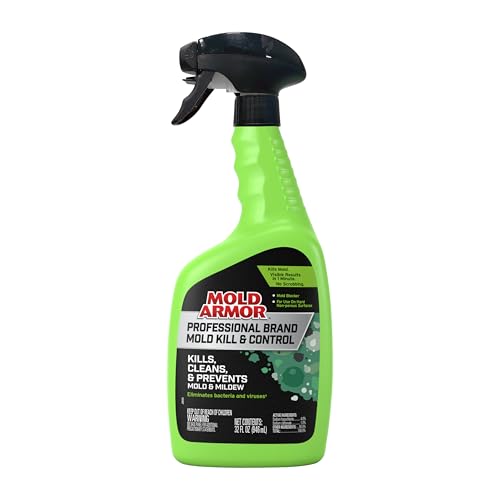 Mold Armor Mold & Mildew Remover | Widely stocked bathroom/surface remover. | Amazon — $22.98 |