Proper Mold Remediation: What Homeowners Need to Know
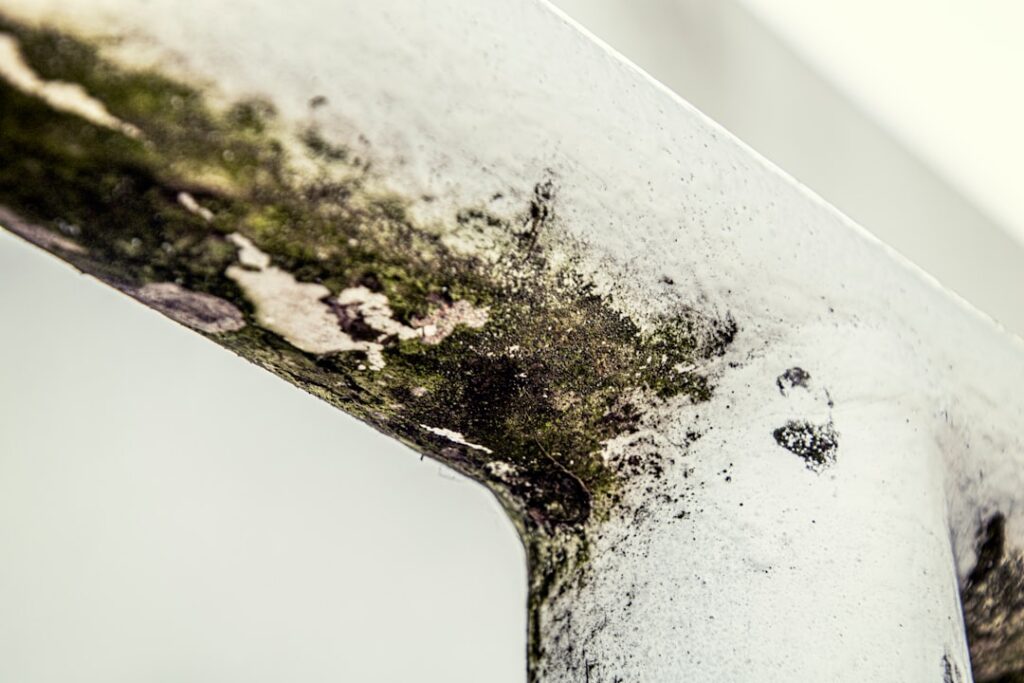
Proper mold remediation looks different from a quick cleanup, and the difference is what separates a job that ends a problem from a job that hides it for six months. The IICRC S520 standard sets the bar — containment with negative pressure and HEPA exhaust, mandatory source-moisture correction first, full personal protective equipment compliance, antimicrobial application after physical removal, post-remediation clearance assessment, and a written scope of work documenting every decision. This guide summarizes EPA and CDC guidance current as of 2026 — consult a certified mold inspector for testing decisions and your physician for symptom evaluation. The pages below walk through what each requirement actually looks like and the red flags that signal a contractor cutting corners.
Is this mold, asbestos, or water damage? Get a free instant screen
Upload a clear photo of the suspect area. You'll get an instant AI screening opinion and what to do next. This is screening guidance, not a professional determination.
Screening guidance only. AI can be wrong. Confirm asbestos, mold type, or lead with lab testing or a licensed professional before acting.
The Six Pillars That Define Proper Remediation
The S520 standard breaks proper work into six identifiable components. Containment quality. Source-moisture correction. Full PPE compliance. Antimicrobial application after physical removal. Post-remediation clearance testing. Written scope-of-work documentation. Each one is observable, each one has clear pass-fail criteria, and any one missing or skipped converts the project from remediation to cosmetic cleanup.
Containment Quality: Negative Pressure and HEPA Exhaust
Containment is the most visible quality signal. A proper contained work zone uses six-mil polyethylene sheeting taped along framing edges with painter’s tape over duct tape (duct tape pulls drywall paper when removed). HVAC supply and return registers in the affected room are sealed independently. A HEPA air scrubber draws air from inside the containment and exhausts it outside through a window port or temporary ducting, producing measurable negative pressure across the barrier.
Negative pressure means that air flows into the containment when the barrier is breached — not out. The visible test is a barrier that bulges inward toward the work zone rather than outward into the rest of the house. The objective test is a manometer reading between 5 and 15 Pascals negative, which a credentialed contractor should be able to show on request.
Limited containment — a single layer of plastic over a doorway with HEPA filtration nearby — works for small contained jobs under a few square feet. Full containment with anteroom is required for category-three jobs or jobs over about 30 square feet. A contractor who deploys only limited containment on a larger job is operating outside the standard.
Source-Moisture Fix Must Come First
The EPA position on this is unambiguous: fix the moisture source before remediation begins, not after. A plumbing leak that is still active. A roof penetration that is still leaking. A grading issue that still pushes water at the foundation during rain. Any of these still present when remediation starts will reseed the colony within months, and the contractor who proceeded anyway has failed the homeowner.
The verification is a moisture map taken before the work begins. Pinless meter readings across all affected substrates, with the leak verified repaired by a hose test, a pressure test, or whatever proves the source is genuinely fixed. A contractor who cannot show this documentation, or who proposes to clean the visible mold while “we figure out the leak later,” is signaling that the project will need a second remediation cycle within the year. A review of the mold inspection and testing hub covers how an independent assessor confirms source-resolution.
Full PPE Compliance During the Work
OSHA standards require respiratory protection for mold remediation workers. The standard PPE kit is an N95 or higher respirator (N100 or half-face elastomeric for category-three jobs), sealed eye protection, nitrile gloves, disposable coveralls, and shoe covers. The full kit is worn from the moment a worker enters the containment until the moment they exit.
The red flag homeowners can observe directly: workers in T-shirts and surgical masks. A surgical mask does not filter at the 2 to 10 micron range where mold spores live. A T-shirt holds spores against the worker’s skin and arms and distributes them when the worker leaves the containment. Either is evidence that the contractor is treating the work as a cosmetic cleaning rather than a contained remediation.
Antimicrobial Application After Physical Removal
The S520 standard sequences physical removal before antimicrobial application. The order matters: spraying antimicrobial on a colony that is still in place produces visual reassurance without meaningful biological effect because the chemistry cannot reach the spores inside the substrate. Physical removal — demolition, HEPA vacuuming, damp wiping — gets the bulk of the colony out, and the antimicrobial treats the residual contamination on cleaned surfaces.
EPA-registered antimicrobials are the appropriate products. Each one carries an EPA registration number on the label that a homeowner can verify against the EPA pesticide product database. A contractor who applies an unregistered product, or who refuses to identify the product by name, is either using a consumer cleaner labeled for surface mildew (which is not registered for the deeper biological control that remediation requires) or operating outside the regulatory framework.
Post-Remediation Clearance Testing
Clearance is what separates a finished remediation from a closed-out remediation. A third-party assessor — not the contractor — performs visual inspection, tape-lift surface sampling, and airborne spore counts compared to outdoor baseline. The work passes when visible inspection shows no residual growth, surface samples return below detection or below baseline thresholds, and airborne counts inside the containment are at or below the outdoor reference sample.
The third-party requirement matters. A contractor who clears their own work has a conflict of interest. The independent assessor is paid to find what the remediator missed. Front Range homeowners can typically book a separate clearance assessment for $300 to $600 depending on sample count, which is small money compared to the cost of a failed remediation that closes in spores behind new drywall.
Reviewing the IICRC S520 walkthrough on this site shows what the clearance checklist actually covers and what triggers a failure.
Written Scope of Work
A scope-of-work document for proper remediation is detailed and specific. Each room is listed with affected square footage. The demolition extent is enumerated by surface and dimension. The containment plan is described by category (limited, full, or full-with-anteroom). The antimicrobial is named by product and EPA registration number. The drying targets are listed in moisture content per substrate. The clearance method is identified and the third-party assessor is named or selection criteria are listed. Disposal route for contaminated materials is documented.
A scope that says only “remediate mold per industry standard” is not a scope. It is a placeholder for a project that will scope down once the contractor is inside. Homeowners reading bids should compare the level of detail across competing quotes — the most detailed scope is usually the most professional contractor, even when the price is higher.
Red Flags in Shoddy Mold Work
A handful of patterns appear in failed remediation projects often enough to be predictable.
No Containment or Insufficient Containment
A worker cleaning visible mold with a sponge while the rest of the house breathes through the same air system is doing cosmetic work, not remediation. Even small jobs need at minimum a sealed doorway and HVAC isolation.
Same-Day Cleanup Without Source Investigation
A contractor who can do the work the same day the homeowner calls is not investigating the moisture source. Source investigation takes hours of moisture mapping, sometimes thermography, and often opening exploratory access points. A same-day quote-and-execute is cosmetic.
Painting Over Without Cleaning
The encapsulation paint route — sealing visible mold under a layer of “mold blocking” paint — is occasionally appropriate as an adjunct to proper remediation but is never a standalone solution. A contractor who proposes painting as the primary fix is failing the project.
No Documentation Trail
A proper project produces photographs at each phase, daily moisture logs, signed clearance reports, and disposal certificates. A contractor who hands over only an invoice and a “good to go” verbal sign-off has done a project that cannot be defended at resale, at an insurance claim, or at any future indoor-air-quality question.
The Daily Workflow on a Proper Project
A homeowner who watches a proper remediation in progress sees a predictable daily pattern. Each morning begins with a moisture-reading log update on the substrates being dried, photographs of the day’s progress, and a brief verbal walk-through with the lead technician. Workers suit up at the doorway, with the respirator donned before entering the containment and removed after exiting and disposing of coveralls.
During the work, the air scrubber runs continuously and the containment barrier holds visible inward pressure. Demolition debris stays in the containment until shift end, then gets bagged, double-bagged at the doorway, and carried out a single direct route to an outdoor dumpster or truck. Lunch breaks happen outside the containment, never inside.
End-of-day rituals matter. The work zone gets a HEPA vacuum pass before workers leave for the night. Tools are bagged and stored in a sealed container. The air scrubber stays running through the night to maintain negative pressure even when no one is on site. A contractor who turns off the air scrubber overnight has broken the containment and effectively restarted the spore distribution cycle every morning.
What Proper Remediation Costs on the Front Range
Proper remediation costs more than cosmetic cleanup because it includes all the steps that the cheap quote skips. Front Range pricing as of 2026 for proper work: a small contained bathroom job runs $800 to $2,000 (versus $200 to $400 for a cosmetic spray-and-paint that will fail). A mid-scope basement room runs $3,000 to $10,000 (versus $1,000 to $2,000 for a cosmetic). A large multi-room project runs $15,000 to $50,000 with structural work involved.
The cheap quote almost always fails within the year. The homeowner pays for the cosmetic, then pays a proper remediator to redo the work, then pays for the additional damage that the prolonged colony caused in the interim. The total exceeds the proper quote by a meaningful margin every time.
When to Walk Away From a Quote
Walk away from a quote that has no moisture-source investigation listed, no containment plan specified, no antimicrobial identified by product, no clearance method described, and no written scope beyond a couple of bullet points. Walk away from a contractor who offers same-day execution without an assessment. Walk away from any project where the workers are not wearing respirators during the visible work.
For homeowners less certain how to read a quote, a separate inspection by an independent assessor — not the contractor — is the most useful single step. The assessor produces the moisture map and the written scope baseline that the contractor then bids against, and the document also serves as the homeowner’s evidence of project quality at resale or in any future claim.
Spending a few hundred dollars on an independent assessment before committing to a remediation quote that runs into the thousands has consistently been the most cost-effective decision Front Range homeowners make on these projects.
References
- EPA Mold Cleanup in Your Home — U.S. Environmental Protection Agency
- CDC Cleanup and Remediation — Centers for Disease Control and Prevention
- OSHA Mold Standards — Occupational Safety and Health Administration
- HUD Healthy Homes: Mold — U.S. Department of Housing and Urban Development
Front Range homeowners reviewing a remediation quote and wanting an independent second opinion can reach a vetted local inspector through our contact page for a scope review before signing.