Blue Mold on Wall: Causes, Cleanup and When Drywall Goes
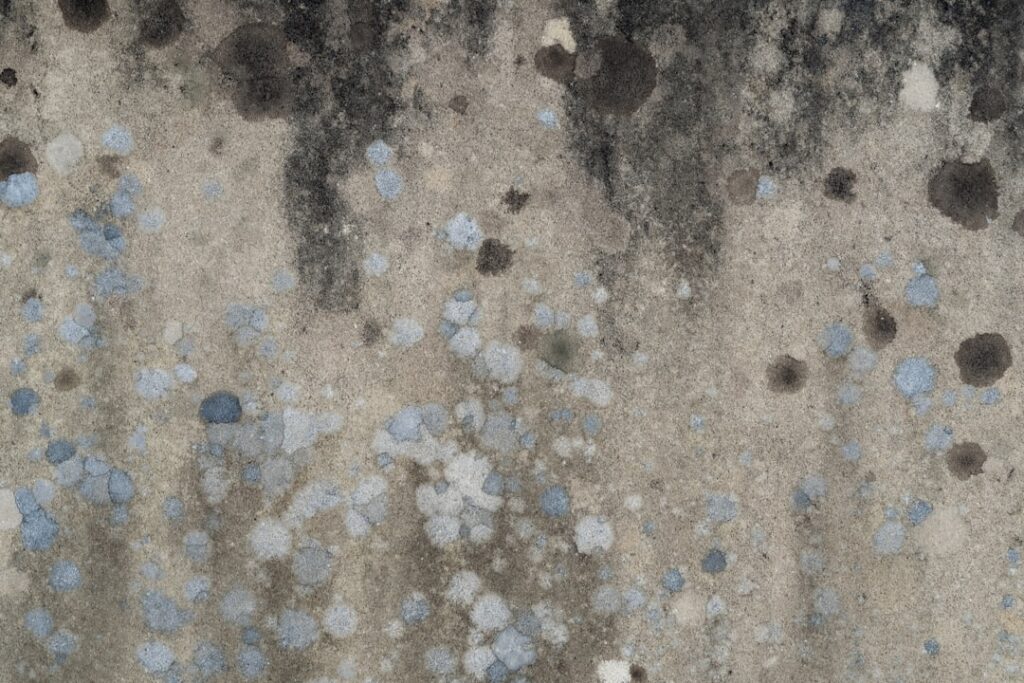
A patch of blue mold on wall paint or drywall tends to catch the eye because it does not look like the “black mold” most people expect. It can show up as powdery blue-green speckles behind a dresser, a bluish haze in a bathroom corner or a fuzzy ring around a window frame. The color is interesting, but it is not the important part. What matters is that something is keeping that wall damp, and that the cleanup method depends on whether the growth is sitting on a painted surface or has worked into the drywall itself. This guide covers what blue growth is commonly attributed to, why it appears, how to clean it, when drywall has to come out and how to keep it from returning. It summarizes EPA and CDC guidance current as of 2026; consult a physician about health symptoms and a qualified professional for large or recurring problems.
Part of our Mold Around the Home guide — start there for the full picture →
Is this mold, asbestos, or water damage? Get a free instant screen
Upload a clear photo of the suspect area. You'll get an instant AI screening opinion and what to do next. This is screening guidance, not a professional determination.
Screening guidance only. AI can be wrong. Confirm asbestos, mold type, or lead with lab testing or a licensed professional before acting.
What Blue Mold on a Wall Usually Means
Blue or blue-green mold on indoor surfaces is often attributed to species of Penicillium or Aspergillus. Both are common. The CDC lists Cladosporium, Penicillium and Aspergillus as the most common indoor molds. That makes them reasonable guesses for a blue-green patch on drywall, but only guesses.
Color alone cannot identify a mold. The same genus can appear in different shades depending on its age, the surface it is growing on, moisture levels and light. A colony that starts white can turn blue-green as it produces spores, and dust, paint pigment or wallpaper dye can change how it looks. Only laboratory analysis identifies a mold to genus or species, and, as covered below, federal agencies say that identification is usually unnecessary.
The useful message from blue mold is simpler: the wall is wet, or has been wet, often enough for mold to grow. The CDC’s guidance is that if you see or smell mold, you should remove it and fix the moisture problem, and that you do not need to know the type of mold to do so. The EPA states that the key to mold control is moisture control.
For more on mold in specific parts of the house, browse the mold by room hub, and for the bigger picture on inspection and testing, start at the mold inspection pillar.
Mold Colors on Walls: What They Can and Cannot Tell You
People often try to read a wall’s mold by color. The table below lists the genera commonly associated with each color in general mold references. Treat the middle column as a loose association, not an identification; many molds appear in more than one color. The right-hand column is the part that actually guides action, and it is nearly the same for every row.
| Color on the wall | Commonly associated genera (not a diagnosis) | What it means for cleanup |
|---|---|---|
| Blue or blue-green | Often attributed to Penicillium or Aspergillus | Clean small areas on painted surfaces with detergent and water; remove moldy drywall if growth has penetrated the paper; fix the moisture source |
| Green | Often linked to Cladosporium, Aspergillus or Penicillium | Same approach as blue; green and blue-green frequently overlap in practice |
| Black or very dark | Often linked to Cladosporium, Alternaria or Stachybotrys | Same cleanup rules apply; color does not by itself indicate a more dangerous mold; persistently soaked materials are often involved |
| White | Can be early growth of many molds; sometimes confused with efflorescence (mineral salt deposits) on masonry | Check whether it smears or dissolves like salt; if it is mold, clean it the same way and find the moisture |
If you are comparing colors, our guides to green mold, black mold on walls and fuzzy mold cover what those growths typically look like.
Is blue mold more or less harmful than other colors?
There is no federal guidance ranking mold by color. The EPA explains that molds produce allergens, irritants and in some cases potentially toxic substances, and that mold exposure can irritate the eyes, skin, nose, throat and lungs of both allergic and non-allergic people. The CDC notes that people with asthma or mold allergies may have severe reactions, and that immune-compromised people and those with chronic lung disease may get lung infections from mold. Those effects are tied to exposure and individual sensitivity, not to the color on the wall.
Why Blue Mold Grows on Walls
Mold spores are already present in nearly every home. The CDC notes mold can enter through doors, windows, vents and HVAC systems, and can be carried in on clothing, shoes and pets. Spores only grow when they land somewhere that stays damp. On walls, the usual moisture sources fall into three groups.
Condensation
Warm, humid indoor air meeting a cold surface leaves water behind. Exterior walls, corners where insulation is thin, the area behind furniture pushed tight against an outside wall, and the drywall around windows are classic spots. The EPA notes that condensation can be a sign of high humidity and advises acting quickly to dry the wet surface and reduce the moisture source.
On the Front Range, condensation problems often appear in winter. Outdoor temperatures drop well below freezing, while showers, cooking, humidifiers and indoor plants push moisture into the air. North-facing bedrooms and closets on exterior walls in Denver, Boulder and Colorado Springs are common trouble spots.
Leaks
A slow drip from a supply line, a failed shower valve, an ice dam forcing water under shingles, or a cracked foundation can wet drywall from behind. The CDC lists leaks in roofs, windows and pipes among the places mold grows. Leak-driven mold often appears as a patch with a clear center point or a stain line, and the drywall may feel soft or look bubbled. Our guide to mold in a bathroom wall covers plumbing-related cases.
Poor ventilation
Bathrooms without working exhaust fans, laundry rooms with unvented dryers, and closed-off basement rooms all trap moisture. The CDC recommends exhaust fans that vent outside in kitchens and bathrooms and a dryer that vents outside. The EPA’s bathroom guidance is that increasing ventilation, by running a fan or opening a window, and cleaning more often will usually prevent recurring mold or at least keep it to a minimum.
What the pattern can hint at
- Spots spread across the upper corners of a room or ceiling edge: often humidity and condensation.
- A defined patch low on the wall or below a fixture: often a leak or wicking from a wet floor.
- Growth behind furniture or pictures on exterior walls: often trapped cold air and condensation.
- Mold that returns in the same spot after cleaning: the moisture source has not been fixed, or growth is behind the surface.
For a wider walkthrough of causes, see our main mold on wall guide.
Blue mold behind wallpaper, paneling and furniture
Some of the largest wall colonies are found only when something is moved. Wallpaper, vinyl wall coverings, wood paneling and large pieces of furniture can all hold moisture against drywall while hiding what is growing underneath. Signs worth checking include wallpaper seams that lift or bubble, a musty odor stronger near one wall, and stains bleeding through the covering.
Be careful about how you look. The EPA cautions that investigating hidden mold requires care because it involves disturbing potential growth sites, and gives the example that removing wallpaper can release a massive amount of spores if mold is growing on the underside. If you suspect a hidden problem, the EPA suggests considering an experienced professional. At minimum, wear the protective gear described below, mist the surface first and peel slowly rather than tearing a whole strip off at once.
How Big Is It? The 10 Square Foot Rule
Before deciding how to clean, measure. The EPA’s guidance is that if the moldy area is less than about 10 square feet, roughly a 3-foot by 3-foot patch, most homeowners can handle the job themselves in most cases. If there has been a lot of water damage, or the growth covers more than 10 square feet, the EPA points to its more detailed remediation guidance written for larger buildings, and an experienced contractor is usually the better choice.
The EPA adds a few other situations that call for a professional or more caution:
- The water damage came from sewage or other contaminated water.
- Mold may be in the HVAC system; the EPA advises not running the system if you know or suspect it is contaminated.
- You have health concerns; the EPA suggests consulting a health professional before starting cleanup.
Also count what you cannot see. A 2-foot patch on the surface can be the visible edge of a larger area behind the drywall, especially where a leak has been running for a while.
Cleaning Blue Mold: Painted Surfaces vs. Drywall
The single most useful distinction for cleanup is whether the mold is on the surface of a sound, painted wall or has grown into the drywall itself. The EPA says to scrub mold off hard surfaces with detergent and water and dry completely, and notes that absorbent or porous materials may have to be thrown away if they become moldy, because mold can grow into the empty spaces and crevices of porous materials and be difficult or impossible to remove completely.
Protect yourself first
The EPA recommends an N-95 respirator, long gloves that reach the middle of the forearm, and goggles without ventilation holes. Ordinary household rubber gloves are fine with water and mild detergent; for bleach or strong cleaners, the EPA recommends gloves made from natural rubber, neoprene, nitrile, polyurethane or PVC. Open windows for fresh air, as the CDC advises, and keep children and pets out of the room.
Painted walls with surface growth
Semi-gloss and satin paints, common in bathrooms and kitchens, behave much like a hard surface when the paint film is intact and the drywall underneath is solid.
- Mist the area lightly so spores do not go airborne when you start wiping.
- Wash with a detergent-and-water solution using a sponge or soft brush. Work from the outer edge toward the center.
- Rinse with a clean damp cloth and dry the wall thoroughly. A fan helps.
- Bag used rags and sponges before carrying them through the house.
- Watch the spot over the following weeks. Faint staining may remain; the EPA notes mold can cause staining and it may not be possible to restore the original appearance.
The CDC also allows a bleach solution of no more than 1 cup of household laundry bleach per gallon of water on hard surfaces. If you use bleach, the CDC warns never to mix it with ammonia or other cleaners because this produces a poisonous gas. Our clean mold off wall guide and broader clean mold guide go through products and technique in more detail.
Flat paint and bare drywall
Flat and matte paints are more porous, and unpainted drywall paper is highly absorbent. Light, recent growth sometimes wipes off a flat-painted wall, but scrubbing hard can tear the paper face and push moisture deeper. Use a lightly dampened cloth, dry the area quickly, and check whether staining or softness remains.
When drywall paper or core is involved
If the growth has soaked into the paper face, the paper is peeling or bubbling, the drywall feels soft or crumbly, or the mold is on the back side of the panel, cleaning the surface will not solve it. Because drywall is a porous material, the EPA’s guidance that moldy porous materials may need to be thrown away applies. In practice, the affected section is usually cut out and replaced after the moisture source is fixed and the cavity is dried.
For small, contained areas, a careful homeowner can do this within the 10-square-foot guideline. For larger areas or anything tied to an ongoing leak, a contractor with mold experience is the safer route. Our how to get rid of blue mold on walls guide walks through removal, and how to remove the mold from the wall covers cutting out damaged sections.
Mold sprays and “mold killers” for drywall
Store shelves carry sprays marketed for drywall mold. They can help clean surface growth on sound, painted walls, but no spray restores drywall that mold has grown into. Follow the label exactly, ventilate, and do not mix products. Our roundup of wall mold removers compares common options.
Do not paint over it
The EPA’s advice is direct: do not paint or caulk moldy surfaces. Clean up the mold and dry the surface before painting, because paint applied over moldy surfaces is likely to peel. Once the wall is clean, dry and repaired, the CDC suggests adding mold inhibitors to paint, which are sold at paint and home improvement stores.
Do You Need to Test Blue Mold?
Usually not. The CDC does not recommend mold testing. It explains that the health effects of mold differ between people, that sampling and culturing cannot tell you whether someone will become sick, and that there are no set standards for an acceptable quantity of mold in a home. The EPA says that in most cases, if visible mold growth is present, sampling is unnecessary, and notes that no EPA or other federal limits have been set for mold or mold spores.
Knowing that a blue patch is Penicillium rather than Aspergillus would not change the cleanup. Either way, the mold comes off or the material comes out, and the moisture gets fixed.
There are narrower cases where sampling may help:
- A musty smell with no visible source, suggesting hidden mold.
- Checking that a professional remediation was effective; the EPA notes surface sampling may be useful to determine if an area has been adequately cleaned.
- Disputes between landlords and tenants, or between buyers and sellers, where documentation matters.
The EPA recommends that sampling be done by professionals with specific experience designing sampling protocols and interpreting results. If you still want a screening look, our mold test guide explains the options, and you can compare mold test kits with those limits in mind.
Preventing Blue Mold From Coming Back
Cleaning without fixing moisture just resets the clock. These steps target the causes.
Keep humidity in the 30 to 50 percent range
The EPA recommends keeping indoor relative humidity below 60 percent, ideally between 30 and 50 percent. The CDC advises keeping it no higher than 50 percent. A basic hygrometer, which the EPA describes as small and inexpensive, tells you where you stand.
Indoor air in many Front Range homes is dry for much of the year, so a wall with mold in a dry Colorado house is a strong hint of a localized source, such as a leak, a shower without a working fan, or a cold spot collecting condensation, rather than whole-house humidity. Be cautious with room humidifiers in winter; running one hard in a bedroom with cold exterior walls is a common way to grow mold behind the bed.
Ventilate moisture at the source
- Run the bathroom fan during and after showers, or open a window. Confirm the fan vents outside, not into the attic.
- Use the range hood when cooking and running the dishwasher.
- Make sure the clothes dryer vents outside.
- Vent moisture-producing appliances outdoors where possible, as the EPA advises.
Reduce cold-wall condensation
- Pull furniture a few inches away from exterior walls so air can circulate.
- Keep closet doors on exterior walls open periodically, or add louvered doors.
- Address missing or compressed insulation in exterior walls and around window frames.
- Dry any condensation on windows and walls promptly.
Fix leaks fast
The EPA and CDC both stress drying water-damaged materials within 24 to 48 hours. Check under sinks, behind toilets, around tub surrounds and below windows after storms. Spring snowmelt and hail-damaged roofs are frequent sources of hidden wall moisture along the Front Range.
When to Call a Professional
A small blue patch on a painted bathroom wall is a weekend task. Bring in help when:
- The growth covers more than about 10 square feet, or water damage is extensive.
- The mold returns after cleaning, suggesting a hidden source.
- You smell mold but cannot find it.
- The drywall is soft, stained from behind or bulging.
- The water came from sewage or another contaminated source.
- Someone in the home has asthma, a mold allergy, a weakened immune system or chronic lung disease.
An inspector can trace moisture with a meter and thermal camera, check the wall cavity and attic, and recommend repairs. A remediation contractor handles removal. Our guide to getting rid of mold on a wall explains how DIY and professional cleanup compare.
References
- A Brief Guide to Mold, Moisture and Your Home — U.S. Environmental Protection Agency
- Mold Cleanup in Your Home — U.S. Environmental Protection Agency
- About Mold — Centers for Disease Control and Prevention
Frequently asked questions
What causes blue mold on a wall?
Moisture. Blue mold grows where a wall stays damp from condensation, a leak or poor ventilation. Spores are already present in most homes and only grow on surfaces that stay wet, so finding and fixing the moisture source matters more than the color.
Is blue mold on a wall dangerous?
Federal agencies do not rank mold by color. The EPA says mold can cause allergic reactions and irritation, and the CDC notes people with asthma, mold allergies or weakened immune systems face higher risk. Any indoor mold should be cleaned up and its moisture source fixed.
Can blue mold be cleaned off drywall?
Surface growth on sound, painted drywall can often be cleaned with detergent and water and then dried. If the mold has soaked into the paper face or the drywall is soft or stained from behind, that section usually needs to be cut out and replaced.
Should blue mold be tested to identify the species?
Usually not. The CDC does not recommend mold testing, and the EPA says sampling is generally unnecessary when mold is visible. Cleanup is the same regardless of species.
What humidity prevents mold on walls?
The EPA recommends keeping indoor relative humidity below 60 percent, ideally between 30 and 50 percent, and the CDC advises no higher than 50 percent. A simple hygrometer shows where your home sits.
Blue mold keeps coming back on the same Front Range wall? Reach out through our contact page and we can connect you with a local inspector who can find where the moisture is coming from.