Black Mold Removal Companies Near Me: A Hiring Guide
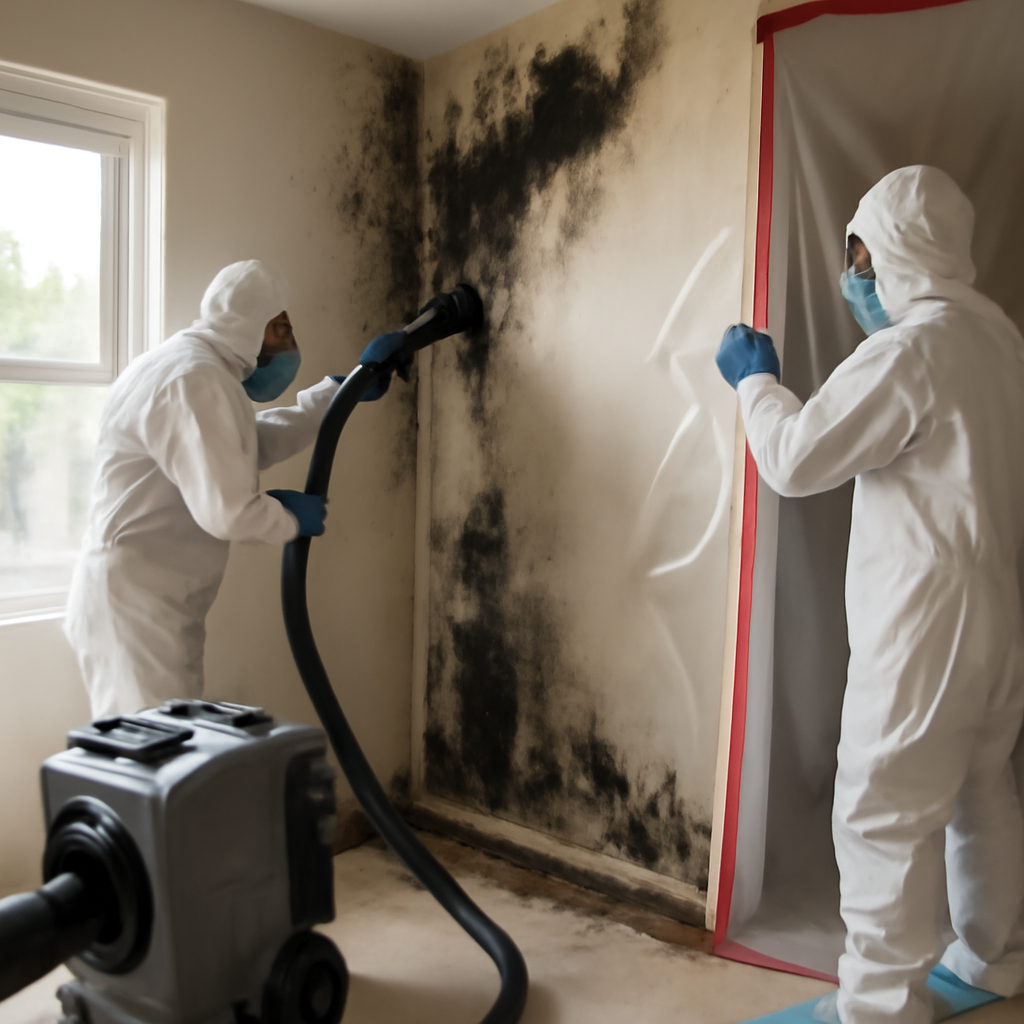
Searching for “black mold removal companies near me” usually happens at a stressful moment: a dark patch has appeared, a musty smell will not leave, or a home sale is on the line. The results page fills with companies promising fast, total removal, and it is hard to tell a careful contractor from an upsell. This guide explains how to evaluate black mold removal companies near me searches turn up, what credentials matter, and which red flags to avoid. It summarizes EPA and CDC guidance current as of 2026; consult your physician for health symptoms and a certified professional for testing and removal decisions.
Part of our Black Mold & Your Health guide — start there for the full picture →
Is this mold, asbestos, or water damage? Get a free instant screen
Upload a clear photo of the suspect area. You'll get an instant AI screening opinion and what to do next. This is screening guidance, not a professional determination.
Screening guidance only. AI can be wrong. Confirm asbestos, mold type, or lead with lab testing or a licensed professional before acting.
How to choose black mold removal companies near you
The short answer: look for a company that diagnoses before it sells, follows EPA-aligned procedures, carries proper insurance and any required state license, provides a written scope, and verifies its own work. The best contractors talk about fixing moisture first and removing mold second, because the EPA is explicit that moisture control is the key to mold control. A company that focuses only on spraying and fogging, without addressing the water source, is treating a symptom.
“Black mold” usually refers to Stachybotrys chartarum, a dark, slimy mold that grows on chronically wet cellulose materials. Despite its reputation, the EPA and CDC advise the same response for any indoor mold: remove it and fix the moisture, regardless of color or species. A company that leans heavily on fear about toxic black mold to justify expensive add-ons deserves extra scrutiny.
That distinction is worth holding onto while you read marketing copy. Many companies build their pitch around the alarming reputation of black mold, implying that it requires special, costly handling that ordinary mold does not. The agencies do not support that framing. The method, the equipment, and the cost are driven by how much growth there is, what materials it has colonized, and how hard the moisture source is to reach — not by the color. A homeowner who understands this is far harder to upsell, because the scary species name loses its power to justify a number that the actual scope of work would not.
Credentials and licensing to verify
Requirements vary by state, so the first step is to learn your local rules.
State licensing
Some states license mold assessors and remediation contractors; many do not. Where licensing exists, confirm the company holds the current credential. Where it does not, references and documentation matter more. Our guide to certified mold remediation explains which certifications carry weight.
Industry certification
Reputable firms often hold IICRC certification and train technicians in EPA and ANSI/IICRC S520 remediation standards. Certification is not a guarantee, but its absence is a question worth asking.
Insurance
Verify general liability and workers’ compensation coverage. A contractor who damages a wall or whose worker is injured on your property without insurance can leave you exposed. Ask for a certificate of insurance and confirm it is current, not lapsed, since a policy that expired last year offers no protection. A reputable company provides this without hesitation.
Bonding and complaint history
Beyond licensing and insurance, a quick check of a company’s record is worthwhile. Look for unresolved complaints, lawsuits, or a pattern of disputes through your state consumer-protection resources, and read recent reviews with an eye for how the company handled problems rather than just the star rating. A firm that resolves complaints fairly is a better bet than one with a flawless-looking profile and no track record at all.
Why the inspection and removal should be separate
One of the most useful protections a homeowner has is keeping the company that diagnoses the problem separate from the company paid to fix it. When a single firm both tests and remediates, it has a financial incentive to find more mold than necessary. An independent assessment establishes the scope, and the remediation company works to that scope. After the job, a separate post-remediation verification confirms the work succeeded. Our overview of mold assessments describes how the diagnostic step works, and the mold inspection and testing hub ties the roles together.
Questions to ask before hiring
A short interview reveals a lot, and the quality of the answers matters more than how smoothly they are delivered. A confident salesperson who cannot explain how the crew will find the water source is a worse choice than a plainspoken contractor who walks you through the diagnosis. Strong candidates answer these readily:
- How will you find and fix the moisture source? The answer should come before any talk of removal.
- What standards do you follow? Expect references to EPA guidance and IICRC S520.
- Will you provide a written scope of work? Vague verbal promises are a warning sign.
- How do you contain the area? Plastic sheeting and negative air pressure should be standard for larger jobs.
- Is post-remediation verification included, and who performs it? Independent verification is best.
- What is your insurance and licensing status? Ask for documentation.
- Can you provide local references? Recent, nearby references beat generic testimonials.
Red flags to walk away from
Certain behaviors signal a company to avoid:
- Fear-based selling. Heavy emphasis on “toxic black mold” danger to justify large bills.
- No moisture diagnosis. Jumping straight to fogging or spraying without finding the water source.
- Combined test-and-remediate with no independent check. A built-in conflict of interest.
- No written scope or contract. Leaves you with no recourse.
- Pressure to sign immediately. Legitimate contractors give you time to compare.
- Promises to “kill all mold permanently.” Spores exist everywhere; the realistic goal is removing growth and controlling moisture.
What black mold removal should cost
Pricing depends on the size of the affected area, the materials involved, and how much demolition is needed to reach the source. Small contained jobs often run a few hundred dollars; larger multi-room or HVAC projects reach the thousands, and extensive contamination with structural repair runs higher. Black mold itself does not cost more to remove than other mold of the same extent — color does not change the method. Beware quotes that inflate price purely on the “black mold” label.
It helps to understand what is actually in a price. Labor for containment, removal, cleaning, and drying is the core; disposal of contaminated porous materials adds to it; equipment rental for dehumidifiers and air movers runs over the days the area must dry; and any moisture-source repair — plumbing, roofing, drainage — is a separate trade. Reconstruction to replace removed drywall, flooring, or insulation is typically quoted apart from the remediation. When a quote arrives as a single lump sum with no breakdown, ask for the line items, because the breakdown is where padding and omissions both become visible. For structured pricing, see our guides on black mold abatement cost and how much it costs to remove black mold.
Comparing quotes the right way
Collect at least two or three written estimates and compare them line by line rather than on bottom-line price alone. A useful estimate names the moisture source, lists the materials to be removed, describes containment, specifies drying and verification, and breaks out any repair work. A low number that omits the moisture fix is not actually cheaper — it is incomplete. A high number padded with unnecessary fogging or “antimicrobial” treatments the EPA does not require is overpriced. The most comparable quotes are the ones built on the same independently established scope.
Local considerations when searching “near me”
Proximity matters for practical reasons: a nearby company responds faster to an active leak, knows regional moisture patterns, and is easier to hold accountable through local references. A Front Range contractor understands how dry winters and monsoon-season humidity affect basements and crawlspaces differently than a coastal climate would. When evaluating local results, weight recent neighborhood references and verifiable local addresses over national lead-generation sites that simply route your inquiry to whoever pays for the click.
Lead-generation sites and how to see past them
Many top search results for a phrase like this are not contractors at all but lead-generation services that collect a homeowner’s information and sell it to whichever company is paying. The listing may look local, complete with a city name and a stock photo, while the actual work gets routed to a rotating set of subcontractors the homeowner never chose. The tell-tale signs are a generic name, a form that asks for contact details before showing any company, a phone number that connects to a call center rather than a local office, and reviews that describe wildly different experiences. To get to a real local contractor, look for a verifiable physical address in your area, a license number you can check with the state, a named owner or technicians, and references from recent jobs in nearby neighborhoods. Calling the listed number and asking directly who would perform the work, and whether they are employees or subcontractors, quickly separates a genuine local firm from a middleman selling your inquiry to the highest bidder.
What a quality black mold removal job looks like
A well-run project follows a recognizable arc. The contractor confirms and stops the moisture source, sets up containment with sheeting and negative air pressure, removes porous materials that cannot be salvaged, cleans and HEPA-vacuums salvageable surfaces, dries the space with dehumidifiers and air movers to a documented level, and then has the area verified before any rebuild. Our companion guide on how mold remediation is done walks through the same sequence in detail. If a company skips containment, ignores the moisture source, or declares the job finished without verification, the result is likely to fail.
As a homeowner, a few observations during the job confirm it is being done right. The crew should isolate the work area and use HEPA-filtered negative air rather than working in the open. They should be removing and bagging saturated porous materials, not merely spraying and painting over them. They should be running drying equipment for as long as the materials need, confirmed with a moisture meter rather than by feel, and they should be willing to show those readings. A job that wraps up in a few hours with a fresh coat of paint over the old spot and no attention to the leak above it is a cosmetic fix wearing the costume of remediation.
When you can skip the company entirely
Not every mold spot needs a contractor. The EPA notes that growth under about 10 square feet on hard, non-porous surfaces can often be cleaned by a homeowner with detergent and water, following CDC safety precautions. Hiring a company makes sense when growth is extensive, hidden inside walls or HVAC systems, tied to flooding or sewage, or when occupants have asthma or weakened immunity. Knowing which category you face keeps you from overpaying for a small problem or underestimating a large one.
A reputable company will tell you honestly when a problem is small enough to handle yourself, and that honesty is itself a useful screening signal. A firm that insists every spot requires a costly intervention, or that pressures a homeowner toward a large contract for what is plainly a minor surface patch, is selling rather than advising. The contractors worth keeping are the ones willing to talk you out of work you do not need.
Understanding the contract and warranty
Before work begins, the contract should put the verbal promises in writing. A solid agreement names the moisture source and the repair responsible for it, lists the materials to be removed and the methods used, specifies containment and drying, states who performs post-remediation verification, and sets out the price and payment schedule. Be wary of large upfront deposits and of contracts that leave the scope vague enough to bill extras freely. Some companies offer a workmanship warranty, but read what it actually covers: a warranty is only meaningful if the moisture source was fixed, since mold that returns because of an unaddressed leak is a new problem rather than a failure of the cleanup. A clear, specific contract is the homeowner’s best protection if a dispute arises later, and the time spent reading it before signing is far cheaper than the time spent contesting a vague one afterward.
How insurance interacts with the hire
Whether insurance helps pay depends on the cause of the mold, not on which company you hire. Many homeowners policies cover mold resulting from a sudden, covered event such as a burst pipe while excluding mold from gradual leaks or deferred maintenance. A good remediation company can document the loss thoroughly, which supports a claim, but it cannot change what the policy covers. Homeowners should read their policy, talk to their insurer early, and avoid contractors who promise that insurance will “definitely cover everything” before the claim is even filed. Inflated scopes designed to maximize a claim can backfire, leaving the homeowner caught between a denied claim and a large bill.
The risk of waiting too long
Choosing a company carefully is important, but so is acting in reasonable time. A small black mold patch tied to an active leak does not pause while a homeowner collects quotes for weeks. Moisture keeps spreading, the affected area grows, and a job that might have been a few hundred dollars becomes a multi-room project. The sensible balance is to gather two or three quotes promptly — over days, not weeks — while taking interim steps to stop the water and dry the area. Speed and diligence are not in conflict; the goal is a fast, informed decision rather than either a rushed signature or an indefinite delay.
Putting it together
The right black mold removal company near you is the one that diagnoses moisture before selling removal, follows EPA and IICRC standards, carries insurance and any required license, works to an independently established scope, and proves its work through verification. Color and scary species names should not drive the price. Compare written quotes on the same scope, check local references, read the contract and warranty carefully, and avoid pressure tactics. A careful hire fixes the problem once instead of selling you a temporary spray. The homeowner who applies that standard — diagnosis before sale, independent scope, verified result, and a willingness to walk away from pressure or fear-based pitches — turns a stressful, confusing search into a sound decision, and ends up with a dry, clean home rather than a recurring bill.
References
- Mold Remediation Guide — U.S. Environmental Protection Agency
- About Mold and Health — Centers for Disease Control and Prevention
- A Brief Guide to Mold, Moisture and Your Home — U.S. Environmental Protection Agency
Front Range homeowners weighing black mold removal companies can get in touch through our contact page to connect with a vetted local inspector for an independent read before hiring.
Mold removal & cleanup picks
For a small, contained patch (under ~10 sq ft) these EPA-friendly removers handle surface mold. Larger or recurring growth warrants a professional assessment first.
| Product | Why | Buy |
|---|---|---|
 RMR-86 Instant Mold Stain Remover RMR-86 Instant Mold Stain Remover | Fast-acting on stains; ventilate and wear PPE. | Amazon — $29.99 |
 Concrobium Mold Control Concrobium Mold Control | No-bleach formula that also helps prevent regrowth. | Amazon — $11.26 |
 Mold Armor Mold & Mildew Remover Mold Armor Mold & Mildew Remover | Widely stocked bathroom/surface remover. | Amazon — $22.98 |