Mold Removal Companies in My Area: How to Choose
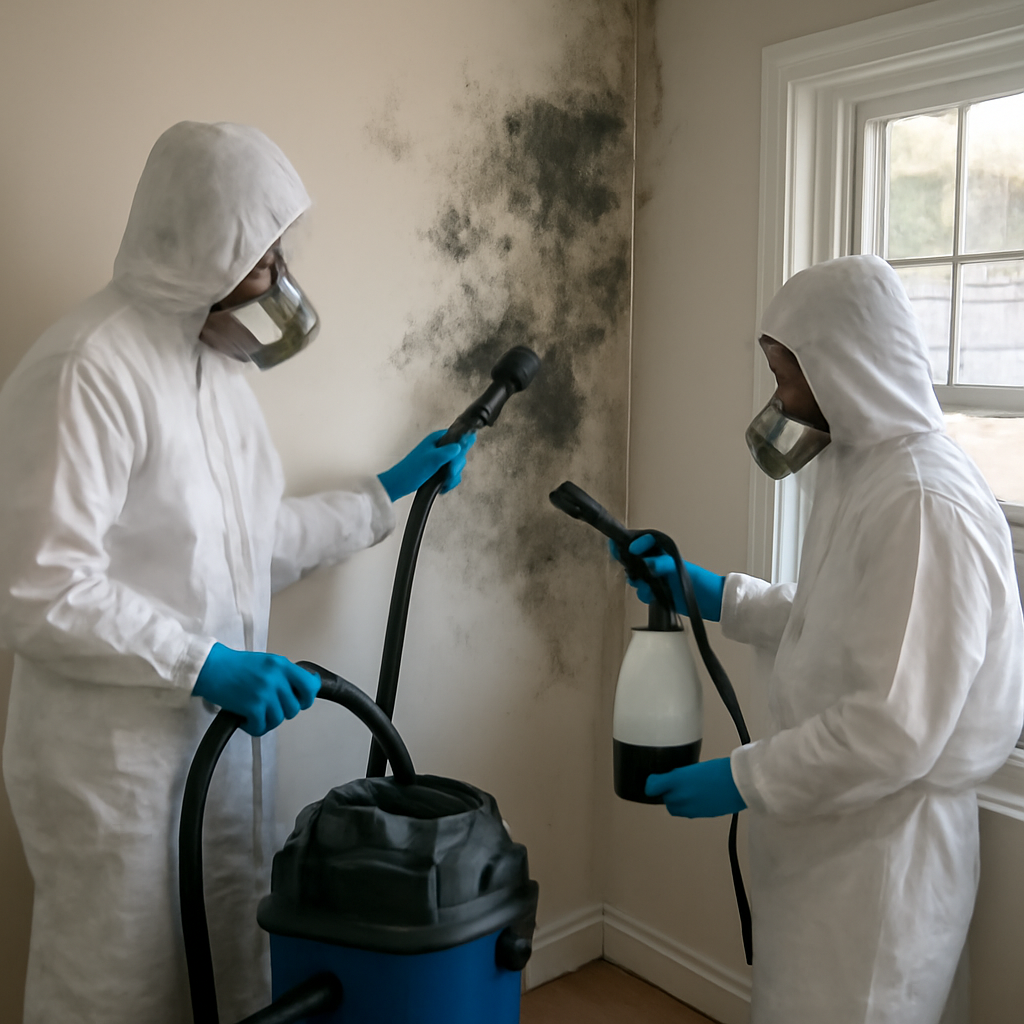
Searching for “mold removal companies in my area” produces a long list, but the right choice depends on matching the company’s strengths to your specific problem and verifying a few measurable things. Local mold removal typically costs $1,500 to $6,000 for a contained issue, with small jobs near $500 and structural work running higher. This guide summarizes EPA and CDC guidance current as of 2026 and reflects typical pricing; consult a certified remediation professional for a binding estimate and a physician for any health concerns.
Is this mold, asbestos, or water damage? Get a free instant screen
Upload a clear photo of the suspect area. You'll get an instant AI screening opinion and what to do next. This is screening guidance, not a professional determination.
Screening guidance only. AI can be wrong. Confirm asbestos, mold type, or lead with lab testing or a licensed professional before acting.
How to evaluate mold removal companies near you
The strongest local company combines verifiable credentials, a written and itemized scope of work, and a clear plan to fix the moisture that caused the mold in the first place. The U.S. Environmental Protection Agency is direct on that last point: mold returns unless the underlying water problem is corrected. A company that proposes to scrub mold without diagnosing the leak, grading issue, or humidity source is selling a temporary result.
Begin by shortlisting companies that hold recognized remediation certifications, carry liability insurance, and provide detailed written estimates. Then compare at least three bids. Our mold inspection and testing hub covers the diagnostic step that should precede any hire, so you understand the problem before paying anyone to address it.
Credentials and insurance to confirm
Mold remediation is lightly regulated, and licensing varies by state, so industry certifications carry weight. Ask which credentials the on-site technicians hold, not just the company owner. Reputable certifications cover containment, removal methods, and air-quality verification. Confirm general liability insurance and, where workers are employed, workers’ compensation coverage.
Independence is the other pillar. The cleanest arrangement keeps the party that tests separate from the party that remediates. When one company inspects, defines the scope, performs the work, and certifies its own success, the incentives all point toward over-scoping. Independent post-remediation testing gives you objective proof the job worked, which the CDC supports as a way to confirm cleanup was effective.
What a fair, itemized quote looks like
A trustworthy estimate reads like a project plan. It should separate the major phases so you can compare bids fairly:
- Assessment. Inspection, moisture mapping, and any pre-remediation sampling.
- Containment. Plastic sheeting and HEPA-filtered negative air to prevent spore spread.
- Removal and disposal. Tear-out of contaminated porous materials and bagged disposal.
- Cleaning and treatment. HEPA vacuuming, surface cleaning, and antimicrobial application.
- Moisture repair. Fixing the leak, drainage, or humidity source, often a separate line.
- Verification. Clearance testing confirming the area is back to normal.
- Reconstruction. Replacing removed drywall, flooring, or trim, usually quoted separately.
A single round number with no breakdown is a red flag. Ask for the detail. Comparing the steps against a standard mold remediation protocol makes scope gaps easy to spot.
Types of local providers and their trade-offs
National restoration franchises
These offer round-the-clock availability, standardized procedures, and experience handling insurance claims after water losses. They suit emergencies and large jobs. The trade-offs are higher overhead and less pricing flexibility.
Independent remediation specialists
Owner-operated firms focused on mold tend to be more flexible on price and more invested in local reputation. The best ones know regional moisture patterns well. Quality varies more than with a franchise, so verify certifications and insurance carefully.
General contractors
A general contractor may offer the lowest price on small jobs and can handle reconstruction. The risk is that mold-specific containment and verification get skipped. This route fits small, surface-level mold on hard materials but is riskier for hidden or large growth.
Front Range homeowners weighing options should factor in regional conditions — finished basements, crawl spaces, and grading issues are common across Denver, Adams, and Jefferson counties, and a local specialist familiar with them often diagnoses the moisture source faster.
Red flags to avoid
Several warning signs reliably mark weaker providers:
- Scare tactics emphasizing “toxic” mold and urgency without a measured explanation.
- No interest in finding the moisture source.
- Refusal to allow independent clearance testing.
- Vague, all-in pricing that prevents comparison.
- No proof of insurance or certification on request.
- Pressure to sign on the spot.
Describing what you actually see helps you get accurate quotes; our comparison of white mold versus black mold gives homeowners the vocabulary to explain the problem over the phone.
Keeping costs reasonable
The main cost drivers are size, location in the home, the materials removed, and the moisture repair. To control spending, act early — a small patch is far cheaper than a saturated wall cavity — and gather three itemized bids. Check what your homeowners policy covers before work begins; many policies pay for mold only after a sudden covered event and cap payouts between $1,000 and $10,000. Prevention pays too: holding indoor humidity below 50 percent with a properly sized dehumidifier and fixing leaks promptly costs far less than repeat remediation.
Questions to ask before you hire
A short list of direct questions separates strong local companies from weak ones. Ask how they will locate and fix the moisture source, since cleanup without that step guarantees recurrence. Ask which certifications the on-site technicians hold and to see proof of liability insurance. Ask whether they use containment and HEPA-filtered negative air on jobs that warrant it, and who performs the post-remediation verification. Ask for an itemized written estimate and for recent local references on jobs of similar size.
The way a company answers is as telling as the answers themselves. A reputable firm welcomes these questions and explains its process clearly; a weaker one deflects, pressures you to sign, or leans on alarming language about “toxic mold” without specifics. The EPA’s measured framing — remove the mold, fix the moisture, verify the result — is the standard a good company will echo in its own words.
How local providers structure their pricing
Understanding how companies build a price helps you read their quotes. Most price by scope: the area affected, the materials that must be removed, the containment required, and the labor hours involved, plus the separate cost of repairing the moisture source and any reconstruction. Some charge a minimum service fee for very small jobs, which is why a tiny bathroom patch can cost more per square foot than a larger, more efficient project.
Watch for two patterns at opposite extremes. A single round number with no breakdown hides what you are buying and makes comparison impossible. An unusually low bid often means a narrower scope — frequently the omission of the moisture repair or verification — rather than a genuine bargain. Three itemized estimates covering the same scope let you compare meaningfully. For homeowners trying to gauge whether a quote is fair, our overview of typical mold remediation protocols shows what a complete scope should include.
National brands versus local independents in your area
The choice between a national restoration franchise and a local independent often comes down to the nature of the job. Franchises shine in emergencies and large insurance losses, offering 24/7 response, standardized procedures, and claims experience. Their overhead is higher and their pricing less flexible. Local independents tend to be more competitive on price and more attuned to regional moisture patterns, but quality varies more, so verification of credentials matters more.
For Front Range homeowners, local familiarity carries real value. A company that regularly works in finished basements and crawl spaces across Denver, Adams, and Jefferson counties will often diagnose a grading or seepage problem faster than a crew unfamiliar with the region’s conditions. Neither option is universally better; matching the provider to the problem — emergency versus planned, large versus small, simple versus complex — is what produces a good outcome.
Emergency versus planned remediation
The urgency of the situation should shape which company you call. An emergency — a burst pipe, a flooded basement, sewage backup — calls for a company with rapid response and water-extraction capability, often a national restoration franchise that operates around the clock and works directly with insurers. Speed matters here because mold can establish within 24 to 48 hours of water intrusion, so getting the area dried quickly can prevent a mold problem from forming at all.
A planned remediation of existing mold is different. There is time to gather three itemized bids, check credentials and references, and choose deliberately, which often favors a local specialist with strong regional knowledge and competitive pricing. Recognizing which situation you are in prevents two mistakes: dithering over bids during an active flood, or rushing into an expensive emergency-priced contract for a problem that has been sitting in a wall for months and can wait a few days for proper vetting.
When to call a professional
Call a professional when the affected area exceeds roughly 10 square feet, when mold is inside the HVAC system, when contaminated water is involved, or when occupants have asthma, allergies, or weakened immunity. The EPA’s 10-square-foot guideline is a sensible DIY ceiling for hard, non-porous surfaces. Anything larger, porous, or hidden behind walls belongs with a vetted local company working from a written protocol with independent verification. The best provider in your area is the one that explains its process, prices transparently, and treats the moisture source as the real problem.
How to verify a company’s credentials
Claims are easy to make and worth checking. To verify a remediation company, ask for the names of the certifications its technicians hold and confirm those credentials exist and are current with the issuing body rather than taking a logo on a website at face value. Request a certificate of liability insurance and, if employees are involved, workers’ compensation — a legitimate insurer will provide it on request. Where your state licenses mold work, confirm the license number and status with the licensing authority.
Online reviews add context but should be read critically: look for patterns across many reviews rather than a single glowing or scathing one, and weigh how a company responds to complaints. References for recent local jobs of similar size let you ask past clients the questions that matter most — did the mold return, was the estimate accurate, was the work area left clean. A company confident in its work will supply references without hesitation.
The remediation process you are paying for
Knowing the steps a competent company follows helps you judge whether yours is doing the job properly. The sequence runs from assessment and moisture mapping, through containment with plastic sheeting and HEPA-filtered negative air, to removal of contaminated porous materials, cleaning and antimicrobial treatment of salvageable surfaces, repair of the moisture source, drying, and finally verification. Reconstruction follows once the area is confirmed dry and clean.
The two steps homeowners most often see skipped are containment on larger jobs and independent verification at the end. Skipping containment risks spreading spores through the home; skipping independent verification leaves you with only the remediator’s word that the job worked. When a local company can describe this full sequence and explains how it verifies success, that is strong evidence of competence. When it cannot, no price is low enough to make it a good choice.
References
- Mold Cleanup in Your Home — U.S. Environmental Protection Agency
- About Mold and Your Health — Centers for Disease Control and Prevention
- A Brief Guide to Mold, Moisture, and Your Home — U.S. Environmental Protection Agency
Front Range homeowners who want help comparing local remediation bids or confirming the moisture source first can get in touch through our contact page to reach a vetted inspector.
Mold removal & cleanup picks
For a small, contained patch (under ~10 sq ft) these EPA-friendly removers handle surface mold. Larger or recurring growth warrants a professional assessment first.
| Product | Why | Buy |
|---|---|---|
 RMR-86 Instant Mold Stain Remover RMR-86 Instant Mold Stain Remover | Fast-acting on stains; ventilate and wear PPE. | Amazon — $25.99 |
 Concrobium Mold Control Concrobium Mold Control | No-bleach formula that also helps prevent regrowth. | Amazon — $13.48 |
 Mold Armor Mold & Mildew Remover Mold Armor Mold & Mildew Remover | Widely stocked bathroom/surface remover. | Amazon — $22.98 |