Bird Removal: Vents, Gutters, Chimneys and Protected Species
Bird removal starts with two questions: what species is it, and is there an active nest with eggs or young? Most native birds are protected by the federal Migratory Bird Treaty Act, so the usual answer for a nest in a vent, soffit or gutter is to wait until the young have fledged, then remove the empty nest and screen the opening so it cannot happen again. House sparrows, European starlings and feral pigeons are not covered by that law, and they cause most of the problems in dryer vents, bath fan hoods and soffits. Birds inside a chimney, attic or a blocked dryer vent, or a woodpecker damaging siding, often warrant a professional. This guide summarizes U.S. Fish and Wildlife Service and CDC guidance current as of 2026; state rules can add further protections, so check your state wildlife agency’s rules before acting.
Part of our Specialty Home Inspections guide — start there for the full picture →
| Where you find birds | What it usually means | What to do |
|---|---|---|
| Dryer vent or bath fan hood, chirping, nesting material poking out | Often house sparrows or starlings; nest can block airflow | Stop using the dryer if airflow is blocked; remove nest when legal and install a guard |
| Soffit gap or gable vent | Starlings, sparrows or swallows nesting in a gap | Identify species; wait for fledging if protected; repair the gap and screen the vent |
| Gutters and downspouts | Nests of robins, sparrows or others; blocked drainage | Wait if active and protected; clean and add guards after |
| Chimney, fluttering or scratching in the flue | Birds nesting or trapped; chimney swifts in some areas | Do not light a fire; call a chimney professional; install a screened cap |
| Drumming and holes in wood or stucco siding | Woodpeckers, often northern flickers, foraging, drumming or nesting | Protected; use deterrents and repair holes; no lethal control without a permit |
| Pigeons on ledges, roof or solar panels | Feral pigeons roosting, droppings buildup | Not federally protected; exclusion, spikes or panel guards; careful droppings cleanup |
Is the Bird Protected? The Migratory Bird Treaty Act
This is the first thing to sort out, because it decides what you are allowed to do. The U.S. Fish and Wildlife Service explains that the Migratory Bird Treaty Act prohibits the “take” of protected migratory bird species without authorization, and it defines take to include killing, capturing, selling, trading and transport. The list of protected species is long and covers most native birds homeowners encounter, from robins, finches and swallows to woodpeckers, owls and hawks. Disturbing an active nest that holds eggs or young of a protected species is generally treated as prohibited, so the practical rule is to leave active nests alone until the birds are gone.
The same law has an important exception. The Service notes that a 2004 amendment limits the act to native species and requires the agency to publish a list of nonnative, human-introduced birds to which it does not apply. The three birds behind most household nuisance problems fall in that nonnative group:
- House sparrows — small brown birds that pack grass, feathers and trash into vents, light fixtures and soffit gaps.
- European starlings — dark, speckled, glossy birds that nest in cavities, including dryer vents, bath fan hoods and gaps in eaves.
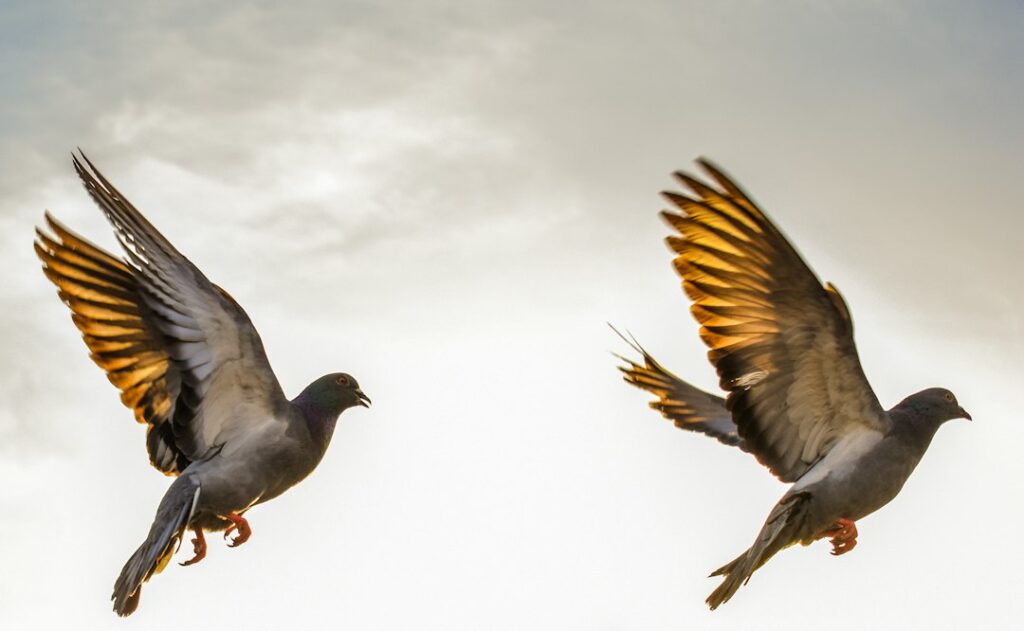
- Feral pigeons (rock pigeons) — roost on ledges, under solar panels and on flat roof sections.
Federal law aside, state and local rules can still apply, and humane handling is expected either way. If you cannot confidently identify the bird, treat it as protected and call a professional or your state wildlife agency. Permits for removing protected birds that are causing damage come through the Fish and Wildlife Service’s migratory bird permit program, and a licensed professional typically handles that process.
Nesting Season: When to Wait and When to Act
On the Colorado Front Range, most songbird nesting runs from spring through midsummer, with starlings and sparrows sometimes raising more than one brood. A typical nest goes from eggs to fledged young in a matter of weeks, so waiting is often a short and reasonable delay. Check the nest from a distance every few days; when the chirping stops and adults are no longer visiting, the young have likely left.
Waiting is not always possible. Act sooner, with professional help, when:
- A dryer vent is blocked. A nest in the exhaust run traps lint and heat. Stop using the dryer until the vent is cleared, because blocked dryer vents are a known fire hazard.
- A bird is trapped inside the house, attic or chimney. A trapped adult will not survive long and can damage materials trying to get out.
- Birds are inside living space or ductwork. Mites, odor and droppings move into the home.
- The bird is a nonnative species. Sparrow and starling nests can be removed at any time under federal law, though humane handling and state rules still apply.
Once a nest is inactive, remove it promptly and close the opening. Birds return to successful nest sites year after year, and an empty, unscreened vent will usually be reoccupied the following spring.
Health Risks From Bird Droppings and Nests
CDC explains that histoplasmosis is a lung infection caused by breathing in spores of the Histoplasma fungus, which lives in soil and in bird or bat droppings, and that spores are released into the air when contaminated material is disturbed. Most people who breathe in the spores do not get sick, but the infection can range from mild to severe, especially for people with weakened immune systems, infants and adults over 55. The fungus mainly lives in the central and eastern United States, but CDC notes that some outbreaks have happened in places scientists did not expect it, and its prevention guidance applies wherever large amounts of droppings build up.
CDC’s prevention advice is direct: large amounts of bird or bat droppings should be cleaned up by professional companies that specialize in hazardous waste removal, and activities that disturb droppings, such as cleaning, remodeling or tearing down old buildings, raise the risk. CDC also suggests protective masks such as N95s for workers in those situations.
For a single small nest in a vent, sensible precautions are enough: gloves, a well-fitted mask, lightly misting the material with water or disinfectant to keep dust down, bagging it, and washing hands afterward. CDC’s general wildlife guidance also recommends washing hands after contact with wild animals or their droppings and after time in places like attics where wild animals may have been. Nests can carry mites and other insects, which is another reason to bag them rather than knock them loose.
Birds in Specific Parts of the House
Dryer vents and bath fan hoods
These are the most common household bird problem. The louvered hood on an exterior wall offers a sheltered cavity, and starlings and sparrows will pull louvers open or build behind a broken flap. Signs include chirping near the laundry room, longer drying times, a hot dryer or nesting debris on the ground below the vent. After the nest is cleared and the duct cleaned, a properly designed guard keeps birds out without trapping lint. Avoid fine mesh screens on dryer vents, because they clog with lint and create a fire hazard; our guide to the dryer vent cover explains which designs are safe and code-friendly.
Soffits, gables and roof vents
Gaps where soffit panels have sagged or where fascia has rotted are favorite starling sites. Gable vents without screening behind the louvers let birds, and sometimes bats, into the attic. Roof vents with damaged screens are another common route. The permanent fix is to repair the wood and trim and back every vent opening with sturdy galvanized hardware cloth. Our guides to soffit and fascia repair and roof vent types cover the materials involved.
Chimneys
Birds that fall or nest in an uncapped flue can block it, which creates a carbon monoxide risk when the fireplace or a connected appliance is used. Do not light a fire to drive birds out. A chimney professional can remove the nest once it is legal and confirm the flue is clear. In some regions, chimney swifts nest in chimneys and are protected, so species identification matters here too. A screened chimney cap is the long-term fix; see our guide to the chimney cap for sizing and types.
Attics
Birds that get into the attic through a vent or gap leave nesting material and droppings on the insulation. After the birds are out and the entry sealed, small amounts can be bagged by hand. Large accumulations, particularly from pigeons or a long-running starling colony, are better handled by a cleanup contractor; our guide to attic insulation removal covers that process.
Gutters
Nests in gutters block drainage and can send water over the fascia, where it rots wood and soaks the foundation. Wait for fledging if the nest is active and the species is protected, then clean the gutter and consider guards.
Roofs, ledges and solar panels
Feral pigeons favor flat ledges, roof valleys, the space beneath rooftop solar panels and the tops of porch beams. The droppings stain surfaces, clog gutters and, under panels, build up with nesting debris that holds moisture against the roof. Because pigeons are nonnative, they can be excluded at any time of year, but they are persistent and return to the same roost. Effective exclusion usually means physical barriers: mesh guards around the perimeter of solar arrays, spikes or wire systems on ledges and netting for recessed areas. Feeding birds near the house makes pigeon problems much harder to solve.
DIY or Professional: How to Decide
Many bird problems are simple enough for a careful homeowner. Others are not, because of the law, the height or the health risk. A rough guide:
- Reasonable DIY: removing an inactive nest from a ground-level vent and installing a guard; cleaning a gutter after fledging; hanging reflective deterrents for a woodpecker; bagging a small amount of droppings with gloves and a mask.
- Better for a professional: anything on a second-story roofline; a bird trapped inside a chimney, wall or duct; dryer vents that exit through the roof; pigeon exclusion around solar panels, which requires work near electrical equipment and the roof surface; large droppings accumulations; and any situation where you cannot identify the species or it may be protected.
Some homeowners try sticky repellent gels, ultrasonic devices or plastic owl decoys. Results tend to be short-lived because birds get used to them, and sticky gels can harm small birds. Physical exclusion, meaning screens, guards, caps and repaired gaps, is the approach that lasts. For the duct side of the job, a clean exhaust run is part of the fix: once a nest is cleared, have the full length of the dryer duct cleaned, since debris often sits well back from the hood.
Woodpecker Damage to Siding
Woodpecker damage is a common Colorado complaint, and the northern flicker is usually the culprit. Woodpeckers drum on siding, fascia, metal flashing and even stucco to communicate and claim territory, mostly in spring. They also excavate holes to find insects in the wood or to build nest and roost cavities. Cedar and other wood siding, and the foam behind some synthetic stucco, are common targets.
Woodpeckers are native and protected under the Migratory Bird Treaty Act, so lethal control is off the table without a federal permit. Practical steps:
- Check for insects. Rows of small holes can mean the bird is feeding on insects in the siding. Treating the insect problem often ends the damage.
- Use visual deterrents. Reflective tape, hanging reflective objects or bird netting placed a few inches from the siding can discourage drumming at a specific spot.
- Cover the spot. Temporary sheet metal or hardware cloth over a favorite drumming area can redirect the bird.
- Repair holes promptly. Open holes invite other birds, insects and moisture. Fill and paint small holes; replace badly damaged boards.
- Timing. If a woodpecker has excavated a cavity and is nesting, wait until the nest is inactive before sealing it.
What a Professional Bird Removal Service Does
- Inspection and identification. Confirm the species, whether the nest is active and every entry point.
- Legal check. For protected species, plan around the nesting season or obtain the needed permit; for nonnative species, plan humane removal.
- Removal. Remove nests and any trapped birds, using one-way exclusion devices for some cavity-nesting birds.
- Cleaning. Clear vent ducts, sanitize droppings and remove contaminated insulation or debris.
- Exclusion. Install vent guards, hardware cloth, chimney caps, bird spikes, netting or solar panel guards, and repair soffit and fascia gaps.
- Warranty. A written warranty on the exclusion work.
Typical Bird Removal Costs
These are a typical national range, not quotes. Get two or three written quotes, since pricing varies widely by region and job.
| Service | Typical national range | Main cost drivers |
|---|---|---|
| Nest removal from a vent plus guard | Roughly $150–$500 | Number of vents, height, duct cleaning needed |
| Dryer vent clearing and cleaning | Roughly $100–$300 | Duct length, roof versus wall termination |
| Chimney nest removal and cap | Roughly $200–$800 | Flue size, cap type, roof pitch |
| Pigeon exclusion (spikes, netting, panel guards) | Roughly $500–$3,000 or more | Area covered, roof access, number of panels |
| Droppings cleanup and sanitizing | Roughly $300–$2,000 or more | Volume, access, insulation removal |
| Woodpecker siding repair | Roughly $200–$1,500 or more | Number of holes, siding type, painting |
Homeowners insurance often excludes damage caused by birds and other animals, although sudden events may be treated differently. Check your policy before filing.
How to Choose a Bird Control Company
- Species knowledge. The company should identify the bird and explain the federal and state rules that apply before quoting.
- Licensing and permits. Ask about state licensing and, for protected species, how permits are handled.
- Insurance. Proof of liability coverage for roof and ladder work.
- Written estimate and warranty. Itemized vents, materials and warranty terms.
- Safe vent products. Dryer guards that do not trap lint.
Red flags: offering to remove an active nest of a protected bird with no permit, recommending poison, or sealing vents in a way that blocks required airflow.
Prevention and How a Home Inspection Flags Bird Problems
The best prevention is closing openings after each nesting season: screen gable and roof vents, fit bird-resistant guards on dryer and bath fan hoods, cap the chimney, repair soffit and fascia gaps, and keep gutters clean. Front Range hailstorms crack plastic vent hoods and dent soffits, so a quick look after a big storm is worthwhile.
During a home inspection, the inspector reports visible conditions such as nests in vents, damaged or missing vent hoods, an uncapped chimney, woodpecker holes in siding, droppings in the attic and gaps at the eaves, typically recommending repair by a qualified contractor. The inspector does not remove nests or disassemble vents. For more targeted evaluations, our overview of specialty inspections explains what can be added.
More Questions About Bird Removal
How do you keep birds from nesting in a dryer vent?
Birds are kept out of a dryer vent by installing a vent cover designed for dryer exhaust, such as a louvered cap with a guard that still allows lint to pass, after confirming no active nest is inside. Fine mesh screens should not be used on dryer vents, because lint can clog them and create a fire risk.
Cleaning the vent line regularly removes nesting material and lint. If birds have already nested, check whether eggs or young are present and whether the species is protected before removing anything. A professional can clear and guard the vent safely.
Can birds in the attic damage a home?
Yes, birds in an attic can damage a home by compressing or soiling insulation, blocking vents, contaminating the space with droppings and nesting material, and creating fire risks near light fixtures or wiring. Their entry holes also let in rain and other pests.
Droppings that build up over time can harbor fungi and bacteria, so cleanup should be done with proper protective equipment or by a professional. Sealing entry points after birds leave, replacing damaged insulation, and repairing vents or soffits restores the attic and prevents a return.
Are bird deterrents like spikes and netting effective?
Yes, bird spikes, netting and other physical deterrents are generally the most effective long-term bird control methods because they block access to roosting and nesting spots. Visual scare devices and sound repellents often work only temporarily as birds become used to them.
The right deterrent depends on the bird species and location. Spikes suit ledges and signs, netting suits large open areas like eaves, and vent guards protect exhaust openings. Proper installation matters; poorly placed deterrents can trap birds or shift them to another part of the house.
Does homeowners insurance cover bird damage?
Homeowners insurance often excludes damage caused by birds, rodents and insects, treating it as a maintenance issue, though some policies cover sudden damage such as a bird breaking a window. Coverage varies widely by insurer and policy wording.
If bird activity leads to a covered event like a fire caused by a nest in a vent, the resulting damage may be covered even if the bird activity itself is not. Reviewing the policy’s exclusions and documenting the problem with photos helps when talking with an insurer.
References
- Migratory Bird Treaty Act of 1918 — U.S. Fish and Wildlife Service
- Migratory Bird Program — U.S. Fish and Wildlife Service
- Histoplasmosis: Causes and How It Spreads — Centers for Disease Control and Prevention
- Preventing Histoplasmosis — Centers for Disease Control and Prevention
- Wildlife and Healthy People — Centers for Disease Control and Prevention
Frequently asked questions
Is it legal to remove a bird nest from a vent?
It depends on the species and whether the nest is active. Most native birds are protected under the Migratory Bird Treaty Act, so active nests should be left until the young fledge. House sparrows, European starlings and feral pigeons are nonnative and not covered by that federal law, but state rules may still apply.
How do you get a bird out of a dryer vent?
Stop using the dryer if airflow is blocked. Identify the bird, wait for fledging if it is a protected species, then have the nest removed, the duct cleaned and a lint-safe guard installed. Avoid fine mesh screens that clog with lint.
Are bird droppings dangerous?
Large accumulations can be. CDC explains that the fungus causing histoplasmosis can be found in bird droppings and that disturbing them releases spores. CDC recommends professional cleanup for large amounts; small nests can be bagged with gloves and a mask.
How do you stop a woodpecker from damaging siding?
Woodpeckers are protected, so use deterrents rather than lethal methods. Check for insects in the siding, hang reflective tape or netting near the spot, cover favorite drumming areas with metal and repair holes promptly once any nest is inactive.
How much does bird removal cost?
Typical national ranges run from about one hundred to a few hundred dollars for a single vent nest and guard, and into the thousands for pigeon exclusion or large droppings cleanup. Height, number of openings and cleanup volume drive the price.
How long does it take baby birds to leave a nest?
Baby birds of many common backyard species leave the nest about two to three weeks after hatching, though timing varies by species. Waiting until young birds fledge before sealing a vent or opening is often the simplest legal option for protected species.
Can birds get into a chimney?
Yes, birds and chimney swifts can enter chimneys without a cap. A chimney cap with mesh sides is the standard prevention. Chimney swifts are a protected species, so active nests should not be disturbed; a chimney professional can advise on timing removal and cap installation.
Is it safe to clean bird droppings yourself?
Small amounts of bird droppings can be cleaned carefully by wetting them first to limit dust, wearing gloves and a properly fitted respirator, and bagging waste. Large accumulations, especially in attics, are better handled by professionals, since dry droppings can carry fungal spores that cause illness.
Seeing nests in vents or damage at the eaves on a home you are buying? Contact our team to arrange a Front Range inspection.