Best Thermal Imaging Camera for Hunting: Outdoor Use Guide
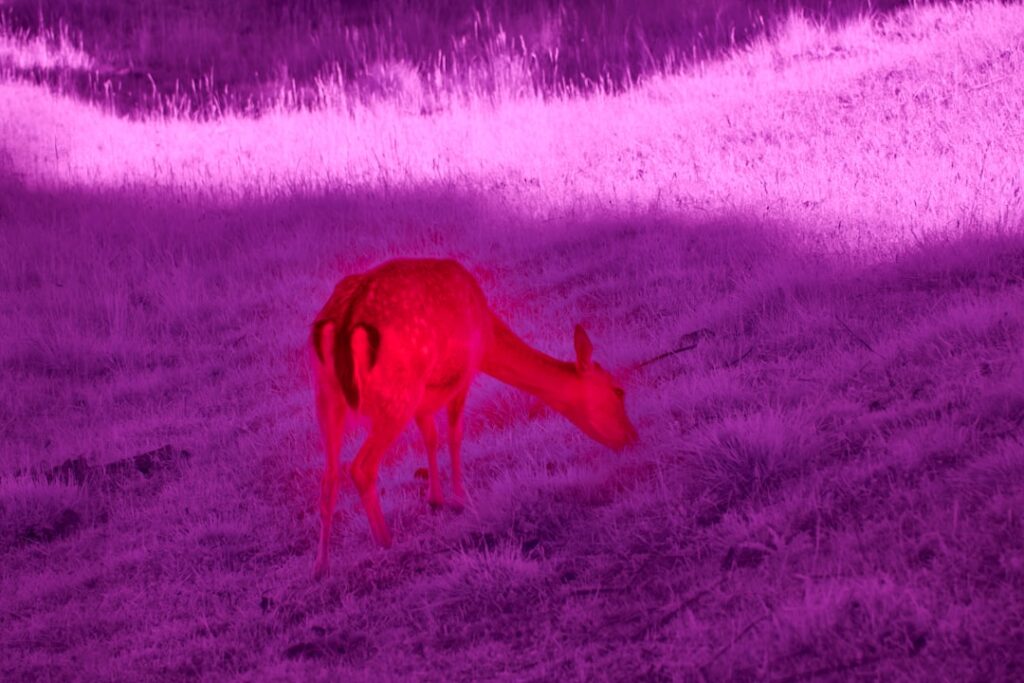
A thermal imaging camera for hunting is mostly a scanning tool. Hunters and landowners use one to scout before first light, glass a meadow at dusk, check whether an animal is still bedded in cover, recover game after dark and spot predators near livestock. For those jobs the right camera is usually a handheld thermal monocular, not a riflescope and not a phone-attached inspection camera. This guide compares the outdoor thermal monoculars on the current Amazon shelf on sensor resolution, refresh rate, lens, stated range, weather sealing and power, adds one phone-based option for short-range use, and then explains which specs matter in the field. It covers optics and observation only, not shooting technique.
Part of our Thermal Imaging for Homes guide — start there for the full picture →
As an Amazon Associate we earn from qualifying purchases.
How we compared: we compared 26 current Amazon listings returned for thermal hunting cameras and general thermal cameras on what each listing states. Seven are outdoor optics (six handheld monoculars and one riflescope); the other 19 are handheld or phone-attached inspection cameras, which we read mainly to choose one phone-based pick. We did not lab-test or handle any unit and did not verify range claims in the field. Prices and availability change often, so check the current listing before buying.
Quick picks: thermal cameras for hunting and outdoor scanning
| Pick | Best for | Key spec | Key detail |
|---|---|---|---|
| TOPDON TS004 Pro | Most detail at distance | 384×288, 19 mm lens | 650-yd detection claim; IP67; 11 h |
| Nightfox Arctic | Hands-free, head-mounted scanning | 256×192, ≤30 mK | Head strap + helmet dovetail; 24° view |
| CVLIFE 256×192 Monocular | Sharpest stated eyepiece display | 1024×768 display, 50 Hz | Picture-in-picture; external power |
| TOPDON TS004 | Pocketable all-night scanner | 256×192, 13 mm lens | IP67; 11 h; 2 m drop rating |
| GOYOJO G215 | Swappable batteries in the cold | 256×192, 12 µm, 15 mm | Replaceable cells; 16 GB storage |
| TOPDON TC001 Max | Phone-based close-range spotting | 256×192 (512×384 enhanced) | Names wildlife observation; measures temperature |
The six picks, compared listing by listing
1. TOPDON TS004 Pro — Best for Detail at Distance
384×288 thermal monocular with a 19 mm lens, 50 Hz, a 650-yd detection claim, IP67 sealing and an 11-hour battery.
Check price on Amazon| Specification | Details |
|---|---|
| Thermal sensor | 384×288 at 50 Hz |
| Lens / range | 19 mm lens; detection to 650 yd; clear detail within 146 yd, per the listing |
| Power | 5,000 mAh battery; up to 11 hours |
| Durability | Silicone-armored housing; IP67; rated for 2 m drops |
| App | Wi-Fi link to the TopInfrared app for live view, photos and video with audio |
| Warranty | 1 year |
TOPDON TS004 Pro — 384×288, 50 Hz, 19 mm, 650-yd detect / 146-yd detail, 11 h, IP67, 2 m drop, app link
The Only Monocular on the Shelf Above 256×192
Five of the six thermal monoculars in these results use a 256×192 sensor. The TS004 Pro is the only one at 384×288, about 2.25 times the pixel count, and it pairs that with the longest stated lens among the monoculars (19 mm, versus 10 to 15 mm on the others). More pixels behind a longer lens is what lets an animal stay recognizable farther out instead of turning into a warm smudge.
Its listing is also unusually honest about range. Only three of the six monoculars state any distance, and TOPDON is the only brand that gives two numbers for each model: 650 yards for detection and 146 yards for “clear detail.” That second figure is the one to plan around when you need to tell a doe from a coyote.
The trade-offs: the listing gives no weight, no NETD sensitivity and only a one-year warranty, and recording runs through the phone app rather than stated onboard storage.
Pros
- Highest resolution among the monoculars
- Longest stated lens (19 mm)
- States both detection and detail ranges
- IP67 with an 11-hour battery
Cons
- Weight and NETD not stated
- One-year warranty
- Narrower view than shorter-lens units
2. Nightfox Arctic — Best Hands-Free Option
Head- or helmet-mounted 256×192 thermal monocular with ≤30 mK sensitivity, 50 fps, AMOLED display and 9-hour battery.
Check price on Amazon| Specification | Details |
|---|---|
| Thermal sensor | 256×192, fixed focus, ≤30 mK sensitivity, 50 fps |
| Field of view / range | 24° viewing angle; detection around 100 yd, per the listing |
| Mounting | Head strap and dovetail helmet adapter included; shares mounts with the Nightfox Prowl 2 |
| Display / storage | AMOLED display; records to an included 32 GB memory card |
| Power | 3,500 mAh battery; about 9 hours; USB-C charging |
| Build / warranty | IP65; about 0.62 lb; 2-year manufacturer warranty |
Nightfox Arctic — 256×192, ≤30 mK, 50 fps, 24° view, head/helmet mount, AMOLED, 32 GB card, 9 h, IP65, 2-yr warranty
The Only Head-Mountable Monocular, and the Only One Stating NETD
Every other monocular here is built to be held to the eye. The Arctic ships with a head strap and a dovetail adapter for helmets, which frees both hands for walking a dark trail, dragging a deer or checking fence lines. Its 24° viewing angle is the only field of view any monocular listing states, and it suits scanning close cover rather than glassing a far ridge.
It is also the only one of the six monoculars to publish a sensitivity figure: ≤30 mK. Lower NETD helps separate an animal from sun-warmed rock or brush on a muggy evening. Its two-year warranty is the longest stated among the monoculars; the rest say one year or simply “manufacturer warranty.”
The catch is range. Nightfox states detection of “around 100 yd (180 m),” and those two figures do not match, so treat this as a close-range tool. It also does not mention an app connection.
Pros
- Only head- or helmet-mountable unit here
- Only monocular stating NETD (≤30 mK)
- Wide 24° stated viewing angle
- Two-year warranty; 32 GB card included
Cons
- Short, inconsistently stated range
- Fixed focus
- No app link mentioned
3. CVLIFE 256×192 Thermal Monocular — Best Eyepiece Display
15 mm, 12 µm thermal monocular with a 1024×768 display, 50 Hz, picture-in-picture, Wi-Fi and 16 GB storage.
Check price on Amazon| Specification | Details |
|---|---|
| Thermal sensor | 256×192, 12 µm detector, 50 Hz |
| Optics / display | 15 mm lens; 2.4x base magnification, 4x electronic zoom; 0.39-inch 1024×768 display |
| Features | Six palettes, picture-in-picture, hot-spot tracking, Wi-Fi app for live view and file transfer |
| Storage | Built-in 16 GB for photos and video |
| Power | Up to 8 hours; fast charging; can run from external power |
| Build / warranty | IP65 water and dust protection; about 1 lb; 1-year warranty |
CVLIFE 256×192 — 12 µm, 50 Hz, 15 mm, 2.4x base, 1024×768 display, PiP, hot-spot tracking, Wi-Fi, 16 GB, 8 h, IP65
The Only Monocular That States Its Display Resolution and Base Magnification
The thermal sensor sets how much detail exists, but the eyepiece display sets how much of it you actually see. The CVLIFE is the only monocular listing that gives a display resolution (1024×768) and the only one that states a base optical magnification (2.4x). That makes it easier to judge than units that only quote digital zoom.
It is also the only monocular whose listing says it can run from external power, a practical feature for a long sit in a blind with a power bank in a pocket. Picture-in-picture and hot-spot tracking help pick a warm animal out of a busy scene.
The listing does not state a detection range or NETD, and its IP65 rating covers water jets rather than immersion. At 8 hours, its stated runtime is the shortest of the six monoculars apart from the GOYOJO units’ “over 6 hours.”
Pros
- Only monocular stating display resolution
- States base magnification, not just zoom
- External power and fast charging
- 16 GB storage plus app transfer
Cons
- No detection range or NETD stated
- IP65 rather than IP67
- One-year warranty
4. TOPDON TS004 — Best Compact All-Night Scanner
256×192, 50 Hz thermal monocular with a 13 mm lens, IP67 silicone armor, 2 m drop rating and an 11-hour battery.
Check price on Amazon| Specification | Details |
|---|---|
| Thermal sensor | 256×192 at 50 Hz |
| Lens / range | 13 mm lens; detection up to 410 m (about 450 yd); clear detail within 100 yd |
| Power | 5,000 mAh battery; up to 11 hours |
| Durability | Silicone-armored housing; IP67; rated for 2 m drops |
| App | Wi-Fi link to the TopInfrared app; photos and video with audio, including offline |
| Model / warranty | TS004; listing says “manufacturer warranty” without a term |
TOPDON TS004 — 256×192, 50 Hz, 13 mm, 410 m detect / 100 yd detail, 11 h, IP67, 2 m drop, app link
One of Only Two Monoculars Rated IP67, With the Longest Stated Runtime
All six monoculars state an ingress rating, but only the two TOPDON TS004 models reach IP67, which adds rated protection against temporary immersion; the other four are IP65. The two TOPDONs also share the longest stated runtime at 11 hours, ahead of the Nightfox (9), CVLIFE (8) and both GOYOJO units (over 6).
Compared with the Pro, this model drops to 256×192 and a 13 mm lens, so its stated ranges shrink to 410 meters for detection and 100 yards for clear detail. For walking field edges, checking a creek bottom or confirming whether something is still bedded in cover, that is plenty.
The listing’s weight field reads about 0.15 lb, which seems implausibly low for a 5,000 mAh unit, so do not rely on it. It also does not state NETD or a warranty term.
Pros
- IP67 sealing and 2 m drop rating
- Ties for longest stated runtime (11 h)
- States both detection and detail ranges
- Records through the app even offline
Cons
- Shorter reach than the Pro
- Warranty term not stated
- Weight figure looks unreliable
5. GOYOJO G215 — Best for Swappable Batteries
256×192, 12 µm thermal monocular with 15 mm lens, 50 Hz, replaceable batteries, 16 GB storage and Wi-Fi.
Check price on Amazon| Specification | Details |
|---|---|
| Thermal sensor | 256×192 with a 12 µm detector; 50 Hz per the title |
| Lens / zoom | 15 mm focal length; 4x zoom |
| Palettes | Six: white-hot, black-hot, red-hot, rainbow, iron-red and glimmer |
| Power | Replaceable batteries; over 6 hours continuous |
| Storage / app | 16 GB image storage; Wi-Fi app for live view and sharing |
| Build / warranty | IP65; model CS-G215-JP2; 1-year warranty |
GOYOJO G215 — 256×192 / 12 µm, 50 Hz, 15 mm, 4x zoom, six palettes, replaceable batteries, 16 GB, Wi-Fi, IP65
One of Only Two Monoculars With Replaceable Batteries
Four of the six monoculars use built-in rechargeable packs. The two GOYOJO models (G215 and G210) are the only ones that state replaceable batteries. On a cold Colorado morning that matters more than any runtime figure: lithium cells lose capacity in the cold, and a spare kept warm in an inside pocket can be swapped in seconds instead of hunting for a power bank and cable.
Between the two GOYOJOs, the G215 is the better-specified choice. It states 50 Hz and a 15 mm lens; the G210 states 25 Hz and a 10 mm lens. At 25 Hz, panning across a field or following a moving animal looks noticeably choppier.
What the listing does not say: no detection range, no NETD figure and a weight field (about 2.2 lb) that likely reflects packaging rather than the device. Its “over 6 hours” runtime is also the lowest stated among the six.
Pros
- Replaceable batteries for cold-weather swaps
- 50 Hz with a 15 mm lens
- Six palettes including glimmer
- 16 GB storage plus app sharing
Cons
- Lowest stated runtime per set of cells
- No detection range or NETD stated
- IP65 and one-year warranty
6. TOPDON TC001 Max — Best Phone-Based Option for Close Range
Dual-lens USB-C phone thermal camera, 256×192 enhanced to 512×384, ≤40 mK, and the only phone unit naming wildlife use.
Check price on Amazon| Specification | Details |
|---|---|
| Thermal sensor | 256×192, enhanced to 512×384 by TISR processing; ≤40 mK; 25 Hz |
| Lenses | Thermal plus a visible-light camera for sharper outlines |
| Connection | Plugs into USB-C phones, tablets and Windows devices; listing mentions a Lightning adapter; no internal battery |
| Measurement | −4°F to 1,022°F, ±2°C or ±2% |
| Uses named | Electrical, HVAC, leak detection, automotive and wildlife observation |
| Size / weight | About 7.1 × 4.2 cm; 33 g |
TOPDON TC001 Max — 256×192 (512×384 TISR), ≤40 mK, 25 Hz, dual lens, USB-C + Lightning adapter, 33 g, −4°F to 1,022°F
The Only Phone-Attached Listing That Names Wildlife Observation
Nine of the 26 listings are phone-attached thermal cameras. They are built for inspection work, but the TC001 Max is the only one whose listing names wildlife observation as a use. It is also a genuine two-in-one: unlike any monocular here, it measures surface temperatures, so the same device that checks a game trail at 50 yards can find a cold draft, a wet ceiling or a hot breaker at home.
Know its limits outdoors. A phone screen glows in the dark and ruins night vision; a 25 Hz refresh is half the rate of the monoculars; there is no stated IP rating; and with no battery of its own it drains the phone. Plan on short-range checks around a cabin, barn or campsite rather than glassing open country.
For buyers who mainly want a home-inspection camera that can double for occasional outdoor use, this is a better fit than any monocular.
Pros
- Measures temperature for home use too
- Dual lens with ≤40 mK sensitivity
- Tiny and light at 33 g
- Works with USB-C and Lightning phones
Cons
- 25 Hz refresh; bright phone screen at night
- No IP rating stated
- Draws power from the phone
Also on the shelf but not picked: the GOYOJO G210 (256×192 at 25 Hz with a 10 mm lens) and AGM’s Rattler V2 19-256, the one riflescope in these results. The other 18 inspection cameras are radiometric tools for building work, covered in our best thermal imagers guide.
Monocular vs scope vs phone camera for hunting
A handheld monocular is the default thermal tool for hunting because scanning is most of the work. It lets you sweep a field, a timber edge or a draw without pointing anything else at what you are looking at, and it stays useful when you are simply walking in or out in the dark. A riflescope-format thermal is a different, more regulated product with its own legal questions. A phone camera fits close-range checks and doubles as a home-inspection tool, but its screen, refresh rate and lack of sealing make it a poor primary outdoor device.
One useful rule from the shelf itself: all six monoculars state IP65 or IP67, while none of the 19 handheld and phone inspection cameras states anything better than IP54, and many state no rating at all. Outdoor optics are built for rain and snow; inspection cameras are built for attics and crawlspaces.
Specs that matter for hunting
Resolution and lens together
Resolution sets how many thermal pixels land on an animal; focal length sets how large it appears. A 384×288 sensor behind a 19 mm lens resolves more at distance than a 256×192 sensor behind a 10 mm lens, and the difference shows up as the gap between “something warm” and “a buck bedded under a juniper.” Enhanced or “super resolution” figures are processing, not more sensor.
Detection versus recognition
Most range figures are detection distances, where a heat source shows up as a few pixels. TOPDON’s listings are the only ones on this shelf that give a separate “clear detail” range, and their ratio (detail at a little under a quarter of the detection distance) is a reasonable discount to apply to any other claim.
Refresh rate
Fifty hertz keeps panning and moving animals smooth; 25 Hz smears. Five of the six monoculars state 50 Hz or 50 fps; the GOYOJO G210 states 25 Hz, as does every phone camera on the shelf that gives a figure.
Sensitivity
NETD measures the smallest temperature difference the sensor can separate. It matters most when the background is nearly as warm as the animal: humid nights, sun-baked rock after sunset or light rain. Only the Nightfox publishes it among the monoculars, so ask sellers for the figure.
Batteries and cold
Stated runtimes are measured in mild conditions. Front Range mornings in elk and deer season regularly start below freezing, and at elevation they can be far colder. Keep the device and spares inside a jacket until use, favor replaceable cells or carry a power bank, and expect less runtime than the box says.
Ergonomics and recording
Weight, button layout and how the eyepiece fits your eye matter on a long sit. Onboard storage or app recording helps when you want to review whether an animal you saw at dusk was the one you thought it was, and it is useful evidence if you report a sick-looking animal to a wildlife officer.
Safety, health and lawful use in the field
Rules on thermal and other electronic devices for hunting vary by state, species, season and method of take, and some uses are restricted. In Colorado, check the current Colorado Parks and Wildlife regulations before carrying any thermal device afield, and always have landowner permission before scanning private land. Using a monocular to scout or to recover game is a different question from using a thermal device to take game; the regulations draw that distinction, not the hardware.
Long, still hours in the cold carry real risk. The CDC names hunters among people who stay outdoors for long periods and face higher hypothermia risk, and warns that hypothermia can occur even above 40°F when someone is chilled by rain, sweat or cold water. Warning signs include shivering, confusion, fumbling hands and slurred speech.
A thermal view also shows animals that should be left alone. In areas with chronic wasting disease, the CDC advises hunters not to shoot, handle or eat animals that look sick or act strangely, to wear gloves when field-dressing and to follow state testing recommendations; it reports CWD in wild deer in 36 states. Odd behavior can also mean rabies, and the CDC notes more than 90% of reported animal rabies cases in the U.S. occur in wildlife, most often bats, raccoons, skunks and foxes.
From the field back to the house
Many people who buy a thermal monocular later want to point it at their own house. It will show warm and cold patches, but monoculars do not measure temperature, adjust for emissivity or save files for a report. Building work calls for a radiometric camera; see our FLIR infrared camera overview or browse the thermal cameras in our shop. For a single surface reading, a digital infrared thermometer is the inexpensive answer.
Reading a house is also a skill. ENERGY STAR notes that sealing air leaks and adding insulation can cut annual energy bills by up to 10%, but finding the leaks depends on scanning when there is a strong inside-outside temperature difference and no sun loading on the walls. Our guide to the infrared scan in a home inspection explains how inspectors set up those conditions.
Colorado notes for Front Range hunters and landowners
The dry, clear air common along the Front Range is generally good for thermal range, while spring upslope storms, fog and blowing snow cut it sharply. Large day-night temperature swings mean rocks, south-facing slopes and pavement hold heat after sunset, lowering contrast for the first hours of darkness; thermal is often clearest late at night and just before dawn. Rural properties near Lyons, Morrison and Palmer Lake often pair acreage with older homes that have drafty attics and frozen-pipe risk; local scans are covered on our Lyons and Palmer Lake pages.
When to call a professional
For questions about legal use of thermal devices, contact Colorado Parks and Wildlife. For anything involving a house, treat a thermal image as a starting point: anomalies need confirmation with moisture meters, electrical testing or opening the assembly. If you are buying or selling a home and want a thermal scan included, reach out through our contact page. For more tools, visit our home inspection tools hub.
References
- Preventing Hypothermia — Centers for Disease Control and Prevention
- About Chronic Wasting Disease (CWD) — Centers for Disease Control and Prevention
- About Rabies — Centers for Disease Control and Prevention
- Seal and Insulate with ENERGY STAR — ENERGY STAR (U.S. EPA)
Frequently asked questions
What type of thermal camera is best for hunting?
For most hunters a handheld thermal monocular is the best fit, because scouting, scanning and game recovery are most of the work. Look for at least a 256x192 sensor, a 50 Hz refresh rate and an IP65 or better rating. A 384x288 sensor with a longer lens holds detail farther out.
How far can a hunting thermal monocular see?
Listed ranges are usually detection distances, where a heat source shows as a few pixels. On this shelf, TOPDON listed 650 yards for detection but 146 yards for clear detail on its 384x288 model, and 410 meters versus 100 yards on its 256x192 model. Plan around the shorter detail figure.
Is a phone thermal camera good enough for hunting?
Only for short-range checks. Phone-attached cameras typically refresh at 25 Hz, rely on a bright phone screen and state no more than IP54 sealing, if any rating at all. Their advantage is that they measure temperature, so they double as home-inspection tools.
Do thermal cameras work in cold weather?
The sensors work well in the cold, but batteries lose capacity. Keep the device and spares warm inside a jacket, consider a model with replaceable batteries or carry a power bank, and expect less runtime than the listing states.
Is it legal to use a thermal camera for hunting in Colorado?
Rules depend on species, season and whether the device is used to scout, recover game or take game. Check the current Colorado Parks and Wildlife regulations before using any thermal device afield, and get landowner permission before scanning private land.
Own acreage on the Front Range and want the house itself checked for heat loss, moisture or electrical hot spots? Contact us to connect with a vetted local inspector.
Thermal imaging cameras
Infrared cameras reveal hidden moisture, missing insulation, and air leaks. Phone-attachment models are the budget entry point; standalone units have higher resolution.
| Product | Why | Buy |
|---|---|---|
 FLIR ONE Pro (phone) FLIR ONE Pro (phone) | Plugs into iPhone/Android; inspector favorite. | Amazon — $349.00 |
 Topdon TC001 Topdon TC001 | High-res phone module at a low price. | Amazon — $199.99 |
 FLIR C5 Compact FLIR C5 Compact | Standalone pocket camera with Wi-Fi. | Amazon — $611.50 |