Thermal Imaging for Hunting: What Homeowners Need to Know
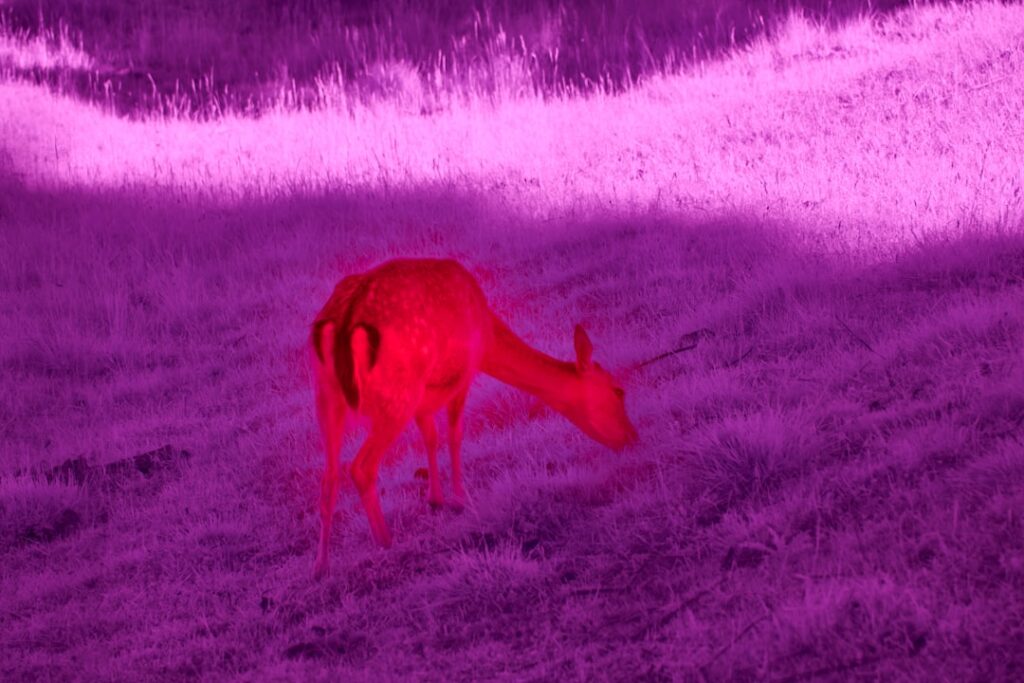
Thermal imaging for hunting has grown from a military and high-end niche into a mainstream category, with handheld monoculars and weapon-mounted scopes that detect the heat signature of animals in total darkness. The same core sensor technology, an uncooled microbolometer that reads infrared energy, also powers the thermal cameras home inspectors use to find missing insulation and hidden moisture. Understanding the shared fundamentals helps buyers see why a hunting thermal device and an inspection thermal camera, though built for different jobs, rest on identical physics and overlapping specifications. This guide explains how the technology works and where the hunting and inspection uses diverge.
Part of our Thermal Imaging for Homes guide — start there for the full picture →
How thermal imaging works for hunting and beyond
Every object above absolute zero emits infrared radiation in proportion to its temperature. A thermal camera’s sensor, called a microbolometer, absorbs that radiation across an array of tiny detector elements and converts the temperature differences into a false-color or grayscale image. Warm objects, a deer’s body, a heated wall stud, a wet patch cooled by evaporation, stand out against their cooler surroundings. No visible light is required, which is why thermal works in complete darkness for hunting and why it sees through visual camouflage like brush or shadow.
That same principle is the foundation of inspection thermography. Our plain-language explainer on what thermal imaging is covers the physics in depth, and it applies equally to a hunter scanning a field and an inspector scanning a ceiling. The crucial point for any buyer: thermal cameras detect surface temperature differences, not objects through walls. A hunter sees an animal’s exposed heat; an inspector sees the thermal pattern moisture or air leakage leaves on a surface. Neither sees through solid material.
The specifications that matter for thermal devices
The same handful of specs determine quality whether the device is aimed at game or a gable wall.
Sensor resolution is the number of thermal detector pixels, commonly 160×120, 256×192, 320×240, or 640×480. More pixels mean finer detail and longer effective detection range; a hunter wants to identify an animal at distance, and an inspector wants to resolve a small thermal anomaly on a wall. Thermal sensitivity, expressed as NETD (noise-equivalent temperature difference) in millikelvin, describes the smallest temperature difference the sensor can distinguish. A lower NETD, such as 40 mK versus 70 mK, produces a cleaner image with subtler contrast, which matters for faint heat signatures in both fields.
Frame rate is critical for hunting and less so for inspection: a 30 or 60 Hz refresh tracks moving animals smoothly, while inspection of static surfaces tolerates lower rates, and some export-restricted or budget units run at 9 Hz. Temperature range and accuracy matter more for inspection, where you may want a measured value, than for hunting, where relative contrast is enough. Lens and field of view trade off magnification against scene width; hunting scopes favor narrow, magnified views for distance, while inspection cameras favor wider views to scan a wall quickly.
Why frame rate and range split the two uses
Hunting devices prioritize detection distance, magnification, and a high frame rate to track movement, often packaged as a monocular or rifle scope with onboard recording. Inspection cameras prioritize close-range temperature accuracy, a usable field of view, and the ability to blend thermal with a visible image. A hunting scope optimized for spotting a hog at 300 yards is poorly suited to reading the subtle thermal gradient of a damp ceiling at arm’s length, and vice versa, even though both share a microbolometer.
The home-inspection crossover
The overlap is real and worth understanding. Many homeowners first encounter thermal through hunting or general-purpose cameras and then realize the device can reveal building problems. A thermal camera scans a wall and shows cool streaks where air leaks past poor insulation, cool patches where moisture is evaporating, and warm lines tracing radiant heating or electrical hot spots in a panel. Our guide to thermal imaging in home inspection details these applications, from missing insulation to HVAC duct tracing to flagging overheating breakers, and the broader home inspection tools guide shows where a thermal camera sits in a working kit.
The limitation that trips up crossover users: thermal does not measure moisture, it suggests it. A cool anomaly might be moisture, a draft, or a thermal bridge, so an inspector confirms with a moisture meter. Similarly, a hunting scope can show a building’s heat patterns, but its narrow magnified lens, high frame rate, and lack of temperature measurement make it a poor substitute for a dedicated inspection camera. The shared sensor does not make the products interchangeable.
Detection, recognition, and identification range
Hunters and inspectors both care about how far a thermal device sees, but they describe it differently, and the distinction is instructive. Thermal performance is often broken into three ranges: detection (you can tell something warm is present), recognition (you can tell what kind of object it is), and identification (you can confirm specifics, such as the species of animal). The same device that detects a heat source at several hundred yards may only identify it at a fraction of that distance, because identification demands far more resolved detail.
Resolution, lens magnification, and sensitivity all push these ranges out. A 640×480 sensor with a long lens identifies game much farther than a 160×120 unit with a wide lens. For inspection, the equivalent question is how small an anomaly the camera resolves at working distance: a higher-resolution sensor distinguishes a fist-sized moisture patch on a ceiling, while a low-resolution one only shows large defects. Buyers in both fields should match the spec to the realistic distance and detail their task requires rather than chasing the longest detection-range number on the box, which describes the easiest, least useful tier of performance.
Why a temperature difference must exist
A point that surprises new thermal users in both hunting and inspection: the camera shows nothing useful when everything in the scene is the same temperature. A thermal device maps differences, not absolute presence. A hunter scanning at midday, when sun-baked ground and rocks radiate as warmly as an animal, sees a cluttered image where game blends into the background; the same scene at night, when an animal’s body heat stands far above the cooled terrain, lights the animal up clearly. This is why thermal hunting favors dawn, dusk, and night.
Inspection lives by the same rule. A wall with hidden moisture only reveals it when that moisture creates a temperature contrast, often because evaporation cools the damp area or because the wet material conducts heat differently than dry material around it. An inspector sometimes manipulates conditions, running the HVAC system to create a temperature gradient across a wall, to force a contrast that makes a defect visible. Understanding that thermal needs a differential to work prevents the common disappointment of scanning a thermally uniform surface and concluding, wrongly, that nothing is there.
Comparison to two adjacent device types
A general-purpose handheld thermal monocular sits between the two worlds; our handheld thermal imaging camera guide covers units usable for both spotting wildlife and casual building scans, typically 256×192 to 320×240 resolution. A thermal rifle scope, covered in our thermal imaging rifle scope guide, adds reticles, ballistic features, and high frame rates for hunting but lacks inspection-grade temperature measurement. A dedicated inspection camera adds visible-light blending, spot temperature readouts, and report software, at the cost of hunting-oriented magnification and range.
Legal and regulatory notes for thermal use
Thermal device use carries rules that differ sharply between the two applications, and buyers should know them before purchasing. Hunting with thermal optics is regulated at the state level, and many states restrict or prohibit thermal and night-vision devices for hunting game animals, while allowing them for non-game species like coyotes or feral hogs, often only at night and sometimes only with a permit. Rules vary widely and change, so checking the current regulations of the state where you will hunt is essential; a device legal in one state may not be legal across the line.
Export regulations also touch the hardware itself. Higher-resolution thermal sensors and faster frame rates fall under U.S. export controls, which is one reason some consumer thermal devices are capped at a 9 Hz refresh rate, slow enough to fall below the controlled threshold but adequate for static inspection and casual spotting. For home inspection there are no hunting-style legal restrictions, but professional thermographers often pursue voluntary certification to demonstrate competence, since interpreting thermal images correctly is a learned skill. Knowing which rules apply to your intended use avoids both a wasted purchase and a legal misstep.
Monocular, scope, and clip-on form factors
Hunting thermal devices come in three main form factors, each with an inspection analogue worth noting. A handheld monocular is the most versatile, used for scanning a field to locate game before committing to a shot, and it doubles reasonably well for casual building scans because you hold and aim it freely. A dedicated thermal rifle scope mounts on a firearm with a reticle and ballistic features for aiming, which makes it purpose-built for hunting and poorly suited to inspection, since you would not point a weapon-mounted optic at a wall. A clip-on attaches ahead of a conventional day scope to add thermal capability without re-zeroing.
For a buyer weighing crossover use, the monocular is the only form factor that comfortably serves both worlds, scanning for animals at night and, in a pinch, revealing a building’s heat patterns by day. Even then, its hunting-oriented narrow, magnified field of view and lack of temperature measurement make it a screening device for buildings rather than an inspection instrument. Someone whose primary need is inspection should buy an inspection camera with a wider field of view and measurement features; someone whose primary need is hunting should buy the monocular or scope built for it. Trying to make one device excel at both usually means it does neither well.
Limitations, maintenance, and buying criteria
Thermal cameras of every type share limits. They read surface temperature only, are fooled by reflective surfaces like glass and polished metal, depend on a temperature difference existing to show anything (a wall at the same temperature as a leak hides it), and require interpretation rather than giving a yes-or-no answer. Export rules also cap the frame rate of some higher-resolution devices.
Maintenance is light: protect the germanium lens from scratches and fingerprints, clean it only with approved optical wipes, keep firmware current, and store the unit dry and within its temperature limits. When buying, decide the primary job first. For hunting, prioritize resolution, detection range, magnification, and a 30 to 60 Hz frame rate. For inspection, prioritize sensitivity (low NETD), temperature accuracy, a wider field of view, and visible-light blending. A buyer who wants both should accept a compromise device or, more practically, choose the tool built for the task that matters most.
References
- ENERGY STAR: Seal and Insulate — U.S. Environmental Protection Agency (ENERGY STAR)
- Infrared Thermography for Inspectors — International Association of Certified Home Inspectors
- Standard of Practice — American Society of Home Inspectors
- Electrical Hazard Identification — Occupational Safety and Health Administration
Frequently asked questions
Can a hunting thermal scope be used for home inspection?
It uses the same sensor technology, so it will show a building's heat patterns, but it is poorly suited to inspection. Hunting scopes favor narrow magnified views and high frame rates for distance, while inspection needs a wider field of view, temperature measurement, and visible-light blending.
What thermal resolution do I need?
More pixels mean finer detail and longer detection range. For hunting, 256x192 to 640x480 helps identify animals at distance; for inspection, 160x120 can find large anomalies but 256x192 or higher resolves smaller moisture and insulation defects more reliably.
What is NETD and why does it matter?
NETD, or thermal sensitivity, is the smallest temperature difference a sensor can distinguish, measured in millikelvin. A lower NETD such as 40 mK gives a cleaner image with subtler contrast, which helps detect faint heat signatures whether you are spotting wildlife or a damp wall.
Does thermal imaging see through walls?
No. Thermal cameras read only surface temperature differences. For hunting they detect an animal's exposed heat; for inspection they read the thermal pattern that moisture, drafts, or insulation gaps leave on a surface. Neither application sees through solid material.
Thermal imaging cameras
Infrared cameras reveal hidden moisture, missing insulation, and air leaks. Phone-attachment models are the budget entry point; standalone units have higher resolution.
| Product | Why | Buy |
|---|---|---|
 FLIR ONE Pro (phone) FLIR ONE Pro (phone) | Plugs into iPhone/Android; inspector favorite. | Amazon — $349.00 |
 Topdon TC001 Topdon TC001 | High-res phone module at a low price. | Amazon — $199.99 |
 FLIR C5 Compact FLIR C5 Compact | Standalone pocket camera with Wi-Fi. | Amazon — $611.50 |