Thermal Imaging Inspection in Palmer Lake, CO
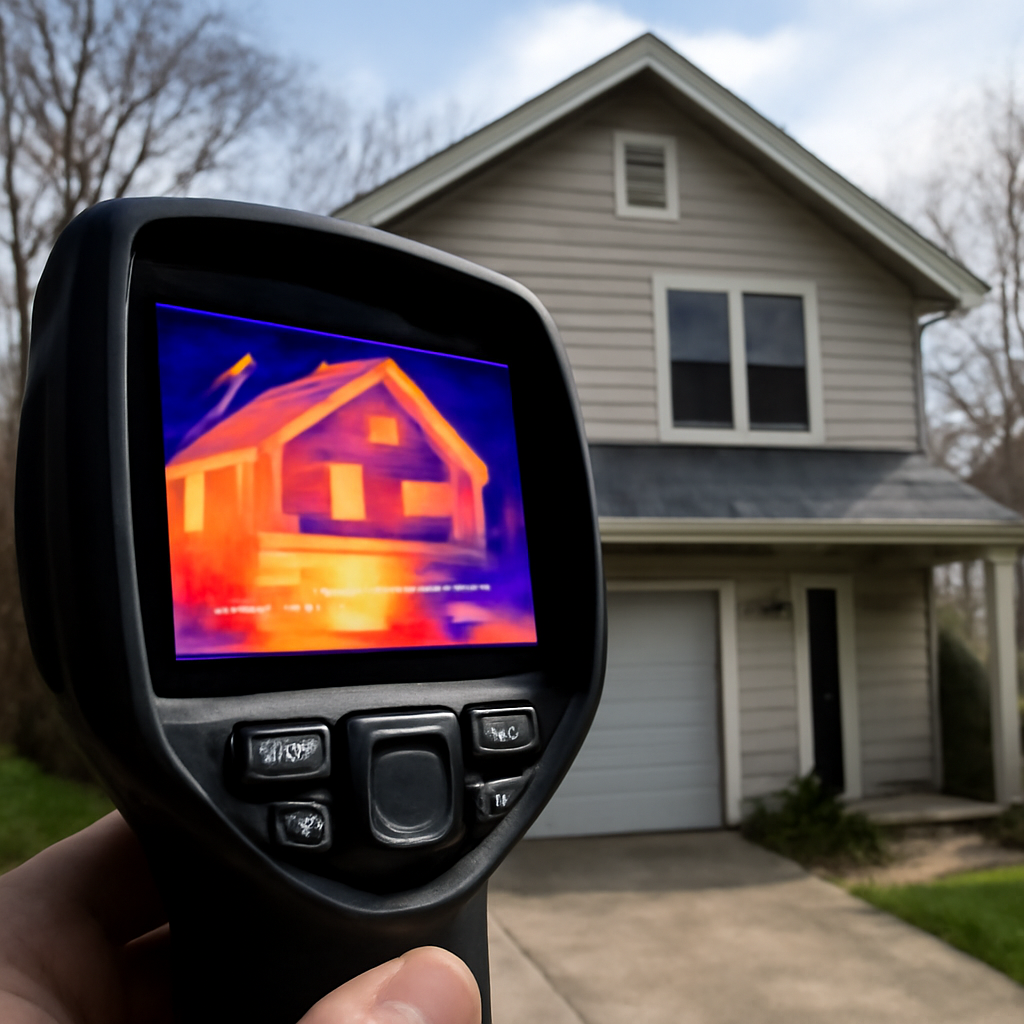
A thermal imaging inspection uses an infrared camera to reveal temperature patterns inside a home that the eye cannot see, exposing hidden moisture, missing insulation, air leaks, and certain electrical hot spots. In Palmer Lake, a forested town near 7,200 feet at the top of the Monument Divide in El Paso County, that capability is especially useful. Heavy tree shade and long cold winters drive both hidden moisture and significant energy loss, so a thermal imaging inspection palmer lake buyers add to a standard inspection can surface problems a visual look would miss. This page explains what infrared can and cannot show, how it applies to local mountain homes, and what it costs.
Thermal imaging inspection in Palmer Lake: what to know
Thermal imaging, also called infrared thermography, detects surface-temperature differences across walls, ceilings, and floors. Damp areas, missing insulation, and air leaks all change how a surface reads on an infrared camera, so an inspector can spot anomalies worth investigating without opening the wall. It is a diagnostic aid, not an X-ray: the camera shows surface-temperature patterns, and the inspector interprets what they likely mean, confirming with a moisture meter where needed.
For Palmer Lake homes, the appeal is finding concealed problems before they become expensive. A cool, damp patch in a shaded attic, or a stripe of missing insulation in a mountain home losing heat all winter, shows up on infrared when a visual inspection would miss it. For how thermal imaging fits the larger inspection process, our buyer’s guide to hiring a home inspector covers the context, and many buyers pair it with a full home inspection in Palmer Lake.
What makes the technique valuable in Palmer Lake specifically is the high-elevation climate. The long cold winters create large indoor-outdoor temperature differences, which is exactly the condition that makes infrared scanning most revealing, both for moisture and for energy performance.
Why Palmer Lake homes benefit from thermal imaging
Energy performance is the strongest everyday reason. At 7,200 feet the heating season is long and demanding, and mountain homes lose heat through gaps in insulation, poorly sealed windows, and air leaks around penetrations. A thermal imaging pass during a heating-season inspection shows exactly where insulation is missing or thin and where conditioned air escapes, translating directly into comfort and heating-cost insights for the buyer. Older homes retrofitted over decades often show inconsistent insulation that infrared makes obvious.
Hidden moisture is the second major benefit. Heavy ponderosa shade keeps roofs and north walls damp, and warm moist indoor air can condense against a cold attic roof deck in a tightly sealed winter home. Infrared can reveal these damp signatures behind finishes that look perfectly dry, along with active plumbing or roof leaks tracking down into walls. In a shaded Palmer Lake home, a thermal scan of the attic and lower level adds real diagnostic power.
Electrical safety rounds out the value. At the panel and accessible connections, the camera can show components running hotter than normal, an early warning of loose connections or overloaded circuits, which matters in mountain homes that may run wood stoves, electric heat, and space heaters through long winters. In a Palmer Lake home that blends a harsh climate, shaded moisture, and sometimes older systems, these are exactly the hidden issues a buyer wants surfaced before closing.
What a Palmer Lake thermal imaging inspection covers
An infrared inspection is a scanning process layered onto a visual assessment. The inspector moves a calibrated camera across surfaces, watching for temperature anomalies, then confirms suspect areas with direct measurement.
Insulation and air leakage
The camera reveals where insulation is missing, settled, or thin by showing temperature streaks and patches across walls and ceilings, and it highlights drafts around windows, doors, and penetrations. For a Palmer Lake buyer, this maps the home’s energy weak points and the comfort issues that come with long, cold, high-elevation winters, often the single most useful output of the scan.
Moisture detection
The inspector scans attics under shaded roofs, ceilings beneath bathrooms, and walls around plumbing for cool, damp signatures, then verifies with a moisture meter. In a shaded Palmer Lake home, the attic and north-facing surfaces are priority areas, since that is where condensation and slow leaks are most likely. A confirmed damp area points to a leak or condensation problem worth opening up.
Electrical scanning
At the electrical panel and accessible connections, the camera can show components running hotter than normal, a sign of loose connections or overloaded circuits. This is a safety screen, not a substitute for an electrician, but it flags concerns for follow-up. Because infrared depends on temperature differences, a heating-season scan in Palmer Lake usually produces the clearest results, which pairs naturally with a pre-purchase inspection in Palmer Lake.
Thermal imaging inspection cost in Palmer Lake
When added to a standard home inspection in the Palmer Lake and El Paso County market, a thermal imaging pass typically adds about $100 to $250, depending on home size and scope. A standalone infrared inspection, focused on a specific concern like a suspected leak or an energy audit, generally runs about $200 to $400.
Palmer Lake factors shape the figure. A larger or older mountain home with more surface area and more retrofit history takes longer to scan thoroughly. A buyer who wants careful attic-moisture and energy documentation may warrant a more detailed pass. The clearest results, and the most value, come during the long heating season when the big indoor-outdoor temperature difference makes anomalies stand out sharply.
Weigh the modest add-on cost against what it can catch. A hidden moisture pocket in a shaded attic, or stripes of missing insulation driving up heating bills through a long winter, are far cheaper to find before closing than after. For a Palmer Lake buyer evaluating a shaded or older mountain home, the small incremental cost of infrared often returns its value many times over in avoided surprises and lower energy bills. Because the scan is folded into a visit the inspector is already making, the buyer gets a second diagnostic layer for a fraction of what a standalone investigation would cost. In a long-winter, high-elevation climate where both heating costs and hidden moisture run high, that incremental coverage is especially well matched to the local stakes.
Palmer Lake regulations and disclosure
Colorado does not license home inspectors or thermographers, so a buyer should choose based on training and equipment rather than a state credential. Inspectors offering thermal imaging should have infrared-specific training and a properly calibrated camera, and should describe infrared as a diagnostic aid that complements, rather than replaces, a standard inspection. The Colorado Seller’s Property Disclosure requires sellers to report known issues including water damage, which a thermal scan can sometimes corroborate or expand on.
Set expectations about what infrared can deliver. The camera shows surface-temperature patterns, not the inside of a wall, and results depend on conditions, so a responsible inspector explains the limits, confirms findings with a moisture meter, and recommends further investigation where the data warrants. For a Palmer Lake home, pairing the scan with the seller’s disclosure and the broader inspection gives the most complete picture.
Neighborhoods and areas served
Thermal imaging value varies by setting across Palmer Lake. Forested lots in Glenway and the Red Rocks Ranch-adjacent areas benefit most from attic-moisture and insulation scans given heavy shade and exposure, while older Downtown Palmer Lake and lakeside homes, retrofitted over decades, frequently show inconsistent insulation that infrared makes obvious. North-facing homes throughout town are prime candidates for moisture-focused scans.
Service typically extends to surrounding Tri-Lakes and Divide communities, including neighboring Monument, Woodmoor, Larkspur, and Castle Rock to the north. Buyers in adjacent Monument and the Divide area can review the related home inspection in Palmer Lake page to see how infrared fits a full inspection. The scan adapts to whether the priority is hidden moisture, energy loss, or both.
How to choose a Palmer Lake thermal imaging provider
Choose an inspector with infrared-specific training, a calibrated thermal camera, and a moisture meter to confirm findings. A good provider explains what infrared can and cannot reveal, schedules the scan when temperature conditions will produce clear results, and documents anomalies with both thermal and standard photos in the report. Because Colorado does not license the field, ask about training and how the inspector verifies suspect readings before drawing conclusions.
For a Palmer Lake home, ask specifically how the provider approaches attic and shaded-wall moisture and whether the scan covers insulation and electrical screening as well, since the energy findings are often the most valuable in a long-winter climate. Request a report that pairs each thermal image with a plain-language interpretation and a recommended next step. An inspector who treats infrared as a careful diagnostic aid, confirms findings rather than overstating them, and times the scan for accuracy is the one worth hiring for a Palmer Lake purchase.
What infrared cannot do in a Palmer Lake home
Using thermal imaging well means understanding its limits, and a Palmer Lake buyer should know what the camera does not deliver. Infrared reads surface temperature, not what is literally inside a wall or roof assembly, so it cannot see a dry pipe, identify the species of a mold colony, or measure radon, none of which have a temperature signature the camera detects. A cool spot in a shaded attic suggests moisture, but the camera cannot tell whether that dampness is active condensation, an old stain, or simply a cold surface against the outdoors. That is why a careful inspector confirms a thermal anomaly with a moisture meter before drawing any conclusion.
Conditions can also produce misleading signals in a mountain home. A surface that is genuinely damp may not show a clear thermal pattern if indoor and outdoor temperatures are too close, which is why a scan on a mild day can miss real moisture, less of a concern at Palmer Lake’s elevation but still possible in shoulder seasons. Conversely, a harmless temperature difference, sun warming one side of a room, a heating duct behind a wall, or a wood stove that was recently running, can create an anomaly that looks like a problem but is not. A scan run during stable, cold heating-season conditions gives the most reliable results because the temperature contrasts are strong and consistent.
The practical takeaway is that infrared is a powerful pointer, not a final answer. It tells the inspector where to look more closely, turning a blind visual inspection into a targeted one, but the conclusions still depend on the inspector’s judgment and confirmation tools. For a shaded Palmer Lake home, that combination is valuable: the camera flags a suspicious attic area or a cold, possibly damp wall, the moisture meter confirms whether it is wet, and the inspector decides whether the finding warrants opening the assembly. A buyer who understands both the reach and the limits of thermal imaging gets the most from the add-on without reading too much, or too little, into a single colorful image.
References
- Standards of practice for home inspectors — International Association of Certified Home Inspectors
- Home energy assessments — U.S. Department of Energy
- Mold and moisture guidance — U.S. Environmental Protection Agency
If you are buying a Palmer Lake home and want to find hidden moisture and energy loss before closing, a thermal imaging pass adds real diagnostic power in this long-winter climate. To connect with a vetted local inspector with infrared training, get in touch through our contact page.
Thermal imaging cameras
Infrared cameras reveal hidden moisture, missing insulation, and air leaks. Phone-attachment models are the budget entry point; standalone units have higher resolution.
| Product | Why | Buy |
|---|---|---|
 FLIR ONE Pro (phone) FLIR ONE Pro (phone) | Plugs into iPhone/Android; inspector favorite. | Amazon — $349.00 |
 Topdon TC001 Topdon TC001 | High-res phone module at a low price. | Amazon — $199.99 |
 FLIR C5 Compact FLIR C5 Compact | Standalone pocket camera with Wi-Fi. | Amazon — $449.00 |