Best Soundproofing for Walls (2026): 6 Picks, Honestly Rated
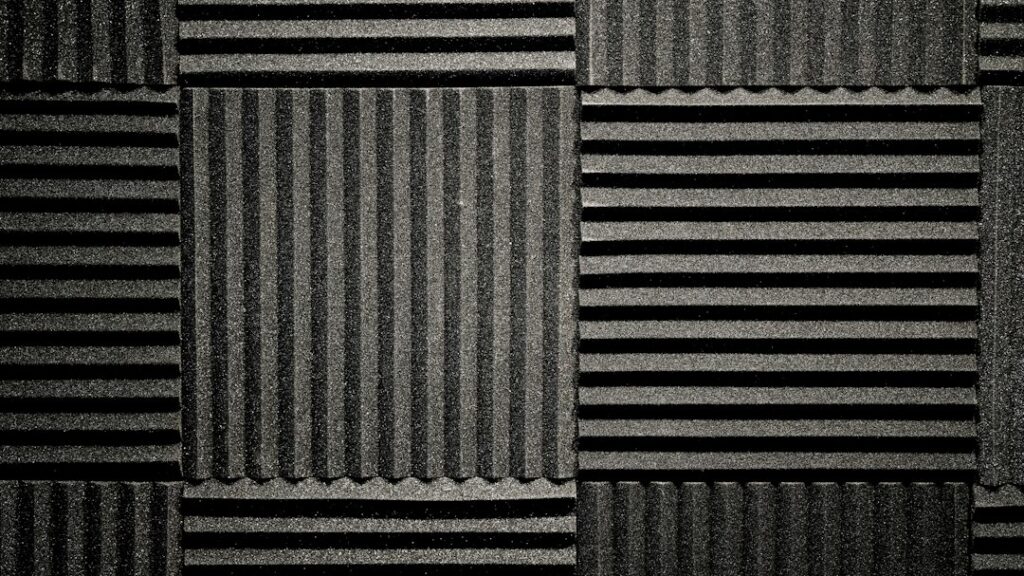
The best soundproofing for walls depends on what you are trying to stop. If a neighbor’s TV, a teenager’s drum kit or traffic noise is coming through the wall, you need mass, airtightness and decoupling: materials that block sound. If your own room sounds echoey on video calls or recordings, you need absorption: soft panels that tame reflections inside the room. Most products sold as “soundproofing” are the second kind. This roundup is honest about that split. It compares one blocking material and five absorbing products on what their listings actually state, then explains how real wall soundproofing works and when it takes a contractor.
Part of our Structure & Exterior guide — start there for the full picture →
As an Amazon Associate we earn from qualifying purchases.
How we compared: we compared 16 current Amazon listings returned for wall soundproofing on what each listing states: material, thickness and density, coverage, any STC or NRC rating, fire-related claims, mounting method and warranty. Fifteen of the 16 are sound-absorbing panels (foam, polyester fiber or wood slat); one is a sound-blocking barrier. We did not lab-test or install any of these products. Prices and availability change, so check the current listing before buying.
Quick picks: block it or absorb it
| Product | Best for | Key features | Price | Buy |
|---|---|---|---|---|
| Trademark Soundproofing MLV | Blocking sound through a wall |
| $269.90as of Oct 22, 2026 1:10 pm GMT+0000 | Buy now →Check current price |
| ArtVivid Polyester Panels | Rated echo absorption |
| $26.99as of Oct 22, 2026 1:10 pm GMT+0000 | Buy now →Check current price |
| SD SODOCT 2 in Pyramid Foam | Thick foam for studios |
| $34.99as of Oct 22, 2026 1:10 pm GMT+0000 | Buy now →Check current price |
| TONOR Wood Slat Panels | Decorative living-room wall |
| $99.99as of Oct 21, 2026 8:15 pm GMT+0000 | Buy now →Check current price |
| Lebenforce Peel-and-Stick | Renters and home offices |
| $36.71as of Oct 21, 2026 8:15 pm GMT+0000 | Buy now →Check current price |
| Focusound 52-Pack Wedge Foam | Budget small-tile foam |
| $36.99as of Oct 21, 2026 8:15 pm GMT+0000 | Buy now →Check current price |
Prices are Amazon’s listed prices as of the time shown and change often; check Amazon for today’s price. As an Amazon Associate we earn from qualifying purchases.
The 6 picks, compared listing by listing
1. Trademark Soundproofing Mass Loaded Vinyl 1 lb — Best for Blocking Sound Through a Wall

1 lb per square foot mass loaded vinyl, 1/8 inch thick, STC 27 stated, 4 x 25 ft roll covering 100 square feet.
Check price on Amazon$269.90 as of Oct 22, 2026 1:10 pm GMT+0000 — prices change; see Amazon for current price.Why we like it
- Only sound-blocking product on the shelf
- Only listing that states an STC rating
- Dense 1 pound per square foot barrier
- Thin enough to add inside a wall assembly
- Made in USA per listing
| Specification | Details |
|---|---|
| Type | Mass loaded vinyl (MLV) sound barrier |
| Rating stated | STC 27 (material on its own) |
| Mass / thickness | 1 lb per sq ft; about 1/8 in thick |
| Coverage | 4 ft x 25 ft roll, 100 sq ft; roll weighs about 100 lb |
| Uses listed | Walls, floors, ceilings, pipes, appliances, fences |
| Material claims | Non-toxic, odorless, virgin material with no regrind |
Trademark Soundproofing MLV — 1 lb/sq ft, 1/8 in, STC 27 stated, 4 x 25 ft (100 sq ft), virgin vinyl, made in USA
The Only Product Here That Blocks Sound Rather Than Absorbing It
Fifteen of the 16 listings returned for this search are absorbers. They make a room sound less echoey, but they are light and porous, so sound passes through them and through the wall behind them. Mass loaded vinyl is different: a heavy, limp sheet that adds mass to a wall, and mass is what resists sound passing through. This is also the only listing on the shelf that gives an STC (sound transmission class) rating, a laboratory measure of how well a material or wall blocks airborne sound. It states STC 27 for the vinyl itself.
That number describes the sheet alone. In practice MLV is added to a wall assembly, typically sandwiched between layers of drywall or hung across studs before new drywall goes on, where it adds to the wall’s existing performance. Hanging it bare on a finished wall or stapling it behind a tapestry does much less, and leaving gaps at the edges lets sound leak straight around it.
The honest downsides: the 100-pound roll is heavy and awkward to hang, seams must be overlapped or taped, and the work usually means opening or adding a layer to the wall. Vinyl is also a low-permeability layer, so on an exterior wall, ask a contractor about moisture before burying it in the assembly.
Pros
- Actually adds sound-blocking mass
- STC rating stated
- Thin, flexible, cuts with a utility knife
Cons
- Heavy, two-person install
- Works best inside a wall assembly, not on its surface
- Needs sealed seams and edges to perform
Check Trademark Soundproofing MLV price on Amazon
2. ArtVivid 12-Pack Polyester Acoustic Panels — Best Rated Echo Absorption
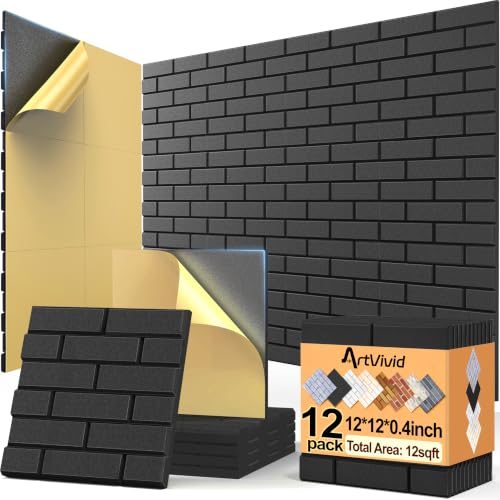
Self-adhesive 12 x 12 inch polyester fiber panels stating NRC above 0.95, brick pattern, for studios and offices.
Check price on Amazon$26.99 as of Oct 22, 2026 1:10 pm GMT+0000 — prices change; see Amazon for current price.Why we like it
- Only absorber stating a numeric NRC
- Dense polyester fiber, not crumbly foam
- Many patterns and colors; light colors paintable
- Detailed coverage math in the listing
| Specification | Details |
|---|---|
| Type | Polyester fiber acoustic panel (absorber) |
| Rating stated | NRC above 0.95 |
| Size / density | 12 x 12 x 0.4 in; 14.36 lb per cubic foot |
| Coverage | 12 sq ft per 12-pack (24-pack option) |
| Mounting | Self-adhesive backing; nails suggested for textured or damp walls |
| Warranty | 2 months per listing |
ArtVivid — polyester fiber, 12 x 12 x 0.4 in, NRC > 0.95 stated, self-adhesive, 12 sq ft per pack, 2-month warranty
The Only Absorbing Panel That Puts a Number on Absorption
NRC, the noise reduction coefficient, describes how much sound a surface absorbs on a scale of 0 to 1. Two listings mention NRC: the SD SODOCT foam calls itself “high NRC” without a number, and this ArtVivid states NRC above 0.95. Every other absorber on the shelf asks you to take its claims on faith. A stated figure is not independent verification, but it is the most specific claim available here.
The panels are dense polyester fiber with a felt-like surface, which many people prefer to foam for a living space because it does not crumble or shed. The listing includes practical coverage math (about 19 twelve-packs for a 15-by-15-foot ceiling) and adhesion tips, including keeping indoor humidity between 40 and 60 percent.
Be clear about the limit: an NRC rating measures absorption inside the room, not blocking. The listing’s claims about reducing keyboard and conversation noise refer to the echo in your space; these panels will not stop a neighbor’s voice coming through the wall. The 2-month warranty is short.
Pros
- Numeric NRC stated
- Dense polyester, decor-friendly
- Clear coverage guidance
Cons
- Absorbs echo only, does not block
- Thin 0.4 in panels help most with higher frequencies
- Two-month warranty
Check ArtVivid Polyester Panels price on Amazon
3. SD SODOCT 2-Inch Pyramid Acoustic Foam — Best Thick Foam for Studios

24 panels of 2-inch pyramid foam at 25 kg per cubic meter, flame retardant claim, explicitly not for noise isolation.
Check price on Amazon$34.99 as of Oct 22, 2026 1:10 pm GMT+0000 — prices change; see Amazon for current price.Why we like it
- Twice as thick as most foam here
- States its density, 25 kg per cubic meter
- Plainly says it is not for noise isolation
- Pyramid profile for studio reflections
| Specification | Details |
|---|---|
| Type | Polyurethane pyramid acoustic foam (absorber) |
| Size / coverage | 12 x 12 x 2 in; 24 panels, 24 sq ft |
| Density | 25 kg per cubic meter |
| Fire claim | “Flame retardant certified” in title; test standard not named |
| Mounting | Construction adhesive or double-sided tape, not included |
| Warranty | 6-month return warranty |
SD SODOCT XYM-01 — 2 in pyramid PU foam, 25 kg/m³, 24 x 12 x 12 in (24 sq ft), flame-retardant claim, no adhesive
One of Only Three Listings That Admit Foam Does Not Soundproof
Ten of the 16 listings are polyurethane foam, and most use “soundproof” in their titles. Three listings say outright that their panels absorb rather than block: this SD SODOCT, which states it is not intended for full soundproofing or noise isolation from outside, plus Knightsacoustic and Saiqiang. That honesty is a good sign about the seller, and it sets the right expectation.
At 2 inches, these panels are twice the thickness of the 1-inch wedge tiles that dominate the shelf, and thicker absorbers generally reach lower in frequency. The pyramid shape adds surface area. The listing states its foam density, which only one other foam listing (the Focusound 80-pack) does.
The listing’s flame-retardant claim does not name a test standard, and adhesive is not included. Foam also collects dust and fades in sun. For a home studio or podcast corner it is a reasonable tool; for a noisy shared wall it is the wrong one.
Pros
- Thick 2 in profile
- Density stated
- Honest about what foam cannot do
Cons
- Adhesive not included
- Fire claim names no test standard
- Studio look may not suit living spaces
Check SD SODOCT 2 in Pyramid Foam price on Amazon
4. TONOR 25070 Wood Slat Acoustic Panels — Best Decorative Living-Room Wall

Four 47.2 x 23.6 inch walnut wood slat panels on polyester backing, about 31 sq ft, screw or adhesive mount.
Check price on Amazon$99.99 as of Oct 21, 2026 8:15 pm GMT+0000 — prices change; see Amazon for current price.Why we like it
- Largest panels on the shelf, 31 sq ft per set
- Wood veneer slats over polyester backing
- Screws included for a secure mount
- Two-year warranty, longest among absorbers
| Specification | Details |
|---|---|
| Type | Wood slat acoustic panel (absorber) |
| Materials | Polyester fiber backing, MDF slats, solid wood veneer |
| Size / coverage | 47.2 x 23.6 in each; 4 panels, about 31 sq ft |
| Mounting | Adhesive or screws; 35 screws per 2 panels |
| Weight | About 6.2 lb as listed |
| Model / warranty | 25070; 2-year warranty |
TONOR 25070 — wood slat on polyester backing, 4 x (47.2 x 23.6 in), ~31 sq ft, walnut veneer, screw or adhesive mount, 2-yr warranty
The Only Wood Slat Option, and the Longest Absorber Warranty
Fourteen of the 15 absorbers on the shelf are foam or flat polyester panels that look like acoustic treatment. The TONOR is the only wood slat product, the style that has become a living-room and home-office feature wall. The polyester felt behind the slats absorbs sound that passes between them, so it does some of the same job as the tiles while looking like furniture.
Each panel is about 4 feet by 2 feet, the largest format here, so a four-pack covers about 31 square feet with few seams. The listing includes screws, a better long-term mount than adhesive pads on painted drywall, and offers a 2-year warranty, the longest stated among the absorbers.
The trade-offs: the listing gives no NRC, MDF slats are heavier and harder to cut than foam, and like every absorber here, it will not stop sound passing through the wall. Choose it to improve how a room sounds and looks.
Pros
- Furniture-grade look
- Large panels, screws included
- Two-year warranty
Cons
- No NRC stated
- Heavier, harder to cut
- Absorbs only, does not block
Check TONOR Wood Slat Panels price on Amazon
5. Lebenforce AP12BLK Peel-and-Stick Panels — Best for Renters and Home Offices
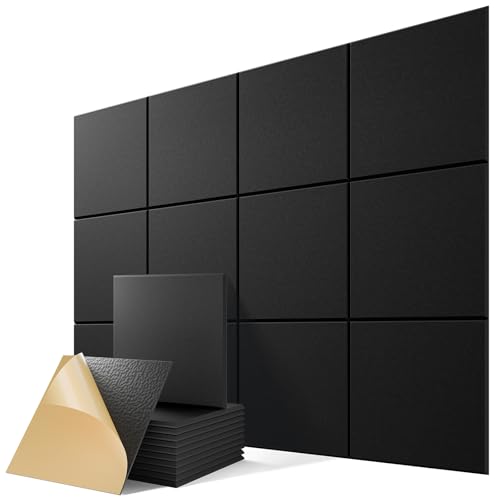
Twelve self-adhesive 12 x 12 x 0.4 inch polyester fiber panels with guidance to cover 20 to 30 percent of the wall.
Check price on Amazon$36.71 as of Oct 21, 2026 8:15 pm GMT+0000 — prices change; see Amazon for current price.Why we like it
- Peel-and-stick backing, no tools
- Polyester fiber that does not shed per listing
- Recommends 20 to 30 percent wall coverage
- Multiple colors for decor
| Specification | Details |
|---|---|
| Type | Polyester fiber acoustic panel (absorber) |
| Size | 12 x 12 x 0.4 in; 12 panels; about 3.5 lb |
| Mounting | Self-adhesive backing for smooth walls, doors and ceilings |
| Coverage advice | Cover 20 to 30 percent of wall area |
| Rating | NRC not stated in listing |
| Model / warranty | AP12BLK; warranty not stated |
Lebenforce AP12BLK — polyester fiber, 12 x 12 x 0.4 in, self-adhesive, 12-pack, 20–30% coverage guidance
The Only Listing That Tells You How Much Wall to Cover
A common mistake with acoustic panels is buying one pack and expecting a transformed room. The Lebenforce listing is the only one that gives a coverage target, recommending panels over 20 to 30 percent of the wall area for good results. That is a helpful starting point for planning a home office or nursery, and it lets you estimate packs before buying.
Peel-and-stick polyester panels suit renters because they go up without tools. The listing says the polyester will not shed or degrade the way cheap foam can, and that the panels can go on doors and windows as well as walls.
The listing’s language about “significant noise reduction” refers to echo and reverberation inside the room. It states no NRC, no warranty and no fire rating, and adhesive can lift paint when removed, so test a small area first.
Pros
- Clear coverage guidance
- Tool-free install
- Polyester does not crumble
Cons
- No NRC or warranty stated
- Adhesive may lift paint
- Thin panels, echo control only
Check Lebenforce Peel-and-Stick price on Amazon
6. Focusound FS0302F 52-Pack Wedge Foam — Best Budget Small-Tile Foam

52 one-inch wedge foam tiles, about 12 inches square, with 300 double-sided adhesive pieces included.
Check price on Amazon$36.99 as of Oct 21, 2026 8:15 pm GMT+0000 — prices change; see Amazon for current price.Why we like it
- 52 tiles cover a lot of wall per pack
- 300 adhesive pieces included
- Wedge grooves for echo control
- Easy to cut and rearrange
| Specification | Details |
|---|---|
| Type | Polyurethane wedge acoustic foam (absorber) |
| Size / count | About 11.8 x 11.8 x 1 in; 52 tiles |
| Mounting | 300 double-sided adhesive pieces included |
| Fire claim | Strong fire resistance claimed; test standard not named |
| Recovery | Vacuum packed; 24 to 48 hours to expand |
| Model / warranty | FS0302F; warranty not stated |
Focusound FS0302F — 1 in wedge PU foam, 52 tiles (~11.8 in square), 300 adhesive pieces, fire-resistance claim, vacuum packed
The Most Tiles With Adhesive Included in One Pack
Several foam listings sell bare tiles and expect you to buy adhesive separately, including the SD SODOCT and Knightsacoustic panels. The Focusound 52-pack includes 300 pieces of double-sided adhesive, enough to mount every tile with several pieces each. (A larger 80-pack from the same brand also includes adhesive.) For spot-treating a gaming room or a recording corner on a budget, that saves a second purchase.
The tiles are the standard 1-inch wedge, the most common profile on the shelf. They help with flutter echo and the harsh reflections that make a small room sound boxy on a microphone.
Keep expectations modest: 1-inch foam mostly affects higher frequencies, the listing’s fire-resistance claim names no test standard, and foam can off-gas a smell when first unpacked. Sound from the next room will still come through.
Pros
- High tile count
- Adhesive included
- Easy to cut
Cons
- Thin 1 in foam, echo only
- Fire claim names no standard
- Expansion time and initial odor
Check Focusound 52-Pack Wedge Foam price on Amazon
Blocking vs absorbing: the part most listings blur
Sound moving through a wall and sound bouncing around a room are two different problems.
- Blocking (isolation) stops sound from passing between spaces. It depends on mass, airtightness and decoupling. It is measured by STC for walls. Products: mass loaded vinyl, extra layers of drywall, damping compounds, resilient channels, insulation inside the cavity, acoustic sealant.
- Absorbing (treatment) reduces echo and reverberation inside a room. It depends on soft, porous material on the surfaces. It is measured by NRC. Products: foam, polyester fiber panels, fabric-wrapped panels, wood slat panels, rugs and curtains.
Foam and felt panels absorb echo; they do not block sound. Sticking foam tiles to a shared wall will make your side of the room sound less echoey, which can make the room feel quieter, but the neighbor’s music will pass through at nearly the same level. On this shelf, 15 of 16 listings are absorbers, and only three of them say so plainly.
Decibels make the gap clear. The CDC’s NIOSH notes that decibels are logarithmic: a sound 10 dB louder is ten times more intense. That is why small leaks matter so much in a blocking wall, and why a thin layer of foam barely moves the number.
How real wall soundproofing works
Mass
Heavier walls resist being vibrated by sound. Adding a second layer of drywall, or a layer of MLV between drywall sheets, adds mass. This is the most DIY-friendly blocking upgrade on an existing wall.
Airtightness
Sound follows air. Gaps around outlets, switch boxes, baseboards, door frames and penetrations leak sound out of proportion to their size. Seal them with acoustic sealant and use putty pads on electrical boxes. Doors are usually the weakest link; a solid-core door with perimeter seals and a door sweep often beats any wall treatment. ENERGY STAR’s air-sealing guidance points to drafts around closed doors and visible gaps around trim as signs of leaks, and the same gaps carry sound.
Decoupling
In a standard wall, drywall on both sides is screwed to the same studs, so vibration passes straight through. Resilient channels, sound isolation clips, staggered studs or a double-stud wall separate the two sides. Decoupling usually means opening the wall or building a new one.
Absorption in the cavity
Insulation inside the wall cavity, such as mineral wool or fiberglass batts, absorbs sound bouncing inside the wall. It helps most when combined with mass and decoupling; on its own it adds modestly.
Safety, moisture and air quality
Fire behavior matters when you cover a wall with foam. Nine of the 15 absorbing listings make flame-retardant or fire-resistance claims, but none names a fire test standard or rating class. Keep foam away from heat sources, never use it to wrap a furnace, water heater or fireplace surround, and ask your local building department before covering large areas in a basement or finished living space.
New foam and adhesives can smell when unpacked. The EPA notes that building materials, furnishings and adhesives are sources of volatile organic compounds and advises increasing ventilation when using products that emit them. Let new panels air out before mounting them in a bedroom.
Moisture is the other risk. Panels glued to a damp basement wall can trap moisture and hide mold, and a vinyl barrier inside an exterior wall can affect how the wall dries. The EPA’s mold guidance stresses that moisture control is the key to mold control and recommends keeping indoor humidity below 60 percent. If a wall already shows staining, peeling paint or a musty smell, fix that first; our guides on mold on walls and removing mold from basement walls explain what to look for.
Front Range homes and when to call a pro
Many Front Range neighborhoods pair older ranches and split-levels with new townhomes and duplexes that share party walls. Party walls in attached housing are often fire-rated assemblies, so cutting into them, adding outlets or removing drywall can affect fire separation and may need a permit. Talk to your HOA and building department before opening a shared wall. Basement media rooms are popular here too; finishing a basement involves egress, moisture and electrical rules beyond acoustics.
Noise also has health stakes. The NIDCD notes that normal conversation runs about 60 to 70 dBA, that sounds at or below 70 dBA are unlikely to cause hearing loss, and that long or repeated exposure at or above 85 dBA can. A home drum room or workshop can exceed that, so treat hearing protection as part of the plan.
For a wall that must truly block sound, hire a drywall or remodeling contractor familiar with decoupled assemblies. Our soundproofing walls guide covers the full set of methods, and the structure and exterior hiring guide explains how to vet bids. Buying a home with a shared wall or finished basement? A home inspection can flag moisture, framing and fire-separation issues before you close.
Frequently asked questions
Do acoustic foam panels soundproof a wall?
No. Foam and polyester panels absorb echo and reverberation inside a room, but they are too light and porous to stop sound from passing through a wall. Blocking sound takes mass, airtight sealing and often decoupling of the wall layers.
What is the best material for soundproofing a wall?
For blocking sound, add mass and seal gaps: an extra layer of drywall, mass loaded vinyl inside the wall assembly, acoustic sealant at edges and outlets, and insulation in the cavity. Decoupling with resilient channels or clips adds more but usually requires opening the wall.
What is the difference between STC and NRC?
STC, sound transmission class, rates how well a wall or material blocks airborne sound passing through it. NRC, noise reduction coefficient, rates how much sound a surface absorbs, on a scale of 0 to 1. Blocking products list STC; absorbing panels list NRC.
Is mass loaded vinyl worth it?
Mass loaded vinyl adds dense, flexible mass and can improve a wall's sound blocking when installed inside the assembly with sealed seams, such as between drywall layers. It does much less when hung loosely on the surface of a finished wall.
How can I soundproof a wall without construction?
Without opening the wall, focus on air leaks and the door: seal gaps around outlets and trim with acoustic sealant, add a solid-core door with seals and a sweep, and add heavy furniture or a bookcase against the shared wall. Absorbing panels then reduce echo on your side.
References
- About Occupational Hearing Loss — CDC National Institute for Occupational Safety and Health
- Noise-Induced Hearing Loss — National Institute on Deafness and Other Communication Disorders
- A Brief Guide to Mold, Moisture and Your Home — U.S. Environmental Protection Agency
- Volatile Organic Compounds’ Impact on Indoor Air Quality — U.S. Environmental Protection Agency
- Sealing Behind Window and Door Trim — ENERGY STAR
Planning a basement media room or quieting a shared wall in a Front Range home? Reach out through our contact page to connect with a vetted local inspector who can check moisture and framing first.