Best Squirrel Deterrent (2026): 6 Picks Compared Honestly
The best squirrel deterrent depends on where the squirrels are. Squirrels raiding a bird feeder or digging up bulbs are a nuisance that repellents may help with. Squirrels inside an attic, soffit or chimney are a building problem, and no spray or scent pouch fixes an open hole in the roof line. This guide covers both. First come six products compared on what their Amazon listings actually state, from a surface spray to peppermint pouches and an ultrasonic unit for vehicles, with a skeptical eye on claims that lack evidence. Then a buying guide that puts exclusion first: finding and sealing entry points, protecting the chimney, and knowing when a wildlife professional or inspector is the better call.
Part of our Specialty Home Inspections guide — start there for the full picture →
As an Amazon Associate we earn from qualifying purchases.
How we compared: we compared 15 current Amazon listings for squirrel deterrents and general rodent repellents that name squirrels, on what each listing states: format, named ingredients, stated life, stated coverage, where it can be used and any regulatory markings. One rat-and-mouse poison bait that the search returned was set aside as off-type. We did not lab-test any of these products or use them hands-on. Prices and availability change often, so check the current listing before buying.
Quick picks: the best squirrel deterrents by problem area
| Product | Best for | Key features | Price | Buy |
|---|---|---|---|---|
| Messinas Squirrel Stopper Spray | Feeders, vents and hard surfaces |
| $11.75as of Nov 13, 2026 1:28 pm GMT+0000 | Buy now →Check current price |
| Aromovial Squirrel Repellent Balls | Garden beds and flower beds |
| — | Buy now →Check current price |
| KsopoG Squirrel Repellent | Planters and potted bulbs |
| $12.99as of Nov 13, 2026 1:28 pm GMT+0000 | Buy now →Check current price |
| AUDQQM Squirrel Away Pouches | Bird feeder zones |
| $16.99as of Nov 13, 2026 1:28 pm GMT+0000 | Buy now →Check current price |
| HLISIS Peppermint Rodent Repellent | Garages and storage areas |
| $17.75as of Nov 13, 2026 1:28 pm GMT+0000 | Buy now →Check current price |
| CIIC Ultrasonic Engine Repeller | Parked vehicles |
| $45.99as of Nov 13, 2026 1:28 pm GMT+0000 | Buy now →Check current price |
Prices are Amazon’s listed prices as of the time shown and change often; check Amazon for today’s price. As an Amazon Associate we earn from qualifying purchases.
The 6 picks, compared listing by listing
1. Messinas Squirrel Stopper Spray, 32 oz — Best for Feeders, Vents and Hard Surfaces

Ready-to-use trigger spray described as a smell, taste and touch barrier; about 1,000 sq ft per quart stated.
Check price on Amazon$11.75 as of Nov 13, 2026 1:28 pm GMT+0000 — prices change; see Amazon for current price.Why we like it
- Only spray format among the squirrel repellents
- Goes exactly where chewing happens: feeder poles, vents
- Ready to use, no mixing
- Gives a coverage rate per quart
| Specification | Details |
|---|---|
| Format | Ready-to-use liquid in a 32 oz trigger bottle |
| Stated action | Barrier through smell, taste and touch |
| Stated coverage | Up to about 1,000 sq ft per quart |
| Reapplication | After heavy rain; more often with high squirrel numbers |
| Cautions | Not for direct application to plants (listing warns of burning); shake 30 seconds |
| Ingredients | Not stated in listing |
Messinas Squirrel Stopper 073095 — 32 oz RTU spray, smell/taste/touch barrier, ~1,000 sq ft per quart, reapply after rain, not on plants
The Only Spray, and the Only One You Can Aim at the Damage
Two listings on the shelf are sprays, and both are this same Messinas formula in a 32 oz bottle and a gallon jug. Every other squirrel product is a ball, pouch, pellet pack or electronic unit that sits near a problem area and releases scent. A spray is different: it can coat the exact surface squirrels are chewing or climbing, such as a feeder pole, a deck rail, a garage door seal or the edge of an attic vent cover. The listing names feeders, attic vents, garden beds, garages, roofs and vehicles as targets.
It is also the only listing that describes taste and touch as part of the barrier, not only smell. That is a sensible approach for chewing damage, where an animal is putting its mouth on the surface. The listing is honest about upkeep: reapply after heavy rain, and more often where squirrel numbers are high.
Two gaps to note. The listing does not name the ingredients, and it warns against spraying plants directly because burning may occur, so protect garden plants by treating the surrounding soil, edging or containers instead. Spraying an attic vent from outside does nothing if squirrels are already inside; seal the entry first, as the buying guide below explains.
Pros
- Targets the exact surface being chewed
- Ready to use with a stated coverage rate
- Larger gallon size available from the same maker
- Clear reapplication guidance
Cons
- Ingredients not named in listing
- Cannot be sprayed directly on plants
- Needs reapplying after rain
- No efficacy data cited
Check Messinas Squirrel Stopper Spray price on Amazon
2. Aromovial Squirrel Repellent Balls, 12-Pack — Best for Garden and Flower Beds
Twelve outdoor scent balls; the only listing naming a full blend: peppermint, lemongrass, geraniol, cedarwood.
Check price on AmazonWhy we like it
- Names four oils instead of just “plant-based”
- Twelve balls to spread across beds
- Written for open yards and gardens
- States it is harmless to birds and chickens
| Specification | Details |
|---|---|
| Format | Scent balls made with oils and inert paper |
| Count | 12 balls |
| Named ingredients | Peppermint oil, lemongrass oil, geraniol, cedarwood oil |
| Target animals | Squirrels and chipmunks |
| Stated life / coverage | Not stated in listing |
| Weight | About 0.5 lb |
Aromovial 12-pack — scent balls with peppermint, lemongrass, geraniol and cedarwood oils, squirrels and chipmunks, life not stated
The Most Transparent Ingredient List on the Shelf
Peppermint appears in 9 of the 15 listings, and most of them stop there or say only “plant-based ingredients.” The Aromovial listing is the only one on the shelf that names lemongrass oil, geraniol and cedarwood oil alongside peppermint. Knowing the blend helps you check it against the EPA’s minimum risk ingredient list and decide whether you want it near a vegetable bed or a pet’s favorite spot.
It is pitched for open ground: yards, gardens, flower beds, pastures. That suits the most common squirrel complaint, which is digging in freshly planted bulbs and containers. Scatter the balls where digging happens and replace them when the scent fades.
The listing does not state how long the balls last or how much area each covers, which most competing pouches do. Its marketing is also strong, calling itself one of the most effective squirrel deterrents, without citing any evidence. Treat that as a sales claim. Like every scent product here, it carries no EPA registration claim.
Pros
- Only squirrel listing naming four specific oils
- Twelve units for wide beds
- Aimed at outdoor digging problems
Cons
- No stated life or coverage
- Effectiveness claims are unsupported
- Rain and sun shorten scent life
- No registration claim in listing
Check Aromovial Squirrel Repellent Balls price on Amazon
3. KsopoG Squirrel and Chipmunk Repellent (SQUIRREL-BA) — Best for Planters and Potted Bulbs

Eight peppermint scent balls listed for 60 to 90 days and 120 sq ft, for planters, beds, feeders and engine bays.
Check price on Amazon$12.99 as of Nov 13, 2026 1:28 pm GMT+0000 — prices change; see Amazon for current price.Why we like it
- Names the behaviors it targets: digging, nesting, chewing
- States 60 to 90 days, depending on weather
- Small balls tuck into planters easily
- Lists planters and vehicle engine bays
| Specification | Details |
|---|---|
| Format | Scent balls |
| Count | 8 balls (about 1 oz pack) |
| Named ingredient | Peppermint plus unnamed plant-based ingredients |
| Stated life | 60 to 90 days, varying with weather |
| Stated coverage | About 120 sq ft |
| Listed uses | Yards, gardens, planters, feeders, garages, attics, engine compartments |
KsopoG SQUIRREL-BA — 8 peppermint balls, 60-90 days (weather-dependent), ~120 sq ft, planters to engine bays
The Clearest Statement of What It Is Meant to Stop
Most pouch listings describe their purpose vaguely, as “helping keep squirrels away.” This one lists the behaviors: digging, burrowing, nesting, chewing and food stealing. It also says plainly that its 60 to 90 day life depends on weather conditions, an honest qualifier that most competitors skip. Six listings on the shelf state a life of up to 90 days, so the long end of that range is common, but few tie it to conditions.
Containers are where scent products have their best chance. A planter is a small, contained space, so a ball or two pushed into the soil surface concentrates the scent where a squirrel is about to dig. Open lawns and windy patios dilute scent quickly.
Like the attic placements that many of these listings suggest, engine-bay use deserves caution. A scent ball loose in an engine compartment can shift or fall onto hot parts; if you try it, secure it away from the exhaust manifold and belts, and check the vehicle owner’s manual. No registration claim appears in the listing.
Pros
- Names target behaviors clearly
- Weather-qualified 60 to 90 day life
- Compact balls suit containers
Cons
- Most ingredients not named
- Only eight balls in the pack
- Engine-bay use needs care
- No registration or efficacy data
Check KsopoG Squirrel Repellent price on Amazon
4. AUDQQM Squirrel Away Pouches, 8-Pack — Best Around Bird Feeders

Eight peppermint pouches listed at about 100 to 120 sq ft each and 60 to 90 days, for feeders, yards and garages.
Check price on Amazon$16.99 as of Nov 13, 2026 1:28 pm GMT+0000 — prices change; see Amazon for current price.Why we like it
- Lists bird feeder spaces as a use
- Gives coverage as a range: 100 to 120 sq ft
- Pouch format hangs from a feeder hook
- Up to 60 to 90 days of stated scent
| Specification | Details |
|---|---|
| Format | Scent pouches |
| Count | 8 pouches (about 1.4 oz pack) |
| Named ingredient | Peppermint (in title) plus plant-based ingredients |
| Stated coverage | About 100 to 120 sq ft per package |
| Stated life | Up to 60 to 90 days, depending on placement |
| Listed uses | Yards, gardens, lawn, bird feeder spaces, garages, cars, attics |
AUDQQM SQUIRREL8POUCH — 8 peppermint pouches, ~100-120 sq ft, 60-90 days stated, feeders to garages
A Pouch Built for Hanging Near Feeders
Six listings on the shelf mention bird feeders: four pouch or ball products, including this one, plus the two Messinas spray sizes. A pouch has a practical edge at a feeder because it can hang from the pole or a nearby branch without touching seed, where a spray needs regular reapplication to the pole itself. The listing’s coverage is given as a range, about 100 to 120 sq ft, which is slightly more modest than the flat 120 sq ft that other pouch listings claim.
Feeder squirrels are a special case. A scent pouch near a seed buffet is competing with free food, and squirrels are persistent. The more reliable fixes are mechanical: a baffle on the pole, mounting the feeder well away from branches and roof edges squirrels can jump from, and seed choices squirrels find less attractive. Use the pouch as an extra layer.
The listing’s language leans on reassurance rather than detail. It offers no ingredient list beyond peppermint in the title and no test data, and it suggests attic use, which is the wrong first step if squirrels are nesting inside.
Pros
- Hangs near feeders without touching seed
- Modest, range-based coverage claim
- No mixing or spraying
Cons
- Competes with a food source it cannot remove
- Ingredients mostly unnamed
- Suggests attic use instead of exclusion
- No registration claim in listing
Check AUDQQM Squirrel Away Pouches price on Amazon
5. HLISIS Peppermint Rodent Repellent, 32 Packs — Best for Garages and Storage Areas
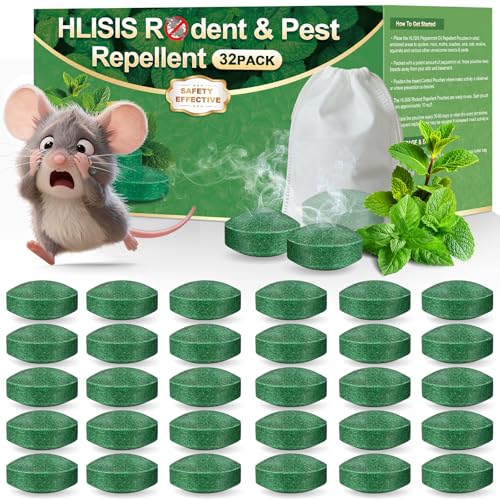
32 peppermint and lemon pellet packs with a mesh bag; about 80 sq ft per unit, 30 to 90 days, EPA Est. No. listed.
Check price on Amazon$17.75 as of Nov 13, 2026 1:28 pm GMT+0000 — prices change; see Amazon for current price.Why we like it
- Largest pack count among the squirrel-naming picks
- Most conservative coverage figure: about 80 sq ft
- Only repellent listing that prints an EPA Est. No.
- Covers mice and rats as well as squirrels
| Specification | Details |
|---|---|
| Format | Scent pellet packs placed in an included mesh bag |
| Count | 32 packs |
| Named scents | Peppermint and lemon |
| Stated life / coverage | 30 to 90 days; up to about 80 sq ft |
| Marking listed | EPA Est. No. 104817-CHN-1 (an establishment number, not a registration number) |
| Listed uses | Kitchens, basements, garages, storage rooms, car engines |
HLISIS-32 — 32 peppermint/lemon pellet packs, ~80 sq ft, 30-90 days, EPA establishment no. listed (not a registration no.)
The Only Repellent Listing With an EPA Number, and What That Number Means
Six of the 15 listings are general rodent repellents that list squirrels among their targets, mostly aimed at mice and rats in garages and storage. Among all the repellents on the shelf, HLISIS is the only one that prints an EPA establishment number. That looks reassuring, but read it correctly. The EPA explains that registered pesticide products carry both an establishment number and a registration number, and that an establishment number only identifies where a product was made. For devices, the EPA states directly that an establishment number does not mean the product was reviewed for safety or efficacy. No registration number appears in this listing.
Where this product makes sense is an enclosed garage, shed or storage room, where scent can build up and where mice are often the bigger concern. Its stated coverage of about 80 sq ft per unit is the smallest figure on the shelf, which is arguably the more honest one. The 32-count pack allows several units per bay.
If you are seeing droppings, gnaw marks or nesting material in a garage, a repellent is the wrong first move. Find and seal the gaps, then use traps if needed. Our best mouse trap roundup compares the options for confirmed mice.
Pros
- 32 packs for multiple storage areas
- Conservative coverage claim
- Includes a mesh bag for placement
Cons
- EPA Est. No. is not a registration
- Mainly aimed at mice and rats
- Scent products do not seal entry points
- Wide 30 to 90 day life range
Check HLISIS Peppermint Rodent Repellent price on Amazon
6. CIIC Ultrasonic Under-Hood Repeller (XY-CC-001), 2-Pack — Best for Parked Vehicles
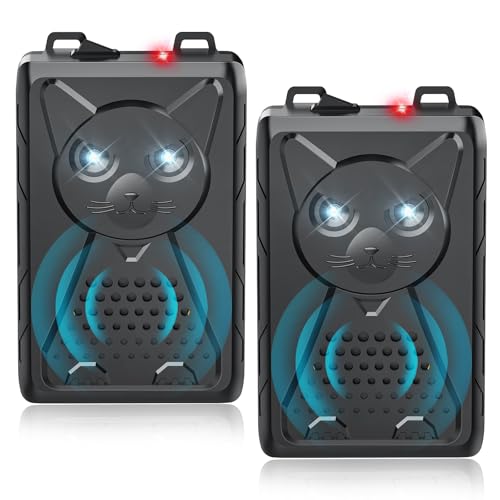
Two ultrasonic and LED units with AA, USB or DC power and a vibration sensor that pauses them while driving.
Check price on Amazon$45.99 as of Nov 13, 2026 1:28 pm GMT+0000 — prices change; see Amazon for current price.Why we like it
- Only electronic unit on the shelf
- Three power options: AA, USB or DC
- Vibration sensor pauses it while driving
- Nothing to replace except batteries
| Specification | Details |
|---|---|
| Type | Ultrasonic emitter with flashing LED |
| Stated frequency | 18 to 36 kHz |
| Power | 4 AA batteries, 5 to 12 V USB adapter, or vehicle DC cable |
| Smart feature | Vibration sensor puts it in standby when the engine runs; resumes about 90 seconds after parking |
| Pack | 2 units with zip ties |
| Evidence cited | None in listing |
CIIC XY-CC-001 — 2 ultrasonic/LED units, 18-36 kHz, AA/USB/DC, vibration standby, zip-tie mount, no efficacy data cited
The Only Electronic Option, and the One That Needs the Most Skepticism
This is the only ultrasonic product among the 15 listings and the only one designed for engine bays first. Its design is thoughtful for that job: it runs on batteries or vehicle power and uses a vibration sensor to switch to standby while driving. For anyone who has had wiring chewed in a car parked outside near trees, that convenience is the appeal.
The evidence is the problem. The EPA classifies ultrasonic units as pesticide devices, and its consumer guide explains that devices do not go through the premarket review and registration that pesticides do; makers generally do not submit efficacy data to the EPA before selling. The listing makes strong safety and effectiveness promises without citing any testing. The listing also offers no data on whether animals keep responding to the sound after weeks of exposure. Treat this as an experiment with a return window, not a solution.
The listing also suggests use in attics and basements. Inside a home, an ultrasonic unit does nothing to close the hole that let an animal in, and a squirrel with young in an attic nest is unlikely to leave because of a sound.
Pros
- Flexible power: AA, USB or vehicle DC
- Vibration standby saves battery
- Two units in the pack
Cons
- No efficacy evidence cited
- Devices skip EPA premarket review
- No data on long-term response
- Useless against an existing attic nest
Check CIIC Ultrasonic Engine Repeller price on Amazon
Exclusion first: why repellents come second
The EPA’s integrated pest management approach puts prevention ahead of control: identify the pest, decide whether action is needed, and prevent the conditions that let it become a problem before reaching for products. With squirrels, prevention means exclusion, physically blocking the openings they use to get into the house. A repellent can make a garden bed less attractive. It cannot close a gap in a soffit.
Squirrels in a house usually enter high, along the roof line. Common entry points an inspector looks for:
- Soffits and fascia: rotted or loose boards, gaps where soffit panels meet, and corners where the roof overhang meets a wall. Our guide to soffit and fascia repair explains the parts and fixes.
- Roof and gable vents: torn or missing screens on gable vents, ridge vents and roof vents. Keep vents screened with sturdy metal mesh rather than blocking them, since attic airflow matters; see soffit vents for how intake venting should look.
- Chimneys: an uncapped flue is an open shaft. A properly sized, screened cap keeps animals and debris out. Our chimney cap guide covers types and fit.
- Roof-to-wall joints, dormers and plumbing vent boots, where flashing has lifted or a gap has been chewed wider.
- Tree branches within jumping distance of the roof, which act as a bridge.
Sealing the right way
Timing matters. Sealing a hole while squirrels or a litter are inside traps them, which leads to more chewing damage, odors and dead animals in the walls. Confirm the attic is empty first, or use a one-way exclusion door that lets animals leave but not return, then make the permanent repair. Use materials squirrels cannot chew through easily, such as heavy galvanized mesh or sheet metal, rather than foam or plastic alone. If you suspect squirrels are already inside, our guide to squirrels in the attic covers signs, timing and cleanup.
How to read squirrel repellent claims
Almost every product on this shelf makes confident promises, and very few back them up. Some useful filters:
- Registration vs exemption. Many plant-oil repellents rely on the EPA’s minimum risk exemption. The EPA exempts certain low-risk ingredients from federal registration because they pose little to no risk to people or the environment. That exemption is about safety; it does not mean the product was shown to work. States also regulate minimum risk products.
- Establishment vs registration numbers. An EPA establishment number identifies a production facility. A registration number, shown as “EPA Reg. No.,” marks a registered pesticide. The EPA notes that registered products carry both, and that registration involves review of product performance data.
- Devices are not reviewed in advance. Ultrasonic units, lights and similar gadgets are pesticide devices. The EPA says they do not undergo premarket review and that sellers generally do not submit efficacy data before selling.
- Coverage figures are marketing. Stated coverage on this shelf ranges from about 80 to 145 sq ft per unit, with 120 the most common figure. None explains how it was measured.
- “Safe for kids and pets” is not a test result. Keep scent balls and pellets out of reach of dogs, which may chew them, and follow the label.
Scent products tend to work best in small, enclosed or sheltered spaces and worst on open lawns in wind. Expect to replace them more often than the label says in hot, dry or wet weather.
Trapping, relocation and wildlife rules
Live trapping looks like the humane middle ground, but it carries legal and practical issues. Rules on trapping, relocating and releasing squirrels and other wildlife vary by state and sometimes by city. Before setting any trap, check with your state wildlife agency; in Colorado that is Colorado Parks and Wildlife. A licensed wildlife control operator knows the local rules and can handle removal and exclusion together.
Two more cautions. First, do not use rat and mouse poison baits for squirrels; the bait product on this shelf is labeled for rats and mice and requires tamper-resistant stations wherever children, pets or non-target animals could reach it. Second, never handle a squirrel or any wild animal with bare hands. The CDC notes that rabies spreads mainly through bites and scratches from infected animals and that more than 90% of reported animal rabies cases in the U.S. occur in wildlife. If anyone is bitten or scratched by a wild animal, seek medical care promptly.
Squirrels and Front Range homes
On the Colorado Front Range, squirrels are common in older neighborhoods with mature trees near rooftops, including much of Denver, Boulder and the established suburbs. A few local factors raise the risk of attic entry:
- Weathered wood trim. Intense sun and wide temperature swings at altitude dry out and crack fascia and soffit boards, opening seams squirrels can chew wider.
- Hail and wind damage. Hailstorms and strong winds can dislodge vent covers, crack vent hoods and lift flashing, creating new gaps that are easy to miss from the ground.
- Cold-season nesting. Squirrels look for warm, sheltered spots as nights get colder, and an attic with insulation is ideal.
- Chimneys on older homes that have never had a cap, or whose cap rusted off.
After a hailstorm, add a roof-line check to the insurance walk-around: look at vent covers, soffit corners and the chimney cap, not just shingles.
When to call a professional or an inspector
Repellents are fine for gardens and feeders. Call a professional when:
- You hear scratching or running in the ceiling or walls, especially at dawn and dusk.
- You see chewed wiring, torn insulation or droppings in the attic. Chewed wiring is a fire hazard and should be evaluated by an electrician.
- Insulation is soiled with droppings or urine and may need professional removal and replacement.
- You cannot find the entry point, or it is on a steep or high roof.
- You are buying a home and want to know whether past wildlife activity left damage behind.
A home inspection looks at the roof line, attic, vents, chimney and insulation, and can point out entry points and past activity before you close. Our rodent home inspection guide explains what is covered, and the specialty inspections hub lists related services. If you are on the Front Range and want an attic and roof-line evaluation, reach out through our contact page to connect with a vetted local inspector.
Frequently asked questions
What is the best squirrel deterrent?
For a house, the best deterrent is exclusion: sealing soffit gaps, screening vents and capping the chimney with materials squirrels cannot chew. For gardens and feeders, a surface spray such as the Messinas Squirrel Stopper can be applied where chewing happens, and scent pouches may help in containers. None of the listings on this shelf provides efficacy data, so expect to combine methods.
Does peppermint oil keep squirrels away?
Peppermint is the most common ingredient on the shelf, named in 9 of 15 listings, but none cites test results showing it repels squirrels. Scent products may help in small, sheltered areas such as planters or storage rooms and fade quickly outdoors in sun, rain and wind. Many rely on the EPA minimum risk exemption, which addresses safety, not effectiveness.
Do ultrasonic squirrel repellers work?
Evidence is weak. The EPA classifies ultrasonic units as pesticide devices, which do not undergo premarket review, and makers generally do not submit efficacy data before selling them. The ultrasonic listing on this shelf cites no testing. If you try one in a vehicle, buy from a seller with a clear return policy.
How do I get squirrels out of my attic?
Find the entry point first, then confirm no animals or young are inside before sealing, or install a one-way exclusion door so squirrels can leave but not return. Repair the opening with heavy metal mesh or sheet metal, not foam alone. Check state wildlife rules before trapping, and consider a licensed wildlife control operator for high or hard-to-reach openings.
Is it legal to trap and relocate squirrels?
It depends on where you live. Rules for trapping, relocating and releasing squirrels vary by state and sometimes by city, and some places restrict relocation. Check with your state wildlife agency, which in Colorado is Colorado Parks and Wildlife, before setting a trap, or hire a licensed wildlife control operator who knows the local rules.
What smells do squirrels hate?
Squirrels are generally put off by strong odors such as capsaicin from hot peppers, peppermint, garlic and predator urine, which is why most repellents use those ingredients. Results vary between individual animals and fade as the scent weakens. Smell-based repellents work best on small areas and need regular reapplication, especially after rain.
When is squirrel activity highest around homes?
Squirrel activity around homes typically peaks in late winter through spring, when females seek nest sites, and again in late summer into fall, when a second litter is raised and food caching begins. Daily activity is highest in the early morning and late afternoon. Those seasons are the best time to inspect rooflines and seal entry points.
Does homeowners insurance cover squirrel damage?
Homeowners insurance often excludes damage caused by rodents and vermin, including squirrels, because it is treated as a maintenance issue. Some policies may cover sudden resulting damage, such as a fire from chewed wiring, depending on the wording. Reading the exclusions section or asking the insurer directly gives the only reliable answer for a specific policy.
More Questions About Squirrel Deterrents
How long do squirrel repellents last outdoors?
Squirrel repellent sprays and granules typically need reapplying every few days to every few weeks, and always after heavy rain or irrigation. Scent-based products fade as the odor dissipates, while taste-based sprays wash off leaves and bulbs. Pouches and repellent balls tend to last longer because they release scent slowly, but they still weaken over a season. The label gives the intended interval, which is worth following closely since squirrels quickly return once a treated area stops smelling or tasting unpleasant. Rotating between two different repellent types can also slow squirrels from getting used to one.
Are squirrel repellents safe around pets and kids?
Most consumer squirrel repellents use food-grade or botanical ingredients such as capsaicin, peppermint or putrescent egg, and are generally considered low risk when used as labeled. Capsaicin-based sprays can still irritate eyes, noses and paws, so keeping pets and children out of treated areas until the product dries is sensible. Granules and repellent balls should sit where dogs cannot chew or swallow them. Read the label for re-entry guidance and storage instructions. If a pet or child swallows a product, contact a veterinarian or poison control and have the container handy.
Why are squirrels attracted to my house in the first place?
Squirrels are drawn to a house mainly by food, shelter and easy access. Bird feeders, fallen nuts, fruit trees and open trash bins provide food, while attics, soffits and chimneys offer warm, dry nesting spots, especially in late winter when females look for nest sites. Overhanging branches and utility lines give squirrels a route onto the roof. Removing food sources, trimming limbs several feet back from the roofline and repairing loose fascia or vent screens reduces the attraction far more than any repellent can on its own.
Can squirrels damage electrical wiring in a home?
Yes, squirrels can chew attic and wall wiring, and gnawed insulation on electrical cable is a recognized fire hazard. Rodents gnaw constantly to keep their teeth in check, and cable sheathing, insulation and wood trim are common targets. Signs include droppings, shredded insulation, chewed vent covers and scratching sounds at dawn and dusk. If squirrels have been living in an attic, a licensed electrician should inspect any damaged wiring before the space is sealed up and insulation is replaced. Home inspectors often flag rodent activity in attics for exactly this reason.
Do motion-activated sprinklers keep squirrels away?
Motion-activated sprinklers can deter squirrels from gardens and lawns, and they work without chemicals by startling animals with a sudden burst of water. They are most effective in a defined zone, such as a vegetable bed, where the sensor covers the approach paths. Squirrels may get used to them over time, so moving the unit occasionally helps. They are not practical in freezing weather or on roofs, and they do nothing for animals already inside an attic. Use them alongside exclusion and food removal rather than as the only defense.