Asbestos Abatement Services: What Homeowners Need to Know
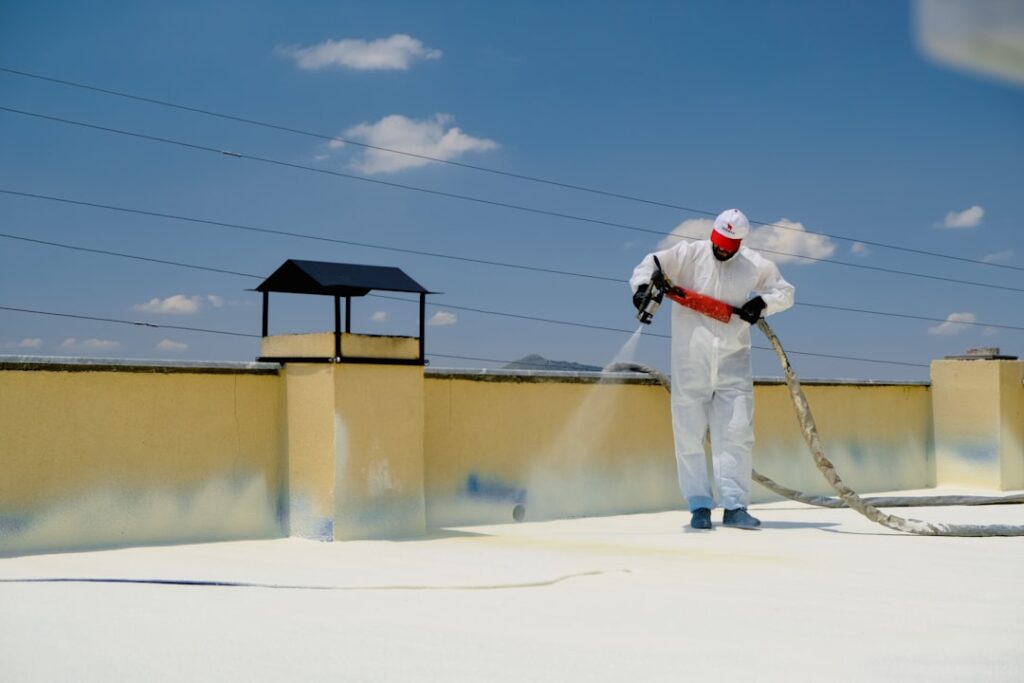
Asbestos abatement services are the regulated, licensed-contractor process for removing, encapsulating, or otherwise controlling asbestos-containing material in a building. Every state with significant pre-1980 housing maintains an abatement licensing program; federal NESHAP rules govern the technical workflow on top of state licensing. This guide summarizes EPA, OSHA, and state-level guidance current as of 2026, walks through what a homeowner should expect during an abatement engagement, and explains how to vet a contractor. The content is informational; engaging a licensed contractor is the right next step for any actual abatement decision.
Part of our Asbestos in the Home guide — start there for the full picture →
Is this mold, asbestos, or water damage? Get a free instant screen
Upload a clear photo of the suspect area. You'll get an instant AI screening opinion and what to do next. This is screening guidance, not a professional determination.
Screening guidance only. AI can be wrong. Confirm asbestos, mold type, or lead with lab testing or a licensed professional before acting.
What “abatement” actually covers
Abatement is an umbrella term for any planned response to asbestos-containing material, including removal, encapsulation (sealing in place), enclosure (covering with a permanent barrier), and operations-and-maintenance programs (managing intact material in place). Most homeowner-facing services focus on removal, but a competent contractor will discuss whether encapsulation or enclosure is appropriate before quoting a full removal.
The EPA NESHAP framework
EPA’s National Emission Standards for Hazardous Air Pollutants (NESHAP), 40 CFR Part 61 Subpart M, regulates asbestos as a hazardous air pollutant and sets the technical floor for abatement work. NESHAP defines regulated asbestos-containing material (RACM), requires pre-job notification to the state regulator, mandates wet methods during removal, sets packaging and labeling standards, and requires manifested transport to permitted landfills.
State licensing programs layered on top
Every state with significant pre-1980 housing licenses asbestos abatement contractors and certifies individual workers. Colorado’s CDPHE certifies five role types: General Abatement Contractor, Asbestos Building Inspector, Air Monitoring Specialist, Management Planner, and Project Designer. Hiring an unlicensed crew is illegal in licensed states and voids any insurance coverage tied to the property.
The five stages of a typical residential abatement
Stage 1: pre-job inspection and bid. Stage 2: regulator notification (typically 10 working days in advance) and worker mobilization. Stage 3: containment setup with polyethylene sheeting, negative-pressure HEPA filtration, and HVAC isolation. Stage 4: wet removal in small sections, double-bagging, decontamination of workers through a three-stage chamber. Stage 5: post-removal HEPA vacuuming, encapsulation of residual surface material, and post-removal air clearance by an independent third-party industrial hygienist.
What the abatement crew brings to the site
Standard kit for a residential abatement: 6-mil polyethylene sheeting (walls, floor, ceiling), spray adhesive and tape for sealing, negative-pressure HEPA air machines, three-stage decontamination chamber, full-face powered air-purifying respirators (PAPRs) with P100 filters, disposable Tyvek coveralls, amended water sprayers, hand tools (no power tools), 6-mil polyethylene bags for waste, OSHA warning labels, and a HEPA vacuum for post-removal cleanup. Power tools are not permitted because they pulverize the material and overwhelm the wet method.
What gets quoted in a bid
A complete bid includes labor, all materials, regulator notification fees, manifested transport, landfill tipping fees, and post-removal air clearance by a third-party industrial hygienist. It should also include the certificate of insurance with pollution liability coverage and the contractor’s state license number. Bids that omit any of those line items are incomplete and should be returned for clarification.
Cost ranges for common residential projects
2026 Front Range ranges, subject to project specifics: popcorn ceiling abatement in a 1,200-square-foot home runs $1,500 to $3,000. Whole-house pipe-wrap removal runs $3,000 to $8,000. Vinyl floor tile removal in a 1,000-square-foot area runs $2,500 to $6,000. Transite siding removal on a 1,500-square-foot home can exceed $20,000. Boiler insulation alone runs $1,500 to $4,000. Always get three bids from licensed contractors and confirm scope alignment before comparing prices.
What the homeowner should not have to deal with
The contractor handles regulator notification, packaging, manifesting, transport, landfill arrangement, post-removal clearance, and all documentation. The homeowner provides site access, vacates the affected area (sometimes the entire home, depending on containment scope), and signs the bid and post-completion paperwork. Any contractor who asks the homeowner to handle transport or landfill arrangements is operating outside the standard licensed workflow.
Air clearance is the legal close
The job is not complete when the bags leave the site. Post-removal air clearance is performed by a third-party industrial hygienist — not the abatement contractor — using either phase-contrast microscopy (PCM) for fiber count or transmission electron microscopy (TEM) for definitive analysis. Samples must show concentrations below the state-specific clearance level (typically 0.01 fibers per cubic centimeter). The clearance report is the legally meaningful job-completion document. For broader context, see our homeowner abatement workflow guide.
Encapsulation as a service alternative
Not every abatement project is a removal. Encapsulation — applying an EPA-recognized sealant to bind the asbestos to its substrate — is appropriate for intact non-friable material that is not in the path of renovation. Transite siding in good condition, sound vinyl floor tile under existing carpet, sealed pipe wrap on inactive lines: all are candidates for encapsulation rather than removal. Encapsulation typically costs 20 to 40 percent of full removal and generates no manifested waste stream.
Enclosure as a service alternative
Enclosure means building a permanent barrier over the asbestos-containing material, such as drywall over a transite-paneled wall or new flooring over intact vinyl tile. Enclosure is appropriate when the material is intact and will not be disturbed by the enclosure itself. The enclosed material has to be documented in property records so future owners and renovators know it is there.
Pre-renovation surveys before any demo
Before any major renovation in a pre-1980 home, a residential asbestos survey by a CDPHE-certified (or state-equivalent) Asbestos Building Inspector is the right starting point. The inspector samples suspect materials in the work area, lab-analyzes them, and produces a survey report identifying which materials require abatement before demo can proceed. Skipping this step exposes the homeowner to OSHA citation if a contractor reports the disturbance. The residential asbestos survey guide covers methodology and cost.
How to vet an abatement service
Confirm the state license is active by pulling the regulator’s online roster. Ask for the worker certification list — every person on site should be individually certified by the state. Request a sample protocol document showing how the contractor handles notification, containment, removal, and clearance. Get the certificate of insurance with pollution liability coverage. Three bids minimum, all from licensed contractors. Check the state regulator’s enforcement database for prior violations.
Red flags in abatement service bids
Verbal-only bids. Bids significantly below the typical range for the scope. No state license number on the quote. No worker certifications listed. No third-party clearance air sampling included. Promises to handle disposal “informally” or “at a discount.” Pressure to sign without three bids. Refusal to provide a sample protocol document. Any one of these is grounds to drop the contractor from consideration.
Documentation the homeowner should retain
After job completion: copies of the pre-job notification submitted to the regulator, the signed waste shipment records for every load, the landfill receipts confirming acceptance, and the post-removal air clearance report from the third-party industrial hygienist. These four documents collectively prove the work was done legally. They should travel with the home in any future sale and be available to lenders during refinance.
Insurance, liability, and warranty
The contractor’s pollution liability coverage protects the homeowner if a NESHAP violation is discovered later. Standard residential homeowner’s insurance does not cover asbestos abatement work, so the contractor’s coverage is the relevant policy. Some contractors offer post-completion warranties on encapsulation (3-5 years typical); removal jobs are warranted by the air clearance report rather than a warranty period.
Health context, briefly
Asbestos exposure is causally linked to mesothelioma, lung cancer, and asbestosis, with latency periods of 20 to 50 years between exposure and disease. There is no safe exposure threshold established for the carcinogenic endpoint. This is why the regulatory framework is strict and why licensed abatement services are the right answer for any actual removal need. Anyone with a history of significant exposure should discuss it with their physician.
When to call a professional
Effectively always for actual abatement work. The decision homeowners face is not whether to hire an abatement service but which one — and the criteria above (license, worker certifications, sample protocol, insurance, three bids, third-party clearance) are the basis for that decision. For a quick sample-only need (testing whether a material contains asbestos), homeowners in most jurisdictions can sample themselves; everything beyond sampling is contractor territory.
References
- Asbestos NESHAP Final Rule — U.S. Environmental Protection Agency
- OSHA Asbestos Construction Standard (29 CFR 1926.1101) — Occupational Safety and Health Administration
- CDPHE Asbestos Program — Colorado Department of Public Health and Environment
- NIOSH Asbestos Topic Page — Centers for Disease Control and Prevention
Frequently asked questions
What is included in a typical asbestos abatement service?
Pre-job inspection and bid, regulator notification, containment setup with polyethylene sheeting and negative-pressure HEPA filtration, wet removal with hand tools, double-bagging and labeling, manifested transport to a permitted landfill, post-removal HEPA vacuuming, encapsulation of residual surface material, and post-removal air clearance by an independent third-party industrial hygienist.
How much do asbestos abatement services cost?
On the Front Range in 2026, popcorn ceiling abatement runs $1,500 to $3,000 for a 1,200-square-foot home, pipe-wrap removal $3,000 to $8,000, floor tile removal $2,500 to $6,000 for 1,000 square feet, and transite siding removal can exceed $20,000. Always get three bids from licensed contractors before comparing prices.
Is encapsulation an alternative to abatement removal?
Yes. EPA recognizes encapsulation with an approved sealer as an acceptable response for intact non-friable material that is not in the path of renovation. Encapsulation typically costs 20 to 40 percent of full removal and generates no manifested waste stream. Transite siding, sound floor tile under carpet, and intact pipe wrap are common encapsulation candidates.
How do I verify an abatement contractor is licensed?
Pull the state regulator's online license roster (CDPHE in Colorado) and confirm the contractor's license number and current status. Request the worker certification list — every person on site should be individually certified. Ask for the certificate of insurance with pollution liability coverage. Check the regulator's enforcement database for prior violations.
Front Range homeowners looking for a connection to a CDPHE-licensed abatement service can reach out through our contact page.
Asbestos test kits
Asbestos can only be confirmed by a lab. A mail-in kit gets you a sealed sample container and accredited analysis — never sand or disturb suspect material first.
| Product | Why | Buy |
|---|---|---|
 Asbestos Test Kit (mail-in lab) Asbestos Test Kit (mail-in lab) | Includes PPE + sealed mailer. | Amazon — $34.99 |
| Pro-Lab Asbestos Test Kit | Widely available; lab fee separate. | Amazon — $34.99 |