Asbestos Abatement Near Me: Vetting Framework Guide
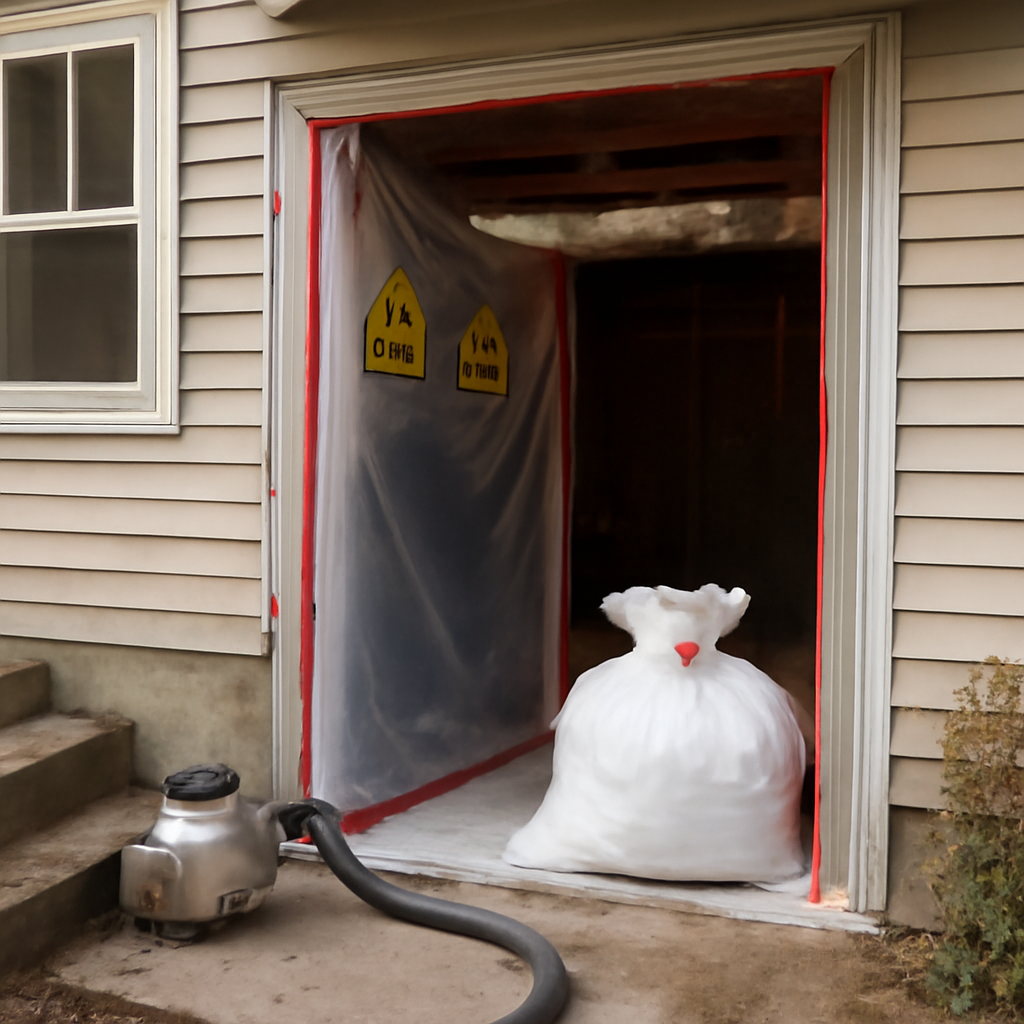
“Asbestos abatement near me” is the highest-volume commercial search in the asbestos category, with strong intent and immediate need behind every query. The challenge is that local search results mix true state-licensed abatement contractors with general remediation firms, restoration franchises, and unlicensed operators bidding on the keyword. Homeowners who pick wrong end up with expensive non-compliance problems that surface during resale, insurance underwriting, or worse, personal exposure. This guide summarizes EPA, OSHA, and state-health vetting criteria as of 2026; it is not legal advice and does not promote any specific company. For any abatement decision, verify licenses directly with the state agency.
Is this mold, asbestos, or water damage? Get a free instant screen
Upload a clear photo of the suspect area. You'll get an instant AI screening opinion and what to do next. This is screening guidance, not a professional determination.
Screening guidance only. AI can be wrong. Confirm asbestos, mold type, or lead with lab testing or a licensed professional before acting.
Asbestos abatement near me: what you are actually hiring
A licensed asbestos abatement contractor is a regulated service business that performs the removal, encapsulation, or enclosure of asbestos-containing materials under federal NESHAP rules and state oversight. The contractor employs state-certified workers and supervisors, carries specific pollution and general-liability insurance, files notifications with the state air-quality agency, follows defined work-practice standards, and delivers chain-of-custody disposal documentation. The credentialing is not optional and not interchangeable with general remediation, mold, or restoration contractor licenses.
The phrase “near me” matters because abatement work is permitted at the state level. A contractor licensed in another state cannot legally perform residential asbestos work in Colorado without holding a current CDPHE General Abatement Contractor (GAC) certification. Out-of-state crews working under a Colorado license, or partnered with a local licensed firm, can be legitimate — but the homeowner needs to verify the chain. The [licensed asbestos removal contractors guide](https://inspectandtest.net/guides/licensed-asbestos-removal-contractors/) covers credential verification in more detail.
The vetting framework: six credentials to verify before signing
A vetting framework gives homeowners a repeatable way to evaluate firms across price quotes. The following six credentials should appear in every legitimate abatement contractor’s documentation. Request copies before signing a contract.
1. State General Abatement Contractor (GAC) certification
In Colorado, CDPHE issues GAC certifications to firms meeting state requirements for training, insurance, and supervisor qualifications. The certification has an expiration date and a verifiable license number. Other states use different terminology (Asbestos Abatement Contractor, Asbestos Hazard Emergency Response Act contractor, etc.) but the function is the same. Verify the number and expiration date on the state regulator’s public license-lookup tool.
2. EPA AHERA accreditation
The Asbestos Hazard Emergency Response Act (AHERA) requires training and accreditation for asbestos workers, supervisors, inspectors, management planners, and project designers. AHERA accreditation cards have annual refresher requirements. Ask for AHERA cards for the supervisor who will be on your project site, not just for the firm’s principal.
3. Pollution-liability insurance
General-liability insurance alone does not cover asbestos exposure claims. Compliant abatement contractors carry contractor’s pollution liability (CPL) insurance with coverage limits typically of $1 million to $5 million per occurrence. Request the Certificate of Insurance (COI) showing CPL coverage in addition to general liability, workers’ compensation, and auto. The COI should name your property address as an additional insured for the project duration on larger jobs.
4. Workers’ compensation coverage
Asbestos abatement workers face higher injury and exposure rates than general construction. State law requires workers’ compensation coverage. Verify the COI shows current workers’ comp coverage. A contractor without workers’ comp creates direct legal exposure for the homeowner if a worker is injured on site.
5. NESHAP compliance history
NESHAP filings are public records. Ask the contractor for the most recent three NESHAP notifications they filed in your state. Cross-reference with the state regulator’s enforcement records — open violations, recent fines, or stop-work orders are red flags. A clean record over three to five years is the baseline expectation.
6. Bonding
Surety bonding protects the homeowner if the contractor fails to complete the work or fails to pay subcontractors and suppliers. Compliant abatement contractors carry bonding appropriate to project size, typically 10-25% of contract value for residential work. Bonding requirements vary by state and project size.
What the quote should include (line-item review)
A compliant abatement quote is itemized. Vague lump-sum bids without line items make it impossible to compare contractors and create change-order exposure mid-project. Homeowners who want a deeper sense of why each line exists can review the how to handle asbestos plain-language guide, which connects the on-site work practices to the bid structure. Expect to see the following:
- Pre-removal inspection coordination — either separate sampling fees or a note that the homeowner provides the lab report.
- NESHAP notification filing — 10-working-day window before work starts, contractor’s responsibility.
- Containment materials — 6-mil polyethylene, duct tape, hazard signs, decontamination unit supplies.
- PPE and consumables — P100 respirator cartridges, Tyvek suits, gloves, amended-water surfactant.
- Negative-air HEPA filtration equipment — daily rental or amortized purchase cost.
- Wet-method removal labor — supervisor + worker hours, fully burdened.
- Double-bagged or wrapped containment — 6-mil poly bags, labels.
- Licensed hauling — round-trip to approved landfill.
- Landfill tipping fees — $150-$400 per ton for asbestos waste in 2026, variable by facility.
- Third-party clearance air sampling — independent industrial hygienist, not the abatement contractor.
- Project closeout documentation — manifests, clearance report, NESHAP notification copy.
Red flags in “abatement near me” bids
Treat the following as warning signs and walk away.
Lump-sum bids without line items
A contractor unwilling to itemize is creating room for change-order surprises or hiding subcontractor markups.
No state license number on the proposal
Every legitimate Colorado abatement contractor lists their CDPHE GAC number on contract documents. A bid without it is a red flag.
Same-day or next-day start dates
NESHAP requires 10 working days of notification before regulated removal work begins. A contractor promising same-day start either is not filing notification (illegal) or is performing work below trigger thresholds (which still requires licensed work in Colorado for friable material).
Disposal “included” without a landfill name
The destination landfill should appear in the quote. Vague “disposal included” language often hides illegal disposal or mixing with general construction debris.
No mention of clearance air sampling
Independent third-party clearance is industry standard for interior residential abatement and required by Colorado above trigger levels. A contractor offering to “self-clear” their own work is bypassing a fundamental quality control.
Pressure to skip the inspection
“We’ve worked on dozens of houses like yours — we know it’s asbestos, no need to sample.” A licensed contractor cannot proceed without a confirmed positive lab result. Pressure to skip sampling is a sign of an unlicensed operator or a contractor planning to cut corners on documentation.
Cost ranges in the Denver metro and Front Range
Asbestos abatement pricing in the Front Range follows the same patterns as elsewhere in the country, adjusted for local labor and tipping-fee variation. Typical 2026 ranges:
Single-room popcorn ceiling abatement: $1,800 to $4,500. Whole-house popcorn ceiling: $6,000 to $18,000 depending on square footage. Vinyl-asbestos floor tile removal (kitchen or single bathroom): $1,500 to $4,000. Whole-floor VAT removal: $4,000 to $12,000. Pipe insulation removal (basement utility room): $1,200 to $5,000 depending on linear feet. Vermiculite attic insulation removal: $8,000 to $25,000 depending on attic size and access. AC exterior siding removal: $8,000 to $22,000. AC corrugated roof sheets on a detached garage: $4,000 to $9,000. Pre-demolition full-house abatement: $15,000 to $50,000+.
Three bids is the standard recommendation. Bids that vary by more than 50% are a signal that one contractor has misread the scope — usually the cheapest, which often reflects an unlicensed operator or planned corner-cutting. Bids within 20-30% of each other on properly scoped projects suggest realistic pricing.
Geographic considerations: Front Range counties
Asbestos abatement contractors serving the Denver metro typically work across Denver, Adams, Arapahoe, Jefferson, Douglas, Boulder, and Broomfield counties. El Paso County and Colorado Springs are typically served by a smaller pool of contractors. Mountain counties (Clear Creek, Gilpin, Park, Summit) have fewer local options and contractors often charge travel surcharges. Verify travel and mobilization charges are listed as separate line items.
CDPHE-permitted disposal facilities serving the Front Range are limited in number, which means hauling distance is similar across contractors in the metro. A contractor quoting significantly lower hauling fees than competitors may be planning a non-compliant disposal route. The broader [asbestos and lead in your home pillar](https://inspectandtest.net/asbestos-lead/) covers regional considerations across pre-1978 housing.
What happens after the contractor leaves
Closeout documentation is the lasting value of a licensed abatement project. The packet should include: NESHAP notification copy, original lab sampling report, abatement scope of work and signed contract, daily work logs with PPE checks and air-monitoring readings, post-removal clearance air-sampling report from the independent hygienist, signed chain-of-custody disposal manifest, and the contractor’s project-completion certification. Retain the full packet with permanent home records. Future buyers, lenders, insurance underwriters, and inspectors may request to see it years later.
Reference-checking calls: what to ask
The reference-call step in vetting separates contractors who do consistent good work from those who execute one or two showcase projects and a long tail of unsatisfactory ones. Effective reference calls produce more useful information than the standard “would you hire them again” question. The structured approach below takes 10-15 minutes per call and surfaces issues that quotes alone cannot.
Ask whether the contractor stayed on the original quoted scope or generated change orders, and if so, how those were communicated and priced. Ask whether the NESHAP notification window matched what was promised, or whether work started late or rushed. Ask whether the clearance air-sampling result came in on the first attempt or required re-cleaning. Ask whether the disposal manifest arrived promptly with the closeout packet, and whether all required signatures were complete. Ask whether the post-project condition of adjacent non-work areas matched expectations — protective sheeting properly removed, dust controlled, exterior access restored.
Three references with consistent positive responses on these specific points beats ten generic “they were great” testimonials. The [asbestos remediation company guide](https://inspectandtest.net/guides/asbestos-remediation-company/) covers vetting frameworks in additional detail.
Contract clauses worth requiring
A well-written abatement contract protects both parties and clarifies expectations. Several clauses are worth requiring even if the contractor’s standard contract omits them.
A defined clearance standard — typically 0.01 fibers per cubic centimeter by phase-contrast microscopy — specified in the contract. A failure-to-clear remediation clause requiring the contractor to re-clean and re-test at their expense if first clearance fails. A no-substitution clause preventing the contractor from sending unqualified workers or subcontractors not listed in the bid. A documentation-delivery clause requiring the closeout packet (NESHAP notification, lab reports, daily logs, clearance report, signed manifests) before the final payment is due. A change-order clause requiring written homeowner approval before any work outside the original scope, with pricing transparency on each item.
When to call a professional
Call a state-licensed asbestos inspector for sampling before contacting abatement contractors. The inspection comes first; the abatement comes after. Get three bids from licensed contractors. Verify each contractor’s credentials independently on the state regulator’s public license lookup. Ask for project references and call them with structured questions. Sign a contract with itemized line items, a defined clearance standard, and a documentation-delivery clause tied to final payment.
References
- Asbestos NESHAP Contractor Requirements — U.S. Environmental Protection Agency
- AHERA Accreditation Requirements — U.S. Environmental Protection Agency
- OSHA Asbestos Worker Protection — Occupational Safety and Health Administration
- Colorado General Abatement Contractor Licensing — Colorado Department of Public Health and Environment
Front Range homeowners ready to start the contractor-selection process can reach out through our contact page to connect with a vetted local inspector for the pre-bid sampling step.
Asbestos test kits
Asbestos can only be confirmed by a lab. A mail-in kit gets you a sealed sample container and accredited analysis — never sand or disturb suspect material first.
| Product | Why | Buy |
|---|---|---|
 Asbestos Test Kit (mail-in lab) Asbestos Test Kit (mail-in lab) | Includes PPE + sealed mailer. | Amazon — $29.99 |
 Pro-Lab Asbestos Test Kit Pro-Lab Asbestos Test Kit | Widely available; lab fee separate. | Amazon — $45.99 |