Asbestos and Mold Services: What Homeowners Need to Know
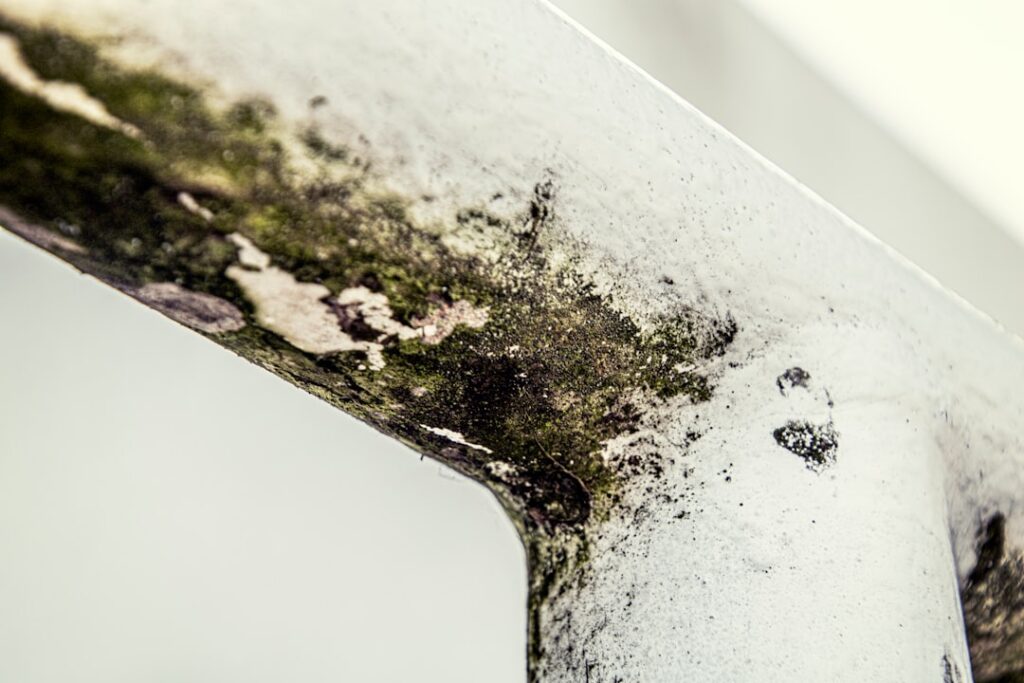
Some contractors market themselves as one-stop providers for asbestos and mold services. The pitch is convenient: a single point of contact, one mobilization fee, coordinated containment. The reality is more nuanced because asbestos and mold work require different certifications, different regulations, and different equipment. This guide explains the distinct service categories, when dual-service contractors actually deliver value, what credentials to verify for each, and how to compare bids when the work involves both hazards. The article reflects EPA, OSHA, CDPHE, and IICRC guidance current as of 2026; consult certified inspectors for both substances and licensed contractors for any abatement work.
Part of our Asbestos in the Home guide — start there for the full picture →
Is this mold, asbestos, or water damage? Get a free instant screen
Upload a clear photo of the suspect area. You'll get an instant AI screening opinion and what to do next. This is screening guidance, not a professional determination.
Screening guidance only. AI can be wrong. Confirm asbestos, mold type, or lead with lab testing or a licensed professional before acting.
Why asbestos and mold are different categories of work
Asbestos abatement is a federally regulated activity. EPA NESHAP, OSHA 29 CFR 1926.1101, and state licensure all apply. Workers must complete EPA AHERA training; supervisors carry additional certification; project designs and notifications flow through state agencies. Disposal requires a permitted landfill and manifested waste shipment records.
Mold remediation is governed primarily by industry standards rather than federal law. The IICRC S520 standard sets technical practice; no federal worker-protection rule specifically targets mold. State licensure exists in a minority of states (Florida, New York, Louisiana, Maine, Tennessee, Texas, and Virginia regulate mold remediators; Colorado does not). Disposal generally uses ordinary trash bags into normal municipal waste.
Certifications to look for in each category
Asbestos and mold work require non-overlapping credentials.
Asbestos credentials
EPA AHERA training categories: building inspector, management planner, project designer, supervisor, and worker. State licensure where required (CDPHE certificates in Colorado). General liability and pollution liability insurance. Worker fit-test records and medical surveillance documentation.
Mold credentials
IICRC AMRT (Applied Microbial Remediation Technician) or CMR (Certified Mold Remediator) for individual workers. IICRC firm certification for the company. ACAC (American Council for Accredited Certification) certifications such as Council-certified Microbial Remediator (CMR) or Council-certified Microbial Investigator (CMI) for inspectors. State licensure where applicable. General liability insurance with mold endorsement.
When the two substances appear in the same project
Older homes with chronic moisture problems commonly have both hazards. A leaking pipe in a 1965 basement can produce mold growth on the gypsum board and disturb asbestos-containing pipe insulation simultaneously. Tear-out of water-damaged drywall around old plumbing may encounter joint compound that contains asbestos. Vermiculite attic insulation in a leaky-roof home can be wet and contaminated with mold. In these scenarios, sequencing the two abatements is essential.
Proper sequencing on dual-hazard projects
The general rule is asbestos abatement first, then mold remediation, then reconstruction. The reason: asbestos work requires strict containment and clearance air testing before any other activity can resume in the area. Mold work that proceeds simultaneously inside an asbestos containment is technically possible but operationally complex. Most contractors complete asbestos abatement and clearance, then re-establish a mold-specific containment, then perform mold remediation. The reconstruction phase comes last after both clearances are documented.
What a dual-service contractor offers
A firm holding both asbestos licensure and IICRC mold certifications can deliver four real benefits: a single point of contact reducing coordination overhead, integrated scheduling reducing project timeline, consolidated billing simplifying insurance claims, and consistent quality control across both phases. The drawbacks: dual-service marketing sometimes outpaces dual-service capability, and a generalist crew may be weaker on the more complex phase. Verify each certification independently — do not assume that holding one implies competence in the other.
How to vet a dual-service contractor
Apply this checklist:
Asbestos verification
State license number cross-checked with the regulator’s website (CDPHE for Colorado). EPA AHERA training certificates for supervisor and crew. Pollution liability insurance certificate naming you as additional insured. Recent successful project references with similar scope.
Mold verification
IICRC firm certification number on the IICRC public registry. Individual technician AMRT or CMR cards. General liability with mold endorsement (not all carriers cover mold). References from projects within the last 12 months.
Project-management verification
Written scope of work for each phase with separate cost line items. Method for sequencing the work and re-establishing containment between phases. Third-party clearance for both substances.
Why “one company, one price” is not always cheaper
Dual-service contractors sometimes bundle pricing in ways that obscure individual line items. Compare a dual bid against separate specialty bids by line item: asbestos containment, asbestos disposal, mold containment, mold disposal, antimicrobial application, reconstruction. If the bundled price exceeds the sum of two specialist bids by more than 10-15%, the convenience premium is too high. If it is meaningfully cheaper, ask which line items were trimmed.
Insurance considerations on dual-hazard claims
Homeowners insurance commonly excludes both mold (subject to caps) and environmental remediation (asbestos). However, if the underlying loss is a covered peril (sudden pipe burst, weather damage), the resulting mold growth may be partially covered, and pre-existing asbestos may be addressed as incidental to a structural repair. Document the loss thoroughly and engage your adjuster early. Some carriers require licensed remediators on their approved-vendor list.
Health framing for both substances
Asbestos and mold present different health-risk profiles. Asbestos exposure causes disease through inhalation of microscopic fibers with latency periods measured in decades; brief low-level exposure rarely warrants medical intervention. Mold exposure causes respiratory irritation, allergic reactions, and occasionally more serious conditions in sensitive individuals; symptoms often appear within days to weeks of exposure. Consult your physician for any persistent respiratory symptoms; document the date and circumstance of any known exposure. For broader context on mold in particular, our hub on mold inspection and testing covers symptom framing and methodology.
Disposal differences that affect project cost
Asbestos waste requires double-bagged labeling, manifested transport, and disposal at a permitted asbestos landfill — generally adding $200-$800 to project costs for transport and tipping fees on small jobs and substantially more on large ones. Mold waste typically uses ordinary trash bags and normal municipal disposal, adding negligible cost. A dual-service contractor must segregate the two waste streams correctly throughout the project; co-mingling can trigger regulatory violations.
Regional context for Colorado
Front Range homes built before 1989 often have asbestos in popcorn ceilings, vinyl tile, joint compound, and pipe insulation. Mold appears most often after flood events, sustained roof leaks, and the dramatic summer monsoon storms that hit Denver, Boulder, and Colorado Springs. Several Front Range firms hold both CDPHE asbestos certification and IICRC mold credentials; verification still applies. The cluster article on asbestos in Colorado covers CDPHE rules and pre-1989 building eras in depth.
Red flags to avoid
Watch for these specific signs: a contractor promising same-day asbestos abatement without state notification, mold “instant kill” claims involving fogging without source removal, dual-service marketing without specific certification numbers, lack of pollution liability insurance, no third-party clearance, or pressure tactics demanding signature before written scope is provided. Each is documented as a recurring complaint pattern in state regulator and consumer-protection databases.
Bottom line on dual-service contractors
Asbestos and mold services share a customer base but require different credentials, regulations, and equipment. Dual-service contractors can deliver real value through coordination — but only after independent verification of credentials in both disciplines. Compare bundled bids line-by-line against specialty bids. Sequence the work asbestos-first, mold-second, reconstruction-last. Retain documentation from both phases for future transactions.
Typical dual-hazard scenarios that homeowners encounter
Several common situations bring both asbestos and mold into the same project scope.
Basement water damage in a pre-1989 home
A leaking pipe or foundation water intrusion soaks drywall, floor tile, joint compound, and pipe insulation simultaneously. Mold establishes on wet gypsum within 48-72 hours; the surrounding asbestos materials must be addressed before mold remediation can proceed safely.
Roof failure with attic vermiculite
Sustained roof leaks can wet vermiculite attic insulation and cause mold growth on the underlying decking. Removing wet vermiculite triggers asbestos protocols if Zonolite is suspected; mold remediation on the decking follows.
Sewer backup in a pre-1985 home
Category 3 (black water) sewer backups contaminate flooring and drywall. If 9×9 vinyl tile or older joint compound is involved, asbestos abatement precedes mold cleanup. Insurance claims often require both certifications because sewer-backup endorsements specifically address dual-hazard scenarios.
Kitchen or bath renovation in a 1960s-70s home
Tear-out routinely encounters joint compound, vinyl flooring, and pipe insulation that may contain asbestos. Plumbing leaks behind walls often produce concealed mold. The renovation cannot proceed until both substances are addressed.
How to read a dual-service bid
A complete dual-service bid separates costs into distinct line items: asbestos inspection and sampling, asbestos abatement labor, asbestos waste disposal, asbestos clearance testing, mold assessment, mold containment, mold removal labor, antimicrobial treatment, structural drying, mold clearance testing, and reconstruction. Bids that lump these into a single “remediation” total prevent meaningful comparison. Ask for an itemized breakdown; reputable contractors provide it without resistance.
Timeline expectations on dual projects
A typical dual-hazard residential project runs 2-4 weeks: 3-5 days for asbestos containment, abatement, and clearance; 5-10 days for mold containment, removal, drying, and clearance; 5-15 days for reconstruction. Shorter timelines may indicate skipped steps. Longer timelines may indicate complex hidden conditions or scheduling conflicts between specialty crews. The contractor should provide a written schedule with milestone dates.
Cross-contamination concerns between phases
The transition from asbestos to mold phase requires careful cross-contamination control. Asbestos containment is fully disassembled and HEPA-cleaned before mold containment establishes. HVAC systems are inspected for asbestos fiber settlement before being reactivated. Workers move from asbestos PPE to mold PPE through a decontamination protocol. A contractor who treats the two phases as continuous (without break for clearance) is cutting corners on at least one of the substances.
Why moisture diagnostics matter on dual projects
Mold growth requires sustained moisture; mold remediation without addressing the moisture source produces recurrence. The pre-remediation moisture investigation identifies the leak source (plumbing, roof, foundation, HVAC condensate), the affected materials, and the extent of substrate saturation. Moisture meters, thermal imaging, and bore-scope inspection are standard diagnostic tools. The investigation report should accompany the remediation scope. Sealing the moisture source must happen before or during remediation; otherwise mold returns within months.
Post-remediation verification testing
Mold remediation completion is verified through post-remediation verification (PRV) testing performed by a third-party inspector independent of the remediation contractor. PRV combines visual inspection (looking for residual mold growth, water staining, and dust), moisture meter readings (verifying substrate is fully dry below 16% wood moisture content), and optional air sampling for fungal spores. Asbestos post-remediation uses clearance air sampling against EPA AHERA levels. Both verifications must pass before reconstruction begins.
Long-term moisture management after the project
Successful mold remediation requires ongoing moisture management. Address the root-cause leak. Improve basement ventilation if humidity is chronically high. Run a dehumidifier in summer months on the Front Range. Inspect for new leaks annually. Monitor relative humidity (target 30-50%) with a hygrometer. Without these ongoing controls, mold can return even after a perfectly executed remediation. Document the moisture management plan in writing as part of the project close-out.
Disclosure obligations for both hazards
Selling a home with prior asbestos abatement and mold remediation requires disclosure on most state seller’s property disclosure forms. Buyers’ agents and inspectors specifically look for documented prior remediation as evidence of past hazard. Properly documented work is generally well-received by informed buyers; undocumented or poorly documented work raises concerns and can suppress sale price or trigger re-inspection. Retain complete documentation packets for both substances from project completion through sale.
References
- EPA mold guidance and remediation principles — U.S. Environmental Protection Agency
- EPA asbestos regulatory framework — U.S. Environmental Protection Agency
- OSHA asbestos worker-protection standards — Occupational Safety and Health Administration
- CDPHE asbestos certification and regulations — Colorado Department of Public Health and Environment
Frequently asked questions
Can one company handle both asbestos and mold?
Yes, if the firm holds both EPA AHERA training and state asbestos licensure plus IICRC AMRT or CMR mold certifications. Verify each credential independently — holding one does not imply competence in the other.
Which should be removed first if both are present?
Asbestos abatement should generally precede mold remediation. Asbestos work requires strict containment and clearance air testing; mold remediation follows in a separate containment after the asbestos phase clears.
Will my insurance cover both?
Standard homeowners policies often exclude environmental remediation and cap mold coverage. If the underlying loss is a covered peril (pipe burst, weather), incidental remediation may be partially covered. Confirm with your carrier before signing contracts.
Do mold contractors need a state license?
In a minority of states (Florida, New York, Louisiana, Maine, Tennessee, Texas, Virginia). Colorado does not currently license mold remediators, but IICRC AMRT or CMR certification is the industry standard regardless of state law.
Front Range homeowners facing both asbestos and mold concerns can reach out via our contact page for a referral to vetted CDPHE-certified and IICRC-credentialed contractors.