Mold Cleaning Services Near Me: Cleaning vs Remediation Guide
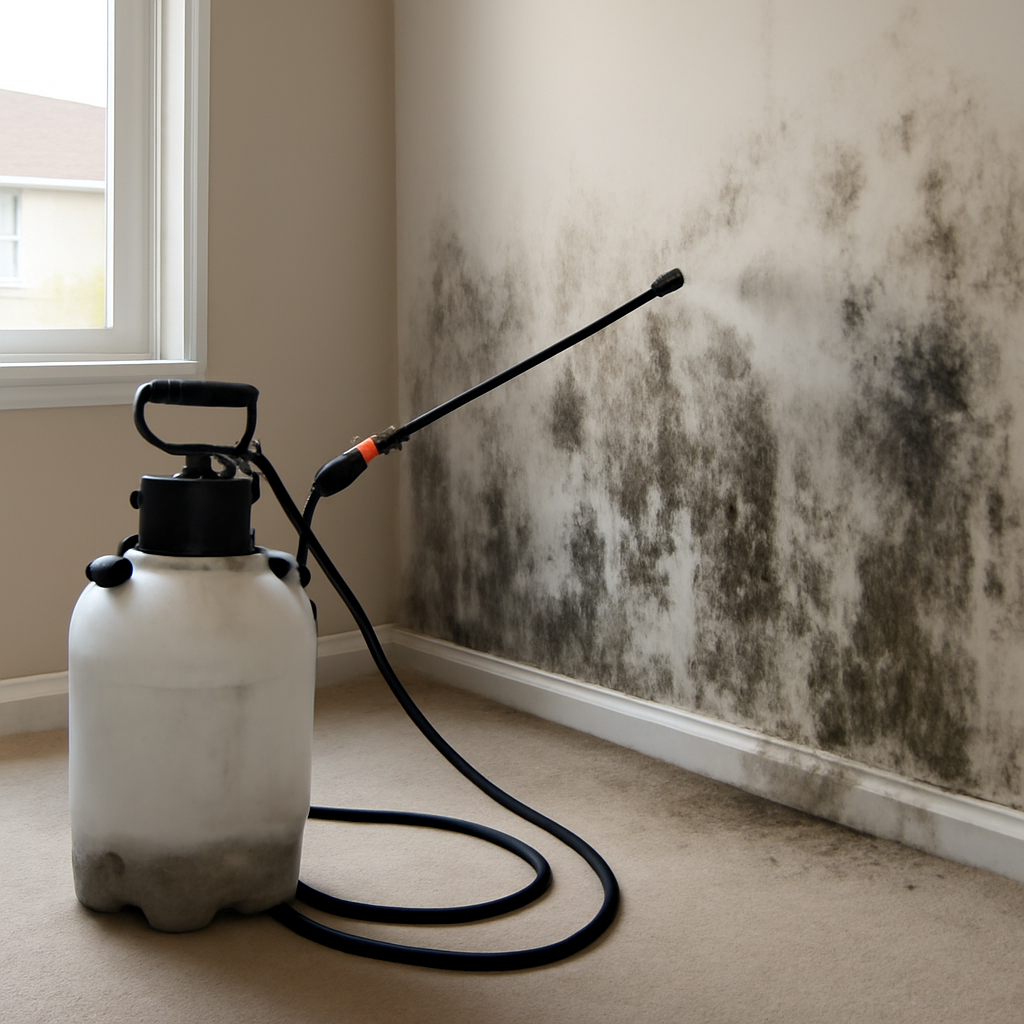
The search “mold cleaning services near me” usually returns a mix of two very different service categories: surface cleaning crews who handle Condition 2 settled-spore situations, and full remediation contractors who handle Condition 3 active growth. Confusing the two is how homeowners end up either overpaying for a wipe-down or under-scoping a job that should have used containment. This guide summarizes EPA and CDC guidance current as of 2026 — consult your physician for symptoms and a certified professional for any decision involving visible mold larger than 10 square feet.
Part of our Mold Removal & Remediation guide — start there for the full picture →
Is this mold, asbestos, or water damage? Get a free instant screen
Upload a clear photo of the suspect area. You'll get an instant AI screening opinion and what to do next. This is screening guidance, not a professional determination.
Screening guidance only. AI can be wrong. Confirm asbestos, mold type, or lead with lab testing or a licensed professional before acting.
Cleaning versus remediation — the distinction that drives price
The IICRC S520 standard distinguishes three contamination conditions. Condition 1 is normal background fungal ecology, Condition 2 is settled spores from a nearby Condition 3 source, and Condition 3 is actively growing mold. Cleaning services typically address Condition 2, and remediation contractors address Condition 3. The line between them determines whether you need a Shop-Vac and microfiber or a full containment and HEPA filtration setup.
When mold cleaning is actually appropriate
Settled-spore cleaning makes sense after a remediation has already removed the source, in lightly contaminated storage areas where dust and surface mold coexist, and on non-porous surfaces under 10 square feet. For these scopes, an IICRC-trained cleaning crew using detergent, antimicrobial wipe-down, and HEPA vacuuming is appropriate and cost-effective.
When cleaning is not enough
Visible black, green, or fuzzy colonies on drywall, baseboards, framing, or HVAC components indicate Condition 3 active growth. Cleaning the visible surface without removing porous substrate and addressing the moisture source merely cosmetically resets the problem. The colony returns when humidity rises, often within 30 to 60 days.
How to verify a local cleaning service is legitimate
Three credentials matter. IICRC certification for at least the supervising technician on site, general liability insurance with a pollution endorsement (standard GL policies exclude mold claims), and workers’ compensation for every technician inside your house. The vendor should provide a certificate of insurance naming your address as additional insured before work begins.
What a written cleaning scope should include
The scope should specify affected area in square feet, surfaces to be cleaned (hard, semi-porous, porous), cleaning product names with EPA registration numbers, HEPA-vacuum specifications, and a clear statement of what does not constitute remediation if active growth is later discovered. Vague “clean the mold in basement” line items are how scope disputes start.
Pricing context for cleaning-only jobs
Surface cleaning of Condition 2 contamination typically runs $400 to $1,200 for residential jobs depending on accessibility and square footage. Anything significantly higher is either undisclosed remediation work or excessive scope. Anything significantly lower may indicate the vendor is skipping HEPA filtration or PPE, both of which are non-negotiable.
The Front Range proximity factor
Travel surcharges become noticeable beyond 25 miles from a vendor’s base. For Front Range homeowners in Douglas, Elbert, Arapahoe, Jefferson, El Paso, Adams, Boulder, or Broomfield counties, narrowing the search to local IICRC-certified firms reduces those surcharges and shortens response time during active moisture events.
What “near me” actually optimizes
Proximity matters for response speed after a water event, not for quality of remediation. A 60-minute response time with proper containment beats a same-block vendor with no certifications. Use “near me” as a starting filter, not a final criterion, and read the cleaning vs remediation distinction breakdown before signing any contract.
How cleaning services should approach HVAC
HVAC contamination is its own service category that overlaps but does not equal duct cleaning. A cleaning service should coordinate with a NADCA-certified HVAC technician for coil and plenum work. Companies that promise to “clean the whole HVAC system” without subcontracting the duct work usually do not have the equipment to do it correctly.
Antimicrobial and biocide product selection
EPA-registered antimicrobials acceptable for residential post-cleaning include hydrogen peroxide-based products, quaternary ammonium compounds, and certain botanical solutions. Bleach is appropriate only on non-porous surfaces and does not penetrate porous substrates. A cleaning service that uses bleach as a universal solution is operating on outdated guidance.
HEPA filtration during cleaning
True-HEPA filtration captures particles to 0.3 microns at 99.97% efficiency, which covers fungal spores. The cleaning service should use a true-HEPA vacuum and ideally a true-HEPA air scrubber running during work. Shop-Vacs without HEPA filtration aerosolize spores and make the contamination worse.
PPE expectations during work
Technicians cleaning mold should wear N95 or P100 respirators at minimum, nitrile gloves, and disposable coveralls. If you see a crew working in T-shirts and dust masks, the company is not following IICRC or OSHA guidance. Homeowners should also avoid the work zone during cleaning and for at least two hours afterward.
What clearance looks like for a cleaning job
Full post-remediation verification with air sampling is overkill for Condition 2 cleaning. A visual inspection and a moisture-meter reading at the source location are usually sufficient. The deliverable should be a one-page report documenting the work performed, materials used, and visual confirmation that the surface is clean.
Red flags during the quote process
Door-to-door solicitation, refusal to provide certificate of insurance, pressure to pay up front, and quotes far below or above the regional range are individually disqualifying. Refusal to write a scope of work in advance is the single most common red flag and the most reliable filter.
Insurance and damage liability
Cleaning services should carry at least $1 million in general liability with a pollution endorsement specifically covering mold-related claims. Ask whether their workers’ compensation policy covers your address; in Colorado this is required by statute for any company with employees on site.
Subcontracting and crew accountability
Some cleaning services subcontract crews from third parties. Ask whether the technicians arriving at your house are W-2 employees of the company you contracted with. Subcontracted crews are not necessarily lower quality, but accountability for property damage and quality complaints becomes harder when a chain of subcontractors is involved.
Getting three comparable quotes
Walk every prospective vendor through the same scope: same square footage, same surfaces, same expected outcome. Bids on different scopes are not comparable. The full mold inspection hub covers how to define scope before requesting quotes, which is the single biggest factor in getting comparable numbers.
Whether mold testing should accompany cleaning
For Condition 2 work, pre-cleaning testing is rarely necessary if the source is visually identified. Post-cleaning surface sampling is also generally unnecessary. Save testing budget for situations where the contamination is unclear, hidden behind finishes, or part of an insurance claim that requires documentation.
What homeowners should do before vendors arrive
Stop the moisture source. A cleaning service called to a still-leaking pipe is being asked to fail. Document the affected area with photos, note odor changes, and isolate pets and immunocompromised family members from the area until work is complete and air has been HEPA-scrubbed.
Differences between residential and small commercial cleaning
Cleaning a 100-square-foot residential storage room differs materially from cleaning a 1,000-square-foot small office. Square footage scales linearly, but air-handling system involvement, occupant-protection planning, and documentation requirements scale more than linearly. Companies advertising “residential and commercial cleaning” should describe how their workflow changes between the two — generic claims without methodology differentiation often mean residential methods being applied at commercial scale.
When cleaning should include surface sealing
After Condition 2 cleaning on certain semi-porous surfaces (raw wood framing, masonry, concrete), some firms apply a clear or pigmented sealer to fill micropores and reduce surface emissivity. Sealing is appropriate as a finishing step on raw substrates inside otherwise dry areas; it is not a substitute for remediation on Condition 3 active growth. Verify why a sealer is being proposed before agreeing.
How a moisture check fits into a cleaning visit
A cleaning crew that arrives with a moisture meter and checks adjacent surfaces is doing diagnostic work that helps the homeowner. If moisture readings show wet substrate behind a cleaned wall, the cleaning visit becomes a referral conversation: the moisture source must be addressed before further cleaning has lasting effect. Crews without moisture meters cannot complete this check.
Coordination with HVAC service providers
Cleaning that affects HVAC components should be coordinated with a NADCA-certified HVAC technician. A cleaning service that promises to “clean the entire HVAC system” without subcontracting to NADCA-certified labor often does not have the equipment for coil and plenum work and may merely run a HEPA vacuum across visible return grilles, which is not duct cleaning in any meaningful sense.
Pet and family preparation before the cleaning visit
Even Condition 2 cleaning generates some airborne particulate during HEPA-vacuum work. Pets and immunocompromised family members should be relocated for the duration of the visit and for at least two hours afterward. Reputable firms communicate this expectation during scheduling rather than at arrival.
What a one-page completion report should include
Date and duration of work, square footage cleaned, surfaces addressed, products used with EPA registration numbers, moisture readings at conclusion if applicable, photographs of pre- and post-cleaning conditions, and signature of the supervising technician. Anything less leaves the homeowner with nothing to show if the area regrows mold and a dispute follows.
Geographic surcharge transparency
Reputable cleaning services disclose travel surcharges in writing during the bid phase, typically as a flat-fee adder or per-mile rate beyond a defined service radius. Surcharges hidden inside bundled line items often surface as surprises on the invoice. Ask explicitly: what’s the surcharge for my ZIP code, and is it itemized separately?
Cleaning service response time expectations
For scheduled cleaning following an assessment, a 5 to 10 business day lead time is typical. For acute conditions (visible mold growing during a wet event), reputable firms accommodate same-week scheduling. Refusal to schedule within two weeks often indicates capacity or process limitations the homeowner should weigh.
How seasonal demand affects pricing
Mold cleaning demand spikes during Front Range spring snowmelt (April-May) and after summer thunderstorm clusters. Booking during these peaks may incur slight premium pricing. Off-peak scheduling (late fall through early winter) often produces better availability and occasionally better rates.
How to read a cleaning service’s online portfolio
Reputable firms publish before-and-after photos with descriptions of scope, contamination level, and outcome. Generic stock photography without project-specific descriptions is a marketing tell. Look for project descriptions that include square footage, surface types addressed, and final results.
How to call a professional
Start with the IICRC firm-locator directory filtered to your ZIP code, cross-check against InterNACHI and Better Business Bureau records, and call three companies for written scope-matched quotes. Ask the credential and insurance questions in writing, then verify what they send you against the IICRC and CDPHE registries before signing.
References
- EPA: Mold Cleanup in Your Home — U.S. Environmental Protection Agency
- CDC: About Mold and Health — Centers for Disease Control and Prevention
- InterNACHI Standards of Practice for Mold Inspection — International Association of Certified Home Inspectors
- OSHA Mold Standards and Worker Protection — Occupational Safety and Health Administration
- CDPHE Mold and Indoor Air Quality — Colorado Department of Public Health and Environment
Frequently asked questions
Is mold cleaning the same as mold remediation?
No. Cleaning addresses Condition 2 settled spores on non-porous surfaces, typically under 10 square feet. Remediation addresses Condition 3 active growth and requires containment, HEPA filtration, and removal of porous substrates.
How much should a local mold cleaning service cost?
Residential Condition 2 cleaning typically runs $400 to $1,200 depending on square footage, surface types, and accessibility. Significantly higher quotes likely include undisclosed remediation work.
Do I need an air test after a cleaning job?
Usually not. Full post-remediation verification with air sampling is appropriate for Condition 3 jobs, not Condition 2 cleaning. A visual inspection and moisture-meter reading at the source is generally sufficient.
Should I clean small mold myself or call a service?
EPA allows DIY cleanup of contaminated areas under 10 square feet on non-porous surfaces using detergent and water plus N95 PPE. Larger areas, porous substrates, or repeated regrowth warrant professional help.
Front Range homeowners weighing a cleaning service versus a full remediation can get in touch here for help identifying an independent assessor to scope the job before quotes go out.