Wood Floor Moisture Meter: A 2026 Buyer Guide for Homeowners
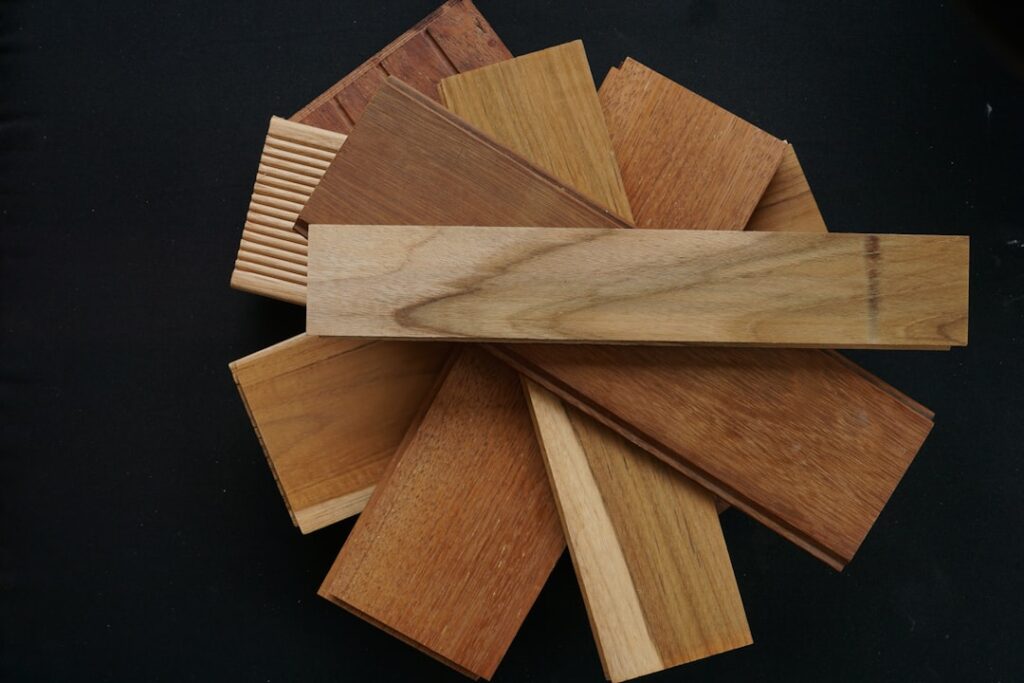
A wood floor moisture meter exists to prevent the most expensive failure mode in hardwood flooring: installing wood at the wrong moisture content and watching it cup, crown, or develop gaps months later. The math is straightforward. A 2,000-square-foot hardwood floor costs $15,000 to $30,000 installed; a $200 moisture meter that prevents one rework job pays for itself many times over. This guide walks through what wood floor meters need to do, which models are the working choices in 2026, and how to use the data correctly. Front Range homeowners face additional considerations because Colorado’s low ambient humidity changes the equilibrium MC targets compared to most of the country.
Why a wood floor moisture meter matters
Hardwood flooring moves with moisture. Wood absorbs moisture from humid air and gives up moisture to dry air, expanding and contracting in the process. Installed at the wrong moisture content relative to the in-service environment, the floor will move after installation, creating either gaps (when wood was installed too wet and then dried) or cupping (when wood was installed too dry and then absorbed moisture). Both failures are visible, both are expensive to fix, and both are largely preventable with proper moisture verification before install.
The standard industry guidance from the National Wood Flooring Association is to install hardwood at a moisture content within 2 percentage points of the long-term in-service equilibrium MC. For Front Range homes (typical indoor EMC of 6 to 8 percent), this means installing wood between 4 and 10 percent MC, with 6 to 8 percent as the central target. For coastal or humid climates with EMC of 8 to 12 percent, the target shifts higher.
What a wood floor moisture meter needs to do
Three capabilities matter for flooring work. First, accurate MC readings on the species being installed (red oak, white oak, maple, walnut, hickory, etc.), which requires species correction tables built into the meter. Second, sensor depth that covers the full thickness of the flooring stock (typically 3/4 inch / 19 mm for solid hardwood), which is where pinless meters with deep penetration earn their keep. Third, no marks left on the wood, which makes pinless meters the default choice for finished material and pre-finished planks.
Pin meters work too but leave visible holes, which is acceptable on the underside of planks or rough lumber but not on showface material. Most flooring contractors carry a pinless meter for finished surfaces and a pin meter for sub-floor evaluation and rough material. Our broader overview of moisture meters for wood covers the underlying technology in detail.
Top picks for wood floor work
Wagner Orion 910 ($150 to $180)
The most common shop and contractor pinless meter. 19 mm reading depth, species correction tables for common flooring species, plus-or-minus 1 to 2 percent MC accuracy when properly used. The standard recommendation for serious DIY installation work and small-shop contractor use. Battery-powered, simple interface, durable enough for daily use.
Wagner Orion 920 ($200 to $250)
Step up from the 910 with more species correction tables, slightly tighter accuracy specs, and a larger display. Worth the upcharge for production flooring contractors who handle a wider species mix; less essential for homeowners installing one species. Both 910 and 920 read up to about 19 to 25 mm into the wood depending on density.
Lignomat Versatec ($250 to $350)
Dual-mode (pin and pinless) with extensive species correction. Higher price reflects the dual functionality, which matters more for diversified contractor use than for single-installation homeowner use. For a buyer who will use both modes regularly, the Versatec offers good value.
Delmhorst BD-2100 or J-2000 (pin meters, $200 to $400)
Professional pin meters with calibrated species corrections and rugged construction. The pin format limits use on showface material but works well for sub-floor evaluation, rough lumber checks, and any situation where small pin holes do not matter.
Pre-installation workflow
Three checkpoints separate successful installs from problem installs. First, when the wood arrives at the jobsite, take readings on at least 10 percent of the planks (or at least 20 boards, whichever is greater). Document the readings. If the average is more than 4 percentage points outside the target EMC for the home, do not install yet; the wood needs to acclimate further or the order needs to be questioned with the supplier.
Second, after acclimation in the conditioned space (typically two weeks for solid hardwood, sometimes shorter for engineered), retest a representative sample of boards and confirm the MC has stabilized within the target range. Critically, also test the subfloor MC: it should be within 4 percentage points of the flooring MC. A 12-percent subfloor under 7-percent flooring will move moisture into the flooring after install, causing problems.
Third, during installation, spot-check boards as they come out of the bundle. Any individual board reading more than 3 percentage points outside the average should be set aside for further evaluation rather than installed.
Equilibrium MC targets by region
Front Range homes (Denver, Colorado Springs, similar) typically settle to indoor EMC of 6 to 8 percent year-round, with summer slightly higher and winter slightly lower. For installation, target 7 percent MC plus or minus 2 percent. Coastal humid climates (Gulf Coast, Pacific Northwest west of the Cascades, Mid-Atlantic in summer) settle to 8 to 12 percent EMC; target installation MC of 10 percent plus or minus 2 percent. Desert and high-altitude dry climates often see EMC as low as 4 to 6 percent; install at 5 to 7 percent.
The right way to know your specific home’s EMC is to measure indoor RH and temperature over a year and consult the EMC tables published by the U.S. Forest Products Laboratory. The shortcut: for any home with HVAC running year-round in a climate similar to yours, ask the local flooring industry what installation MC they target. Front Range installers consistently target 6 to 8 percent.
Subfloor moisture matters as much as flooring moisture
A common installation mistake is verifying the flooring MC carefully and ignoring the subfloor. Concrete slabs in basements often hold significant moisture even when they look dry; OSB or plywood subfloors over crawlspaces can absorb moisture from below. The flooring meter should be used on the subfloor as well as the flooring, and any large differential (more than 4 percentage points) needs to be addressed before install.
For concrete subfloors, calcium chloride moisture vapor emission testing or in-situ relative humidity probes are the industry standards rather than pinless meters, which do not penetrate concrete reliably. Wagner makes pin meters with deeper probes for concrete work, but most flooring contractors handle concrete subfloors with dedicated tests rather than retrofitting their wood meter. Our overview of surface moisture meters covers what works on which substrate.
What about cheap meters for floor installation?
The $20 to $40 generic moisture meters on Amazon will give you readings, but the readings are not reliable enough for floor installation decisions. Three problems compound. First, no species correction means readings on dense hardwoods are systematically off by 1 to 3 percentage points. Second, calibration drift is unverifiable because no reference standard ships with the meter. Third, no manufacturer support if the meter reads incorrectly.
For a one-time floor installation involving thousands of dollars of material, the false economy of a cheap meter is obvious. Either rent a quality Wagner-class meter from a tool rental service for the install week, ask the flooring supplier to test boards as part of the sale, or buy the Wagner Orion 910. Do not rely on a $30 generic meter to make installation-go decisions on $15,000 of hardwood.
Post-install monitoring
After installation, monitor the floor’s behavior over the first heating and cooling season. Some seasonal movement is normal; significant gapping in winter or cupping in summer suggests either an installation MC mistake or an HVAC humidity issue. A homeowner who keeps a moisture meter handy can verify whether observed movement matches the wood’s MC trajectory or signals a different problem (slab moisture, plumbing leak, HVAC failure).
For Front Range homeowners, the dryness of winter air can drive indoor MC down faster than expected, particularly in homes with forced-air heating. Running a humidifier through January and February helps maintain stable wood floor moisture content and reduces winter gapping.
References
- InterNACHI: Moisture Meters for Inspectors — International Association of Certified Home Inspectors
- ASHI: Moisture Detection Resources — American Society of Home Inspectors
- EPA: Moisture and Mold Prevention — U.S. Environmental Protection Agency
Moisture meters for home inspection
Pin meters read deep but leave marks; pinless meters scan surfaces non-destructively. Many inspectors carry both.
| Product | Why | Buy |
|---|---|---|
 Klein Tools ET140 Pinless Klein Tools ET140 Pinless | Non-destructive scanning; affordable. | Amazon — $49.97 |
 General Tools MMD4E General Tools MMD4E | Best-selling pin meter for drywall/wood. | Amazon — $37.70 |
 Lignomat Mini-Ligno Lignomat Mini-Ligno | Trusted by woodworkers; species-calibrated. | Amazon — $115.00 |