Whole House Surge Protector Cost: Device and Install

Whole house surge protector cost typically falls between about $300 and $800 for a panel-mounted device installed by a licensed electrician, with the device itself often running roughly $75 to $400 and the rest going to labor. Jobs climb toward $1,000 to $1,500 or more when the panel has no open breaker spaces, the service needs other corrections or the work is bundled with a panel replacement. Those are typical national ranges for 2026; get local written quotes, because electrician rates and panel conditions vary a lot from house to house.
Part of our Home Electrical guide — start there for the full picture →
A whole-house surge protective device (SPD) sits at the electrical panel or the meter and diverts high-voltage spikes to ground before they travel through the home’s wiring. It does not make a house lightning-proof, and it works best as the first layer of a layered approach that also uses point-of-use protection for sensitive electronics. Our main guide to the whole house surge protector explains how these devices work in more detail; this guide covers what they typically cost, what affects the price, how to read a quote and how an inspector looks at them.
Typical Whole House Surge Protector Costs at a Glance
Typical national range, 2026 — get local quotes. Figures include the device and labor by a licensed electrician unless noted.
| Job | Typical device cost | Typical installed total | Notes |
|---|---|---|---|
| Breaker-style SPD that snaps into an open double space | About $75–$200 | About $250–$600 | Simplest install when the panel brand supports it and has space |
| Hardwired box-style SPD mounted beside the panel | About $100–$400 | About $350–$900 | Needs a dedicated two-pole breaker and short leads |
| Higher-capacity or premium SPD with monitoring | About $250–$700 | About $600–$1,200 | Higher surge ratings, replaceable modules, alarms or app alerts |
| Meter-base surge device | Varies | Varies; sometimes offered by utilities as a program | Installed at the meter by or with approval of the utility |
| SPD plus panel corrections (space, grounding, breakers) | Device plus parts | About $800–$1,500+ | Rearranging circuits, adding tandem breakers or fixing grounding |
| SPD bundled with a panel replacement or service upgrade | Usually a small add-on | Often a few hundred dollars added to the panel job | Often required by current code when the service is replaced |
| Point-of-use surge strips (second layer) | About $20–$80 each | Not installed | For TVs, computers, networking gear and other sensitive devices |
Two things often surprise owners. First, the device is usually the smaller part of the bill; the electrician’s trip charge, labor and permit are most of it. Second, when an SPD is installed during other panel work, the extra cost is modest because the electrician is already there, the power is already off and the permit is already pulled.
What Drives the Installed Price
Panel space and compatibility
Most residential SPDs connect to a two-pole (240-volt) breaker, which takes two adjacent spaces in the panel. If those spaces are open, the job is quick. If the panel is full, the electrician may need to consolidate circuits, use tandem breakers where the panel listing allows them, or add a subpanel, all of which add time and parts. Breaker-style SPDs must match the panel manufacturer. Our guide to the double pole breaker explains how two-pole breakers occupy and connect in the panel.
Lead length and mounting location
SPDs perform best with short, straight connecting conductors, because longer leads add impedance and let more of the surge reach the home’s wiring. Mounting the device right next to the panel, or using a breaker-style unit that sits inside it, is usually preferred. A panel in a finished wall, a tight closet or a crowded utility room can make a short-lead install harder.
Device type and ratings
Price rises with higher surge current ratings, replaceable protection modules, built-in status indicators, audible alarms and remote monitoring. Higher numbers on the box are not automatically better value for a typical house; the right device depends on the service size, exposure and what is in the home.
Condition of the service and grounding
An SPD can only divert a surge to ground if the home has a sound grounding and bonding system. If the electrician finds a missing or corroded grounding electrode conductor, loose neutral connections, double-tapped breakers or other defects, those will need correcting, and they will be quoted on top of the SPD. Older or obsolete panels may need replacement before adding anything at all.
Permit and inspection
Many jurisdictions treat SPD installation as electrical work that requires a permit and inspection, which adds a fee and sometimes a scheduling delay. Check with your city or county building department; requirements differ across the Front Range.
Trip charges and scheduling
Electricians usually have a minimum service charge, so a small job like an SPD often costs more per hour than a larger project. Combining it with other electrical work, such as adding a circuit or replacing an outlet, can spread that trip charge across more value. After-hours or emergency calls after a storm cost more.
Best Surge Protectors: our top 3 picks
| Product | Best for | Key features | Price | Buy |
|---|---|---|---|---|
| ALESTOR PS951 | Best overall power strip |
| $16.99as of Oct 22, 2026 1:09 pm GMT+0000 | Buy now →Check current price |
| Anker 351 Power Strip | Home office with USB-C |
| $28.99as of Oct 22, 2026 11:47 am GMT+0000 | Buy now →Check current price |
| POWSAV NBW-903 | Most outlets |
| $24.99as of Oct 22, 2026 1:09 pm GMT+0000 | Buy now →Check current price |


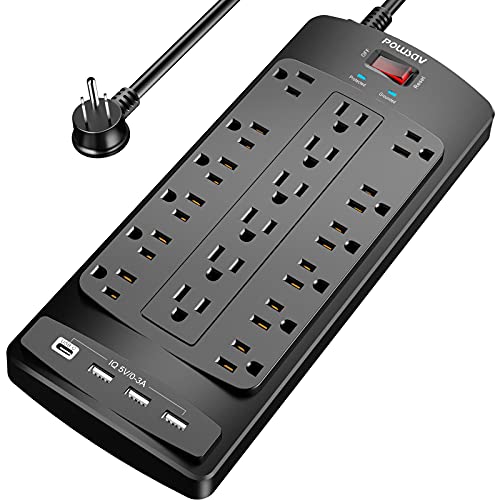
Prices are Amazon’s listed prices as of the time shown and change often; check Amazon for today’s price. As an Amazon Associate we earn from qualifying purchases.
Ratings to Compare on a Quote
Surge protector packaging is full of numbers. A few of them actually help compare devices:
- Type designation. Under the UL 1449 safety standard, devices are categorized by where they are installed. Type 1 devices can go on the line side of the main disconnect, such as at the meter; Type 2 devices go on the load side, typically at the panel; Type 3 devices are point-of-use units such as plug-in strips. Many whole-house units are listed as Type 1 or Type 2, and some carry both.
- Voltage protection rating (VPR). This is the voltage the device lets through during a standardized test surge. Lower is better.
- Nominal discharge current (In). A measure of how much surge current the device can handle repeatedly while still functioning. Higher generally indicates a more durable device.
- Surge current capacity (often in kA). Marketing figures here vary in how they are measured. Treat very large numbers as one factor among several, not a reason by themselves to pay more.
- Status indicator. Lights or alarms that show when protection has been used up are valuable, because SPDs wear out silently.
- Listing. The device should be listed by a recognized testing laboratory for the application.
An electrician can explain which ratings make sense for your service. For a typical single-family house, a reputable Type 2 device with a clear status indicator, installed with short leads, is the common recommendation.
Is It Worth It? Replace, Add or Skip Decision Logic
Whole-house surge protection is usually inexpensive relative to what it protects, but it is not equally valuable in every home. The rules of thumb below are general guidance; an electrician’s evaluation of your service should drive the decision.
- The device has a lifespan. The protective components inside an SPD, commonly metal oxide varistors, degrade a little with each surge they absorb. As a rule of thumb, many owners and electricians plan to check status indicators at least once a year and expect replacement somewhere around a decade, or sooner after a nearby lightning strike or if the indicator shows lost protection.
- What is in the house matters. Modern homes carry electronics in nearly everything: furnace and water heater control boards, appliances, garage door openers, HVAC equipment, smart thermostats, entertainment and networking gear. A single damaged appliance control board can cost more than the installed SPD.
- Exposure matters. Homes with overhead service lines, long rural service runs, frequent thunderstorms or on hilltops and open terrain see more surge exposure than homes with short underground service in a dense neighborhood.
- Timing matters. If you are planning a panel upgrade, EV charger, heat pump or solar installation in the next year or two, adding the SPD then is usually cheaper than a stand-alone visit now.
- It is one layer, not the only layer. Most surges are generated inside the home when motors and compressors cycle. A whole-house SPD does not fully stop those, so point-of-use protection near sensitive electronics is still recommended. Our roundup of the best surge protectors covers that second layer.
If an existing SPD’s indicator shows protection lost, replacement is typically about the same cost as a new install, since the device is swapped and the connections remain. If the panel itself is old, damaged or obsolete, it may make more sense to fold the SPD into a panel replacement; our guide to an electrical panel upgrade explains when that is warranted.
How to Read a Surge Protector Quote
Get two or three written quotes from licensed electricians. Because this is a small job, some contractors quote verbally; ask for it in writing so you can compare.
Line items that should be there
- Device make and model with its Type designation and key ratings
- Mounting location and how it connects (breaker-style or hardwired with a dedicated breaker)
- The breaker size and type being added, and whether any circuits will be moved or combined
- An inspection of the grounding and bonding system, with any corrections priced separately
- Permit and inspection, if required in your jurisdiction
- Warranty terms for the device and for labor; read any “connected equipment” warranty carefully, since those often come with claim conditions and exclusions
- Clear total price, not just an hourly rate
Red flags
- “Lightning-proof” claims. No device makes a home immune to a direct strike. A credible electrician will describe an SPD as reducing risk, not eliminating it.
- Mandatory “whole-home protection” bundles. Packages that add expensive monitoring subscriptions, multiple redundant devices or unrelated upgrades deserve a second quote.
- Unlicensed installers or no permit. Work inside the panel should be done by a licensed electrician, with a permit where required.
- Long or coiled leads. A device mounted far from the panel with long wires loses much of its effectiveness.
- Ignoring obvious panel defects. An installer who adds an SPD to a panel with scorched breakers, double taps or missing covers without mentioning them is not looking out for you.
Questions to ask
- Which Type and ratings are you installing, and why that model?
- How long are the leads, and where will the device mount?
- Did you check the grounding electrode and bonding while you were in the panel?
- How will we know when the device needs replacement?
- Is a permit required here, and will you schedule the inspection?
What a Typical Installation Visit Looks Like
Knowing what the job involves makes it easier to judge whether the labor portion of a quote is reasonable. A straightforward panel-mounted install on an accessible panel is often a visit of an hour or two, though the electrician’s minimum charge may cover more time than that.
- Assessment. The electrician confirms the panel brand and listing, checks for open spaces, looks over the main breaker, neutral and grounding connections and notes any defects that should be fixed first.
- Shutdown. Power to the panel is turned off at the main disconnect. Expect the whole house to be without power for part of the visit, so plan around refrigerators, medical devices and home offices.
- Mounting. A breaker-style unit snaps into two adjacent spaces. A box-style unit is mounted on the wall beside the panel, usually entering through a knockout as close as possible to the breaker it connects to.
- Connections. Leads are kept short and straight, connected to a dedicated two-pole breaker, the neutral bar and the equipment grounding bar as the manufacturer specifies.
- Restart and check. Power is restored, and the status indicators should show the device is protecting. The electrician should show you where to look for them later.
- Inspection. Where a permit was pulled, a city or county inspector may need to see the work, which can mean a second appointment.
Anything beyond that list, such as relocating circuits, replacing damaged breakers or correcting grounding, is extra scope and should be itemized separately on the invoice.
Code Requirements and Front Range Factors
The electrical code and when an SPD is required
The National Electrical Code is published by the NFPA as NFPA 70 and is revised on a regular cycle; the NFPA lists the 2026 edition as current, with a 2029 edition in development. Recent editions added a requirement for surge protection on dwelling-unit services, which typically applies when a service is newly installed or replaced. Whether and how it applies to your project depends on which edition your city or county has adopted and any local amendments, so check with your local building department rather than assuming. In practice, many Front Range panel replacements now include an SPD as part of the job.
Lightning and summer storms
Colorado’s summer thunderstorm season brings frequent lightning, especially in the afternoons along the foothills and across the plains. Homes on ridges, open lots or at the end of long overhead service lines have more exposure. A whole-house SPD helps with surges that arrive over the utility lines and from nearby strikes, but a direct strike on the house calls for a properly designed lightning protection system, which is a separate specialty.
Hail, wind and utility switching
Spring and summer hailstorms and high winds can damage overhead lines and cause outages, and power restoration and utility switching can create voltage transients. Wildfire-related power shutoffs in some areas also mean more on-and-off cycles. These are part of why surge protection is common in the region, though they are not the most common surge source in a typical home.
Generators and solar
Homes with standby generators, portable generator inlets or solar and battery systems often have more equipment that benefits from surge protection and more points where surges can enter. The electrician should coordinate SPD placement with that equipment and any transfer switch.
How a Home Inspection Looks at Surge Protection
The ASHI Standard of Practice directs inspectors to inspect the service drop, service entrance conductors, “service equipment and main disconnects,” service grounding and the “interior components of service panels and subpanels,” and to describe “the amperage rating of the service.” Surge protective devices are typically noted as present or absent when visible, but a home inspector does not test whether an SPD is still providing protection. A status light, when present, is the only practical field indicator.
An inspector may report on:
- An SPD with a status indicator showing lost protection
- An SPD connected with long leads or mounted improperly
- Missing or damaged grounding electrode conductors or bonding
- Panel defects such as double-tapped breakers, scorch marks, missing knockouts or missing dead-front screws
- An obsolete or recalled-type panel that should be evaluated before adding equipment
- The rating of the main breaker and service, which matters for future upgrades
Electrical problems are a real fire risk. The U.S. Fire Administration reports that in 2021, “an estimated 24,200 residential building electrical fires were reported to United States fire departments,” causing an estimated 295 deaths. Surge protection addresses only one slice of electrical risk, and the NFPA’s home electrical safety guidance advises having “all electrical work done by a qualified electrician.” When an inspection flags electrical concerns, the usual recommendation is evaluation by a licensed electrician. Our electrical hiring guide covers how to choose and vet one.
If you are buying a home and want the service panel and grounding looked at before closing, contact our team to schedule a Front Range inspection.
References
- NFPA 70, National Electrical Code — National Fire Protection Association
- Electrical Safety in the Home — National Fire Protection Association
- Appliance and Electrical Fire Safety — U.S. Fire Administration
- ASHI Standard of Practice for Home Inspection — American Society of Home Inspectors
Frequently asked questions
How much does a whole house surge protector typically cost?
Typical national ranges in 2026 are about $75 to $400 for the device and about $300 to $800 installed by a licensed electrician. Jobs can reach $1,000 to $1,500 or more if the panel needs space created, grounding corrected or other repairs.
Can a homeowner install a whole house surge protector?
Installation means working inside the electrical panel, which carries serious shock and fire risk and often requires a permit. A licensed electrician should do it, and many jurisdictions require the work to be inspected.
How long does a whole house surge protector last?
Its protective components wear a little with each surge. As a rule of thumb, check the status indicator at least yearly and expect replacement around a decade, or sooner after a nearby lightning strike or if the indicator shows protection has been lost.
Is a whole house surge protector required by code?
Recent editions of the National Electrical Code require surge protection on dwelling services, typically when a service is installed or replaced. Whether it applies depends on the code edition your city or county has adopted, so check with your local building department.
Are plug-in surge protectors still needed?
Yes. A whole-house unit handles surges arriving from outside, but many surges start inside the home. Point-of-use protectors near computers, TVs and networking gear provide a second layer.
Want an independent look at the electrical panel in a home you are buying? Get in touch with our team to arrange a Front Range inspection.