What Is the Difference Between Mold and Black Mold
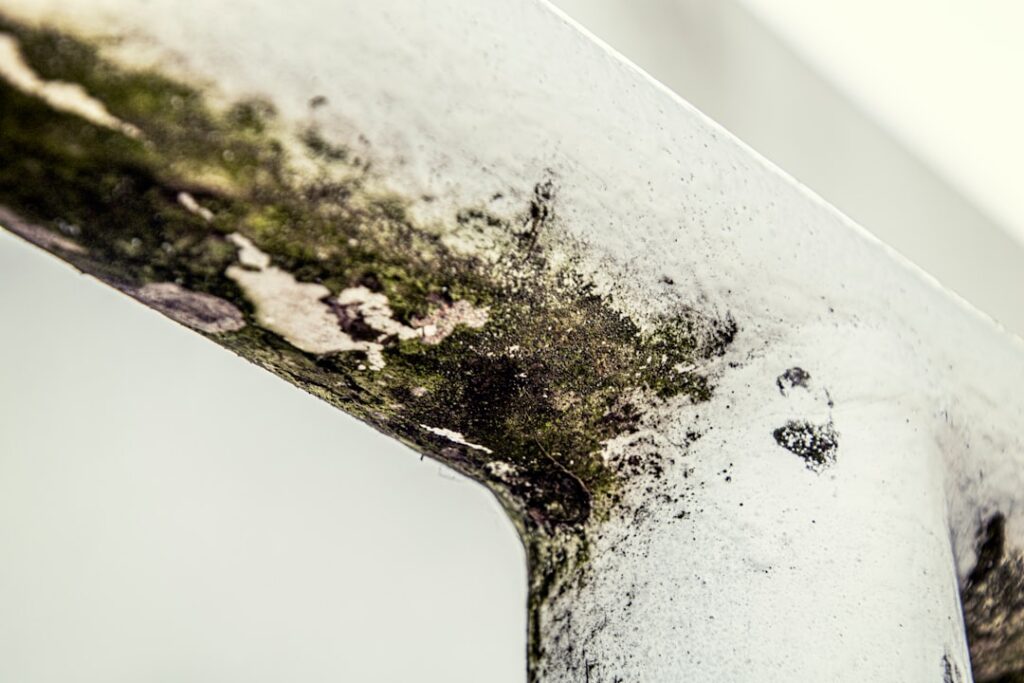
The phrase “what is the difference between mold and black mold” carries an embedded assumption that “mold” and “black mold” are two distinct categories. The reality is more interesting and more useful for homeowners to understand. Mold is the broad biological category — fungi that grow as filaments and reproduce by spores, covering roughly 50,000 to 100,000 named species depending on which taxonomy is used. “Black mold” is a colloquial English-language phrase that homeowners and journalists use loosely to refer to dark-pigmented mold, usually but not always meaning Stachybotrys chartarum. The two terms are not parallel categories; one is a kingdom-level descriptor and the other is a casual visual label. This guide unpacks the terminology and explains why visual color is a poor proxy for species. This guide summarizes EPA and CDC guidance current as of 2026 — consult a certified mold inspector for testing decisions and your physician for symptom evaluation.
Part of our Black Mold & Your Health guide — start there for the full picture →
Is this mold, asbestos, or water damage? Get a free instant screen
Upload a clear photo of the suspect area. You'll get an instant AI screening opinion and what to do next. This is screening guidance, not a professional determination.
Screening guidance only. AI can be wrong. Confirm asbestos, mold type, or lead with lab testing or a licensed professional before acting.
What Is the Difference Between Mold and Black Mold in Plain Terms
Mold, as a biological category, includes every filamentous fungus that grows by hyphal extension and reproduces through spores. The category contains thousands of genera and tens of thousands of species, ranging from the white Penicillium that produced antibiotics to the dark Aspergillus that grows in HVAC components to the Cladosporium that produces bathroom mildew to the Stachybotrys associated with water-damaged drywall. All of them are mold in the technical sense.
“Black mold” is not a species name. The phrase appears nowhere in mycological taxonomy. It functions as a colloquial label that English-speakers apply to dark-pigmented mold colonies, most often Stachybotrys chartarum but also Cladosporium, Alternaria, Aspergillus niger, and any other species that happens to look dark in a given lighting condition. When a homeowner says “I have black mold,” the speaker usually means “I have dark mold and I am worried it might be the species I have read about.” The visual cue triggered the concern; the species identification has not actually happened.
The Taxonomy Problem With Visual Color
Color is among the least reliable identification features for mold because the same species can produce different pigments under different conditions, and many species produce dark colonies as standard. Stachybotrys ranges from greenish to nearly black depending on age, moisture, and substrate. Cladosporium ranges from olive-green to dark green to black on long-established colonies. Aspergillus niger is genuinely black across its life cycle. Alternaria spans olive to dark-brown to black. Even Penicillium, usually pictured as blue-green, can produce dark colonies on certain substrates.
This means the visual phrase “black mold” describes appearance, not species. A homeowner looking at a dark patch on bathroom tile cannot conclude Stachybotrys from the color alone — bathroom tile is not a substrate Stachybotrys colonizes, so the dark colony is almost certainly Cladosporium or Alternaria. A homeowner looking at a dark patch on wet drywall has a higher Stachybotrys probability because that is a substrate Stachybotrys does colonize, but Cladosporium also grows on drywall under less-extreme moisture conditions and could be the actual species. Substrate and moisture history shift the probability range substantially before any visual identification matters.
Best At Home Mold Test Kit: our top 3 picks
| Product | Best for | Key features | Price | Buy |
|---|---|---|---|---|
| Varify 6-Pack | All-round DIY plate kit |
| $15.99as of Nov 5, 2026 12:11 am GMT+0000 | Buy now →Check current price |
| KAYENQO 12-Test | Testing many rooms |
| $28.99as of Nov 5, 2026 12:11 am GMT+0000 | Buy now →Check current price |
| Detekt Indoor Air Quality Kit | HVAC vents |
| $39.99as of Nov 5, 2026 12:11 am GMT+0000 | Buy now →Check current price |


Prices are Amazon’s listed prices as of the time shown and change often; check Amazon for today’s price. As an Amazon Associate we earn from qualifying purchases.
Why the Terminology Confusion Matters
The mold-versus-black-mold terminology confusion creates two practical problems for homeowners. First, it leads to overreaction in the wrong cases — a homeowner who identifies Cladosporium on bathroom tile as “black mold” may pursue expensive remediation that the species does not warrant, when a peroxide cleanup and a bathroom fan timer would resolve the colony for a few dollars. Second, it leads to underreaction in the right cases — a homeowner who finds dark growth on wet drywall but assumes “all dark mold is the same” may pursue DIY cleanup of a colony that actually warrants professional remediation with containment.
The CDC has been notably explicit on this point, writing that the term “toxic mold” is not accurate and that all molds should be cleaned up when found indoors regardless of species. The same logic applies to “black mold” — the phrase does not map to a defined health threshold, a defined cleanup protocol, or a defined species. The substantive question for any colony is what substrate it is on, how big it is, what moisture source allowed it, and what the affected substrate condition looks like. Species name follows from those answers rather than driving them. Homeowners working through the distinction can review the broader explainer on whether all black molds are toxic.
What “Mold” Includes Beyond the Colloquial Black Mold
The molds that grow in homes span a wide species range, and most of them are not what homeowners mean by “black mold.” Cladosporium sphaerospermum is the most globally common indoor mold, responsible for most bathroom and window-sill staining. Penicillium chrysogenum grows on food, stored items, and damp building materials with moderate moisture. Aspergillus species — including A. niger, A. fumigatus, A. flavus, and others — grow on dust-rich substrates and HVAC components. Alternaria alternata appears in damp residential settings with high allergic potential. Chaetomium globosum is associated with water-damaged cellulose substrates and occasionally shows up alongside Stachybotrys. Ulocladium and Trichoderma round out the common indoor list.
Each of these species has its own ecological preference, its own visual signature, its own health-risk profile, and its own cleanup considerations. The cleanup protocol does vary across species, but the variation is usually about substrate condition and colony size rather than about which biocide to use. Hydrogen peroxide kills the surface organisms across all of these species effectively; the question is whether the surface cleanup reaches the embedded colony, which depends on substrate and substrate condition rather than species name.
What “Black Mold” Means When Homeowners Use the Phrase
In everyday homeowner usage, “black mold” usually means one of three things. First, Stachybotrys chartarum specifically — the species the homeowner has read about, often referenced as “toxic black mold” in popular media. Second, any visibly dark mold on a substrate that suggests water damage — for example, dark growth on a basement wall or a ceiling near a roof leak. Third, any dark mold the homeowner finds visually alarming, regardless of substrate or moisture history.
The first usage is taxonomically specific but rarely confirmed without testing. The second is a substrate-and-context based hypothesis that may or may not match the underlying species. The third is a visual reaction that does not reliably predict species at all. For the cleanup decision, all three usages lead to the same first step — assess the substrate, the size, the moisture history, and the occupant health profile — before any species identification matters.
When Species Identification Actually Matters
Species identification matters in a narrow set of scenarios. Real-estate transactions where defensible documentation supports either party’s position benefit from confirmed species identification. Post-remediation clearance after professional work uses sampling that identifies the species present and quantifies them against outdoor baseline. Health-driven cleanup where occupant symptoms persist after visible cleanup may benefit from sampling to confirm whether hidden growth or specific species are contributing. High-stakes cleanup decisions involving substrate replacement budgets or insurance claims sometimes justify the testing cost.
For routine homeowner cleanup of visible mold on salvageable substrate under ten square feet with healthy occupants and a fixable moisture source, species identification rarely changes the protocol. The action is the same regardless of whether the colony is Cladosporium, Aspergillus, or even Stachybotrys at that scale — clean the visible growth with the appropriate substrate-matched method, address the moisture source, verify the result. The CDC has been explicit that current evidence does not support quantitative health thresholds for any species that would change the cleanup recommendation. The broader framework lives at the mold inspection and testing hub for homeowners.
The Substrate-and-Size Framework Replaces the Color Question
The most useful reframing of “what is the difference between mold and black mold” is to replace the color question with a substrate-and-size question. Where is the colony growing? How big is it? How long has the moisture been present? What is the substrate condition? Who is in the household? These five questions point to the cleanup protocol without requiring a species name, and the cleanup protocol determines the cost, effort, and risk involved.
A small Cladosporium colony on bathroom tile is a fifteen-minute peroxide cleanup regardless of whether someone calls it “black mold” because of its color. A large Stachybotrys-likely colony on wet drywall is a professional remediation regardless of whether the species is later confirmed by lab testing. The substrate-and-size framework drives the action; the species identification, when needed, supports documentation rather than driving the action. This is the framework that EPA, CDC, and IICRC all use, and it produces consistent cleanup decisions across the wide species range that “mold” encompasses.
The Five Most Common Indoor Mold Genera
For homeowners who want a more concrete sense of what “mold” actually includes beyond the colloquial “black mold,” the five most-encountered indoor mold genera deserve quick description. Cladosporium is the most globally common indoor mold; appears on tile, glass, fabric, painted surfaces, refrigerator gaskets, and window sills; typically olive-green to dark-green; allergenic but not generally toxin-producing; cleanup is usually a routine homeowner DIY job. Penicillium covers many species; grows on food, stored items, damp paper, and damp building materials with moderate moisture; usually blue-green to white but can appear darker; allergenic with some mycotoxin-producing species primarily on food substrates.
Aspergillus is a large genus with many species; grows on dust-rich substrates, HVAC components, stored items, and food materials; ranges in color from white to green to yellow to black depending on species; primarily allergenic with some species producing mycotoxins on specific substrates and A. fumigatus relevant for invasive infections in severely immunocompromised individuals. Alternaria appears in damp residential settings on painted drywall, window sills, and shower surrounds; typically dark olive to dark-brown to black; strongly allergenic with research linking exposure to asthma severity. Stachybotrys grows on cellulose substrates with sustained moisture exposure; dark olive-green to black with slimy texture in active growth; the species most often meant by “toxic black mold” and the one most associated with mycotoxin concerns in residential settings.
When to Call a Professional Inspector
Three scenarios call for professional involvement in the species question. First, any cleanup that exceeds the DIY scope by substrate, size, or occupant health profile will involve a remediator who typically samples as part of project scoping and post-remediation clearance. Second, occupants with respiratory symptoms not resolved by visible cleanup benefit from professional assessment, including potential hidden-growth investigation and species identification. Third, real-estate transactions where defensible documentation matters benefit from a third-party inspection report that names the species, locates the growth, and quantifies the extent.
The cost of professional inspection with sampling is typically a few hundred dollars for a residential property and produces a written report with photographs, moisture readings, sample results, and recommendations grounded in EPA and IICRC guidance. For high-stakes decisions, the documentation usually justifies the cost; for routine cleanup of small visible colonies on salvageable substrate, the homeowner-scale assessment and DIY cleanup remain appropriate.
References
- Mold and Health Information — Centers for Disease Control and Prevention
- Mold Cleanup in Your Home — U.S. Environmental Protection Agency
- Mold Health Effects Overview — National Institute of Environmental Health Sciences
- NIH Health News and Research — National Institutes of Health
Frequently asked questions
Is black mold a specific species?
No. The phrase is a colloquial English-language label for dark-pigmented mold colonies, most often used informally to mean Stachybotrys chartarum but also applied to Cladosporium, Alternaria, Aspergillus niger, and other dark mold species. It is not a taxonomic category.
Are all dark molds toxic?
No. Color is not a reliable predictor of mycotoxin production. Most dark mold in homes is Cladosporium or Alternaria, which are allergenic but not generally toxin-producing. Stachybotrys can produce mycotoxins under specific growth conditions but is less common than the regular dark molds.
Why do health agencies avoid the phrase 'toxic mold'?
Because the phrase is imprecise — it does not map to a defined species, a defined threshold, or a defined health outcome. The CDC explicitly notes that all molds should be cleaned up when found indoors regardless of species, which makes the distinction less actionable than it sounds.
Does the cleanup protocol depend on the species name?
Usually not for routine cleanup. The substrate, size, moisture history, and occupant health profile drive the protocol. Species identification matters more for documentation in real-estate, insurance, and post-remediation clearance contexts than for the cleanup decision itself.
If you are on the Front Range and want a vetted inspector to scope a colony and confirm the species before deciding on cleanup approach, reach out through our contact page for a referral.