Is All Mold Black? A Color-by-Color Identification Guide
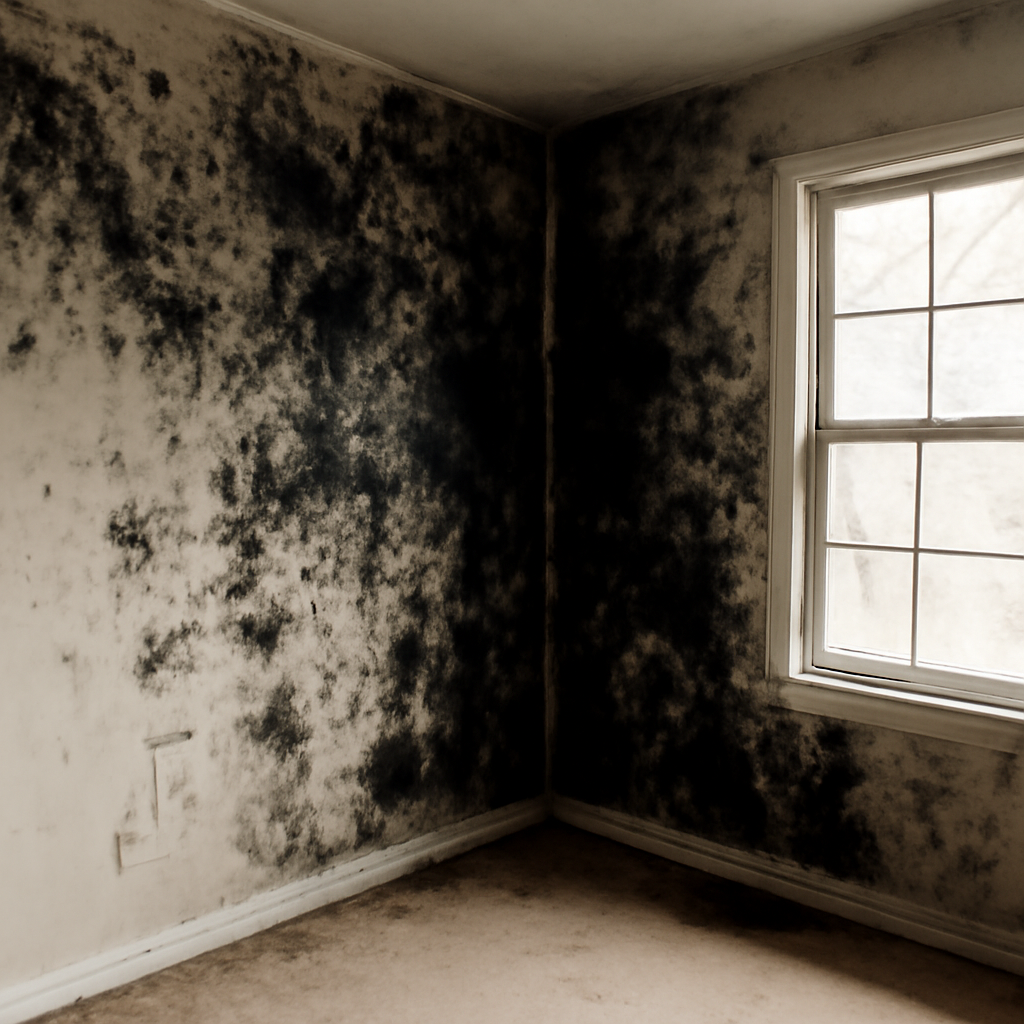
Walk into any hardware store and the warning posters all show the same dark, sinister-looking patch — usually titled “black mold.” Many homeowners take that to mean mold equals black, and anything else must be something else: mildew, dirt, paint discoloration. The reality is more colorful. Mold species span the full visible spectrum, and color alone is one of the least reliable identifiers homeowners can use. Texture, location, water source, and substrate matter more than the hue of the visible colony. This guide summarizes EPA and CDC guidance current as of 2026 — consult a certified mold inspector for testing decisions and your physician for symptom evaluation.
Part of our Types of Mold guide — start there for the full picture →
Is this mold, asbestos, or water damage? Get a free instant screen
Upload a clear photo of the suspect area. You'll get an instant AI screening opinion and what to do next. This is screening guidance, not a professional determination.
Screening guidance only. AI can be wrong. Confirm asbestos, mold type, or lead with lab testing or a licensed professional before acting.
Is All Mold Black? The Short Answer
No. Indoor and outdoor molds come in white, gray, green, blue-green, olive, yellow, orange, pink, red, brown, and black — sometimes within the same species at different ages or on different substrates. The “black mold” label gets overused because the most-feared species (Stachybotrys chartarum) is dark, and dramatic news coverage of toxic black mold cases has reinforced the association. But most household mold isn’t Stachybotrys, and a meaningful fraction of household mold isn’t even black.
A few species do change color as colonies mature. Aspergillus niger starts white, develops a yellowish phase, then turns black as spores form. Cladosporium often appears olive in young growth and darkens to charcoal as the colony establishes. Picking a color identifier from a young colony can give a different answer than picking one from the same colony two weeks later.
Mold Colors and the Species Behind Them
The common indoor molds homeowners encounter fall into recognizable color groups, with caveats about substrate, age, and lighting.
White Mold
Early Aspergillus and Penicillium colonies often start white before sporulating. Geotrichum appears as a chalky white coating on dairy products and damp surfaces. Some early-stage water-damaged drywall mold appears white before darkening. White mold isn’t automatically less dangerous — Aspergillus colonies can produce mycotoxins regardless of their visible color phase. The CDC notes that any actively growing indoor mold warrants removal regardless of color.
Green Mold
The largest visible category. Cladosporium (olive to dark green), Penicillium (blue-green to gray-green), Aspergillus versicolor (yellow-green to gray-green), and various Trichoderma species (bright green). Green is the default color of most household mold growth at some stage. Many green molds are allergenic but not classified as toxic mycotoxin producers at residential concentrations.
Pink and Reddish Pink Mold
Aureobasidium pullulans — a yeast-like fungus that appears as pink, dark pink, or brownish-pink growth on damp wood, painted surfaces, and shower caulk. It also turns black as colonies mature, which is one reason “black mold” descriptions sometimes mismatch the species actually present. Acremonium can present as pink-to-orange. Serratia marcescens isn’t technically a mold (it’s a bacterium) but is commonly mistaken for one and produces pink-orange staining in showers and toilets.
Orange and Red Mold
Acremonium produces orange to pink colonies and is known for mycotoxin production under certain growth conditions. Fusarium presents as red to pink and is more common in damp soil and houseplants than in wall cavities, but it can establish in chronically wet building materials. Red-orange colonies on damp construction lumber sometimes indicate Fusarium colonization.
Yellow Mold
Serpula lacrymans, the classic dry-rot fungus, can show yellow-to-orange spore-producing structures on wood that has been damp for an extended period. It’s wood-decay-capable and structurally destructive, not just cosmetic. Yellow tinges on lumber often appear in damp crawlspaces with poor ventilation.
Brown Mold
Stemphylium appears as brown to dark brown colonies on damp materials. Aspergillus niger in mature spore-production phases can look brown-to-black. Brown mold on wood often signals brown-rot fungal activity, which destroys wood structure rather than just discoloring it.
Black Mold
The category homeowners worry about most. Stachybotrys chartarum is the most notorious, but Aspergillus niger (mature), Cladosporium (mature), Alternaria, and various other species can all appear unambiguously black. Visual identification of black mold species without a lab sample is unreliable — even experienced inspectors collect tape lifts when species ID matters.
Why Color Is a Poor Identifier
Several factors make color alone misleading. First, the same species can present different colors at different growth stages — white when young, green during sporulation, gray-to-black when mature. Second, lighting conditions affect perception — yellow incandescent bulbs distort color, while LED lights and natural daylight show truer colors. Third, surface dust often makes colonies look darker than they actually are; a damp-cloth wipe of a corner reveals the true colony color. Fourth, mixed colonies are common — two or more species growing together produce a composite appearance that doesn’t match any single field guide photo.
The CDC and EPA both emphasize that visual identification has limited reliability and that the cleanup approach should focus on area, substrate, and water source rather than species ID for most residential events. Species testing is more useful in legal, insurance, or symptomatic-occupant contexts than in routine cleanup decisions.
What to Look at Besides Color
If color isn’t reliable, what is? Five other indicators carry more diagnostic weight when combined.
Texture
Powdery, fuzzy, slimy, velvety, or crusty. Slimy when wet often indicates Stachybotrys or a young colony on saturated substrate. Powdery usually indicates mature surface mildew releasing spores. Fuzzy/velvety is typical of established Penicillium or Aspergillus growth.
Substrate
Non-porous (tile, glass, sealed metal) supports surface mildew only. Semi-porous (sealed wood, vinyl wallpaper) can support deeper colonies if treated slowly. Porous (drywall paper, ceiling tile, carpet padding, unpainted wood) supports deep colonization that often cannot be cleaned in place.
Water Source
Intermittent wetting (daily shower, condensation, splash) supports surface mildew. Sustained saturation (slow plumbing leak, roof leak, basement seepage, flood event) supports established colonies and more concerning species like Stachybotrys.
Location
Bathrooms, kitchens, laundry rooms, basements, attics, crawlspaces, and HVAC components are the high-probability locations. Living-room walls without water sources are unlikely to develop mold problems absent a hidden leak or condensation issue.
Smell
A persistent musty smell indicates active microbial activity, often from species the homeowner can’t see. The CDC lists odor as a meaningful diagnostic clue independent of visible growth.
When Color Does Matter
Two scenarios make color a meaningful flag rather than just background information. First, a sudden appearance of slimy black growth on water-damaged cellulose material — drywall paper, ceiling tile, wet cardboard — matches the Stachybotrys profile well enough to warrant immediate caution. Second, the appearance of bright orange or red colonies on framing lumber in a crawlspace or basement may indicate wood-decay fungi (Serpula, Fusarium) or moisture-driven structural fungal growth that affects building integrity rather than just air quality.
Both scenarios still warrant species sampling for confirmation, but they raise the question of whether to escalate to a professional remediation evaluation rather than just cleaning the visible patch.
What the Color Distribution Looks Like in a Typical Home
In a routine residential mold inspection in a typical American home, the dominant indoor species are usually Cladosporium (green to black), Penicillium (blue-green to gray), Aspergillus (yellow-green to black depending on species and age), and Alternaria (dark green to black). Outdoor air samples in most U.S. regions show similar dominance — these species are essentially everywhere. Indoor amplification of any of them above outdoor levels suggests an indoor moisture source supporting their growth. Stachybotrys appears in indoor samples primarily in homes with sustained moisture problems — slow leaks, post-flood conditions, chronic basement seepage. It’s not a routine background species in indoor air.
Action by Color and Context
The action a homeowner should take depends less on color than on the combination of area, substrate, water source, and recurrence. For broader context on the inspection process, see the mold inspection and testing hub, and the related black mold versus mold article walks through species comparison in more depth.
For routine surface mildew of any color under about 10 square feet on non-porous substrates, homeowner cleanup with detergent or diluted bleach is appropriate. For larger areas, porous substrates, sustained moisture, or species suspected of mycotoxin production (Stachybotrys, Chaetomium, certain Aspergillus), professional remediation is the safer path. Color narrows the suspect list but doesn’t determine the cleanup approach.
When to Call a Professional
Three scenarios push beyond the DIY range regardless of color. First, any visible growth exceeding 10 square feet on porous materials. Second, suspected hidden growth (musty smell without visible colony, recurring patches after cleaning, occupant symptoms). Third, growth tied to a sustained or unknown water source where the underlying problem hasn’t been resolved.
The Inspector Workflow
A typical mold inspection visit starts with a visual walkthrough of the affected areas and adjacent rooms. Infrared imaging identifies cold (often wet) spots inside walls and ceilings. A pin or pinless moisture meter confirms saturation readings. If sampling is part of the scope, the inspector collects surface swabs at visible colonies, air samples in the rooms of concern with an outdoor control sample, and sometimes ERMI dust samples for broader genus screening. Lab turnaround is usually three to five business days. The final report should explain what each sample showed in comparison to the outdoor control and recommend a remediation scope only if the data supports it.
Quick Reference Table
For homeowners who want a fast color-to-species starting point: white is often early Aspergillus or Penicillium; green is usually Cladosporium or Penicillium; blue-green is Penicillium; pink is Aureobasidium or Serratia (bacterial); orange is Acremonium or Fusarium; red is Fusarium or Serpula; yellow is mature Serpula or early Aspergillus; brown is Stemphylium or mature Aspergillus niger; black is Stachybotrys, mature Cladosporium, Aspergillus niger, or Alternaria. None of these matches are definitive without lab confirmation, but they help frame a sensible next conversation with an inspector.
Pre-Inspection Documentation
Homeowners can speed the inspection by taking time-stamped photos of the visible growth, noting the date the patch first appeared, listing recent water events (leak, flood, ice dam, plumbing repair), and tracking occupant symptoms with the dates they appeared and worsened. This information turns the inspection from a guessing game into a structured investigation.
The Bottom Line on Color
Color is one data point in a larger picture. Black mold gets the headlines, but white, green, blue-green, pink, orange, red, yellow, and brown molds all exist, all warrant cleanup when they appear indoors, and all share the same underlying cause: too much moisture for too long. The species identification matters less than fixing the moisture source. Homeowners who focus on that step prevent most future mold problems regardless of which color shows up next.
Front Range climate adds one nuance worth noting. Colorado’s dry outdoor air is often assumed to make mold a non-issue, but indoor humidity in poorly vented bathrooms, kitchens, and basements can climb well above 60 percent even when outdoor humidity is in the teens. The species mix in Colorado homes is similar to the rest of the country — color distributions don’t change much by region — but the moisture-source pattern often tilts toward condensation problems on cold exterior walls and basement-floor seepage during spring runoff.
References
- Mold Cleanup in Your Home — U.S. Environmental Protection Agency
- About Mold, Moisture and Your Home — Centers for Disease Control and Prevention
- Mold Health Effects — National Institute of Environmental Health Sciences
- Brief Guide to Mold, Moisture and Your Home — U.S. Environmental Protection Agency
Frequently asked questions
Is white mold less dangerous than black mold?
Not necessarily. White can be an early growth phase of species that later turn green or black, including Aspergillus and Penicillium. The CDC recommends removing any actively growing indoor mold regardless of color, with cleanup scaled by area and substrate.
What does pink mold in the shower mean?
Pink shower staining is often Serratia marcescens (a bacterium) or Aureobasidium pullulans (a yeast-like fungus), not a high-risk mold species. Cleanup with bathroom cleaner usually resolves it. Persistent pink growth indicates a humidity or biofilm problem worth addressing.
Can mold change colors as it grows?
Yes. Many species shift color from white to green to black as they mature and produce spores. A young colony identified by color alone may look entirely different two weeks later. Texture, location, and substrate are usually more diagnostic than color at any single moment.
Should I be more worried about a specific color of mold?
Slimy black growth on water-damaged cellulose materials (drywall paper, ceiling tile, wet cardboard) warrants extra caution because it matches the Stachybotrys profile. Bright orange or red on framing lumber may indicate wood-decay fungi. Either combination is worth a professional evaluation rather than a homeowner cleanup.
Front Range homeowners trying to interpret an unusual-colored mold patch can reach out through our contact page for a referral to a vetted local inspector who can confirm what’s actually growing.