Difference Between Mildew and Black Mold Explained
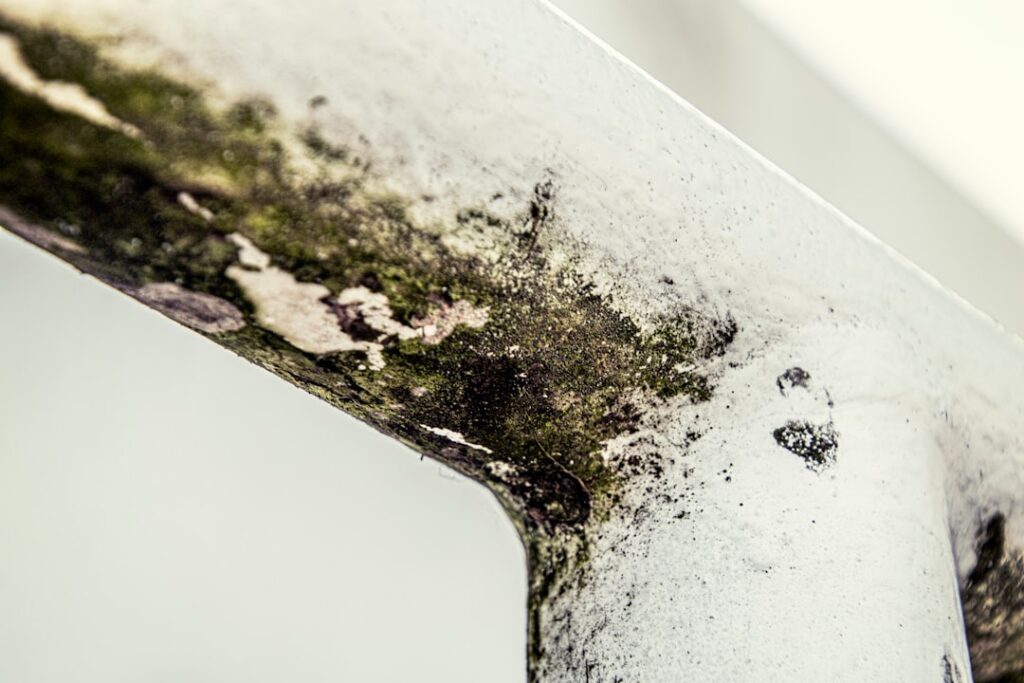
Homeowners use “mildew” and “black mold” almost interchangeably, but the two behave differently enough that telling them apart changes how you respond. Both are fungi, and both signal excess moisture, yet mildew typically stays on the surface while other molds, including the dark growth people fear, can penetrate the material beneath. Understanding the difference between mildew and black mold helps you judge whether a quick scrub will do or whether you are facing a deeper problem. This guide compares the two by appearance, behavior, health effects, and cleanup. This article summarizes EPA and CDC guidance current as of 2026 and is educational only; consult a physician for health symptoms and a certified professional for testing or large removals.
Part of our Black Mold & Your Health guide — start there for the full picture →
Is this mold, asbestos, or water damage? Get a free instant screen
Upload a clear photo of the suspect area. You'll get an instant AI screening opinion and what to do next. This is screening guidance, not a professional determination.
Screening guidance only. AI can be wrong. Confirm asbestos, mold type, or lead with lab testing or a licensed professional before acting.
The Core Difference Between Mildew and Black Mold
The simplest way to frame it: mildew is a specific kind of surface-dwelling fungal growth, while “mold” is a broad category that includes thousands of species, some of which appear black and can grow into porous materials. Mildew tends to sit flat on a surface, looks powdery or downy, and usually comes in white, gray, or pale yellow. Black mold, by contrast, often looks darker, raised, slimy, or fuzzy, and it can establish roots, called hyphae, that penetrate drywall, wood, and other porous surfaces.
Both the CDC and EPA group all of these under “mold” for practical purposes, because the health response and cleanup approach do not change based on the label or the color. Still, the surface-versus-embedded distinction has real consequences for how hard the growth is to remove.
Telling Them Apart by Appearance
Visual and textural clues are the most practical field test.
What Mildew Looks Like
Mildew commonly appears as a thin, flat film. On a bathroom wall it shows up along grout lines and on caulk as a gray or white powdery layer. It often wipes away relatively easily from the surface, though it returns if the moisture persists. Mildew on plants and fabrics can look similar, dusty and surface-bound.
What Black Mold Looks Like
Black mold tends to look darker, with a greenish-black or gray-black tone, and often appears raised, fuzzy, or slimy rather than flat. It frequently grows where materials have stayed wet for a while, soaked drywall, water-damaged wood, perpetually damp grout, and it can leave staining that persists even after the surface growth is removed, because the growth penetrated the material. Our comparison of black mold versus mildew in the shower walks through these visual cues in a common setting.
The Limits of Visual Identification
Color and texture are clues, not proof. Many harmless molds appear black, and only lab testing can confirm a species like Stachybotrys chartarum, the organism most people mean by “toxic black mold.” The CDC cautions that you cannot judge a mold’s hazard by its color, which is why the agencies recommend treating all indoor mold the same way regardless of appearance.
How Their Behavior Differs
The most useful practical difference is how deeply each grows. Mildew is largely a surface organism, so cleaning it off a non-porous surface usually removes it, at least until the moisture returns. Black mold and other penetrating molds extend into porous materials, so wiping the surface leaves living growth behind in the gypsum or wood fibers. This is why a black-mold problem on saturated drywall often requires removing and replacing the material rather than cleaning it, while mildew on tile responds to scrubbing.
This behavioral difference also shapes how the two recur. Mildew comes back quickly on a damp surface but disappears again with cleaning and drying. Embedded mold can push back through fresh paint, signaling that surface treatment alone failed. Our broader comparison of green mold versus black mold explores how appearance relates to severity.
Health Effects: Do They Differ?
For most people, the practical health response is the same. The CDC notes that mold exposure of any kind can cause nasal congestion, throat irritation, coughing, wheezing, and eye irritation, with stronger reactions among people who have asthma, allergies, or weakened immune systems. While Stachybotrys can produce mycotoxins under certain conditions, the CDC states there is no proven link between household molds and serious illness in otherwise healthy people, and that color is not a reliable guide to danger.
So mildew is not “safe” and black mold is not automatically “toxic.” Both warrant removal, especially for sensitive individuals, and both indicate a moisture problem that will worsen if ignored. The difference that matters for health is less about the organism and more about the amount of growth and the sensitivity of the people exposed.
Where Each Tends to Appear
Location patterns reinforce the surface-versus-embedded distinction. Mildew thrives on surfaces that get damp but not soaked: shower walls and ceilings, around tubs, on grout and caulk, on the cooler outer corners of rooms, on fabrics stored in humid closets, and on the leaves of houseplants. These are places where condensation and humidity provide enough moisture for surface growth but not the prolonged saturation deeper molds require.
Black and other penetrating molds favor materials that have stayed genuinely wet: drywall and wood behind a plumbing leak, subfloors and joists in a damp crawl space, the base of walls where foundation moisture wicks up, and any material affected by flooding. The presence of dark, penetrating mold on saturated material is therefore a clue to a more serious or longer-standing water problem than a film of mildew on a shower wall, which is the practical reason black mold warrants closer attention, not a special toxicity.
A Simple Decision Framework
When you find growth and want to decide how to respond, a few questions cut through the mildew-versus-mold labeling.
Is the surface porous or non-porous? On tile, glass, or sealed surfaces, cleaning removes growth of any kind. On bare drywall, wood, or carpet, embedded growth may require removal.
Does it wipe away and stay gone after drying? If yes, you are likely dealing with surface mildew and a humidity issue. If it returns or never fully lifts, growth has penetrated.
How large is the area? Under about 10 square feet is generally a homeowner-sized job; larger areas warrant a professional regardless of label.
What is feeding it? Condensation and humidity point toward mildew-type surface growth; a leak or flood points toward deeper mold and possible material replacement.
These questions matter far more than deciding whether to call the growth mildew or black mold.
Cleanup: Same Principles, Different Difficulty
The EPA’s cleanup guidance applies to both:
- Fix the moisture first. Neither mildew nor mold survives without water.
- Protect yourself. Wear an N95 respirator, gloves, and eye protection.
- Clean hard surfaces. Detergent and water remove surface mildew and surface mold; dry thoroughly.
- Discard saturated porous materials. Embedded black mold in soaked drywall or carpet usually cannot be cleaned.
- Mind the size threshold. Areas over roughly 10 square feet warrant a professional.
The difference in practice is effort: mildew on a hard surface is usually a wipe-and-dry job, while penetrating black mold may require demolition and replacement. For step-by-step technique, see our guide on cleaning mold on walls, and the mold inspection and testing hub for when an independent assessment helps.
Why the Distinction Still Matters in Practice
If the health response and cleanup principles are the same, why bother distinguishing mildew from black mold at all? The answer is that the distinction shapes your expectations about effort and outcome. Recognizing surface mildew tells you the job is likely a wipe-and-dry task plus a humidity fix, and that you can reasonably expect the surface to come clean. Recognizing penetrating mold on saturated material tells you to expect demolition, possible material replacement, and the involvement of a professional if the area is large, which prevents the frustration of repeatedly scrubbing a surface that will never stay clean.
The distinction also guides where you look for the cause. Surface mildew points toward humidity and condensation, prompting you to check ventilation, exhaust fans, and indoor humidity levels. Penetrating mold points toward a water intrusion event, prompting you to hunt for a leak, flood history, or foundation moisture. So while the label does not change the safety precautions, it usefully calibrates both your effort and your search for the moisture source. What it should never do is trigger panic over color alone, since the CDC is clear that color is not a reliable measure of hazard.
Preventing Both Mildew and Black Mold
Prevention is identical because the cause is identical: moisture. Keep indoor humidity below 50 percent, run bathroom and kitchen exhaust fans, fix leaks promptly, ventilate basements and crawl spaces, and address window condensation. Front Range homeowners benefit from Colorado’s dry climate, which suppresses humidity-driven mildew; indoor growth here usually traces to a discrete leak or seepage event, so fixing that single source typically prevents both surface mildew and deeper mold from establishing.
When to Call a Professional
Mildew on a hard surface is almost always a homeowner-sized job. Call a remediation professional when dark, penetrating mold covers more than about 10 square feet, appears inside the HVAC system, follows contaminated water, or keeps returning through cleaning and paint. Call a doctor if household members have persistent respiratory symptoms. The label, mildew or black mold, matters less than the size, depth, and the people affected.
Mildew on Surfaces You Might Not Expect
Mildew earns its reputation as a surface organism by showing up in places homeowners do not always associate with mold. It colonizes fabric and leather goods stored in humid closets and basements, leaving a musty smell and gray spotting that often wipes off. It appears on the rubber gasket and detergent drawer of front-loading washing machines, which trap moisture after each cycle. It grows on the cool exterior of toilet tanks and supply lines where condensation forms, and on grout and caulk throughout bathrooms. Outdoors it dusts patio cushions, umbrellas, and shaded siding.
In each of these cases the organism is staying on the surface, fed by humidity or condensation rather than a soaking leak, which is exactly why these spots usually clean up with detergent and drying. Recognizing mildew in these everyday locations, and treating the humidity that feeds it, prevents the slow spread that can eventually reach more vulnerable porous materials. When mildew keeps returning to the same spot, that persistence is the signal to look harder at ventilation and humidity rather than simply wiping again, since the moisture, not the cleaning, controls whether it comes back. The same logic that separates mildew from deeper mold, surface versus saturation, points to the fix in every one of these settings. A washing-machine gasket needs wiping and air-drying between cycles; a humid closet needs ventilation and lower humidity; condensation on a toilet tank may call for an insulating kit. In each case the mildew is a symptom of a moisture pattern, and changing that pattern, not just scrubbing, is what keeps the surface clear for good. Treating the symptom alone guarantees a return visit with the same cleaner, while treating the moisture ends the cycle.
References
- About Mold and Your Health — Centers for Disease Control and Prevention
- Mold Cleanup in Your Home — U.S. Environmental Protection Agency
- A Brief Guide to Mold, Moisture, and Your Home — U.S. Environmental Protection Agency
Frequently asked questions
What is the difference between mildew and black mold?
Mildew is a surface-dwelling fungal growth that looks flat and powdery, usually white or gray, while black mold often looks darker, raised, or slimy and can penetrate porous materials. Mildew typically wipes off, but embedded black mold may require removing the material it grew into.
Is black mold more dangerous than mildew?
Not necessarily by color. The CDC says color is not a reliable guide to danger and that both can cause similar symptoms in sensitive people. There is no proven link between household molds and serious illness in healthy individuals. Size of growth and occupant sensitivity matter more than the label.
Can I clean black mold the same way as mildew?
The principles are the same: fix moisture, protect yourself, and clean hard surfaces with detergent and water. The difference is difficulty. Surface mildew wipes off, but penetrating black mold in soaked drywall or wood often requires removing and replacing the material.
How do I prevent both mildew and black mold?
Control moisture. Keep indoor humidity below 50 percent, run exhaust fans, fix leaks quickly, ventilate basements and crawl spaces, and address condensation. Both organisms need water, so eliminating the moisture source prevents both surface mildew and deeper mold.
Front Range homeowners who want help connecting with a vetted local inspector to assess a mold or mildew problem can reach out through our contact page.