What Are the Symptoms of Radon? EPA Honest Answer

The honest answer to what are the symptoms of radon is that there are none. The EPA’s Citizen’s Guide to Radon, the U.S. Surgeon General’s advisories, and the American Lung Association all agree on this point: radon exposure produces no acute body symptoms at any concentration ever recorded in residential settings. Radon damages lung tissue silently over years and shows up clinically as lung cancer, typically five to twenty-five years after sustained exposure. This guide explains why the question itself misleads, what the actual health pattern looks like, and what to do instead of looking for symptoms. Information here summarizes EPA, Surgeon General, and American Lung Association guidance current as of 2026 and is informational only. Consult your physician for any respiratory or lung-cancer concerns.
Part of our Radon Levels guide — start there for the full picture →
What are the symptoms of radon: the direct answer
There are no body symptoms of radon. None. EPA’s Citizen’s Guide states explicitly that “radon is a colorless, odorless, tasteless and chemically inert radioactive gas” and that “you cannot see, smell or taste radon, but it still may be a problem in your home.” The Surgeon General’s advisory characterizes radon as the second-leading cause of lung cancer in the United States after smoking, responsible for an estimated 21,000 lung cancer deaths annually per EPA’s modeling.
The harm from radon is dose-cumulative damage to lung tissue from the alpha-particle radiation emitted by radon decay products (polonium-218, polonium-214). The damage accumulates silently. There is no headache, no nausea, no fatigue, no skin reaction, no metallic taste, no respiratory distress that signals current radon exposure. Anyone experiencing those symptoms should consult their physician because the cause is something other than radon. Households researching the broader radon testing landscape often arrive at this question because online searches conflate “symptoms” with “signs of presence in the home,” which are distinct concepts.
Why the question feels intuitive but misleads
Most environmental hazards in homes have acute or sub-acute body symptoms. Carbon monoxide produces headache, dizziness, nausea, and confusion at sub-lethal levels. Volatile organic compounds (paint fumes, cleaning chemicals) trigger respiratory irritation. Mold spores cause allergic and asthmatic responses. Lead exposure in children produces measurable cognitive and behavioral changes. So when homeowners search for radon symptoms, they are applying a reasonable mental model: an environmental hazard should produce a noticeable body response.
Radon is the outlier. The alpha radiation from radon decay does not produce sensory or systemic effects perceptible to the exposed person. The dose-response relationship operates on a cellular DNA-damage timescale that manifests as cancer years after the exposure. This is also why radon mitigation is preventive rather than reactive: you test, find the level, mitigate if elevated, and the action prevents future damage rather than reversing past damage.
What does happen with radon exposure
The mechanism by which radon causes harm is well-characterized:
- Radon-222 gas seeps from soil into homes through foundation cracks, slab penetrations, sump pits, and floor-wall joints.
- The gas mixes with indoor air. Concentration depends on soil radon flux, foundation tightness, ventilation, and weather.
- Radon-222 decays (half-life 3.8 days) into a series of short-lived decay products including polonium-218, lead-214, bismuth-214, and polonium-214.
- Decay products attach to airborne particulates and are inhaled into the lung.
- The particulates lodge in lung tissue. The alpha-emitting polonium isotopes irradiate adjacent lung cells.
- Alpha-particle radiation damages cellular DNA. Most damage is repaired or causes cell death. A small fraction of damaged cells survives with mutated DNA.
- Over years to decades, mutated cells can develop into lung cancer.
The relevant outcome is lung-cancer risk, not any near-term body sensation.
What lung cancer from radon looks like clinically
Lung cancer associated with radon exposure produces the same clinical presentation as lung cancer from other causes: persistent cough, blood in sputum, chest pain, recurrent respiratory infections, unexplained weight loss, fatigue. These symptoms typically appear in advanced disease and are not specific to radon-induced cases. Adenocarcinoma is the most common histological type in radon-exposed non-smokers, but radon also contributes to other lung-cancer types and synergizes strongly with cigarette smoking (smokers exposed to elevated radon have multiplicatively higher lung-cancer risk than either factor alone).
None of these clinical lung-cancer symptoms are caused by current radon exposure in the home. They are the late-stage outcomes of decades-prior cumulative exposure. Anyone experiencing those symptoms needs medical evaluation, not radon testing.
What actually indicates elevated radon in a home
Since there are no body symptoms, the only way to know if radon is elevated in a home is to test. Indicators that warrant testing:
- Location in an EPA Radon Zone 1 (high-risk geology). All Front Range Colorado counties sit in Zone 1.
- Home with a basement, slab-on-grade, or crawlspace foundation (any foundation in contact with soil).
- Home built on uranium-bearing geology (granite, shale, phosphate deposits, mining areas).
- Long-term occupancy in a previously untested home.
- Recent renovation that altered the foundation, sump system, or ventilation.
Short-term radon test kits ($15 to $30) work for a screening pass; continuous radon monitors ($150 to $300) provide hour-by-hour data over multiple days. The EPA action level is 4 pCi/L; EPA also recommends consideration of mitigation between 2 and 4 pCi/L. Front Range homes in Zone 1 commonly test above 4 pCi/L. For Colorado-specific testing context, the free radon test kit Colorado guide covers state and county programs.
What people often misattribute to radon
Several common household symptom patterns get misattributed to radon by homeowners trying to make sense of unexplained complaints. The actual causes are typically different indoor air quality issues that are worth identifying and addressing on their own merits:
Morning headaches in basement bedrooms
Often attributed to radon. More commonly caused by carbon monoxide from poorly vented combustion appliances, off-gassing from new carpet or paint, inadequate ventilation, or sleep-quality factors unrelated to indoor air. A carbon monoxide detector and a basement ventilation assessment usually identify the real cause.
Respiratory irritation and cough
Often attributed to radon. More commonly caused by mold, dust mites, pet dander, off-gassing volatile organic compounds, or seasonal allergens. Indoor air-quality testing for these specific irritants identifies the real cause.
Fatigue and “feeling worse at home”
Often attributed to radon. More commonly caused by sleep disorders, hydration, indoor humidity outside the 30-to-50-percent comfort range, carbon monoxide, mold, or unrelated medical conditions including thyroid, anemia, or sleep apnea.
Children’s recurrent respiratory infections
Sometimes attributed to radon. More commonly caused by mold exposure, dust mite allergens, secondhand smoke, daycare exposure, or other immune-related factors. Pediatric evaluation identifies the real cause.
Testing the home for radon is still worthwhile because radon may be elevated regardless of these symptoms. But the symptoms themselves direct attention to other testable causes that radon testing will not address.
Carbon monoxide versus radon: a common confusion
Searchers frequently conflate carbon monoxide and radon because both are colorless and odorless gases that can accumulate indoors. The differences are dramatic:
- Carbon monoxide: Acute toxicant. Produces headache, dizziness, nausea, confusion at sub-lethal levels. Lethal at high concentrations within hours. Sources are combustion appliances (furnaces, water heaters, fireplaces, attached garages with vehicles running). Detection via CO alarms is standard residential safety practice.
- Radon: Chronic carcinogen. No acute symptoms at any concentration. Damage is cumulative DNA harm in lung tissue over years to decades, manifesting as eventual lung cancer. Source is soil-gas seepage from underlying geology. Detection requires periodic testing because there are no sensory or symptomatic indicators.
A home should have both a carbon monoxide alarm (because acute CO exposure is dangerous and detectable) and periodic radon testing (because chronic radon exposure is harmful but not detectable through any other means). The two precautions address different hazards through different mechanisms.
What to do instead of looking for symptoms
Three actions matter:
Test
If your home has not been tested in the past two years, test now. A short-term kit gives a 48-to-96-hour reading. If results are above 4 pCi/L, retest with a longer-term kit (90+ days) or a continuous monitor for confirmation.
Mitigate if elevated
If confirmed above 4 pCi/L, install a radon mitigation system. The standard residential approach is active sub-slab depressurization (SSD): a fan-powered vent pipe pulls radon-laden soil gas from beneath the foundation and exhausts it above the roofline. Typical installed cost in 2026: $1,200 to $2,500.
Retest after mitigation
Confirm the system is working with a post-mitigation test within thirty days of installation. The system should bring readings well below 4 pCi/L (typically 0.5 to 2 pCi/L).
The historical evolution of radon health awareness
Awareness of radon as a household health hazard developed relatively recently compared to other carcinogens. Uranium miners had been known to suffer elevated lung-cancer rates since the late 1800s (the famous “Bergkrankheit” or “mountain sickness” of Erzgebirge miners in central Europe). The radon connection was established in the 1950s and 1960s through extensive miner cohort studies. But residential radon exposure was not recognized as a meaningful public-health issue until the Stanley Watras case in 1984 made clear that homes could harbor concentrations comparable to or exceeding underground mine workplaces.
EPA established the residential radon program in 1986, published the first Citizen’s Guide to Radon in 1986, and set the 4 pCi/L action level based on what was achievable with then-current mitigation technology rather than as a safety threshold. The Surgeon General issued a national radon health advisory in 2005 emphasizing radon’s status as the second-leading cause of lung cancer. Despite four decades of public-health communication, testing rates remain below 30 percent of U.S. homes, in large part because of the absence of symptoms that would drive homeowners to test.
What “no symptoms” means in practical terms
The absence of acute symptoms from radon exposure has several practical implications for households:
Testing must be proactive
Households cannot wait for symptoms to indicate testing is needed. The decision to test is based on plausible exposure (home age, geology, foundation type, occupancy patterns) rather than perceived health effects. EPA, CDC, and the American Lung Association all recommend testing every home regardless of symptom history.
Mitigation is preventive
Radon mitigation prevents future damage. It does not reverse damage already accumulated from past exposure. Households living in unmitigated high-radon homes for years carry whatever cumulative damage that exposure produced; mitigation now prevents further accumulation.
Disclosure during transactions matters
Buyers cannot rely on seller statements about whether occupants felt healthy in the home. The absence of perceived health effects does not indicate the absence of radon exposure. Most U.S. states now require radon disclosure during residential transactions, and many transactions include radon testing as a standard contingency.
Health-care providers consider exposure history
Lung-cancer screening discussions with primary-care providers may incorporate radon-exposure history as part of the broader risk assessment, particularly for adults with smoking history. Patients can volunteer their radon exposure history (years lived in untested or high-radon homes, smoking history) during age-appropriate screening discussions.
More Questions About Radon Symptoms
Can radon cause insomnia or dizziness?
No, radon is not known to cause insomnia, dizziness or other nervous system symptoms. Radon’s alpha radiation affects the cells lining the lungs and its documented health effect is lung cancer after years of exposure. Dizziness, especially with headache or nausea in a home with fuel-burning appliances, can signal carbon monoxide and needs immediate attention: leave the house and call for help if a CO alarm sounds. Ongoing sleep problems or dizziness should be checked by a doctor.
Does radon cause allergy-like symptoms?
Radon does not cause allergy-like symptoms such as sneezing, itchy eyes, congestion or a runny nose. Radon is an inert gas that the immune system does not react to. Those symptoms in a home are much more likely to come from dust mites, pet dander, pollen or mold, which often thrive in the same damp basements where radon is tested. A doctor or allergist can identify allergy triggers, while a radon test is the only way to measure radon.
How does radon compare with other home health risks?
EPA ranks radon as the second leading cause of lung cancer in the United States after smoking, and estimates it causes about 21,000 lung cancer deaths each year. That makes radon one of the most significant environmental health risks inside homes, alongside carbon monoxide and lead, though it acts much more slowly. Unlike many risks, radon is easy to measure with an inexpensive test and is usually fixable with a mitigation system. That combination of serious risk and simple solution is why testing every home is recommended.
How long should a radon test run?
A short-term radon test runs from 2 to 90 days, with most home kits and professional tests lasting 2 to 7 days, while a long-term test runs more than 90 days. Short-term tests give a fast answer, useful for real estate deals and first checks. Long-term tests show the home’s average across changing weather and seasons, which is closer to actual yearly exposure. If a short-term result is at or above 4 pCi/L, a follow-up test helps confirm before mitigation.
References
- EPA health risks of radon and Citizen’s Guide — U.S. Environmental Protection Agency
- CDC radon information and lung cancer risk — Centers for Disease Control and Prevention
- American Lung Association radon and lung cancer guidance — American Lung Association
- Colorado radon program and Zone 1 geology — Colorado Department of Public Health and Environment
Frequently asked questions
What are the body symptoms of radon exposure?
There are none. Per EPA, the Surgeon General, and the American Lung Association, radon exposure produces no acute body symptoms at any residential concentration. The harm appears years later as lung cancer through cumulative DNA damage from alpha radiation in lung tissue.
If radon has no symptoms, how do I know if it's a problem in my home?
Test. Short-term test kits run $15 to $30 and provide a 48-to-96-hour reading. The EPA action level is 4 pCi/L. Front Range Colorado homes sit in Radon Zone 1 (high-risk geology), so testing is recommended for any home in the region.
Could a headache or fatigue be from radon in my home?
No. Headache and fatigue are not symptoms of radon exposure. They are typically caused by other indoor air-quality factors (carbon monoxide, VOCs, humidity, ventilation) or unrelated health issues. Consult your physician if symptoms persist.
What happens if I have lived in a high-radon home for years?
Cumulative exposure increases lifetime lung-cancer risk, with smoking compounding the risk multiplicatively. The action is to test the home now, mitigate if elevated, and discuss lung-health screening with your physician based on your exposure history and smoking history.
Is radon a known carcinogen?
Yes, radon is classified as a known human carcinogen by major health agencies, including the International Agency for Research on Cancer. The evidence comes largely from studies of underground miners and from residential studies, which link long-term radon exposure to lung cancer.
Does radon cause memory problems or brain fog?
Radon is not known to cause memory problems, brain fog or difficulty concentrating. These symptoms have many possible causes, including sleep problems, stress, medications, carbon monoxide exposure and medical conditions, and should be discussed with a doctor. Radon's documented effect is lung cancer.
Can pets show symptoms of radon?
Pets do not show symptoms of radon exposure, just as people do not. Any effect would be long term and is not well studied in animals. Lethargy, coughing or breathing problems in a pet need a veterinarian. Testing the home protects everyone who lives there, including pets.
If you are a Front Range homeowner and want to talk to a vetted inspector about radon testing or mitigation, reach out through our contact page.
Test your home for radon
Radon is invisible and odorless, so a test is the only way to know your level. A short-term kit gives a first reading in days; a digital monitor tracks it over time.
| Product | Why | Buy |
|---|---|---|
 AirChek Charcoal Radon Test Kit | Lab fee usually included; EPA short-term protocol. | Amazon — $21.95 |
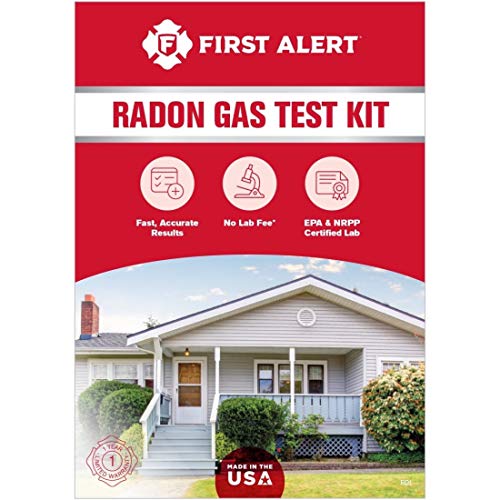 First Alert RD1 Radon Test Kit | Widely stocked; 48-hour charcoal test. | Amazon — $17.95 |
 Airthings Corentium Home | Digital monitor with a long-term average. | Amazon — $99.99 |