10 Warning Signs of Mold Toxicity in the Home
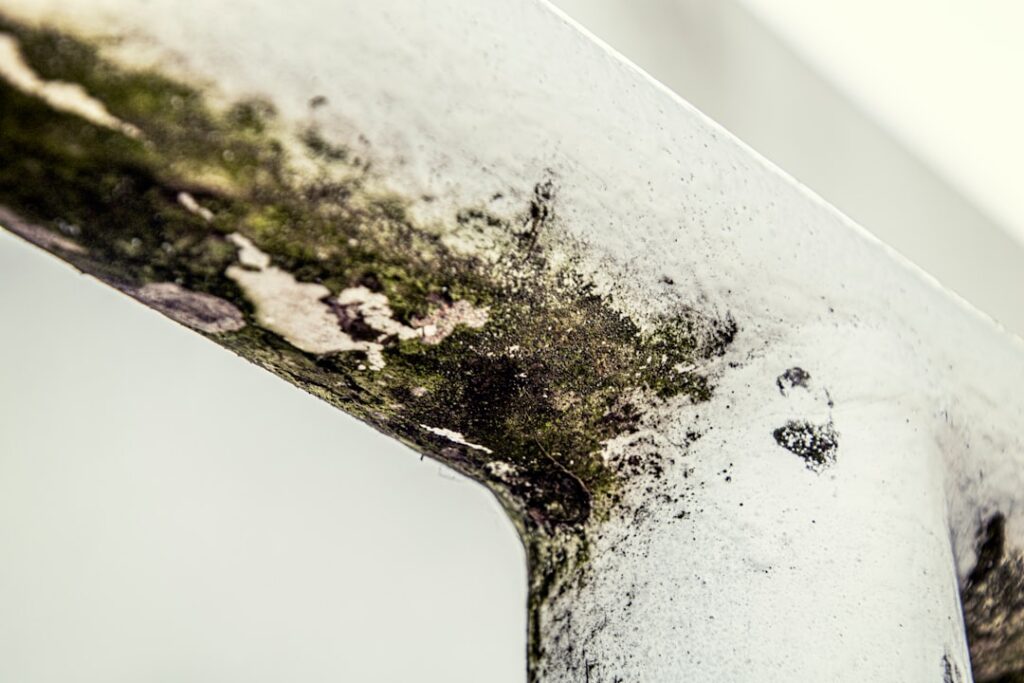
Searches for “what are the 10 warning signs of mold toxicity?” usually return body-symptom lists. That is the wrong frame for a homeowner’s first move. Symptoms in people are a medical question, and only a physician can connect a clinical picture to mold exposure. The home-side question — and the one this guide answers — is different: what are the warning signs that mold is present and active in the house itself, where it can be measured, photographed, and remediated? This article summarizes EPA, CDC, and NIEHS guidance on indoor mold and presents ten environmental indicators homeowners can check themselves. It is not medical advice. For health symptoms you suspect are related to mold exposure, consult a physician — diagnosis and treatment of mold-related illness require professional medical evaluation.
Is this mold, asbestos, or water damage? Get a free instant screen
Upload a clear photo of the suspect area. You'll get an instant AI screening opinion and what to do next. This is screening guidance, not a professional determination.
Screening guidance only. AI can be wrong. Confirm asbestos, mold type, or lead with lab testing or a licensed professional before acting.
Why the Home-Side Warning Signs Matter
If the house has a moisture problem, fixing the house is the only durable response. Medication or supplements do not stop spores from coming from a leaking pipe under the sink. Air purifiers do not fix the failed grading that lets the basement wall stay damp. The ten environmental signs below are the ones a buyer, owner, or inspector can verify with their own senses and a few inexpensive tools. They map directly to remediation decisions. Our pillar page on mold inspection and testing for homeowners explains how an inspector layers these observations into a written scope.
Sign 1: Persistent Musty Odor
A musty, earthy smell that comes and goes with humidity is the most reliable single indicator that microbial growth is active somewhere in the building envelope. The smell is produced by microbial volatile organic compounds (mVOCs) released as mold metabolizes its substrate. CDC notes that musty odors often accompany visible growth but can also signal hidden growth behind walls. A homeowner who can smell mold but cannot find it should treat that as a real signal, not a false alarm.
Sign 2: Visible Staining on Drywall, Trim, or Ceilings
Dark blotches on paper-faced drywall, around bath fans, behind toilets, along the perimeter of basement walls, and on the underside of attic sheathing are the most photographable warning signs. Color alone does not identify the species — “black mold” is a popular term that covers many genera — but visible staining at moisture-prone locations is a mold finding until proven otherwise. The identification guide for black mold signs on this site catalogs the most common visual presentations.
Sign 3: Indoor Humidity Above 60 Percent
EPA recommends keeping indoor relative humidity below 60 percent, and ideally between 30 and 50 percent, to discourage mold growth. A $15 hygrometer placed in the basement, the bathroom, and the bedroom for a week will tell a homeowner whether the house is operating in the danger zone. Sustained readings above 60 percent are an early-warning sign even when no growth is yet visible.
Sign 4: Condensation on Windows, Pipes, or Walls
Persistent condensation indicates a surface is colder than the dew point of the surrounding air. Single-pane windows in winter, cold-water pipes in summer, and exterior basement walls below grade are common locations. Where condensation collects, materials get wet, and where materials stay wet, mold grows. CDC guidance specifically calls out condensation as a moisture source to control.
Sign 5: Water Stains on Ceilings, Walls, or Under Sinks
A yellow-brown ring on a ceiling, a halo around a pipe penetration, or a darkened patch in the back of an under-sink cabinet is documentation of past wetting. The mold may already be growing on the back of the drywall or inside the cabinet box. EPA’s Brief Guide to Mold, Moisture, and Your Home identifies water staining as a primary indicator for investigation.
Sign 6: Bubbling, Peeling, or Cracking Paint
Paint film fails when the substrate behind it is wet or moving from cycles of wetting and drying. Bubbling above a bath shower, peeling at a window sill, or cracking along a basement wall are mechanical evidence that water has reached the wall surface. Where paint failure aligns with a known leak path or with chronic humidity, mold growth on the substrate side of the paint is likely.
Sign 7: Warped or Cupped Flooring
Hardwood that cups along the long edges, vinyl plank that lifts at the seams, or laminate that swells at the joints are signs that water has reached the subfloor. Mold beneath flooring is one of the most common hidden-growth scenarios because the subfloor stays damp under the finish layer long after the visible water has dried.
Sign 8: Recurring Allergy-Like Reactions That Track the Building
This sign sits at the boundary between home and health. Some occupants notice that they feel better when they leave the building and worse when they return. That pattern, when it correlates with rooms that have visible moisture problems, is information about the home — it suggests something in the indoor environment is provoking a response. For the medical evaluation of those symptoms, a physician is the right professional. For the building investigation, the inspector is. CDC and NIEHS both describe respiratory and irritation responses among some occupants of damp buildings.
Sign 9: High Spore Count on an Air or Bulk Sample
Environmental testing — air-cassette sampling, bulk surface tape lifts, or ERMI dust analysis — produces a quantitative record of what is actually growing. A homeowner who suspects hidden mold can have a qualified lab process samples collected by an inspector. Our walkthrough of the risk reality check on mold exposure covers how lab results feed into remediation decisions rather than medical ones.
Sign 10: Roof, Plumbing, or Grading Problems With No Indoor Fix
The tenth sign is structural. A roof that has shed shingles, a drain line that backs up periodically, a sump pump on a borrowed cycle, a downspout that discharges within two feet of the foundation — these are upstream conditions that will keep producing indoor moisture until they are corrected. Homeowners who have addressed visible mold without correcting the upstream water source typically see the growth return within months. The cause-of-black-mold guide ranks these upstream sources for Front Range homes.
How These Signs Translate Into Action
Any one of the ten signs justifies a closer look. Two or more, especially when they cluster in the same room, justify either a thorough self-inspection with a flashlight and a moisture meter or a paid inspection that includes thermal imaging and air sampling. EPA guidance allows homeowners to remediate areas smaller than about 10 square feet themselves, provided proper personal protective equipment is used and the moisture source is fixed. Larger areas, HVAC involvement, contamination from category-three water, and any situation with immunocompromised occupants are reasons to bring in a remediation contractor.
What This Article Does Not Cover
Body symptoms — fatigue, brain fog, joint pain, sinus issues, rashes, headaches, mood changes — are common in popular “mold toxicity” lists. Whether any specific symptom in a specific person is caused by mold exposure is a medical question. CDC notes that some occupants of damp or moldy buildings report respiratory and mucous-membrane symptoms but that establishing a direct causal link in any given case requires medical evaluation. For health concerns, consult a physician. This guide stays on the building.
When to Call a Mold Professional
Front Range homeowners who have ticked off three or more environmental signs above benefit from an inspection that combines a visual survey, thermal imaging on suspect walls, moisture-meter readings on substrates, and an air sample for spore quantification. The inspector’s report names the moisture source, scopes the affected materials, and gives the homeowner a defensible basis for the remediation contractor’s bid. That sequence — diagnose, document, remediate, verify — is the standard EPA-aligned approach.
Distinguishing Home-Side Warning Signs From Body Symptoms
To make the distinction practical, here is the consolidated checklist of the ten home-side warning signs above, restated as observable indicators a homeowner can verify without any clinical involvement. Each is a building observation, not a health claim, and each maps to a remediation step that can be scoped and priced.
- Persistent musty smell — earthy, basement-like odor that intensifies after rain or when the HVAC kicks on; correlates with microbial volatile organic compounds released as colonies metabolize substrate. Document the rooms and the time-of-day pattern before searching for the source.
- Visible staining — brown, black, gray, or olive-green blotches on paper-faced drywall, behind baseboards, on the underside of attic sheathing, or around bath fans. EPA’s Brief Guide treats any unexplained staining at moisture-prone locations as a mold finding until proven otherwise.
- History of leaks or water events — a roof claim within the last seven years, a burst supply line in the basement, a slow drip from a refrigerator line, a sewer backup, or a sump pump that failed during a storm. Past wetting events leave dormant or active colonies in cavities even when the visible water is long gone.
- Elevated relative humidity — sustained readings above 60 percent on a basement or bathroom hygrometer over a seven-day window. EPA’s mold course identifies 30 to 50 percent as the target range that suppresses growth.
- Condensation patterns — water beading on window glass in winter, sweating cold-water pipes in summer, or damp patches on exterior basement walls year-round. Each marks a surface operating below the dew point of the surrounding air.
- Peeling, blistering, or bubbling paint — paint film failure at the substrate level is mechanical evidence that water has reached the wall and that the gypsum or wood behind the paint has been wet enough, long enough, to support colony formation.
- Warped, cupped, or swollen wood — hardwood cupping along the long edge, baseboard pulling away from the wall, door casings that no longer sit flush, or subfloor swelling at toilet flanges. Wood movement is a moisture witness and a hidden-mold candidate.
- Recurring water marks — yellow-brown halos around ceiling penetrations, rings under sinks, or repeating stain patterns at the same ceiling joist bay after every heavy rain. A recurring mark means the source is active, not historical.
- Occupant respiratory complaints localized to specific rooms — eye irritation, throat scratchiness, or sneezing that occupants notice when they enter the basement but not the upstairs bedroom. This is environmental data about the building, not a medical diagnosis; physicians evaluate the symptoms, and the inspector evaluates the room.
- HVAC evidence — visible dust accumulation around supply registers, musty smell when the system first cycles on after a long off-period, or staining on the secondary drain pan and around the air handler. CDC guidance treats HVAC contamination as a separate remediation category because spores can be redistributed throughout the home from a single source inside the ductwork.
The value of separating these ten home-side signs from a body-symptom list is that each one is actionable on the building side without involving a clinician. A homeowner can photograph staining, take a humidity reading, lift a baseboard, and assemble enough evidence to either justify a paid inspection or scope a self-remediation under EPA’s 10-square-foot threshold. Body symptoms still belong with a physician, but the house itself can be diagnosed by the people who live in it.
References
- A Brief Guide to Mold, Moisture, and Your Home — U.S. Environmental Protection Agency
- About Mold — Centers for Disease Control and Prevention
- Mold Health Information — National Institute of Environmental Health Sciences
- Mold Course Chapter 2: Why and Where Mold Grows — U.S. Environmental Protection Agency
If your house is showing three or more of these warning signs, a Front Range inspector can document the moisture source and scope the affected materials — reach out through our contact page to start that conversation.