How Do You Treat Mold Toxicity: A Home-Side Guide
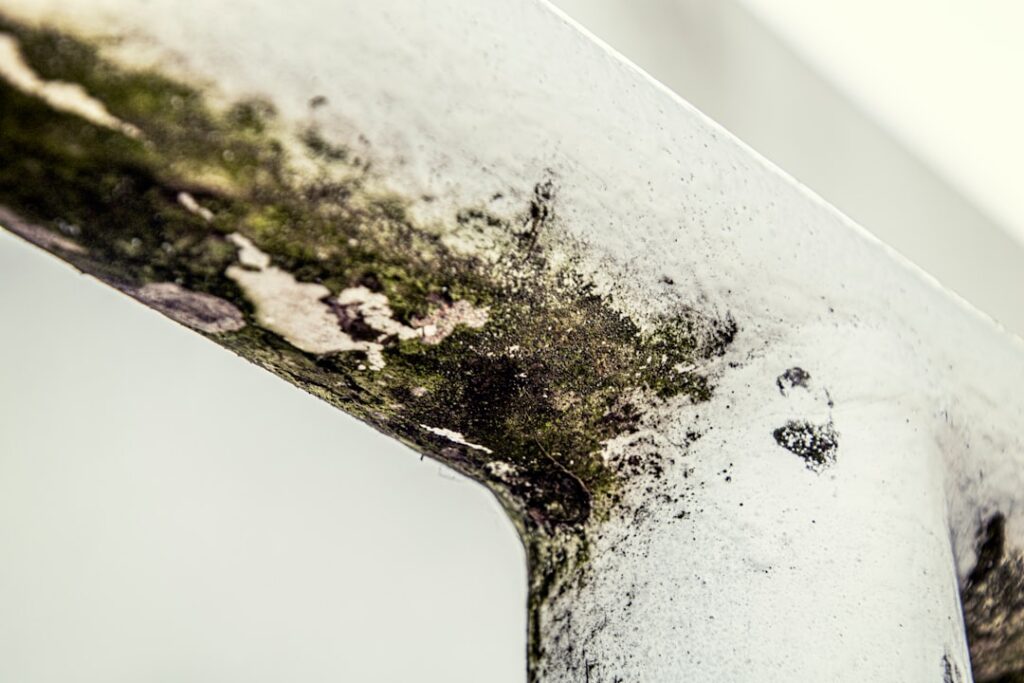
Homeowners asking how do you treat mold toxicity are usually mixing two questions. One is medical — how a physician treats symptoms a patient attributes to mold exposure. The other is about the home — how to remove ongoing exposure by remediating the colony. We cannot provide medical-treatment advice. This article summarizes EPA, CDC, NIEHS, and American Lung Association guidance and is intended as general information for homeowners. It is not medical advice. From a home-inspection standpoint, treating the source of exposure means identifying and remediating the mold colony — and that is what we cover in depth below.
Is this mold, asbestos, or water damage? Get a free instant screen
Upload a clear photo of the suspect area. You'll get an instant AI screening opinion and what to do next. This is screening guidance, not a professional determination.
Screening guidance only. AI can be wrong. Confirm asbestos, mold type, or lead with lab testing or a licensed professional before acting.
Why this is a two-part question
Indoor mold exposure has two dimensions for a household. Symptoms a person is experiencing — respiratory, allergic, or otherwise — fall under medical care. The mold itself, the water source feeding it, and the colony in your walls or basement fall under home assessment and remediation. Treating one without the other tends not to work. A medication regimen that suppresses symptoms while the patient continues to breathe spore-laden air does not address the underlying exposure. Remediating the home while serious symptoms go medically unmanaged is similarly incomplete.
The right approach runs both tracks in parallel. Talk to a physician about symptoms. Address the home conditions that produced the exposure. Neither track substitutes for the other.
The home-side answer: treating the source of exposure
Source control is the home-side equivalent of “treatment.” It has three components: identifying every active and former source of moisture, remediating the colony to the appropriate scope, and preventing recolonization. Each step has structure and standards behind it.
Step 1: Complete assessment
A walk-through with a flashlight is the starting point but not the end. A complete assessment includes systematic visual inspection of every interior surface in suspect rooms, moisture-content readings of porous materials with a calibrated meter, screening for hidden moisture with thermal imaging where indicated, and where appropriate, surface or air sampling. The point of the assessment is not to identify species — it is to map the extent of the problem so the remediation plan matches the reality.
Step 2: Source repair
The water that fed the colony has to be stopped. Plumbing leaks repaired. Roof penetrations sealed. Foundation drainage corrected. Bathroom and kitchen ventilation fixed so moist air exits the building rather than condensing on cold surfaces. Indoor relative humidity brought below sixty percent. The EPA position on this is unambiguous — without source control, remediation is decorative.
Step 3: Remediation under a recognized standard
The IICRC S520 standard is the industry reference for professional mold remediation. It covers containment, PPE, material handling, cleaning methods, and post-remediation verification. Reputable remediators follow it. The EPA’s threshold of roughly ten square feet separates homeowner-DIY territory from professional work. Above that, or for any HVAC contamination, or for porous-material involvement beyond a small patch, professional remediation is the appropriate scope.
Step 4: Post-remediation verification
A passing PRV — visual reassessment confirming complete removal, moisture readings within normal range, and where indicated, air sampling showing levels comparable to outdoor controls — is the home-side equivalent of “completion of treatment.” Skipping PRV after a serious remediation leaves the question of whether exposure has actually been resolved unanswered.
Step 5: Prevention
Long-term moisture management is what keeps the colony from returning. Sized dehumidification, ventilation, building envelope maintenance, and periodic re-inspection of previously affected areas. None of these are exciting steps. All of them are what makes a remediated home actually stay remediated.
Surface mold versus invasive infection
One important distinction. “Mold infection” sometimes refers to the visible colonization of surfaces and materials in a building. It sometimes refers to a medical condition — invasive fungal infection where fungal cells colonize tissue in a vulnerable patient. The home-side response addresses the first. The medical-side response addresses the second. They share vocabulary but have very different action paths.
Home remediation does not treat invasive medical infection. Medical treatment of invasive infection does not address the surface colony in the wall. Anyone evaluating either should match the response to the actual situation, and anyone with possible invasive infection — which primarily affects immunocompromised individuals — should be in active medical care.
Why DIY consumer products often disappoint
Consumer mold sprays, fogger devices, and ozone generators are widely sold but have important limitations. Sprays can decolorize visible surface mold without reaching porous-material penetration. Foggers can deposit antimicrobials without resolving the underlying water source. Ozone generators have been the subject of CDC and EPA cautionary guidance because of respiratory irritation concerns at the levels needed to affect mold, and they do not substitute for source repair and material removal.
The honest answer for homeowners is that the same things published guidance recommends — source repair, careful removal, proper PPE, and prevention — are also what actually works. Specialty consumer products at best supplement these steps; at worst they substitute for them and leave the underlying problem in place.
How the home-side and medical-side timelines interact
The two tracks rarely complete on the same schedule. Medical evaluation, diagnosis, and treatment can stretch across weeks or months depending on what is found. Home remediation under a typical scope runs days to weeks for execution, with monitoring continuing thereafter. The household decision-making improves when both tracks are visible to each other — the physician informed about home conditions, the remediation team informed about any occupant vulnerabilities that warrant additional containment care.
Communication between the two sides is the homeowner’s responsibility, since the providers do not coordinate directly. Sharing the inspection report with the treating physician helps. Sharing physician-recommended precautions with the remediation team helps. Documenting both sides in writing reduces miscommunication.
Common patterns in residential remediation projects
Residential remediation jobs follow recognizable patterns. Bathroom remediation tied to a single plumbing leak is among the most common — typically a one-to-three day project for a competent crew, scope bounded by the affected wall and any adjacent floor area. Basement remediation tied to seasonal seepage runs longer, sometimes a week or more, because the source-control work often includes drainage improvements outside the building. Whole-house remediation following major water damage — a burst supply line on an upper floor, for example — can be a multi-week project involving demolition, drying, professional cleaning, and reconstruction.
Each pattern has its own scope considerations, cost range, and timeline. The estimate a reputable remediator provides should reflect the specific pattern your situation matches. Beware of fixed-price flat-rate quotes that do not address scope variability — most serious remediation cannot be priced reliably without an on-site assessment.
What “treatment” looks like at scale
For a property with extensive moisture history and significant visible colonization, the realistic home-side treatment is a multi-week project. Demolition of affected drywall, removal of contaminated insulation, drying of structural framing under monitored conditions, replacement of porous materials, source-repair work, post-remediation verification, and long-term moisture management. A residential remediation of this scale is typically a five-figure investment when professionally executed. Properties with HVAC contamination may add duct cleaning to the scope.
Smaller patches in a single bathroom or basement corner can be a weekend project for a homeowner with appropriate PPE. The scope decision should be made after assessment, not before.
The medical side, briefly
We are not a medical site and cannot provide treatment advice. We can describe what published agencies and resources say about who should consult a physician and when. The CDC recommends physician consultation for any unexplained respiratory symptoms, any worsening of existing respiratory conditions, and any rash, eye irritation, or other symptom that correlates with time spent in a mold-affected space. Allergists, pulmonologists, and family physicians can each address different aspects of the question.
“Mold toxicity” is not a single diagnostic category in mainstream medical practice. Symptoms attributed to it in popular media may, on workup, reflect allergic sensitization, asthma, hypersensitivity pneumonitis, or other conditions — each with established medical management. A physician’s evaluation is what separates these possibilities. Internet-based diagnosis does not.
Where to start when the home side is the question
The home-side starting point for any household concerned about ongoing exposure is a professional mold inspection. The inspection produces a written assessment of conditions, identifies water sources, scopes the remediation, and documents starting conditions for any post-remediation verification later. Our overview of mold inspection services describes what is typically included, and the broader mold inspection pillar connects the topic to related resources.
For households dealing with active mold and trying to understand the homeowner action sequence, what to do if you have black mold walks through the decision flow.
What to ask any remediator about “treatment completion”
A remediator who promises treatment in a vague way without describing the steps above is not following any recognized standard. Specific questions to ask include: how will the water source be identified and documented, what is the containment plan, what materials will be removed versus cleaned, what PPE will the crew use, how will affected materials be bagged and disposed, what will the post-remediation verification look like, and will written documentation be provided to the homeowner. Reputable remediators answer all of these comfortably.
When to involve a physician
Anyone in the household with respiratory symptoms, persistent cough, worsening asthma, rash, eye irritation, sinus issues, or any other concern that may relate to mold exposure should consult a physician. The home-side work runs in parallel with the medical-side work — neither replaces the other.
If you suspect mold is affecting your health, contact your healthcare provider. For home assessment and remediation, work through the mold inspection hub to understand the process before signing with any contractor.
References
- Mold Cleanup in Your Home — U.S. Environmental Protection Agency
- About Mold and Health — Centers for Disease Control and Prevention
- Mold Topic Overview — National Institute of Environmental Health Sciences
- Mold and Dampness — American Lung Association
If you are a Front Range homeowner trying to scope the home-side work for a property with active mold issues, connect with our team here for a referral to a vetted local inspector.