10 Warning Signs of Mold Toxicity at Home
Many homeowners search for the warning signs of mold toxicity after noticing a musty home and unexplained discomfort. This article describes what people commonly report and what the EPA and CDC say about mold exposure in general. It is not medical advice and cannot diagnose any condition. This guide summarizes EPA, CDC, and NIH public-health guidance current as of 2026. If you have health symptoms you believe may be linked to your home, see a physician; for the building itself, consult a certified mold professional. The home-inspection angle here is simple: find the moisture, test where needed, and remove the source.
Part of our Black Mold & Your Health guide — start there for the full picture →
Is this mold, asbestos, or water damage? Get a free instant screen
Upload a clear photo of the suspect area. You'll get an instant AI screening opinion and what to do next. This is screening guidance, not a professional determination.
Screening guidance only. AI can be wrong. Confirm asbestos, mold type, or lead with lab testing or a licensed professional before acting.
A Note on the Term “Mold Toxicity”
“Mold toxicity” is a popular phrase rather than a precise clinical diagnosis. Health agencies focus on mold exposure and its documented effects, such as allergic and respiratory reactions in sensitive people. The CDC notes that scientific understanding of broader health claims is still limited and evolving. Reading this article as a homeowner’s checklist for investigating your building, not as a symptom diagnosis, keeps you on solid ground and pointed toward your doctor for anything medical.
Sign 1: A Persistent Musty Odor
A damp, earthy smell that lingers even when surfaces look clean often signals hidden mold behind walls, under flooring, or in HVAC ducts. Odor is one of the most reliable building-side indicators because mold growth releases distinctive compounds. If you smell it but cannot see it, the source is likely concealed. Our guide to finding the source of mold in a house walks through tracking it down.
Sign 2: Visible Growth or Discoloration
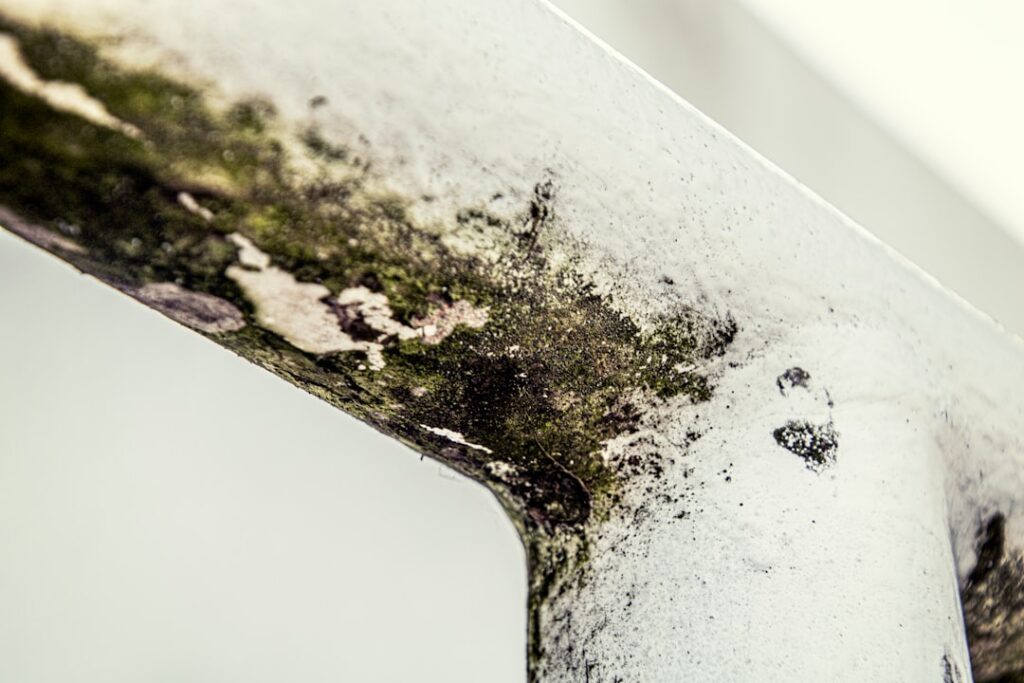
Black, green, or fuzzy patches on walls, ceilings, grout, or window frames are the clearest building sign. Even small spots warrant attention because they mark a moisture problem. Discoloration that returns after cleaning usually means the underlying water source remains active.
Sign 3: Respiratory Irritation Indoors
Some people report coughing, congestion, or throat irritation that eases when they leave the home. The CDC associates mold exposure with these allergic and respiratory responses in sensitive individuals. Because many conditions cause the same symptoms, only a physician can interpret what they mean for you; the home-side response is to investigate moisture.
Sign 4: Worsening Allergy or Asthma Patterns
People with existing allergies or asthma sometimes notice flare-ups tied to a particular room or season of dampness. The EPA recognizes that mold can trigger asthma episodes in those who are allergic. Track when and where reactions occur; that pattern helps an inspector locate the source. Discuss any health change with your doctor.
Sign 5: Eye and Skin Irritation
Itchy eyes or skin irritation that improves away from home is something some occupants describe. These are nonspecific reactions, so they are clues about your environment rather than a diagnosis. A medical professional evaluates the symptom; an inspector evaluates the moisture and growth.
Sign 6: Headaches or Fatigue Tied to the Home
Reports of headaches or tiredness that lift when away from the house are common in online accounts. Public-health agencies have not established mold as a definitive cause of these general symptoms, and many other factors can produce them. This is precisely the kind of symptom to bring to a physician rather than self-attribute to mold.
Sign 7: Condensation and Humidity Problems
Foggy windows, sweating pipes, and a clammy feel point to indoor humidity above the recommended range. The CDC advises keeping humidity below 60 percent because elevated moisture invites mold. High humidity is a building warning sign even before visible growth appears.
Sign 8: Water Stains and Past Leaks
Brown rings on ceilings, warped baseboards, or a history of basement flooding flag spots where mold may be developing out of sight. Front Range homes are prone to this after ice dams and clay-soil foundation seepage. Any past water intrusion is worth re-checking, because mold can establish within 24 to 48 hours of wetting.
Sign 9: Peeling Paint or Bubbling Walls
Paint that bubbles, cracks, or peels can indicate moisture trapped behind the surface, a frequent companion to hidden mold. When the wall itself is deforming, the problem is usually structural moisture rather than a cosmetic one. This is a strong cue to inspect behind the finish.
Sign 10: Symptoms That Improve Away From Home
The thread tying many reports together is improvement during travel or time away, followed by a return of discomfort at home. As a building clue, that pattern justifies testing and source removal. As a health matter, it justifies a conversation with your physician, who can rule in or out the many possible causes.
What to Do: Test the Building, Consult a Doctor
Separate the two tracks. For your health, see a physician for any symptoms, since this article cannot diagnose or treat anyone. For your home, control humidity below 60 percent, fix leaks, and arrange professional testing if you suspect hidden growth. Independent inspection identifies the moisture source so removal actually solves the problem. Our overview on how to tell if you have mold in your house outlines the next steps.
Why Self-Diagnosis Is Risky
The symptoms people attribute to mold, headaches, fatigue, congestion, brain fog, overlap with dozens of unrelated conditions, from seasonal allergies to thyroid problems to ordinary viral illness. Assuming mold is the cause can delay diagnosis of something else entirely. Public-health agencies have not established mold as a definitive cause of many general symptoms, and the science on broader claims remains limited. The responsible move is to bring symptoms to a physician who can test and rule things in or out, while treating the home as a separate, parallel investigation.
What the Research Actually Supports
The CDC and EPA consistently support a narrow, well-documented set of effects: mold exposure can trigger allergic reactions and respiratory symptoms in sensitive people, and can worsen asthma in those who are allergic. Beyond that, agencies describe the evidence as limited or still under study. This article reflects that boundary. It does not claim mold causes the long list of symptoms circulating online, because the science does not support those claims. Treat sourced agency guidance as more reliable than viral symptom checklists.
How Home Testing Fits In
Home testing addresses the building, not your body. When you smell mold but cannot find it, or when growth keeps returning, professional testing locates hidden sources and confirms whether indoor spore levels exceed outdoor baselines. The EPA notes that visible mold rarely needs sampling, since the response is the same regardless of species: remove it and fix the moisture. Testing earns its cost mainly for hidden growth, disputes, or sensitive households. Our overview on how to know if you have mold in your house explains when it is worth it.
Steps to Reduce Exposure at Home
While you pursue medical answers, you can lower potential exposure in the home. Keep humidity in the 30 to 50 percent range, run bathroom and kitchen exhaust fans, fix leaks promptly, and dry wet materials within 24 to 48 hours. Improve ventilation in damp areas like basements. These steps follow CDC guidance and reduce the conditions mold needs, regardless of whether your symptoms turn out to be mold-related. They are good practice for any home and harmless to your health.
Who Is Most Sensitive to Mold Exposure
Public-health agencies note that some groups react more strongly to mold exposure. People with asthma or existing allergies may experience flare-ups, and those with weakened immune systems can be more susceptible to certain effects. Infants, older adults, and people with chronic respiratory conditions are often mentioned as more sensitive. This does not mean mold causes a long list of illnesses in these groups; it means their reactions to ordinary exposure may be more pronounced. Anyone in a sensitive group with symptoms should consult a physician promptly.
Separating Online Claims From Agency Guidance
Much of what circulates online about mold toxicity goes well beyond what the CDC, EPA, and NIH actually state. Agencies focus on documented allergic and respiratory effects and describe broader claims as limited or under study. When evaluating advice, weight sourced guidance from these agencies over viral checklists and product marketing that promises to diagnose or cure mold illness. This article deliberately stays within the bounds of agency consensus, which is the safest ground for a home-inspection resource that is not a medical authority.
When to Call a Professional
Bring in a certified mold professional when you smell mold but cannot find it, when growth keeps returning, or when the affected area is large or inside HVAC systems. Pair building testing with medical care: the inspector handles the source, your doctor handles your health. This division keeps both decisions grounded in the right expertise. Never let a building inspection substitute for seeing a physician about symptoms.
How an Inspection Addresses the Building Side
A home inspection focused on mold does what no symptom checklist can: it locates moisture and growth. Inspectors measure humidity, check known problem areas, and use moisture meters and sometimes thermal imaging to find dampness behind finishes. When growth is hidden, this is how the source is identified so removal actually solves the problem. The inspection answers the building question, where is the moisture and the mold, while leaving the health question to your physician. Our overview on finding the source of mold in a house explains the process.
Documenting What You Observe at Home
If you suspect a mold problem, keep a simple log: where you see or smell growth, when symptoms occur and whether they ease away from home, and any history of leaks or flooding. This record helps both an inspector locate the source and a physician evaluate your situation, each within their own expertise. Photographs of visible growth and water stains add useful detail. Good documentation also supports insurance claims and resale disclosure, making it worthwhile regardless of how the health question resolves.
Keeping Perspective on Mold Risk
Mold is common, and most household exposure causes, at most, allergic or respiratory irritation in sensitive people rather than serious illness. Panic helps no one. The constructive response is measured: control moisture, remove visible growth, test when there is genuine uncertainty, and see a physician for symptoms. Treating every musty smell as a health crisis leads to wasted spending and anxiety, while ignoring real moisture problems lets damage accumulate. A calm, source-focused approach serves Front Range homeowners best.
Why Source Removal Matters More Than Symptom Chasing
The most constructive thing a homeowner can do about suspected mold is remove the source, not chase a symptom list. If mold is present, eliminating it and the moisture feeding it removes whatever exposure exists, regardless of which symptoms it may or may not be causing. This source-focused approach aligns with EPA guidance and sidesteps the unresolved debates about broader health claims. Pair it with a physician’s evaluation of your health, and you address both tracks responsibly. Our overview on how to get rid of mold covers the removal side.
References
- About Mold and Health — Centers for Disease Control and Prevention
- Mold and Health — U.S. Environmental Protection Agency
- Mold and Indoor Air Health Topic — National Institute of Environmental Health Sciences
- Mold Frequently Asked Questions — Centers for Disease Control and Prevention
Frequently asked questions
Is mold toxicity a real medical diagnosis?
'Mold toxicity' is a popular term rather than a precise clinical diagnosis. Health agencies describe documented effects of mold exposure, mainly allergic and respiratory reactions in sensitive people. Only a physician can evaluate your symptoms.
Can mold in my home make me sick?
The CDC and EPA associate mold exposure with allergic and respiratory reactions in some individuals. Because many conditions share these symptoms, see a doctor for any health concern and have your home assessed for moisture and growth.
What should I do if I notice these signs?
Treat health and building as separate tracks. Consult a physician for symptoms, and control humidity, fix leaks, and arrange professional testing for the home so the moisture source can be removed.
Does cleaning visible mold fix the problem?
Cleaning helps, but if the moisture source remains, mold returns within days. Identifying and correcting the leak or humidity issue is what makes removal last.
If you’re along the Front Range and want a vetted inspector to test your home for hidden mold, reach out through our contact page. For testing and inspection basics, visit our mold inspection hub, and see your physician for any health symptoms.