Track Lighting: Heads, Transformers and Older System Issues
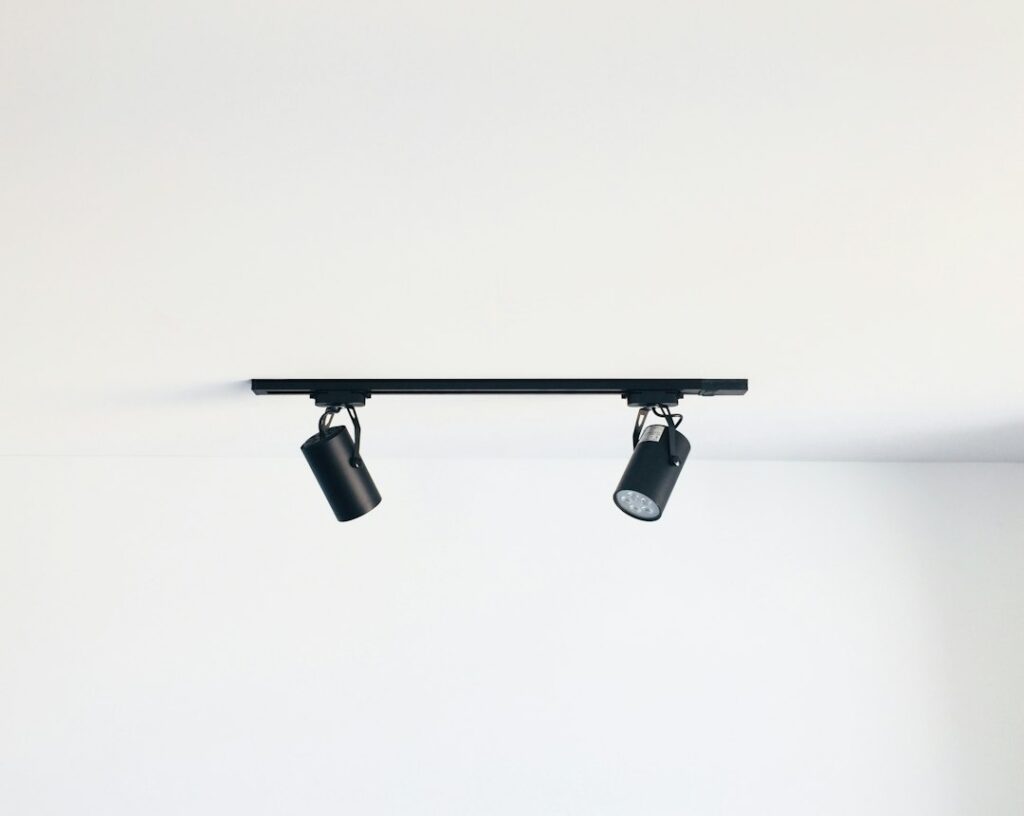
Track lighting had its heyday in the 1980s and 1990s, then came back in cleaner, slimmer LED forms for kitchens, galleries, lofts and sloped ceilings. Many Front Range homes now contain both generations: a newer LED track in a remodeled kitchen and an older halogen system still hanging in a hallway or basement rec room. Track lighting is flexible, since heads slide and aim wherever they are needed, but it also comes with quirks: two very different voltage systems, transformers that hum or fail, heads that only fit one brand’s track, and older halogen lamps that run hot. This guide explains how the systems work, what to watch for in older installations, how LED retrofits compare, what a home inspector notes and what homeowners can expect to pay in 2026. Wiring changes belong with a licensed electrician.
Part of our Home Electrical guide — start there for the full picture →
How Track Lighting Works
A track system has three main parts:
- The track, an extruded aluminum channel that carries conductors along its length and mounts to the ceiling or wall.
- The power feed, either a live-end connector at one end of the track or a floating canopy that feeds the track from a ceiling box anywhere along its length.
- The heads, the individual lights that clip or twist into the track and can be moved and aimed.
Additional connectors join track sections in straight runs, L-shapes, T-shapes or X-shapes. Some systems use flexible “monorail” rails that can be bent into curves and suspended on standoffs. Cable systems, a related style, string heads along two tensioned wires.
The appeal is adaptability. A single ceiling box can feed a long run of adjustable lights, which is why track lighting is common where adding multiple recessed fixtures would be difficult, such as concrete ceilings, sloped or vaulted ceilings, and rooms with limited attic access.
Line-Voltage vs. Low-Voltage Track Lighting
The most important distinction in any track system is the voltage carried by the track itself.
Line-voltage track
Line-voltage track carries standard household voltage (120 volts in U.S. homes) directly from the branch circuit. Heads either take standard household bulbs or contain their own LED drivers. Line-voltage systems are straightforward: no central transformer, fewer components to fail and broad availability of heads.
Low-voltage track
Low-voltage systems, commonly 12 or 24 volts, use a transformer to step household voltage down. The transformer may be built into the track’s power feed, mounted in a canopy at the ceiling or remote-mounted in a nearby closet or attic. Low-voltage heads are typically smaller, and in the halogen era they allowed the compact MR16 and similar lamps that gave crisp, focused light for art and retail displays.
The trade-offs are notable. Low-voltage conductors carry more current for the same wattage, so voltage drop along a long rail or cable can make heads at the far end dimmer. Transformers produce heat, may hum, and require dimmers compatible with their type (magnetic or electronic). And the transformer is one more component that can fail.
Telling them apart
A canopy or power box noticeably larger than a simple connector often signals a built-in transformer. Small bi-pin lamps (such as MR16) in each head are another clue. Labels inside the canopy, on the transformer or on the track usually state the voltage and maximum wattage.
Track Types and Head Compatibility
Track lighting is not standardized the way household bulbs are. In North America, three single-circuit track configurations are widely known by the names of the companies associated with them, commonly called H, J and L type. Each uses a different spacing and contact arrangement, and heads designed for one type generally do not fit the others.
Within each type, some manufacturers make compatible heads, and adapters exist for a few combinations. Compatibility is not guaranteed across brands, even when the track looks similar, so it is worth confirming with the manufacturer or a lighting supplier before buying replacement heads. A head that fits loosely or makes intermittent contact can flicker or arc.
Two-circuit and three-circuit tracks allow heads on the same track to be switched or dimmed separately. These need heads that can be set to the correct circuit.
Practical tips for owners of an existing system:
- Remove one head and check for a brand name, model or track type marking before shopping.
- Take the head to a lighting store or photograph the adapter end and the track profile.
- For discontinued systems, replacing the entire track and head set with a current product is often simpler than hunting for compatible parts.
Older Halogen Track Lighting and Heat
Many older track systems were built around halogen lamps, both line-voltage PAR and low-voltage MR16 types. Halogen produces bright, white light, but it does so by running a filament very hot. ENERGY STAR explains that incandescent bulbs release about 90 percent of their energy as heat, and halogen lamps are a type of incandescent.
That heat creates several concerns in older installations:
- Hot heads and lenses that can burn fingers during aiming or relamping.
- Discolored or brittle sockets and wiring inside the head after years of heat cycling.
- Proximity to combustibles, such as heads aimed at curtains, shelving, artwork or sloped ceilings close to the lamp.
- Overlamping, where a higher-wattage lamp was installed than the head or transformer was rated for.
The U.S. Fire Administration’s appliance and electrical fire safety guidance advises keeping anything that can burn away from lamps, light fixtures and light bulbs, and using bulbs that match the recommended wattage on the lamp or fixture. Those two rules cover most of the halogen-era track hazards. Halogen lamps with a missing or broken protective lens are another concern, because some lamp types were designed to operate only behind a lens.
Transformer problems
Older magnetic transformers can buzz, run hot and fail with age. Electronic transformers are quieter but can be finicky with dimmers and with low-wattage LED replacements. Signs of trouble include humming that grows louder, flickering across the whole run, heads that only work at certain dimmer settings, and scorch marks or a burning smell near the canopy. Any burning odor is a reason to switch off the circuit and call an electrician.
LED Retrofits and New LED Track Systems
There are two paths to LED: relamp the existing system or replace it.
Relamping with LED bulbs
Line-voltage heads that accept standard PAR or similar bulbs can often take LED equivalents directly. Low-voltage MR16 heads are more complicated. LED MR16 lamps draw far less power than halogen lamps, and some transformers, particularly electronic ones, need a minimum load to operate properly. Too little load can cause flicker or no light at all. Some LED lamp makers publish lists of compatible transformers, and replacing the transformer is sometimes part of the fix.
Replacing with an LED track system
Modern LED track heads often have integrated LEDs and drivers, with a choice of color temperature and beam spread. ENERGY STAR notes that LEDs are directional light sources and use heat sinks to manage the heat they produce, and that thermal management is the single most important factor in LED performance over its lifetime. Directional light suits track heads well, since the whole purpose is aiming light at a target.
Dimming remains a compatibility question. ENERGY STAR notes that not every LED light works well with every dimmer switch, and recommends checking the dimmer maker’s list of compatible products. Our guides to dimmer switches and dimmable LED bulbs go deeper.
A note on ENERGY STAR labels
Shoppers looking for an ENERGY STAR label on track heads may not find one. ENERGY STAR states that, because efficient LED bulbs have become the standard, the EPA ended the ENERGY STAR program for the most common light fixtures, and only high-performing recessed downlights may continue to earn the label. Products with older ENERGY STAR packaging may still appear on shelves during a sell-through period. The absence of a label on a new track head does not by itself indicate poor efficiency.
Where Track Lighting Works Best
Track lighting earns its place in specific situations:
- Art and collections, where heads can be re-aimed as pieces change.
- Kitchens with limited ceiling cavity depth or a single existing box.
- Vaulted and sloped ceilings, where recessed cans can be awkward.
- Basements with concrete or ductwork-filled ceilings, common in older Front Range ranch homes.
- Rentals and lofts, where minimal ceiling penetration is preferred.
Where a flatter, quieter ceiling is the goal, recessed lighting is the usual alternative. Over islands and tables, pendant lights or a chandelier provide a decorative focal point, with track heads used to wash walls or art.
Choosing Heads: Beam Spread, Color and Light Quality
Once the track type is settled, the heads determine how the system actually looks. Three specifications matter most.
Beam spread
Heads are sold with narrow spot, medium flood and wide flood beams. A narrow beam picks out a single painting or sculpture with a defined pool of light. A wide flood washes a wall, a countertop or a bookshelf more evenly. Mixing beam spreads on one track is common: a few spots for focal points and floods for general coverage. Some heads have adjustable zoom or interchangeable lenses.
Color temperature
ENERGY STAR’s light fixture buying guidance explains that lower Kelvin numbers appear warmer and more yellow, while higher numbers appear whiter or bluer. Warm white (around 2700 to 3000K) is typical in living spaces, while some owners prefer a slightly cooler white in kitchens or workshops. Keeping every head on a track at the same color temperature avoids a patchy look. Some newer heads offer selectable color temperature through a small switch on the head, which makes matching easier when one head is replaced years later and the original model is no longer sold.
Color rendering
Many track heads list a color rendering index (CRI). Higher-CRI heads tend to show artwork, wood finishes and food more naturally, which is why gallery-style heads often advertise high CRI. The trade-off is usually price.
Safe Aiming and Relamping
Most track lighting work happens overhead, often on sloped or tall ceilings. A few habits reduce the risk of burns, shocks and falls:
- Turn the circuit off before removing or inserting heads, even on systems marketed as tool-free.
- Let halogen heads cool fully before touching them; they can stay hot for some time after switching off.
- Avoid touching halogen lamp glass with bare fingers, which many lamp makers warn can shorten lamp life.
- Use a stable ladder on level flooring and keep both feet on the steps while aiming heads.
- Re-aim heads so the hot face does not point at nearby fabric, shelving or ceiling surfaces at close range.
Small details matter as well. A head that does not lock firmly into the track should be replaced rather than wedged in place.
Installation and Mounting Basics
Track lighting is often installed by replacing a single ceiling fixture with a floating canopy or live-end feed. The track is then screwed to the ceiling at intervals specified by the manufacturer, typically into framing or with appropriate anchors. The general process for disconnecting an old fixture and verifying the circuit is similar to our guide on how to install a light fixture, and the ceiling junction box must remain accessible behind the canopy.
Key points:
- Total head wattage must not exceed the track, feed or transformer rating.
- Track should not be installed where heads would sit within reach of a bathtub or shower unless the product is rated for that location; local electrical rules apply.
- Dead ends should be capped, and unused track sections should not be left exposed.
- Long runs may need additional feeds, especially on low-voltage systems where voltage drop is a concern.
What a Home Inspector Notes
The ASHI Standard of Practice directs inspectors to examine a representative number of installed lighting fixtures, switches and receptacles, and it lists low-voltage wiring systems and components among the items an inspector is not required to inspect. In practice, inspectors usually operate the switch, look for missing or inoperable heads and note visible concerns such as:
- Heads aimed close to combustible materials or showing heat discoloration.
- Missing end caps or loose track sections.
- Transformers that hum loudly, run very hot or show scorching.
- Flicker or non-operation suggesting dimmer or transformer incompatibility.
- Exposed wiring or an open box at the feed point.
Problems with older systems often lead to a recommendation for evaluation by a licensed electrician. Buyers can use the hiring process guide and the electrical hiring hub to line up qualified help.
Track Lighting Costs
General 2026 ranges Front Range homeowners may see:
- Track kits: basic LED kits with several heads are often modestly priced, while architectural systems with premium heads cost considerably more.
- Individual LED heads: range from budget to high-end, with color-tunable and high-CRI gallery heads at the top.
- Electrician installation on an existing box: commonly in the low hundreds of dollars for a straightforward run.
- New feed location, switch or dimmer: adds labor and possibly drywall repair.
- Transformer replacement on a low-voltage system: varies with transformer type and access, often a modest part cost plus a service call.
- Full replacement of an older halogen system with LED: parts plus a short electrician visit in many cases.
These are broad estimates rather than quotes. Ceiling height, access, permit requirements and local labor rates all affect the final cost.
Repair, Relamp or Replace?
For a working line-voltage system with available heads, relamping with LEDs is usually the cheapest improvement. For a low-voltage halogen system with a tired transformer, discontinued heads or heat damage, full replacement often makes more sense than piecemeal repairs. When in doubt, an electrician can test the transformer, check the circuit and recommend the more cost-effective path.
References
- Appliance and Electrical Fire Safety — U.S. Fire Administration
- Learn About LED Lighting — ENERGY STAR
- Light Fixtures (Downlights) — ENERGY STAR
- ASHI Standard of Practice for Home Inspection — American Society of Home Inspectors
Frequently asked questions
What is the difference between line-voltage and low-voltage track lighting?
Line-voltage track carries standard 120-volt household power to the heads. Low-voltage track uses a transformer to step power down, commonly to 12 volts, and typically uses smaller heads and lamps.
Are track lighting heads interchangeable between brands?
Not reliably. North American track commonly comes in H, J and L types with different contact layouts. Heads must match the track type, and cross-brand compatibility should be confirmed with the manufacturer.
Can I put LED bulbs in old halogen track lighting?
Often yes for line-voltage heads. Low-voltage MR16 systems may need a compatible transformer, because some transformers do not work properly with the lower load of LED lamps.
Is old halogen track lighting a fire hazard?
Halogen lamps run hot. Overlamping, missing lenses or heads aimed close to combustibles raise risk. The U.S. Fire Administration advises matching bulb wattage to the fixture and keeping burnables away from lights.
How much does track lighting installation cost?
Installing a track on an existing ceiling box commonly costs in the low hundreds of dollars in labor, plus the kit. New feeds, switches or transformer work add cost. These are general 2026 estimates.
Inheriting an aging halogen track system with a home purchase? Let us know and we will match you with a Front Range inspector who can evaluate the lighting and electrical system.