Dimmer Switch: LED Compatibility, Buzzing and Hot Plates
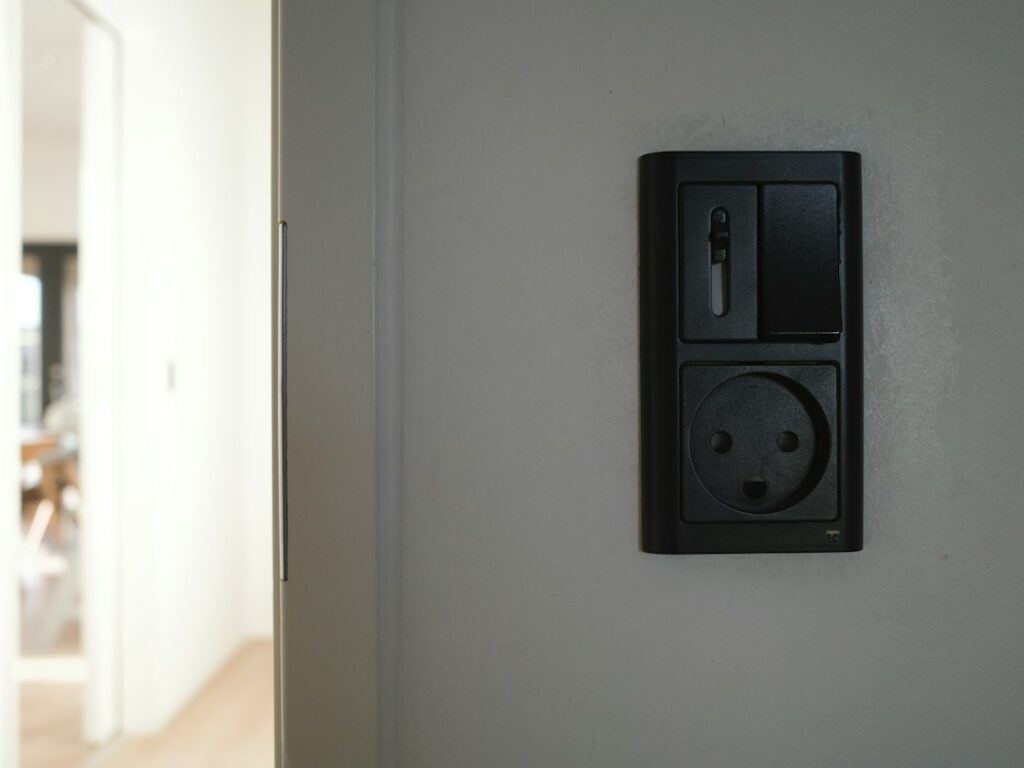
Dimmers are one of the most common upgrades in a home and one of the most common sources of small, nagging problems. LED bulbs that flicker at low settings, a faint buzz from the wall, a faceplate that feels warm, or a light that will not dim smoothly all trace back to how the dimmer, the bulbs and the wiring work together. A dimmer switch that was a good match for incandescent bulbs years ago may be a poor match for the LEDs installed since. This guide explains the main dimmer types, how to think about LED compatibility and minimum load, which symptoms are normal and which are warning signs, why fans and receptacles need different controls, and where dimmers fit with GFCI and AFCI protection. It is written for homeowners and buyers. Any wiring work should be handled by a licensed electrician with a permit where your jurisdiction requires one.
Part of our Home Electrical guide — start there for the full picture →
What a Dimmer Switch Does
A dimmer controls how much power reaches a light. Early rheostat dimmers did this by turning excess energy into heat, which was inefficient and hot. Modern electronic dimmers instead switch the power on and off many times per second, chopping part of each alternating-current wave so the bulb receives less average power. The two broad approaches are:
- Forward-phase, or leading-edge, dimming. The dimmer cuts the beginning of each half-wave. This is the traditional, often triac-based design, and it is what most inexpensive incandescent dimmers use. It is also commonly used with magnetic low-voltage transformers.
- Reverse-phase, or trailing-edge, dimming. The dimmer cuts the end of each half-wave. This approach is often quieter and is typically used with electronic low-voltage transformers and many LED drivers.
Which approach a light needs depends on its driver or transformer, and that is where most compatibility problems begin. Many dimmers are listed for one method, while some newer models can be set to either.
Types of Dimmers and What They Are For
Walk down the lighting aisle and the labels can be confusing. These are the main categories.
Incandescent and halogen dimmers
The oldest and simplest type, designed for resistive loads such as standard incandescent and line-voltage halogen bulbs. Many older homes still have them. They may work with some dimmable LED bulbs, but often only over a narrow range and sometimes with flicker or buzzing.
CL and LED-rated dimmers
Dimmers marked for CFL and LED loads, sometimes labeled “C·L” by one major manufacturer, are designed for the electronic drivers inside dimmable LED and CFL bulbs. Many include an adjustable low-end trim that sets the lowest dim level, which helps eliminate flicker or dropout at the bottom of the range. These are usually the default choice for replacing an old dimmer in a room that now uses LED bulbs.
ELV and MLV dimmers
Low-voltage lighting, such as some under-cabinet strips, older track systems and certain recessed fixtures, uses a transformer to step down the voltage. Electronic low-voltage (ELV) transformers usually call for a reverse-phase dimmer. Magnetic low-voltage (MLV) transformers usually call for a dimmer listed for magnetic loads. Using the wrong type can cause buzzing, flicker, overheating of the transformer or a shortened life for the dimmer. The fixture or transformer label should state what it needs.
0–10V and other control-wire systems
Some LED fixtures, more common in commercial work but increasingly found in modern homes, use a separate low-voltage control pair to dim the driver. These require a matching control and additional wiring. A standard wall dimmer will not dim them.
Smart dimmers
Smart dimmers add app, voice or schedule control. Many need a neutral conductor in the switch box to power their electronics, and many use a companion device for three-way locations rather than a traditional second switch. If your dimmer controls a light from two places, our guide to three-way switch wiring explains how travelers and common terminals work, which helps when an electrician discusses smart replacements.
Best Dimmer Switches: our top 3 picks
| Product | Best for | Key features | Price | Buy |
|---|---|---|---|---|
| Lutron Diva LED+ DVCL-153P | Paddle dimmer for most rooms |
| $25.59as of Nov 19, 2026 10:36 am GMT+0000 | Buy now →Check current price |
| Leviton Decora Slide DSL01 | Most adjustable settings |
| $18.54as of Nov 19, 2026 10:36 am GMT+0000 | Buy now →Check current price |
| Lutron Toggler LED+ AYCL-153P | Homes with toggle switches |
| $19.98as of Nov 19, 2026 10:36 am GMT+0000 | Buy now →Check current price |


Prices are Amazon’s listed prices as of the time shown and change often; check Amazon for today’s price. As an Amazon Associate we earn from qualifying purchases.
LED Compatibility and Minimum Load
ENERGY STAR notes that LED lighting products produce light up to 90% more efficiently than incandescent bulbs, and that incandescent bulbs release about 90% of their energy as heat. That efficiency is why most homes have switched, but it has a side effect for dimmers. An old dimmer designed around several hundred watts of incandescent load may now see only a few dozen watts of LED load, and some dimmers do not behave well with such a small load.
Points worth knowing:
- Only dimmable LEDs should go on a dimmer. Non-dimmable LED bulbs on a dimmer can flicker, buzz, fail early or overheat. The packaging should say “dimmable.”
- Minimum load. Many dimmers have a minimum load below which they may flicker, fail to turn fully off, or produce a faint glow. With very efficient LEDs, a single bulb on a dimmer can fall below that minimum.
- LED ratings are lower than incandescent ratings. A dimmer might be rated for a large incandescent wattage but a much smaller LED wattage, because LED drivers draw current differently. Read both numbers.
- Compatibility lists. Dimmer and bulb manufacturers often publish lists of tested combinations. When flicker or dropout persists, checking one of these lists is often faster than trying bulb after bulb.
- Mixed bulbs. Putting different LED brands or models on one dimmer can make them dim unevenly or flicker at different points.
ENERGY STAR also notes that heat is generally the most important factor in how long an LED lasts, and that higher operating temperatures shorten useful life. Enclosed or insulated fixtures that trap heat can reduce LED life whether or not a dimmer is involved, so check whether bulbs are rated for enclosed fixtures.
Buzzing, Flicker and Other Symptoms
Dimmers and dimmed lights produce a range of symptoms, some harmless and some not.
Buzzing from the dimmer or the bulb
A faint hum from a dimmer, especially at mid-range settings, can be normal for forward-phase designs, because rapid switching makes internal components vibrate. Buzzing from the bulbs or fixture usually points to a mismatch between dimmer type and driver or transformer. Loud buzzing, crackling, or buzzing that is new, especially combined with heat or a smell, is not normal and should be checked.
Flicker at low settings
Flicker near the bottom of the range is the classic LED compatibility problem. A dimmer with an adjustable low-end trim often solves it. Flicker that happens at any setting, comes and goes, or affects lights on other circuits is a different issue. Our guide to lights flickering in the house covers causes from bulbs and switches to loose connections and service problems.
Lights that glow when off or do not turn on at low levels
Some electronic dimmers, particularly smart and no-neutral designs, pass a small current through the load when “off,” which can make a sensitive LED glow faintly. Lights that will not start until the dimmer is turned up, a symptom sometimes called pop-on, are another driver compatibility issue.
Lights that do not dim at all, or only partly
Non-dimmable bulbs, mismatched low-voltage transformers, or a dimmer at the wrong location in a multi-switch arrangement can all prevent proper dimming.
Warm Faceplates: Normal vs Too Hot
Because dimmers regulate power electronically, they produce some heat. Many dimmers have metal fins on the front of the device, hidden behind the faceplate, that act as a heat sink. CPSC’s Home Electrical Safety Checklist advises that outlets and switches should be cool to the touch, noting that unusually warm devices may indicate an unsafe wiring condition such as a loose connection, and adds that some dimmer switches may warm during normal use.
A practical way to think about it:
- Usually normal: a faceplate that feels mildly warm, similar to a phone that has been in use, when the dimmer is controlling a load near its rating.
- Warning signs: a faceplate too hot to keep a hand on, discoloration or melting of the plate or device, a burning or hot-plastic smell, crackling, or heat at a dimmer controlling only a few LED bulbs, where little heat should be produced.
If you notice the warning signs, turn the circuit off at the breaker and have an electrician check the dimmer’s rating, the load, and every connection in the box. A loose connection can heat up even if the dimmer is correctly sized.
Derating when dimmers are ganged
When two or more dimmers share a multi-gang box, their heat sinks are close together. To fit them under one faceplate, installers often break off the side fins. Many manufacturers require the dimmer’s maximum rating to be reduced, or derated, when fins are removed or devices are ganged. The derating table is usually printed in the instructions. A dimmer that was sized for a single-gang box but installed with its fins snapped off beside two others may run hotter than intended. This is one of the less obvious reasons a ganged dimmer feels warmer than a standalone one.
Never Dim Receptacles or Fans With a Light Dimmer
Light dimmers are designed for lighting loads. They are not meant to control:
- Receptacles. A dimmer feeding an outlet could reduce power to whatever gets plugged in, such as a vacuum, a space heater or electronics, possibly damaging the appliance or overheating the dimmer. Switched receptacles for lamps should use an ordinary switch.
- Ceiling fans. Fan motors need a fan-speed control designed for motors. A light dimmer on a fan motor can cause humming, overheating and premature motor failure. Fans with light kits typically use either a dual control, separate wall controls, or a remote receiver in the canopy. Our ceiling fan installation guide covers wiring for separate fan and light control.
- Exhaust fans, transformers and other motor or appliance loads unless the product is specifically listed for that use.
Some smart dimmers and fan controls are marketed together, so check that the device on a fan is a fan control and not a light dimmer.
GFCI and AFCI Interplay
Dimmers sit on circuits that may also be protected by ground-fault circuit interrupters (GFCI) or arc-fault circuit interrupters (AFCI). The ASHI Standard of Practice includes GFCIs and AFCIs among the electrical items a home inspector is to inspect, along with a representative number of switches and fixtures.
Interactions to be aware of, all of which vary by product and installation:
- Nuisance AFCI trips. Some older AFCI breakers and some electronic loads have been reported to interact poorly, and certain dimmers or LED drivers can contribute to unexplained trips. Newer devices are generally better at telling normal electronic switching from dangerous arcing. If a breaker trips when a dimmed light is turned on or adjusted, see breaker keeps tripping and have an electrician evaluate it rather than replacing the AFCI with a standard breaker.
- GFCI-protected lighting. Bathroom and outdoor lighting may be downstream of a GFCI. If a dimmed bathroom light suddenly goes dead, a tripped GFCI receptacle elsewhere in the bathroom or another room may be the cause. Our guide to a GFCI outlet not working explains how to find and reset it.
- Wet locations. Dimmers and controls near tubs and showers are subject to location rules. Local code and the product listing decide what is allowed.
Energy, Comfort and Fire Safety
Dimming saves some energy, since a dimmed light draws less power, but with LEDs the savings per fixture are small compared with the earlier jump from incandescent to LED. Comfort, mood and the ability to use one fixture for several tasks are usually the bigger reasons to dim. ENERGY STAR certified light fixtures and bulbs are one starting point if you are replacing fixtures at the same time.
On the safety side, the U.S. Fire Administration reports an estimated 24,200 residential building electrical fires in the United States in 2021, causing an estimated 295 deaths, 900 injuries and over $1.2 billion in property loss. It also advises using bulbs that match the recommended wattage on a lamp or fixture. Mismatched bulbs, overloaded dimmers and loose connections all create heat where it does not belong.
Replacing a Dimmer: Who Should Do It
Swapping an old dimmer for a modern LED-rated one looks simple, but it involves working inside a box that may contain more than one circuit, older wiring, or a three-way arrangement. The basics for any homeowner are to turn the circuit off at the breaker, verify it is dead with a tested non-contact voltage tester or meter, and stop if anything looks unusual: aluminum conductors, brittle insulation, scorch marks or loose splices. Beyond that, a licensed electrician should handle the work.
Colorado requires electrical permits for much residential electrical work, and many Front Range municipalities run their own permit and inspection programs. Whether a like-for-like device replacement needs a permit varies, so check with your local building department.
Choosing a replacement dimmer
Before buying, gather a few facts so the electrician, or the store, can match the device to the load:
- The type and number of bulbs or fixtures on the circuit, and whether each is labeled dimmable.
- Whether any fixture uses a low-voltage transformer, and if so, whether it is electronic or magnetic.
- Whether the light is controlled from one location or several.
- Whether the dimmer will share a multi-gang box with other dimmers, which affects derating.
- Whether you want smart features, and whether the box has a confirmed neutral.
With that list, it is usually straightforward to pick a dimmer whose LED rating, minimum load and dimming method fit the fixtures.
Typical costs
Prices vary by region, access and wiring condition. As a rough 2026 guide, a basic LED-rated dimmer is an inexpensive device, and an electrician’s service call to replace one or two typically falls in the low hundreds of dollars. Smart dimmers cost more for hardware, and adding a neutral or a new switch location raises labor considerably. Ask whether the quote includes checking compatibility with your existing bulbs.
What inspectors look for
During a general home inspection, an inspector operates a representative number of switches and dimmers using normal controls, notes lights that do not respond, flicker or buzz, and may note warm devices or damaged plates. Inspectors do not usually remove devices or determine bulb compatibility, so findings typically recommend evaluation by an electrician. Our electrical inspections section explains what that part of the inspection covers, and the guide to hiring a home inspector covers choosing an inspector.
More Questions About Dimmer Switches
Do dimmer switches need a neutral wire?
Many standard dimmer switches do not need a neutral wire, but most smart dimmers and some LED dimmers do. Older homes often lack a neutral in the switch box, which limits the choice of dimmer.
Check the dimmer’s instructions before buying. If the box has no neutral, look for models specifically designed for no-neutral installation, which may have minimum-load requirements. Adding a neutral usually requires running new wire, which is a job for a licensed electrician.
Can a dimmer switch be installed on a three-way circuit?
Yes, a dimmer switch can be installed on a three-way circuit, but it must be a dimmer rated for three-way use. A standard single-pole dimmer will not work correctly when the light is controlled from two locations.
Some three-way dimmers allow dimming from only one location, while others use a companion switch that allows dimming from both. Wiring three-way circuits is more complex than single-pole circuits, so many homeowners hire an electrician to avoid miswiring.
How long do dimmer switches last?
Dimmer switches typically last many years, often a decade or more, but heat, overloading and frequent cycling can shorten their life. Dimmers controlling loads near their rated maximum tend to fail sooner.
Signs of failure include lights that will not turn on, flicker, buzzing, inability to dim or a faceplate that becomes unusually hot. A dimmer that shows scorching, a burning smell or melted plastic should be turned off at the breaker and replaced by a qualified person.
Can a dimmer switch control an LED fixture with a built-in driver?
A dimmer switch can control an LED fixture with a built-in driver only if the fixture is labeled dimmable and the dimmer is compatible with that driver. Some integrated fixtures require specific dimmer types, such as trailing-edge or low-voltage dimmers.
Check the fixture instructions or compatibility list before choosing a dimmer. Incompatible combinations can cause flicker, buzzing, limited dimming range or reduced fixture life. Commercial-style fixtures may use separate control wires instead of a standard wall dimmer.
References
- Home Electrical Safety Checklist (Pub. 513) — U.S. Consumer Product Safety Commission
- Learn About LED Lighting — ENERGY STAR
- Appliance and Electrical Fire Safety — U.S. Fire Administration
- ASHI Standard of Practice for Home Inspections — American Society of Home Inspectors
Frequently asked questions
Is it normal for a dimmer switch to feel warm?
A mildly warm faceplate can be normal, because dimmers regulate power electronically and shed some heat. CPSC notes some dimmers may warm during normal use. A plate too hot to touch, discoloration, a burning smell or crackling are warning signs that call for turning off the breaker and calling an electrician.
Why do my LED lights flicker on a dimmer?
Common causes are non-dimmable bulbs, an older incandescent dimmer, a load below the dimmer's minimum, or a dimmer type that does not match the LED driver. An LED-rated dimmer with a low-end trim adjustment often helps.
Can I use a dimmer switch on a ceiling fan?
Not a light dimmer. Fan motors need a fan-speed control designed for motors. A light dimmer on a fan can cause humming, overheating and motor damage. Fans with lights typically use separate or dual controls.
Why does my dimmer buzz?
A faint hum can be normal for some dimmers, but buzzing from bulbs or fixtures usually means the dimmer and the LED driver or transformer are mismatched. Loud, new or crackling buzz, especially with heat, should be checked by an electrician.
Do I need a special dimmer for LED bulbs?
Usually yes. Dimmers rated for LED or CFL loads handle the small, electronic loads of dimmable LEDs better than old incandescent dimmers. Check the dimmer's LED wattage rating and the bulb maker's compatibility list.
Can a dimmer switch be used on outdoor lights?
A dimmer switch can be used on outdoor lights if the fixtures and bulbs are dimmable and the dimmer is installed in an indoor or weather-protected box. Low-voltage landscape lighting usually requires a transformer that supports dimming.
Can a dimmer switch be used with fluorescent lights?
Standard dimmer switches should not be used with ordinary fluorescent fixtures. Fluorescent lights require special dimmable ballasts and matching dimmers. Using the wrong combination can damage the ballast or create a hazard. Replacing fixtures with dimmable LEDs is often simpler.
Can a dimmer switch cause radio interference?
Yes, some dimmer switches can cause buzzing or interference on AM radios and audio equipment because of the way they chop the electrical waveform. Higher-quality dimmers with filtering, or keeping audio equipment on separate circuits, can reduce interference.
Buying a home with a wall of buzzing dimmers or warm faceplates? Get in touch and we can help you find a Front Range inspector who checks lighting controls and points out what needs an electrician.