Thermal Imaging Inspection in Arapahoe County, CO
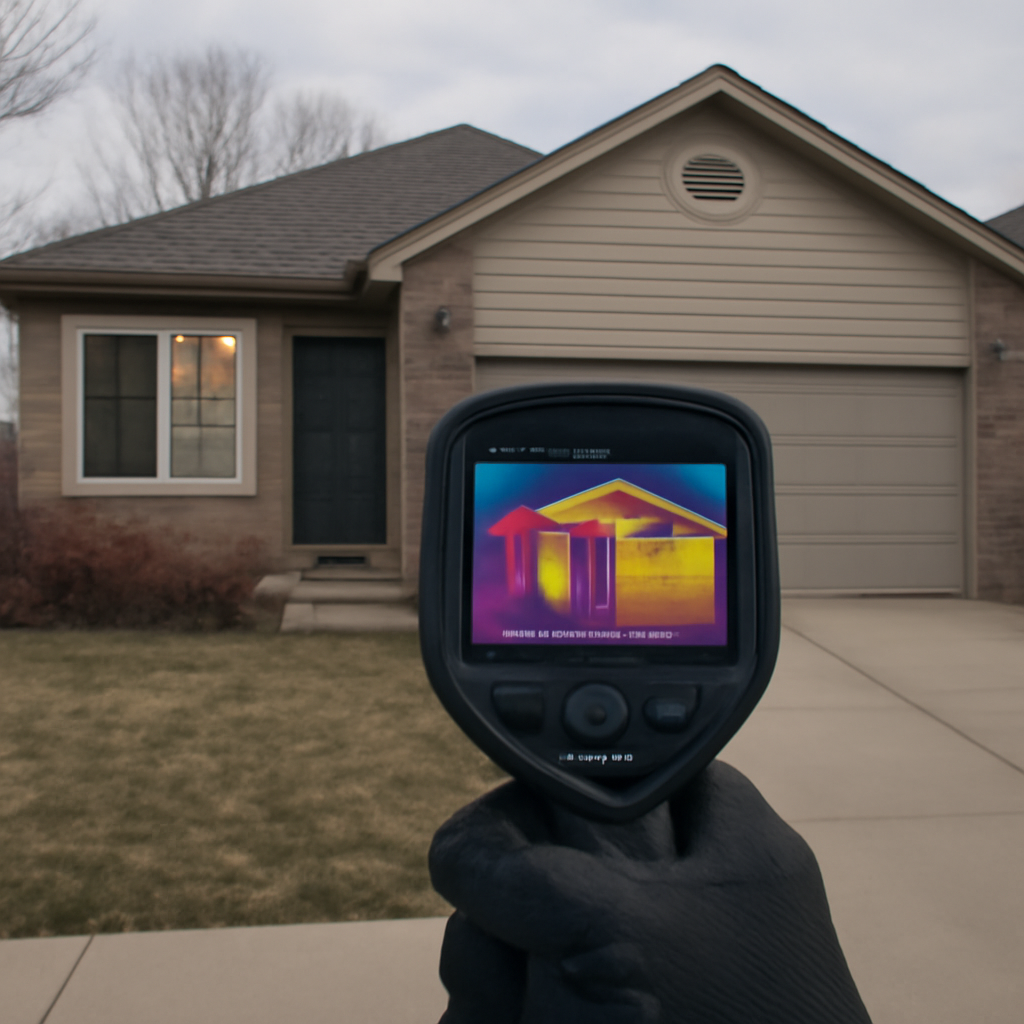
Arapahoe County is the most populous county in Colorado, stretching from inner-ring suburbs like Englewood and Sheridan east across Aurora and Centennial to the far-eastern plains. Its housing runs from 1950s and 1960s brick ranches near Denver to brand-new tract builds on the eastern edge, which means a thermal imaging inspection here can reveal very different problems depending on where a home sits. This page is a county-level hub: it explains what infrared scanning finds, what it costs across Arapahoe County, and links to the live city service pages for Aurora, Centennial, and Littleton. The guidance below reflects standard home-inspection practice as of 2026; a scan is a screening tool, not a destructive test, so confirm any finding with follow-up before acting.
Part of our Thermal Imaging for Homes guide — start there for the full picture →
Thermal imaging inspection in Arapahoe County: what to know
A thermal imaging inspection uses an infrared camera to read surface-temperature differences across walls, ceilings, and floors. Those differences flag what the naked eye misses: missing insulation, active moisture, overheating electrical connections, and air leaks. The camera does not see through walls; it reads heat patterns on the surface that reveal what sits behind them. In a county as varied as Arapahoe, that screening adds real value because the building stock ranges from seven-decade-old ranches to homes finished last year.
Infrared is a standard add-on to a full home inspection rather than a stand-alone service in most cases. Inspectors scan during the walkthrough and photograph anomalies for the report. For the broader context on how scanning fits a purchase, our buyer’s guide to hiring a home inspector on the Front Range walks through the credentials and process that matter most.
Because Arapahoe County spans such a wide housing timeline, no single finding dominates. An Englewood ranch from 1958 is more likely to show insulation gaps and aging electrical, while a far-east Aurora build from 2018 is more likely to reveal a builder shortcut, a missed insulation batt, or an HVAC duct that never got sealed. The camera treats both fairly: it shows where heat is moving in ways it should not, and the inspector interprets that pattern against the home’s age and construction.
Why Arapahoe County homes need thermal imaging
The county’s housing mix is the first driver. Older Englewood, Sheridan, and original Aurora homes from the 1950s through the 1970s often have under-insulated walls, single-pane or early double-pane windows, and electrical systems that have been modified over decades. Infrared finds the cold spots where insulation settled or was never installed, and the warm spots at a loose breaker or an over-loaded junction before they become a fire risk.
Climate sharpens the value. The Front Range sees sharp daily temperature swings and Chinook freeze-thaw cycles that stress building envelopes and open small gaps over time. A scan run when there is a meaningful difference between indoor and outdoor temperature, common across an Arapahoe County fall, winter, or spring, produces the clearest images because heat contrast is what the camera reads.
Moisture is the third driver. Infrared does not detect water directly, but evaporative cooling makes a wet area read colder than its surroundings, which is how a scan flags a hidden roof leak, a plumbing drip behind a Centennial bathroom wall, or moisture wicking up a Greenwood Village basement. Catching that early matters because unseen moisture feeds mold, and a follow-up moisture-meter reading confirms whether the cold spot is genuinely wet.
Newer eastern Arapahoe homes benefit for a different reason. Fast-built tract housing in far-east Aurora and the county’s growing eastern subdivisions can hide construction defects, a missing insulation batt, an unsealed duct, or a gap around a recessed light, that a thermal scan surfaces while the home is still new enough to pursue a builder warranty claim.
What an Arapahoe County thermal imaging inspection covers
An infrared scan during a home inspection typically walks the full interior envelope plus key systems. The inspector reads exterior walls and ceilings for insulation gaps and air leakage, the electrical panel and visible circuits for overheating connections, and areas around plumbing, windows, and rooflines for the cold signatures that suggest moisture.
Insulation and air leakage
Missing or settled insulation shows as a temperature anomaly across a wall or ceiling. In an older Littleton or Englewood home, this often appears as cold stripes between studs where batts slumped or as a cold band at the rim joist. Sealing and re-insulating those areas is one of the highest-return comfort and energy fixes a buyer can plan.
Electrical hot spots
An overloaded circuit, a loose connection, or a failing breaker runs hotter than its neighbors, and infrared catches that pattern before it sparks. This matters most in homes whose electrical has been modified across decades, common in Arapahoe County’s older inner-ring suburbs where additions and finished basements piled load onto original panels.
Moisture and roof intrusion
Because wet materials read cooler as they evaporate, a scan can reveal a roof leak staining attic sheathing, a slow supply-line drip behind drywall, or groundwater intrusion in a basement. The inspector confirms any thermal moisture flag with a moisture meter, since cold alone is not proof of water.
Thermal imaging inspection cost in Arapahoe County
As an add-on to a full home inspection, infrared scanning in the Arapahoe County market typically adds about $75 to $200, depending on home size and whether the inspector includes it by default. Some inspectors fold a basic scan into the base inspection fee at no extra charge, while a dedicated stand-alone infrared survey of a larger home can run $250 to $400 or more.
A full home inspection in the Denver-metro and Arapahoe County market generally runs $400 to $650 for a typical single-family home, with larger or older homes at the higher end. Bundling the infrared scan into that inspection is almost always cheaper than commissioning it separately, and it gives the buyer one coordinated report.
The value is in what it prevents. A scan that catches an overheating electrical connection or a hidden roof leak can flag a repair worth far more than the scan’s cost, and on a new far-east Aurora build it can surface a defect while a builder warranty still covers the fix. For a few hundred dollars on top of the inspection, infrared turns invisible problems into documented findings a buyer can negotiate.
Where the scan rarely pays off is on a small, recently built home with no obvious comfort or moisture complaints and a freshly inspected electrical panel, since there may simply be little for the camera to find. Even then, a basic scan included in the inspection fee costs the buyer nothing extra and provides a clean baseline. The judgment call is mostly about a stand-alone survey: for a large, older Englewood or Littleton home with a history of additions, the dedicated scan is easy to justify, while for a compact new condo it usually is not. An honest Arapahoe County inspector will tell a buyer which situation they are in rather than upselling a survey that will not earn its keep.
Arapahoe County regulations and disclosure
Colorado does not license home inspectors, so credentials are voluntary and worth checking. Look for InterNACHI or ASHI membership, which carry standards of practice and a requirement that inspectors only report what they can verify. A thermal scan finding should be described as a screening observation needing confirmation, not a definitive diagnosis.
Colorado’s Seller’s Property Disclosure asks sellers to report known defects, including roof leaks, electrical problems, and moisture or mold history. A thermal imaging inspection can corroborate, or contradict, what a seller disclosed. If a scan reveals a moisture pattern the disclosure never mentioned, that is a negotiating point and a prompt for further investigation before closing in any Arapahoe County transaction.
What infrared adds beyond a standard visual inspection
A standard home inspection is fundamentally a visual exercise: the inspector evaluates what can be seen and accessed. Thermal imaging extends that reach into the parts of a home a flashlight cannot reveal, which is why it is more than a gimmick in a county whose housing hides such different problems. Three categories of finding illustrate the gap between a visual-only inspection and one backed by infrared.
The first is energy and comfort. A far-east Aurora buyer touring a new home in summer cannot see that a second-floor bedroom over the garage has a missing insulation batt, but they will feel that room run hot in July and cold in January after they move in. Infrared shows the gap before closing, while it is still a builder-warranty item rather than an out-of-pocket retrofit. In an older Englewood ranch, the same scan maps where decades-old insulation has slumped, turning a vague “the house feels drafty” into a specific, fixable list of wall and rim-joist sections.
The second is electrical safety. Older Arapahoe County homes near the Denver core have often had their electrical systems modified across additions and finished basements, piling load onto panels that were never sized for it. A loose lug, an over-tightened breaker, or an overloaded circuit runs measurably hotter than its neighbors, and infrared flags that heat signature before it becomes an arc or a fire. This is a finding no visual inspection can produce, because the danger lives behind a panel cover and inside a junction box.
The third is concealed moisture, which matters because moisture feeds mold and rot. A slow supply-line drip behind a Centennial bathroom wall, a roof leak wetting attic sheathing, or groundwater wicking up a Greenwood Village basement wall all read as cool anomalies as the water evaporates. The inspector confirms each with a moisture meter, but infrared is what tells them where to point the meter in the first place. Without it, a small leak can stay hidden until it has caused thousands of dollars of damage.
Arapahoe County communities and areas served
Arapahoe County’s home-inspection demand spans its full geographic range, and the typical thermal finding shifts noticeably from one part of the county to another. To the west, the older inner-ring suburbs of Englewood, Sheridan, and Cherry Hills Village hold mid-century homes where insulation gaps, aging single-pane or early double-pane windows, and modified electrical dominate the scan results. These are the homes where infrared most often pays for itself by mapping a clear insulation and air-sealing to-do list.
Centrally, Centennial and Greenwood Village mix established 1980s and 1990s subdivisions with newer infill, where the recurring findings are hidden plumbing leaks behind finished walls and the occasional electrical hot spot from a finished-basement remodel. Littleton, the historic county seat shared with Jefferson and Douglas counties, blends older downtown housing with surrounding tract neighborhoods, so an inspector there may scan a century-old home and a 1990s build in the same week.
To the east, Aurora, Colorado’s third-largest city, anchors the county’s population, and the far-eastern plains host the county’s fastest new construction. On those newer builds the camera most often surfaces construction shortcuts, a missed batt, an unsealed duct, a gap around a recessed light, while a builder warranty can still cover the fix. Across that whole span the infrared value proposition holds; only the typical findings shift with housing age. For city-specific detail, see our live pages on thermal imaging inspection in Aurora, thermal imaging inspection in Centennial, and thermal imaging inspection in Littleton.
How to choose an Arapahoe County thermal imaging provider
Ask whether the inspector carries a true radiometric infrared camera, not a phone clip-on, and whether they are trained to interpret thermal images rather than just capture them. A qualified inspector explains what a cold or hot spot means in context and confirms moisture flags with a meter rather than declaring water from the image alone.
Confirm the scan happens under useful conditions: there needs to be enough temperature difference between inside and outside for the camera to read contrast, which is why a same-day summer scan of a shaded home sometimes shows little. A good Arapahoe County inspector schedules and interprets accordingly, and includes annotated thermal photos in the written report so findings are documented for negotiation or a builder claim.
Finally, prefer an inspector who folds infrared into a full inspection so structural, electrical, and moisture findings arrive in one coordinated report. That integration is what makes thermal imaging genuinely useful in a county whose homes range from 1950s ranches to brand-new builds.
References
- Standards of practice and inspector credentials — International Association of Certified Home Inspectors
- Home inspection standards — American Society of Home Inspectors
- ENERGY STAR: Seal and Insulate — U.S. Environmental Protection Agency (ENERGY STAR)
Frequently asked questions
Is thermal imaging worth it for an Arapahoe County home?
Often yes. The county's housing ranges from 1950s ranches to new far-east builds, and infrared finds insulation gaps and electrical hot spots in older homes plus construction defects in newer ones, all while the issues are still negotiable or under warranty.
How much does a thermal imaging inspection cost in Arapahoe County?
As an add-on to a full home inspection it typically adds about $75 to $200, and some inspectors include a basic scan in the base fee. A stand-alone infrared survey can run $250 to $400 or more.
Does an infrared camera see through walls?
No. It reads surface-temperature patterns that reveal what is behind a wall, such as missing insulation, moisture, or an overheating wire. Findings are confirmed with follow-up tools like a moisture meter.
Which Arapahoe County cities do you cover?
Service spans the whole county, from Englewood, Sheridan, and Cherry Hills Village in the west through Centennial, Greenwood Village, and Littleton to Aurora and the far-eastern plains. See our Aurora, Centennial, and Littleton pages for local detail.
When is the best time to run a thermal scan?
When there is a clear temperature difference between inside and outside, which is most of the Front Range fall, winter, and spring. Contrast is what the camera reads, so a scan during a mild, shaded summer day shows less.
From mid-century Englewood ranches to new far-east Aurora builds, a thermal imaging inspection turns invisible problems into documented findings across Arapahoe County. To connect with a vetted local inspector before your closing deadline, reach out through our contact page.
Thermal imaging cameras
Infrared cameras reveal hidden moisture, missing insulation, and air leaks. Phone-attachment models are the budget entry point; standalone units have higher resolution.
| Product | Why | Buy |
|---|---|---|
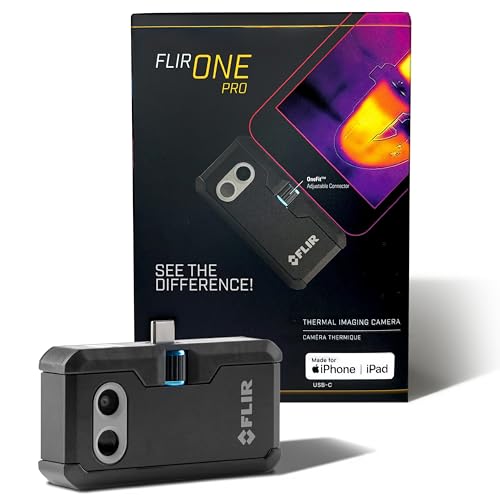 FLIR ONE Pro (phone) | Plugs into iPhone/Android; inspector favorite. | Amazon — $296.65 |
 Topdon TC001 | High-res phone module at a low price. | Amazon — $249.00 |
 FLIR C5 Compact | Standalone pocket camera with Wi-Fi. | Amazon — $593.99 |