Mold Testing in Arapahoe County, Colorado
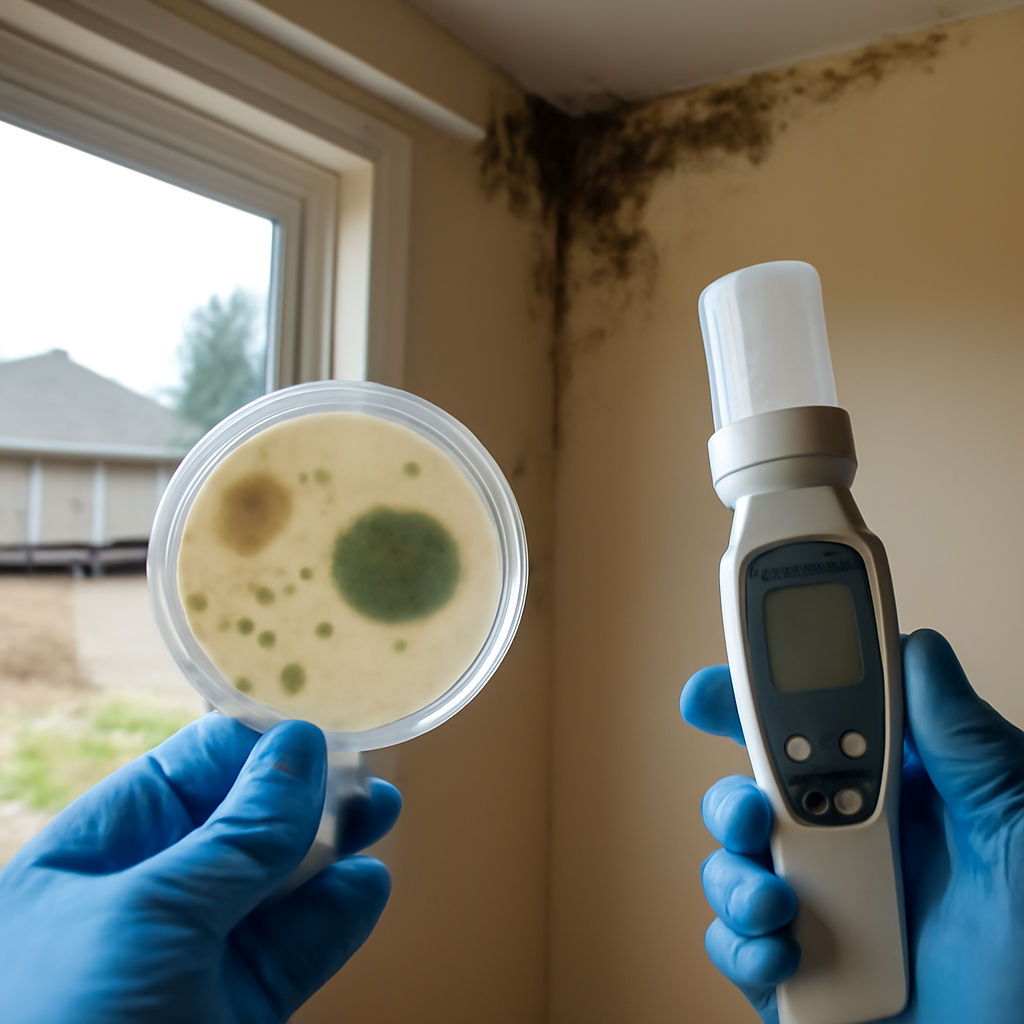
Mold testing arapahoe county residents look for is the lab step that follows a visual inspection: collecting air or surface samples to identify what is growing and how much. Arapahoe is Colorado’s most populous county, with housing from 1950s-70s Englewood and north-county homes through 1980s-2000s Centennial and Aurora to new far-east builds, so testing situations vary widely. The shared county seat is Littleton, alongside Aurora, Centennial, Englewood, Greenwood Village, Cherry Hills Village, and Glendale. This county hub explains when sampling helps, what the lab measures, local costs, and links to city pages. This summary reflects EPA and CDC guidance current as of 2026; consult a certified professional for testing decisions.
Part of our Mold Testing & Inspection guide — start there for the full picture →
Is this mold, asbestos, or water damage? Get a free instant screen
Upload a clear photo of the suspect area. You'll get an instant AI screening opinion and what to do next. This is screening guidance, not a professional determination.
Screening guidance only. AI can be wrong. Confirm asbestos, mold type, or lead with lab testing or a licensed professional before acting.
Mold testing in Arapahoe County: what to know
Mold testing measures spores. Air sampling pulls a fixed air volume through a cassette and compares spore counts and types against an outdoor control; surface sampling lifts material from a suspect spot for lab identification. Neither finds the water source, so testing follows a visual inspection rather than replacing it.
Across the county’s wide housing mix, testing answers a specific question: whether a musty older Englewood basement or a damp newer Centennial lower level carries an elevated indoor spore load relative to outdoors, and what genus is present when health or a sale dispute is involved. Swamp-cooler homes add a humidity variable that air sampling can help characterize.
For how spore counts are interpreted, our mold inspection and testing hub covers the science. This page stays on the county-level when, where, and how much.
Why Arapahoe County homes warrant mold testing
The housing range creates distinct testing scenarios. In older Englewood, Sheridan, and north-county homes, decades-old finished basements and original windows that sweat in winter can foster growth that an air sample documents when no obvious stain exists. Aging plumbing behind walls is a frequent hidden source these homes share.
Swamp coolers complicate the moisture picture. An evaporative cooler adds humidity by design, and a home that runs one through a humid stretch can develop elevated indoor moisture and spore activity around the cooler chase. Air sampling helps separate a genuine indoor source from the seasonal humidity a cooler introduces, which is a distinction unique to this region’s older housing.
Newer homes shift testing to the basement. In Centennial, Aurora, and far-east builds, tight envelopes mean that once spores are released by a foundation seep or sump failure, they linger rather than dissipating. The Cherry Creek and South Platte corridor water table feeds those below-grade leaks, and an air sample compared to an outdoor control quantifies the resulting indoor load.
What Arapahoe County mold testing covers
A standard protocol pairs an indoor sample with an outdoor control taken the same day, because Front Range outdoor spore counts shift by season and the comparison gives the indoor number meaning.
Air sampling versus surface sampling
Air sampling is the workhorse for a musty basement with no visible growth, common in both older Englewood homes and newer Aurora ones. Surface sampling confirms whether a specific stain, on a swamp-cooler ceiling or a Centennial basement wall, is mold and identifies the genus. Many situations use both: air for the overall load, surface for the visible spot.
The outdoor control and the lab report
The outdoor control anchors the result. An indoor reading only means something against that day’s outdoor baseline in Littleton or Aurora. The lab returns spore counts by genus per sample, and a competent provider explains whether the indoor-to-outdoor ratio and the genera present point to an indoor source rather than normal infiltration.
Mold testing cost in Arapahoe County
Mold testing in the Arapahoe County market typically runs about $300 to $600 for an inspection that includes two to three lab-analyzed samples, with each additional sample adding roughly $75 to $150. A standalone air-sample pair sits at the lower end. Larger Greenwood Village and Cherry Hills Village homes with several finished areas may need more samples, raising the total.
Lab fees are part of the cost because an independent accredited laboratory analyzes the cassettes. Bundling testing with a visual inspection or a pre-purchase home inspection usually trims the trip charge, which is why many county buyers combine them rather than scheduling separate visits.
Colorado regulations and disclosure
Colorado does not license mold testers or set a numerical action level for residential mold, so there is no state-defined pass or fail. The homeowner is responsible for choosing a tester who uses an accredited lab and a defensible protocol. In a transaction, Colorado’s Seller’s Property Disclosure asks about known mold and water damage, so a documented lab report supports honest disclosure on an Arapahoe County sale.
Because no license applies, ask which laboratory analyzes the samples and request chain-of-custody documentation. A report from an accredited lab with a matched outdoor control carries far more weight in a negotiation than an on-the-spot meter reading, especially when an older home’s swamp cooler clouds the moisture picture.
Communities and areas served across Arapahoe County
Testing demand follows the county’s full housing range. Aurora, the largest community, drives steady volume from its finished-basement homes; our mold testing in Aurora page covers the city detail. Centennial’s tract neighborhoods follow the same below-grade pattern, on our mold testing in Centennial page. Littleton, the county seat, mixes older and newer stock.
Coverage continues through Englewood, Sheridan, Greenwood Village, Cherry Hills Village, and Glendale, where older homes and swamp coolers shape the testing question, and the far-east additions, where new construction concentrates risk in finished basements. The county’s dry outdoor air keeps outdoor control counts low, which often makes an elevated indoor reading stand out clearly.
Interpreting results in a swamp-cooler home
Mold testing in an older Arapahoe County home with a swamp cooler requires a careful read, because the cooler complicates the indoor-versus-outdoor comparison that anchors every result. A running evaporative cooler pulls large volumes of outdoor air into the home, which can carry outdoor spores indoors and temporarily raise the indoor count without any indoor source at all. A tester who does not account for this can misread normal infiltration as an indoor mold problem.
The protocol adjusts accordingly. For a meaningful air-sample comparison in an Englewood or Sheridan home, the cooler is typically turned off before and during sampling so the indoor reading reflects the home’s own conditions rather than a stream of outdoor air. The genus identification also helps: if the elevated spores are water-indicator types associated with chronically wet materials, that points to a genuine indoor source, whereas ordinary outdoor genera in proportions matching the outdoor control suggest infiltration rather than growth.
This is why an experienced tester asks about the cooler and the home’s mechanical setup before sampling. The same numbers can mean very different things depending on whether the swamp cooler was running, where the sample was taken relative to the cooler register, and which genera dominate. A report that ignores the cooler’s contribution can send an older-home owner chasing a mold problem that is really just the cooler doing its job, which is exactly the misinterpretation a thoughtful protocol avoids.
Testing across Arapahoe County’s housing eras
Because Arapahoe County spans such a wide housing range, the testing question looks different from one neighborhood to the next. In the pre-1980 inner ring, testing often follows a musty odor in a decades-old finished basement or around a swamp cooler, where the question is whether an aging-plumbing leak or chronic condensation has produced a real indoor spore load. The low outdoor baseline typical of the dry Front Range air helps an indoor elevation stand out when one exists.
In the 1980s-2000s homes of Centennial and Aurora, testing usually centers on the finished basement after a known water event or a visible stain. A foundation seep fed by the Cherry Creek or South Platte corridor water table can release spores that linger in the tight envelope, and an air sample compared to a same-day outdoor control quantifies whether the basement air is actually elevated or simply smells stale. The result guides whether remediation is warranted or whether drying and source repair suffice.
In far-east new construction, testing is less common but occasionally arises when a new home has had a construction-phase leak or a plumbing failure soon after move-in. Here an air sample confirms whether the affected area cleared after drying or whether spores persist behind new finishes. Across all three eras, the testing principle is constant, indoor versus a matched outdoor control, interpreted by genus, but the scenario that prompts the test and the likely source vary with the home’s age and construction.
What affects mold testing cost in Arapahoe County
Sample count is the largest variable, and it scales with the home and the question being asked. A single suspect area in a compact Englewood basement may need only one indoor air sample plus the outdoor control, landing near the bottom of the range. A larger Greenwood Village or Cherry Hills Village home with multiple finished zones, a separate mechanical room, and a swamp-cooler area to characterize can warrant three or four indoor samples, each adding the per-sample fee. The outdoor control is built into every protocol regardless of home size.
The swamp-cooler factor can add a sample in older homes. When an evaporative cooler clouds the moisture picture, a tester may collect an additional sample near the cooler register to distinguish the unit’s humidity contribution from a genuine indoor source, which the cleaner-cut newer homes in Centennial or Aurora rarely require. Surface sampling of a visible stain adds a smaller increment than a full air-sample survey, though the lab analysis fee still applies to each tape lift or swab.
Bundling lowers the effective cost. Ordering testing as part of a visual mold inspection or a pre-purchase home inspection spreads the trip charge across services, so the marginal cost of the lab work drops compared with a standalone testing visit. For a transaction on a deadline in Aurora or Littleton, that bundling is usually the most economical path, since the buyer needs both the moisture finding and the lab number anyway.
How to choose an Arapahoe County mold testing provider
Confirm the provider takes a same-day outdoor control and sends cassettes to an accredited laboratory. A tester who explains the indoor-to-outdoor comparison, and who accounts for a swamp cooler’s humidity contribution rather than blaming every reading on hidden mold, understands the county’s older housing. Be wary of free testing tied to a remediation upsell.
For a purchase, coordinate testing with the inspection that identifies the water source so the lab data and the moisture finding tell one story. That pairing fits Arapahoe County’s range, where a confirmed indoor spore load plus a documented leak, whether a swamp-cooler line or a basement seep, justifies remediation rather than guesswork.
References
- Mold cleanup and testing guidance — U.S. Environmental Protection Agency
- Mold and health effects — Centers for Disease Control and Prevention
- Colorado mold guidance for residents — Colorado Department of Public Health and Environment
Frequently asked questions
When is mold testing worth it in Arapahoe County?
When there's a musty smell with no visible growth, when occupants report symptoms, or when a sale dispute needs documented lab data. An inspection finds the source; testing quantifies the spores.
How does a swamp cooler affect mold testing?
Evaporative coolers add humidity, so an air sample helps separate a genuine indoor mold source from the seasonal moisture a cooler introduces, a distinction that matters in older Arapahoe County homes.
Why take an outdoor control sample?
Front Range outdoor spore counts vary by season, so an indoor reading only means something compared against that day's outdoor baseline in Littleton or Aurora. The control makes the result interpretable.
How much does mold testing cost in Arapahoe County?
Expect about $300 to $600 for an inspection with two to three lab samples, plus roughly $75 to $150 per additional sample. Larger homes with several finished areas cost more.
Does a swamp cooler add to the testing cost?
It can. In an older home where an evaporative cooler clouds the moisture picture, a tester may collect an extra sample near the cooler register to separate the unit's humidity from a genuine indoor source, which adds the per-sample fee.
If an Arapahoe County basement smells musty but nothing is visible, a lab-backed test gives you a real number. To connect with a vetted local tester before a deadline, get in touch through our contact page.