Mold Testing in El Paso County, Colorado
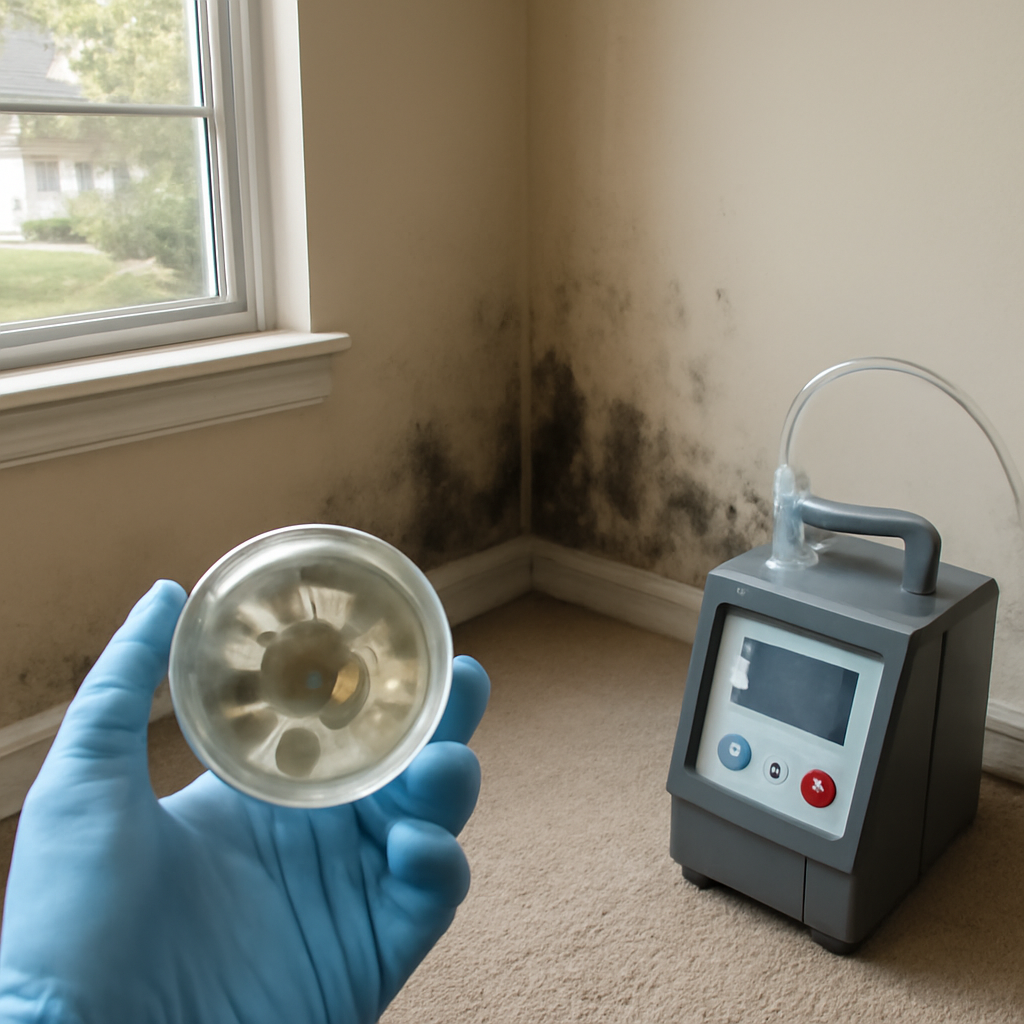
Mold testing puts an objective number on what a mold inspection finds, and across El Paso County that quantification matters in homes where dry-climate complacency lets moisture hide, from downtown Colorado Springs and Old Colorado City to the newer suburbs of Falcon, Monument, and Security-Widefield. Air and surface sampling identifies the types of mold present and compares indoor spore counts to outdoor baselines, giving homeowners and buyers a measured answer rather than a guess from a musty smell. This county hub explains how mold testing works here, when it adds value, and which city pages to read next. Mold is a health-adjacent topic; the guidance below reflects EPA and CDC sources current as of 2026 and is informational, not a medical or remediation directive.
Part of our Mold Testing & Inspection guide — start there for the full picture →
Is this mold, asbestos, or water damage? Get a free instant screen
Upload a clear photo of the suspect area. You'll get an instant AI screening opinion and what to do next. This is screening guidance, not a professional determination.
Screening guidance only. AI can be wrong. Confirm asbestos, mold type, or lead with lab testing or a licensed professional before acting.
Mold testing in El Paso County: what to know
Mold testing collects samples, typically air samples through a spore trap or surface samples by tape or swab, that an accredited laboratory analyzes to identify mold genera and estimate concentrations. The standard interpretation compares indoor counts and types against a simultaneous outdoor sample, since some mold is always present in outdoor air. Testing answers what and how much; it does not, by itself, fix anything, which is why the EPA emphasizes finding and correcting the moisture source. For how testing and inspection complement each other, our plain-language mold hub for homeowners explains the full picture.
In El Paso County, testing earns its place where stakes or uncertainty are high. A buyer closing on a swamp-cooled Colorado Springs home with a finished basement, an owner with unexplained allergy symptoms in a downtown bungalow, or a post-remediation clearance check after a basement repair are all cases where a documented spore count carries weight that a visual inspection alone cannot.
It is worth being clear about what a spore count does not tell you, so the result is used well. A number does not diagnose a health condition, does not by itself declare a home unsafe, and does not point to the moisture source; it characterizes what is present in the air or on a surface at the moment of sampling. Its value comes from being read alongside the inspection context, the visible conditions, the moisture readings, and the home’s history, so it confirms a concealed source or verifies a cleanup rather than floating as a scary figure with no anchor. An El Paso County tester who provides only a lab sheet has done half the work; connecting that count to a cause and a fix is the half a homeowner is actually paying for.
Why El Paso County homes warrant testing
The dry climate is precisely why testing adds value here. Because Colorado Springs is arid most of the year, moisture problems are easy to overlook, and a home can have a hidden source, behind a finished basement wall, above a leaking swamp-cooler duct, that an occupant feels as symptoms before they see a stain. Air sampling can detect elevated, atypical indoor spore counts even when no growth is visible, which is exactly the scenario testing is built for.
Swamp coolers and winter sealing supply the moisture. Evaporative coolers add humidity each summer and can leak at rooftop penetrations, while winter sealing traps whatever moisture the home generates, and the EPA notes mold can begin growing on damp surfaces within 24 to 48 hours. In a finished basement fed by snowmelt or a high spring water table, that creates the persistent dampness that surface and air testing can confirm or rule out.
Health concerns drive many tests. The CDC notes mold exposure can trigger respiratory symptoms in sensitive people, so for an El Paso County household reporting persistent congestion, asthma flare-ups, or musty odors without a visible source, testing helps connect symptoms to an actual indoor source rather than guessing, and it gives a baseline to compare against after any repair.
What an El Paso County mold test covers
A testing visit pairs sampling with the inspection context that makes the numbers meaningful. The technician documents visible conditions and moisture readings, then collects an outdoor control sample and indoor samples from the suspect areas, most often the basement or near a swamp-cooler register, before sending everything to an accredited lab.
Air sampling
Air samples drawn through spore traps capture what is actually circulating in the breathing zone, which is why they are the workhorse for finished basements and swamp-cooled homes where growth may be hidden. Comparing the indoor spore count and types to the outdoor control reveals whether the home has an elevated, atypical indoor profile that points to a concealed source.
Surface and clearance sampling
Surface samples confirm whether a specific stain near a cooler duct or basement wall is active mold and which type. After a remediation, a clearance test verifies that counts have returned to a normal range relative to outdoors, the documented proof a buyer or owner should insist on before signing off on a repair.
Mold testing by El Paso County community
The testing rationale shifts across the county. In Colorado Springs, the range from old downtown and Old Colorado City bungalows to newer suburbs means both surface sampling of suspect old-basement materials and air sampling for concealed leaks behind newer drywall are common. Manitou Springs, with older foothill homes and higher local moisture, more often involves crawlspace and foundation-area sampling.
In Fountain and Security-Widefield, slab-on-grade and mid-century stock leans toward air sampling near swamp-cooler registers and plumbing walls, while Monument and Black Forest, higher and wetter with snow load, see foundation and roof-area testing. Falcon and the eastern plains subdivisions, being newer, usually involve air sampling to chase a hidden leak. Military-adjacent housing near Fort Carson, Peterson, and Schriever adds turnover-driven testing between occupants. A homeowner reviewing this hub should match the city page to the property, because location, elevation, and housing era determine whether air or surface sampling is the right tool.
Mold testing cost in El Paso County
Mold testing in the El Paso County market generally runs about $300 to $700 for a typical sampling visit, with the total driven by the number of samples and lab fees; a single air sample plus an outdoor control sits at the low end, while a multi-room or pre- and post-remediation clearance job runs higher. Many providers bundle a visual inspection with the sampling, which is usually more economical than ordering them separately.
Weigh that against the consequences. A hidden swamp-cooler or basement moisture problem in a Colorado Springs home, left undocumented, can become a costly remediation and a contentious post-sale dispute, while a few hundred dollars of testing during the inspection contingency gives a buyer a defensible number to negotiate with. For an owner doing remediation, the clearance test is the only objective confirmation the work succeeded, which protects against paying twice.
Sequencing the testing well keeps the spending sensible. The usual order is an inspection first to find visible growth and the moisture source, then targeted sampling only where a real question remains, such as a concealed source behind a finished basement wall, a symptom pattern with no visible cause, or a swamp-cooler-fed attic that smells musty without obvious staining. Testing before remediation sets a baseline, and a clearance test afterward confirms the space returned to a normal indoor-versus-outdoor profile. Sampling everything up front without a moisture diagnosis spends money on numbers that do not point to a fix, while skipping the baseline leaves no way to prove a cleanup worked. An El Paso County provider who explains this order, instead of selling a fixed sample package, is offering judgment that is worth more than the lab fee.
Colorado regulations and disclosure
Colorado does not license mold testers or set binding indoor mold limits, so the credential to look for is an accredited laboratory and a tester who samples to a recognized protocol with a clear chain of custody. The Seller’s Property Disclosure asks about known mold and water damage, but in a dry-climate market where problems hide, buyers should consider independent testing rather than relying solely on the seller’s account. Because there is no federal or state numeric standard for indoor mold, the indoor-versus-outdoor comparison and the type of mold found, not a single threshold, drive interpretation.
Communities and areas served
This hub links the city-level mold pages across El Paso County. From the county seat of Colorado Springs out to Fountain, Monument, Manitou Springs, Falcon, Security-Widefield, and Black Forest, the testing rationale shifts with the housing, old-basement surface testing downtown and in Old Colorado City, swamp-cooler and finished-basement air sampling in the suburbs. For city-specific detail, see our pages on mold testing in Colorado Springs and our companion mold inspection in El Paso County guide.
Wherever the home sits in the county, the goal of testing is the same: turn a vague suspicion into an accredited-lab number that supports a clear decision about repair, negotiation, or clearance.
How to choose an El Paso County mold testing provider
Choose a tester who uses an accredited laboratory, always collects an outdoor control sample, and is independent of any remediation company, so the results are not a pretext to sell a cleanup. Ask for a sample lab report so you can see how results are presented, and confirm the provider explains the indoor-versus-outdoor comparison rather than quoting a scary raw number out of context.
For a swamp-cooled or finished-basement home, ask how they sample concealed spaces and whether they offer post-remediation clearance testing. For a downtown or Old Colorado City home, ask how they handle surface sampling on old basement walls. A credible provider ties every recommendation back to the moisture source, consistent with EPA guidance, rather than to a spore count alone.
Reading the lab report correctly keeps the result useful rather than alarming. A raw spore count means little by itself; what matters is how the indoor sample compares to the simultaneous outdoor control in both total count and the mix of mold types, and whether water-loving genera associated with chronic wetting appear indoors well above outdoor levels. A number that looks high but tracks the outdoor profile usually reflects normal seasonal background, especially in a dry climate where outdoor spore loads vary, while a moderate indoor count dominated by an atypical, moisture-indicating type can point to a concealed source worth pursuing. A trustworthy El Paso County provider walks you through that comparison, explains what the numbers prove and do not, and ties any recommendation back to finding and correcting the moisture, which is the durable fix the EPA emphasizes over chemical treatment.
References
- Mold cleanup and moisture control — U.S. Environmental Protection Agency
- Mold and your health — Centers for Disease Control and Prevention
- A Brief Guide to Mold, Moisture and Your Home — U.S. Environmental Protection Agency
Frequently asked questions
When should I test rather than just inspect for mold in El Paso County?
Test when stakes or uncertainty are high: a swamp-cooled Colorado Springs home purchase, unexplained allergy symptoms in a downtown bungalow, or a post-remediation clearance check. Testing quantifies spore types and counts a visual inspection alone cannot.
How does mold testing read results without a legal limit?
There is no federal or state numeric indoor mold standard. Labs compare indoor spore counts and types against a simultaneous outdoor control sample. An elevated, atypical indoor profile points to a concealed source even when no growth is visible.
What does mold testing cost in El Paso County?
A typical sampling visit generally runs about $300 to $700, driven by the number of samples and lab fees. Bundling a visual inspection with sampling is usually more economical than ordering them separately.
Why test a dry-climate home like Colorado Springs?
The arid climate makes leaks easy to overlook, so a hidden swamp-cooler or basement source can affect occupants before any stain appears. Air sampling can detect elevated indoor spore counts even when no growth is visible.
What is post-remediation clearance testing?
After a repair, a clearance test verifies that indoor spore counts have returned to a normal range relative to outdoors. It is the objective proof that a remediation actually worked before a sale or sign-off.
In a dry-climate market where moisture hides, an accredited-lab spore count turns suspicion into a clear decision. To connect with a vetted Front Range mold testing provider, reach out through our contact page.