Thermal Imaging Inspection in Centennial, CO | InspectandTest
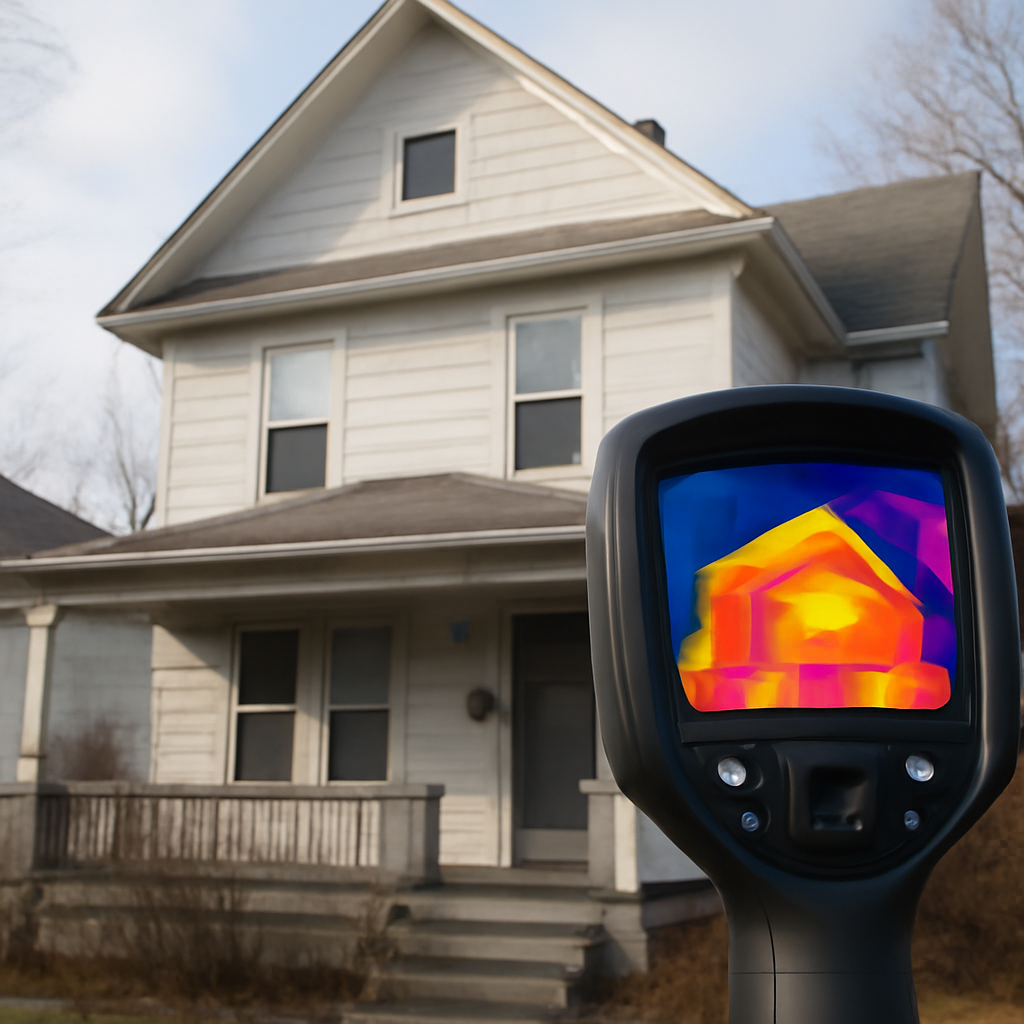
A thermal imaging inspection uses an infrared camera to see temperature differences across a home’s surfaces, revealing problems a standard visual inspection cannot: hidden moisture behind drywall, missing or settled insulation, air leaks, and overheating electrical connections. For Centennial buyers and homeowners, the technique is especially valuable in the city’s aging 1970s-through-1990s housing, where original insulation has often settled and decades-old wiring and plumbing can hide faults. This page explains what a thermal imaging inspection centennial properties benefit from, what infrared can and cannot detect, and what it costs. The camera does not see through walls; it reads surface-temperature patterns that an inspector then interprets and verifies with moisture meters and other tools.
Part of our Thermal Imaging for Homes guide — start there for the full picture →
Thermal imaging inspection in Centennial: what to know
Infrared cameras detect emitted heat, translating surface-temperature differences into a visible image. A damp patch behind drywall reads cooler through evaporation, a gap in attic insulation shows as a streak, and a loose breaker connection glows hot. The inspector uses these patterns as clues, then confirms findings with a moisture meter or direct inspection, since thermal imaging points to anomalies rather than diagnosing them on its own.
In Centennial, the technique earns its keep on three fronts: finding moisture intrusion in finished basements, mapping settled or missing insulation in older homes that drives up heating bills, and spotting electrical hot spots in decades-old panels. It is almost always an add-on to a broader home inspection in Centennial rather than a standalone service, because infrared findings are most useful in the context of a full condition report. For how this fits the wider inspection decision, our buyer’s guide to hiring a home inspector on the Front Range covers choosing an inspector and the add-ons worth ordering.
What infrared cannot do matters too. It does not see through walls, cannot detect mold directly (only the moisture that feeds it), and depends on a temperature difference between inside and outside to produce readable contrast. The best results in Centennial come on cold winter days or hot summer afternoons, when that delta is largest and anomalies stand out clearly, which suits the city’s swing-heavy climate well.
Why Centennial homes benefit from thermal imaging
Aging insulation makes infrared especially useful here. Centennial’s 1970s-and-1980s homes often have original insulation that has settled, compressed, or was installed to standards below today’s, leaving voids that waste heat through cold winters. A thermal scan maps those gaps room by room, turning an abstract energy complaint into a specific, fixable list, which matters in a market where heating bills add up over a long sealed season.
Finished basements raise the moisture stakes. Centennial’s homes commonly have finished lower levels where living space meets soil and grade, and where evaporative-cooler humidity can settle. A slow foundation seep, a leaking window well, or condensation behind finished walls can hide for months before visible damage appears. Thermal imaging can catch the cool signature of that hidden moisture early, before it feeds mold or rots framing, which is why buyers of finished-basement Centennial homes often request it. Pairing the scan with a mold inspection in Centennial is logical where moisture appears.
Older electrical systems add a safety dimension. Decades-old panels and wiring can develop loose or overheating connections that a visual inspection would not catch, but infrared reveals as hot spots. In a 1970s or 1980s Centennial home, that electrical scan is one of the more valuable parts of a thermal inspection, since it can flag a genuine fire risk. Bundling the scan with a pre-purchase inspection in Centennial gives a buyer both the condition report and this hidden-defect layer.
Swamp-cooler moisture leaves thermal traces worth checking in Centennial homes. An evaporative cooler that leaks, or ductwork that retains humidity from years of cooler use, can produce damp, cool signatures in ceilings and around registers that infrared picks up. Scanning the cooling distribution in a home that uses or once used a swamp cooler can reveal moisture the homeowner never noticed, which matters because that dampness is also what can feed mold in lower-level rooms and ducts.
Plumbing hidden in walls and slabs is another infrared target. A slow supply-line leak behind a wall or a slab-heated line can show as an unexpected warm or cool streak, and catching it early prevents the slow water damage that feeds mold and rots framing. In an older Centennial home with decades-old plumbing, a thermal pass over kitchen and bathroom walls can surface a developing leak before it announces itself as a stain or a spike in the water bill.
What a Centennial thermal imaging inspection covers
The inspector scans accessible interior surfaces, ceilings, walls, and floors, plus the attic and accessible mechanical areas, looking for thermal anomalies and verifying the meaningful ones.
Moisture and insulation
Cool, irregular patterns on ceilings or basement walls flag possible moisture, which the inspector confirms with a moisture meter before reporting. Streaky or patchy temperature differences across walls and attic floors reveal insulation gaps and settling, a common finding in older Centennial homes. These two results, hidden moisture and insulation voids, are the most common and most actionable.
Electrical and air leakage
Scanning the electrical panel and accessible circuits can reveal overheating breakers or loose connections that present a fire risk, a safety find worth the scan on its own in aging housing. Around windows, doors, and rim joists, infrared shows air-leakage paths that waste energy through Centennial’s cold winters. These are the comfort-and-safety items a thermal scan adds beyond the standard visual inspection.
Thermal imaging inspection cost in Centennial
As an add-on to a home or pre-purchase inspection, thermal imaging in the Centennial market typically adds about $100 to $250, depending on the home’s size and how much of the scan is requested. Some inspectors include a basic infrared sweep in their standard fee and charge extra only for a full documented thermal report with annotated images.
A standalone thermal imaging inspection, ordered separately, generally runs about $200 to $400. For most Centennial buyers, the add-on route is the better value, since the infrared findings are most useful alongside the broader inspection report rather than in isolation.
The payoff is in what stays hidden otherwise. A scan that catches a finished-basement moisture seep before closing can save a buyer thousands in eventual drywall, framing, and mold remediation, a flagged electrical hot spot can prevent a fire, and an insulation map can guide cost-effective upgrades. Against those outcomes, a $100-to-$250 add-on is inexpensive verification on an aging Centennial home.
The energy payoff is especially strong in Centennial’s older housing. The infrared map of settled insulation and air leaks gives a homeowner a ranked list of low-cost, high-return fixes, topping up an under-insulated attic, sealing a leaky rim joist, weatherstripping drafty windows, that lower heating bills through the long Colorado winter. For a buyer of a 1970s or 1980s home, that list turns a vague sense that the house feels cold into a concrete plan, often paying for the scan within a couple of heating seasons.
The documentation value carries beyond the purchase. A dated, annotated thermal report records the home’s condition at closing, which helps if a moisture or insulation issue resurfaces or if the buyer wants to verify that a seller-promised repair was completed. On an older Centennial home with several potential trouble spots, that infrared baseline alongside the standard inspection report gives the buyer a fuller and more defensible record than the visual inspection alone.
Colorado regulations and disclosure
Colorado does not license home inspectors or thermal imaging technicians, so the relevant credential is voluntary training in infrared building diagnostics, often through programs aligned with InterNACHI or thermography certification. For a Centennial buyer, confirming the inspector is trained to interpret infrared, rather than just pointing a camera, is what makes the findings reliable.
Thermal imaging findings can inform Colorado’s Seller’s Property Disclosure indirectly: moisture or insulation issues a scan reveals become known conditions a seller must disclose, and a documented thermal report gives a buyer specifics for the inspection objection. Because infrared points to anomalies that require verification, a reputable inspector always confirms a thermal finding with a moisture meter or direct observation before reporting it as a defect.
Neighborhoods and areas served
Thermal imaging in Centennial is most often requested for finished-basement and aging homes across Southglenn, Willow Creek, Walnut Hills, Foxridge, and Homestead, where hidden moisture, settled insulation, and older wiring carry the most cost. Service typically extends to adjacent Greenwood Village, Littleton, and the Arapahoe County side of Aurora.
The energy case is strongest in the oldest of these homes. A 1970s Southglenn or Foxridge house built to the insulation standards of its day, then left to settle for decades, can leak heat in ways the owner feels as cold rooms and high winter bills without knowing why. An infrared map names the specific walls, ceilings, and rim joists losing heat, so a homeowner can invest in the fixes that pay back fastest rather than guessing. That makes the scan valuable not just at purchase but anytime an owner of an older Centennial home wants to cut heating costs methodically.
Across these areas, the value drivers are the same: Centennial’s strong seasonal temperature contrast makes infrared effective, the aging housing means settled insulation and older electrical are common, and finished basements make hidden-moisture detection worthwhile. Whether the home is a 1970s ranch or a 1990s build, a thermal scan adds insight a visual-only inspection leaves out.
How to choose a Centennial thermal imaging provider
Choose an inspector with documented infrared training who treats thermal imaging as a diagnostic add-on, verifying anomalies with a moisture meter rather than reporting raw camera images as conclusions. Ask to see a sample thermal report so you know whether you are getting annotated, interpreted findings or just colorful pictures. Scheduling the scan during cold or hot weather produces the clearest results in Centennial.
Confirm what the scan includes, since coverage varies. A thorough provider scans interior walls and ceilings, the attic, accessible basement walls, and the electrical panel, then explains which anomalies are meaningful and which are benign. For an older Centennial home, ask specifically that the scan cover the electrical panel and the basement walls, where the most valuable findings, hot spots and hidden moisture, tend to appear.
Bundle thoughtfully. Most Centennial buyers get the best value adding thermal imaging to a full inspection alongside radon testing and, on older homes, a sewer scope, so one visit produces a complete picture. A trustworthy inspector helps you decide whether the scan is worth it for the specific home rather than treating it as an automatic upsell.
Mind the weather window when scheduling the scan. Infrared depends on a temperature difference between inside and outside, so a mild spring or fall day with little contrast yields a flat, uninformative image. If the only inspection date falls in mild weather, ask whether running the home’s heating or cooling beforehand can build enough delta, or whether the scan is better deferred. An honest Centennial inspector explains these limits rather than scanning regardless and charging for weak results, which is a sign the provider is genuinely working to give the buyer usable information rather than padding the invoice.
References
- Infrared thermal imaging for inspectors — International Association of Certified Home Inspectors
- Home inspection standards and ethics — American Society of Home Inspectors
- ENERGY STAR: Seal and Insulate — U.S. Environmental Protection Agency (ENERGY STAR)
Frequently asked questions
What does a thermal imaging inspection find in a Centennial home?
Hidden moisture behind drywall, missing or settled insulation common in older homes, air-leakage paths, and overheating electrical connections in aging panels. The inspector verifies infrared anomalies with a moisture meter before reporting.
How much does thermal imaging add to a Centennial inspection?
Usually $100 to $250 as an add-on to a home or pre-purchase inspection. A standalone thermal scan runs about $200 to $400, though the add-on route gives better value alongside the full report.
Why is thermal imaging useful in older Centennial homes?
The 1970s-90s housing often has settled insulation and decades-old wiring. Infrared maps insulation voids that waste heat and flags overheating electrical connections that a visual inspection would miss, including a possible fire risk.
When is the best time for a thermal scan in Centennial?
On cold winter days or hot summer afternoons, when the difference between indoor and outdoor temperature is largest. That contrast makes insulation gaps and moisture anomalies stand out clearly in the infrared image.
A thermal imaging scan adds a hidden-moisture, insulation, and electrical-safety layer to a Centennial inspection that the eye alone misses, especially on aging homes. To connect with a vetted Arapahoe County inspector trained in infrared diagnostics, get in touch through our contact page.
Thermal imaging cameras
Infrared cameras reveal hidden moisture, missing insulation, and air leaks. Phone-attachment models are the budget entry point; standalone units have higher resolution.
| Product | Why | Buy |
|---|---|---|
 FLIR ONE Pro (phone) FLIR ONE Pro (phone) | Plugs into iPhone/Android; inspector favorite. | Amazon — $349.00 |
 Topdon TC001 Topdon TC001 | High-res phone module at a low price. | Amazon — $199.99 |
 FLIR C5 Compact FLIR C5 Compact | Standalone pocket camera with Wi-Fi. | Amazon — $611.50 |