Thermal Imaging Inspection Timnath, CO | InspectandTest
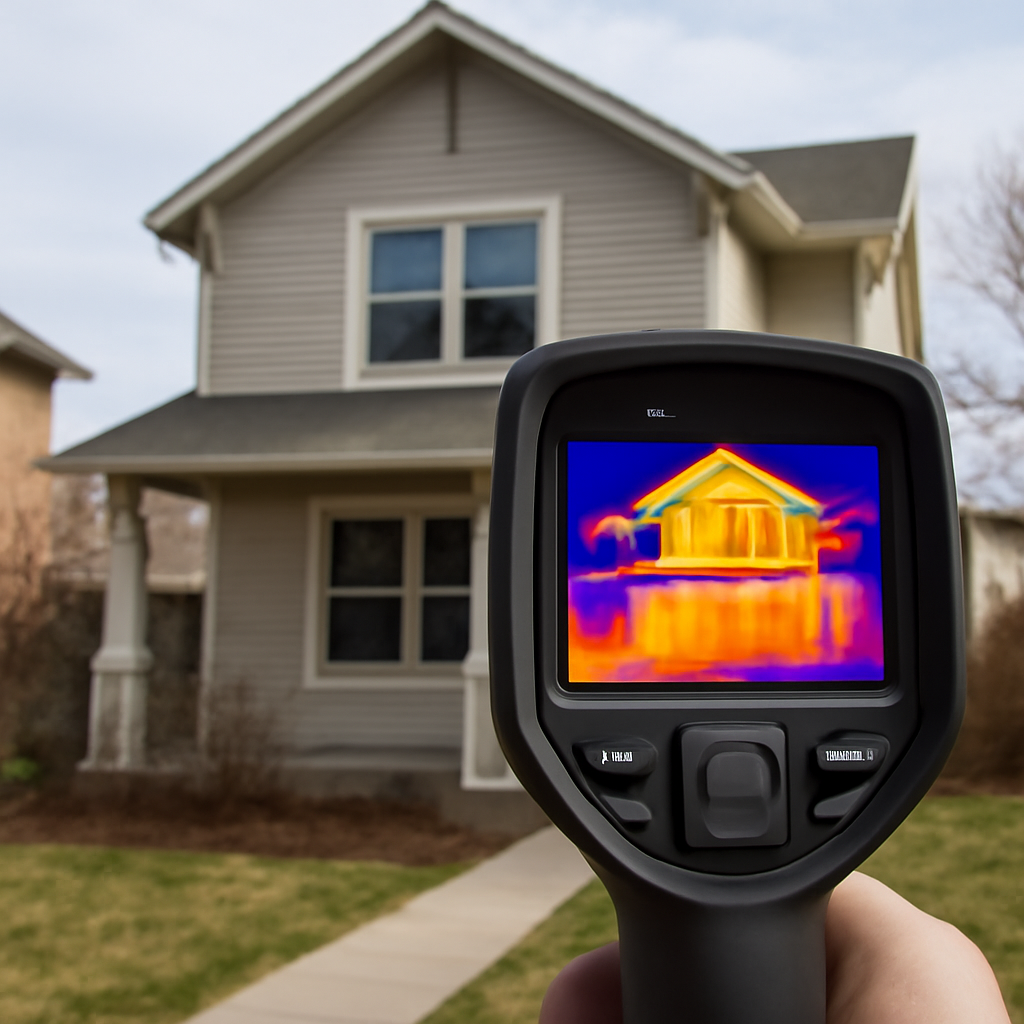
A thermal imaging inspection uses an infrared camera to reveal temperature differences across a home’s surfaces, exposing problems a standard visual inspection cannot see: hidden moisture, missing insulation, air leaks, and electrical hot spots. In Timnath, where fast-built new subdivisions and tight, energy-efficient construction can hide air-sealing gaps and condensation, thermal imaging is a valuable add-on. This page explains how a thermal imaging inspection timnath buyers and homeowners might order works, what it finds in local homes, and what it costs. The camera does not see through walls; it reads surface temperature patterns that point to what lies behind them.
Part of our Thermal Imaging for Homes guide — start there for the full picture →
Thermal imaging inspection in Timnath: what to know
Thermal imaging, also called infrared inspection, uses a camera that detects infrared radiation and translates it into a visible image of surface temperatures. Wet drywall reads cooler than dry drywall, a gap in insulation reads warmer or cooler than the surrounding wall, and an overloaded electrical connection reads hot. The inspector interprets these patterns to locate problems behind finished surfaces without cutting into them.
An important limit: the camera reads surface temperature, not what is literally behind the wall. It shows an anomaly, and the inspector then confirms the cause with a moisture meter, a closer look, or other tools. Thermal imaging is a screening technology that points to where a problem likely is, which the inspector verifies. For how it fits into the broader inspection process, our buyer’s guide to hiring a home inspector explains where infrared adds value and where it does not.
In Timnath, thermal imaging earns its place because new construction hides a particular set of issues. Tight, energy-efficient homes depend on continuous insulation and careful air-sealing, and infrared reveals exactly where builders fell short, missing insulation, gaps around penetrations, and air leaks that raise energy bills and create cold spots. The camera can also flag condensation or a hidden leak behind a finished basement wall. The technology is most useful paired with a full inspection, where the infrared findings add a layer the naked eye misses, and where interpretation turns images into verified findings.
Why Timnath homes benefit from thermal imaging
Tight construction is the strongest reason. Timnath’s 2010s-and-2020s subdivisions, Wildwing, Timnath Ranch, Harmony Club, Riverbend, are built for energy efficiency, which depends on insulation and air-sealing being done right. Infrared is the tool that shows whether they were: it maps missing or uneven insulation in walls and attics and reveals air leaks around windows, doors, and penetrations. In a fast-built home, these shortcuts are common and otherwise invisible until the energy bills arrive.
Finished basements add a moisture use. Timnath’s homes almost all have finished basements, and thermal imaging excels at finding the cool, wet areas behind finished walls that a visual inspection would miss. A slow builder-grade leak or condensation in a tightly sealed wall can show as a temperature anomaly before it becomes a visible stain. Neighborhoods near the Poudre River and reservoirs, where water tables can run higher, make basement moisture screening especially worthwhile.
Climate and local equipment add more uses. Colorado’s cold, sealed winters make air leaks and insulation gaps expensive, and thermal imaging maps exactly where conditioned air escapes, useful information for a buyer planning to address comfort and energy costs. Evaporative coolers, common on local homes, add humidity and ducting that can leak, which infrared can help flag. For a buyer worried that hidden moisture has led to mold, pairing the scan with our guide to mold inspection in Timnath connects a temperature anomaly to a moisture assessment.
What a Timnath thermal imaging inspection covers
An infrared scan typically accompanies a standard inspection, with the camera focused on the areas where hidden problems concentrate in new homes.
Insulation and air leaks
The camera reveals missing or uneven insulation as temperature variation across walls and ceilings, and air leaks as streaks of infiltrating outside air around windows, doors, and penetrations. In a tightly built Timnath home, this is often the highest-value part of the scan, since builder air-sealing shortcuts directly affect comfort and energy cost. The inspector documents where the home’s thermal envelope falls short.
Moisture and electrical
The inspector scans finished basement walls, ceilings below bathrooms and roofs, and areas around plumbing for the cool signatures of moisture, confirming any anomaly with a moisture meter before reporting it. At the electrical panel and major connections, infrared can flag overheating components that signal a loose or overloaded connection, a genuine safety find even in a new home. These results help a buyer understand both comfort and safety issues a visual check would miss.
Thermal imaging inspection cost in Timnath
Thermal imaging is usually offered as an add-on to a standard home inspection rather than a standalone service. In the Timnath and Larimer County market, adding an infrared scan to a full inspection typically costs about $100 to $250 on top of the base inspection fee, depending on home size and scope. A standalone thermal scan, when available, generally runs $200 to $400. Some inspectors include limited infrared use in their base inspection at no extra charge.
The value depends on what it catches. Finding an insulation gap or air leak that the builder must fix under warranty, hidden moisture behind a finished basement wall, or an overheating electrical connection can justify the add-on cost many times over. For a new Timnath home, the scan’s ability to verify that the energy-efficient construction was actually done right makes it especially worthwhile during a purchase.
Weigh the modest add-on fee against what stays hidden without it. A standard inspection documents what is visible; thermal imaging extends that reach to conditions behind surfaces, which is precisely where insulation, air-sealing, and moisture problems live in tight new construction. For most buyers of finished-basement homes here, the infrared add-on is a small price for a meaningful layer of additional information, often actionable under the builder warranty.
Colorado regulations and disclosure
Colorado does not license home inspectors or thermal imaging technicians, so training and equipment quality carry the weight. Look for an inspector with infrared certification, such as a Level I thermography credential, and a quality camera, since a low-resolution device or an untrained operator can produce images that mislead rather than inform. The Colorado Seller’s Property Disclosure covers known defects, but hidden insulation gaps or moisture are exactly the items a new home’s first owner may not know about.
That makes thermal imaging a useful complement to disclosure during a purchase. An infrared scan during the inspection contingency can surface a hidden air-sealing or moisture problem the seller never noticed, giving the buyer a basis to refer it to the builder while the warranty window is open. Because no license guarantees competence, confirm the inspector’s thermography training and ask how they verify infrared findings, since the credibility of the result depends on proper interpretation and confirmation with secondary tools.
Neighborhoods and areas served
Thermal imaging serves homes across Timnath, mostly new construction: Wildwing, Timnath Ranch, Harmony Club, and Riverbend, where infrared verifies insulation and air-sealing and screens finished basements for moisture, plus the occasional Old Town Timnath home where it finds missing insulation and electrical hot spots. Service typically extends to adjacent Fort Collins, Windsor, Severance, and Loveland, where buyers facing similar new construction, including those scheduling a home inspection in Fort Collins, often add infrared.
The scan’s payoff shifts with the home, though in Timnath it usually means verifying new construction. A new subdivision home reveals air-sealing and insulation shortcuts and finished-basement moisture; the rare older home reveals aging insulation and electrical issues. Matching the infrared scan to the home’s likely hidden problems is what makes thermal imaging a worthwhile add-on rather than a gimmick in this part of Larimer County.
How to choose a Timnath thermal imaging provider
Choose an inspector with infrared certification and a quality camera who explains that thermal imaging screens for problems and verifies them with secondary tools like a moisture meter. A credible provider shows you the infrared images alongside the confirmation, rather than reporting an anomaly as a definite defect. Be cautious of any operator who treats every temperature difference as a problem, since normal homes have many harmless temperature variations.
For the most value, add thermal imaging to a full home inspection in Timnath so the infrared findings sit within a complete evaluation of the home. Ask about the inspector’s thermography training, request a sample report that shows how infrared findings are documented, and confirm they verify moisture anomalies before reporting them. An inspector who interprets carefully and confirms findings gives you reliable information rather than alarming but unverified images.
The right provider combines a good camera with the judgment to interpret it. Infrared in untrained hands produces striking images and misleading conclusions, while a certified, careful inspector turns those images into actionable, verified findings, including air-sealing issues a builder can be asked to fix. On a new-home purchase where construction quality is the real question, that interpretive skill is what makes the thermal scan worth its modest add-on cost.
What thermal imaging cannot do in a Timnath home
Understanding the limits keeps a buyer from over-trusting the camera. Thermal imaging does not detect mold, measure radon, or test for any specific hazard; it only maps surface temperature differences. A cool spot on a basement wall suggests moisture, which can lead to mold, but the infrared image alone proves neither mold nor a particular contaminant. For those answers, a Timnath buyer needs the corresponding test, which is why infrared works best as a screening layer that directs the right specialist to the right spot.
Conditions affect what the camera can see. Thermal imaging depends on a temperature difference between a problem area and its surroundings, so a mild day with little indoor-outdoor contrast can mask the very insulation gaps and air leaks that matter most in a tightly built home. Recent sun on an exterior wall, a running shower, or HVAC that just cycled can create temporary patterns an untrained eye might misread. A skilled inspector accounts for these conditions and notes when a scan was limited, which is especially relevant for verifying air-sealing in a new Timnath build.
The camera also cannot see fully behind every surface, and it does not replace the hands-on parts of an inspection. Dense materials or areas with no thermal path to the surface may hide a problem infrared cannot reach. For a Timnath buyer, the honest framing is that thermal imaging adds a valuable but bounded layer: it finds many hidden insulation, air-sealing, moisture, and electrical issues the eye misses, often actionable under the builder warranty, while leaving the definitive answers to moisture meters, lab tests, and the inspector’s broader evaluation.
Timing the scan well improves what it captures. In Timnath, a cooler morning during the heating season gives the clearest read on insulation gaps and air leaks, since the indoor-outdoor temperature difference is what makes those flaws visible. A scan run on a mild day may understate exactly the air-sealing shortcuts that matter most in a tightly built new home. A good inspector notes when conditions limited the scan and whether returning under better contrast would add value, the kind of candor that separates a meaningful infrared add-on from a checkbox service on a Timnath purchase.
References
- Infrared certification for inspectors — International Association of Certified Home Inspectors
- Home inspection standards of practice — American Society of Home Inspectors
- ENERGY STAR: Seal and Insulate — U.S. Environmental Protection Agency (ENERGY STAR)
Frequently asked questions
What does a thermal imaging inspection find in Timnath homes?
Infrared cameras reveal missing or uneven insulation, air leaks, hidden moisture behind walls, and overheating electrical connections. In Timnath's tight new construction, verifying insulation and air-sealing is especially valuable, and the moisture-screening capability helps with finished basements.
Can a thermal camera see through walls?
No. The camera reads surface temperature, not what is literally behind a wall. It shows anomalies that point to hidden problems, which the inspector then confirms with a moisture meter or closer inspection before reporting them.
How much does thermal imaging cost in Timnath?
As an add-on to a full inspection, an infrared scan typically costs $100 to $250 depending on home size. A standalone scan generally runs $200 to $400, and some inspectors include limited infrared use in their base fee.
Is thermal imaging worth it for a new Timnath home?
Often yes. It verifies that the home's energy-efficient insulation and air-sealing were done right, and screens finished basements for hidden moisture. Findings can sometimes be referred to the builder under warranty, which adds to the value.
Does Colorado regulate thermal imaging inspectors?
No. Colorado does not license home inspectors or thermographers, so training and equipment quality matter. Look for infrared certification such as a Level I thermography credential and a quality camera, and ask how the inspector verifies findings.
Add an infrared scan to your Timnath inspection to verify insulation and air-sealing and catch hidden moisture the eye misses, often while the builder warranty still applies. To get connected with a vetted, infrared-certified local inspector, reach out through our contact page.
Thermal imaging cameras
Infrared cameras reveal hidden moisture, missing insulation, and air leaks. Phone-attachment models are the budget entry point; standalone units have higher resolution.
| Product | Why | Buy |
|---|---|---|
 FLIR ONE Pro (phone) FLIR ONE Pro (phone) | Plugs into iPhone/Android; inspector favorite. | Amazon — $349.00 |
 Topdon TC001 Topdon TC001 | High-res phone module at a low price. | Amazon — $199.99 |
 FLIR C5 Compact FLIR C5 Compact | Standalone pocket camera with Wi-Fi. | Amazon — $611.50 |